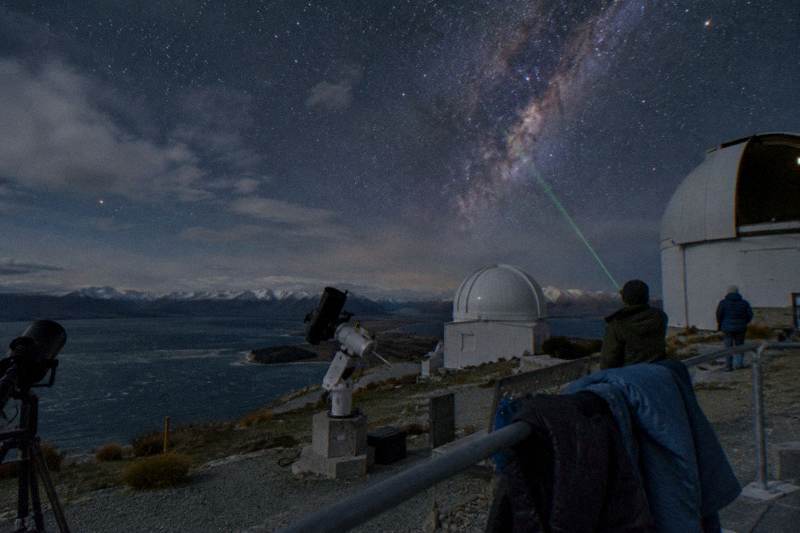
Can I Drive Up To Mount John Observatory?
Yes, you can drive up to Mount John Observatory, but only between 9am and 4pm, with a NZD 14 per vehicle fee at the gate. Here is how daytime access and the evening Summit Experience bus both work.
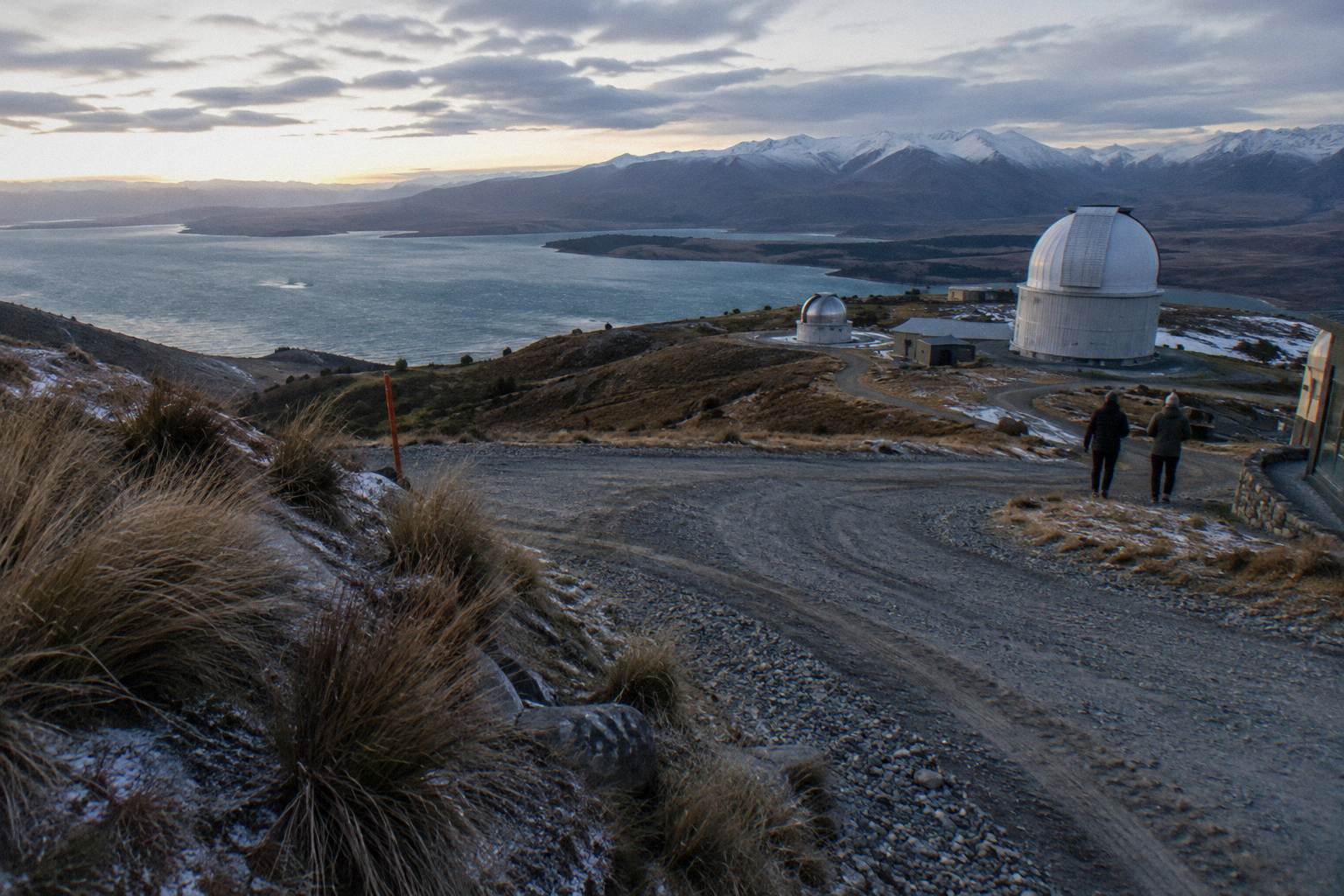
Yes, you can drive up to Mount John Observatory, but only in daylight. The operator that runs the summit cafe states the access road is open 9am to 4pm, a NZD 14 per vehicle fee applies at the gate, and vehicles over 12 seats are not permitted. The road also closes in some weather. After dark, private vehicles do not use the road, and the way up is the Summit Experience bus.
The question sounds simple and the answer has three parts that catch people out: the road exists, it has strict daytime hours, and it is a toll road with a gate fee. Anyone planning a daytime visit to the Astro Cafe or the Summit Circuit track can drive up themselves between 9am and 4pm. Anyone whose real goal is the night sky needs a completely different plan, because the hours end hours before the stars come out.
This page walks through both routes: the self-drive day visit and the guided evening trip. It sets out the operator's own figures for hours, fees and vehicle limits, explains what the Summit Experience bus includes, and covers what the road itself is like behind the wheel. The facts throughout come from the operators' own pages, including the operator's Astro Cafe page, which is where the road rules are published.
If your reason for climbing the hill is stargazing rather than a daytime coffee with a view, the evening options are the ones to read closely.
Yes, in daylight and only in daylight. The road to the University of Canterbury Mt John Observatory is open to private vehicles from 9am to 4pm daily, with a road user fee of NZD 14 per vehicle collected at the gate. Vehicles over 12 seats are not permitted, and the operator states the road is closed in some weather. There is no evening self-drive access on this road.
Those are the rules as the operator publishes them on its Astro Cafe page, and they apply to everyone, not just cafe customers. The road is a private access way through working farmland up to the observatory summit at 1,029 m, and the gate fee is what the operator charges for its use. The hours are not a suggestion or a summer-only schedule: 9am to 4pm is the stated window, and arriving at 3:55pm leaves no time at the top before the road closes.
The practical read is that a daytime drive up Mount John and an evening stargazing session are two separate products with two separate access models. By day you are a road user paying a fee, free to walk the Summit Circuit track, an 8.9 km return walking track from lake level, or visit the Astro Cafe, which opens the same 9am to 4pm hours. By night the summit belongs to the guided experiences, and the road carries the operator's bus rather than private cars.
If you have already read whether you need a tour to stargaze at Mount John, you will know the shape of the argument: the reserve is public, the summit road at night is not part of that public access. You can stargaze brilliantly from lake level for free. What you cannot do is park your own car next to the observatory domes at 11pm, and no operator offers that.
What Are The Road Hours And The Gate Fee?
The access road to Mount John is open 9am to 4pm daily, matching the Astro Cafe hours, and costs NZD 14 per vehicle at the gate. Vehicles over 12 seats are not permitted on the road at all. The operator notes the road is closed in some weather, so a clear morning in Tekapo village does not guarantee the gate is open by afternoon.
The fee is per vehicle, not per person, which changes the maths for families. A car carrying four people pays NZD 14 once. The operator does not publish concessions or exemptions beyond that flat figure, so budget it as a straight toll on any daytime visit. Motorists planning to take in the Astro Cafe, which serves from the summit daily during those same hours, should treat the fee as part of the outing.
| Road fact | What the operator states |
|---|---|
| Opening hours | 9am to 4pm daily |
| Road user fee | NZD 14 per vehicle at the gate |
| Vehicle limit | Vehicles over 12 seats not permitted |
| Weather closures | Road closed in some weather |
| Cafe hours | Astro Cafe 9am to 4pm daily |
| Walking track | Summit Circuit track, 8.9 km return |
Two of those rows deserve emphasis. The vehicle limit rules out coaches and larger campervan groups driving up independently; a party of more than a dozen arriving in one vehicle cannot use the road at all, and the guided experiences become the natural alternative. And the weather closure line is not boilerplate: Mount John sits at 1,029 m in an alpine environment where the operator itself says conditions can close the road. The same caution applies in reverse to the evening tours, whose weather terms are set out on the operator's weather page.
The hours also interact with New Zealand's seasons in a way the flat "9am to 4pm" does not spell out. In midsummer the sun sets late in the Mackenzie Basin, so the gap between road closure and darkness is hours wide. In midwinter the road closes around dusk. Neither changes the rule: the published window is 9am to 4pm, and no evening self-drive option exists within it.
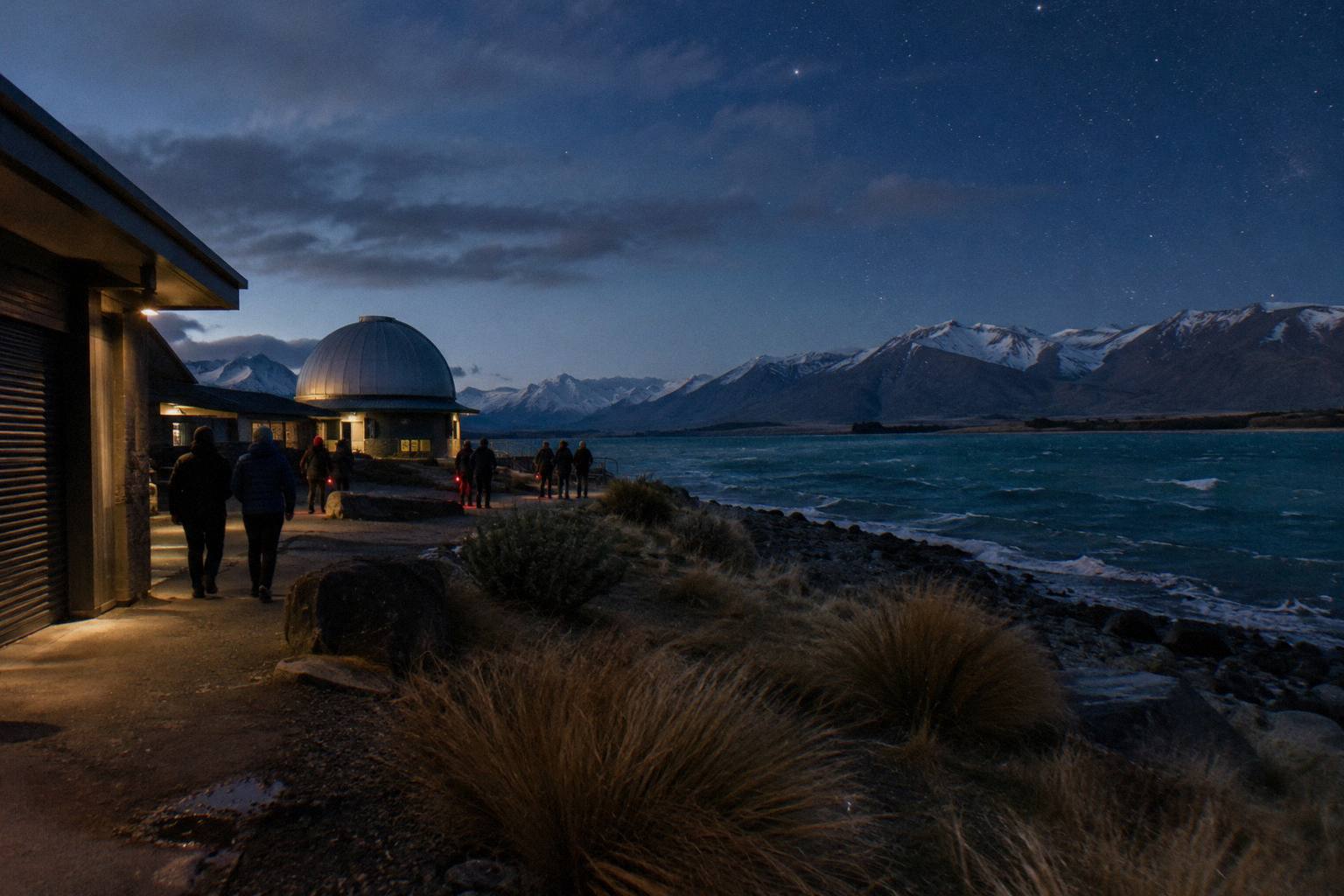
For travellers weighing a day trip against a night tour, the comparison is straightforward. The day visit buys the cafe, the view over Lake Tekapo and the chance to stretch legs on the track, at NZD 14 per vehicle. The night visit buys telescopes up to 16 inch inside a private observatory dome, an Extreme Cold Weather jacket loan and guiding, at the operator's price of NZD 239 per person, adult and child alike. They are different purchases for different parts of the day, and many visitors do both.
Why Can't You Drive Up At Night?
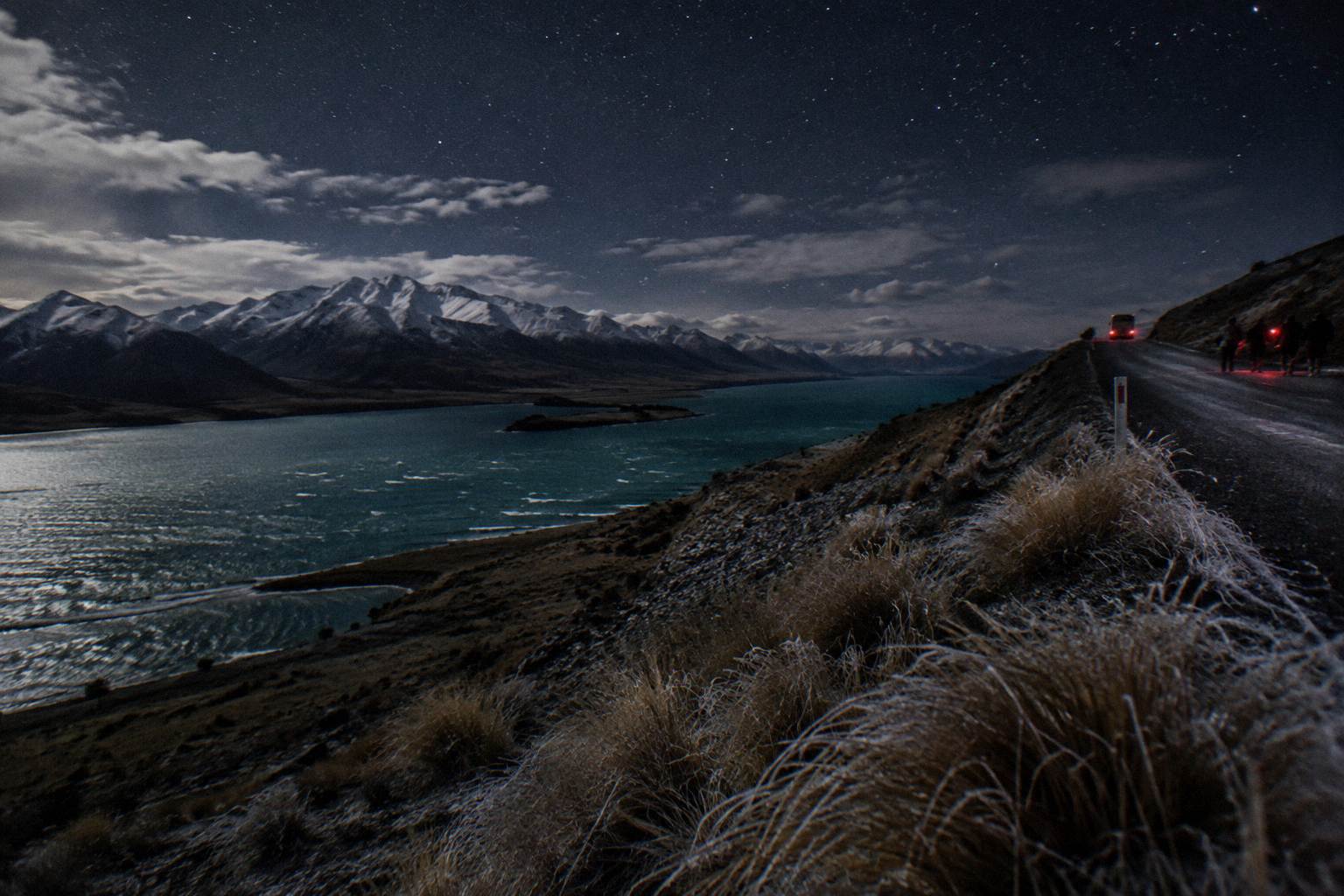
At night the summit road is used by the operator's guided tours, not by private vehicles, and the published road hours end at 4pm, hours before stargazing begins. The operator runs its Summit Experience guests up by bus, a 15-minute trip each way. No bookable product offers night driving on this road in your own vehicle.
The reasons sit with the landowners and the operator rather than with any visitor rulebook, and the honest version of this answer sticks to what is stated: the road has hours, the operator runs a bus for its evening tours, and there is no night self-drive option. What visitors can control is which evening experience they book, and that choice determines how the mountain is climbed.
The flagship is the Mt John Summit Stargazing Experience. Guests check in at the Dark Sky Project base at 1 Motuariki Lane on the Takapō lakefront 15 minutes before departure, then ride the bus 15 minutes to the University of Canterbury Mt John Observatory at the summit. The experience runs 1 hour 45 minutes in total, has a minimum age of 10, and carries a 4.6 rating across 352 reviews. Tātai Aroraki, Māori astronomy, is woven through the guiding alongside Western astronomy, and the site is described by the operator as New Zealand's largest professional research observatory. Full details are on the Summit Experience tour page, and the Summit Experience page on the operator's own site sets out inclusions and booking terms.
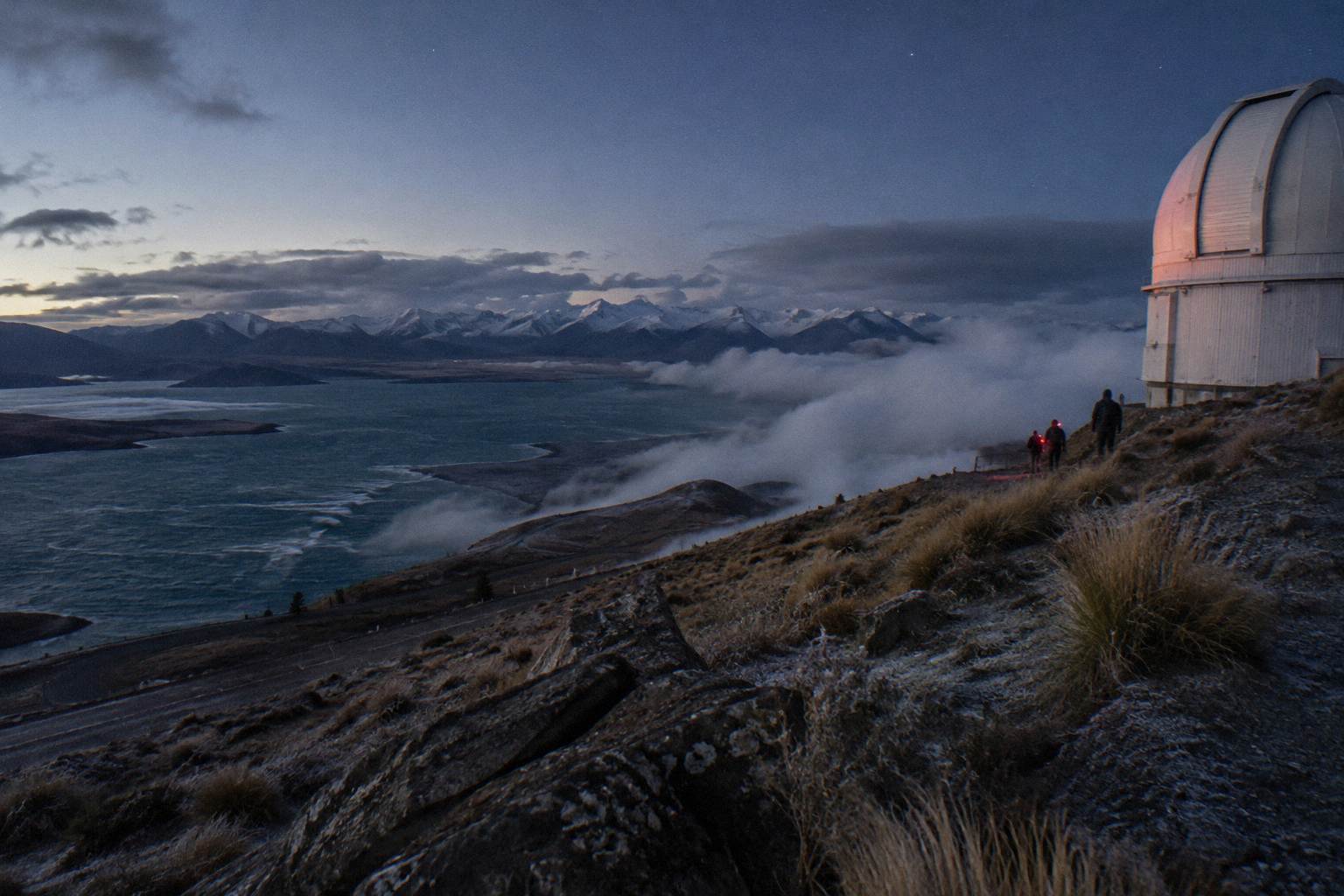
Not every evening plan needs the summit, and it is worth being clear about the alternatives before you commit. The Crater Stargazing Experience at Cowan's Private Observatory runs 75 minutes including transport, five minutes' drive from the base, with a minimum age of 5, telescopes up to 14 inch, and purpose-built observation craters sheltered from wind and light. The operator's price is NZD 139 adult, NZD 99 for children aged 5 to 17, with a family pass at NZD 377 for two adults and two children. For a different shape of evening altogether, Soak in the Stars at Tekapo Springs pairs guided telescope viewing with an exclusive hot pool at 37.5 to 38.5 °C, towels, robes, hot drinks and warm poncho coats included, 90 minutes, minimum age 10, NZD 179 adult.
Thinking about which evening fits your group?
All three operators are blunt about weather: clarity and sky objects cannot be guaranteed. Dark Sky Project decides as close to tour time as possible and offers an indoor alternative, a reschedule, a gift voucher or a full refund when outdoor stargazing is not possible. Tekapo Springs runs in all weather, substituting an indoor VR experience for telescope viewing under cloud, with a 25 percent refund per ticket if telescope viewing falls under 30 minutes. None of that is fine print; it is the core of booking a night activity in a mountain environment.
How Does The Summit Experience Bus Work?
Summit Experience guests check in at the Dark Sky Project base on the lakefront 15 minutes before the tour, then take the operator's bus 15 minutes up the summit road. The total experience runs 1 hour 45 minutes, transport both ways included, along with guiding and the loan of an Extreme Cold Weather jacket. The bus is the only evening access for the tour.
The check-in detail matters more than it sounds. The base is at 1 Motuariki Lane, Takapō (Tekapo), on the lakefront between the Four Square and the YHA, in the building with the large observatory dome, and every Dark Sky Project experience departs from there. Arriving late is not a shrug: the operator's terms state late check-in means no refund, and the bus does not wait for a second pick-up. Build in the 15 minutes and a margin for parking in the village. The wider set of guides lives on Mt John Stargazing.
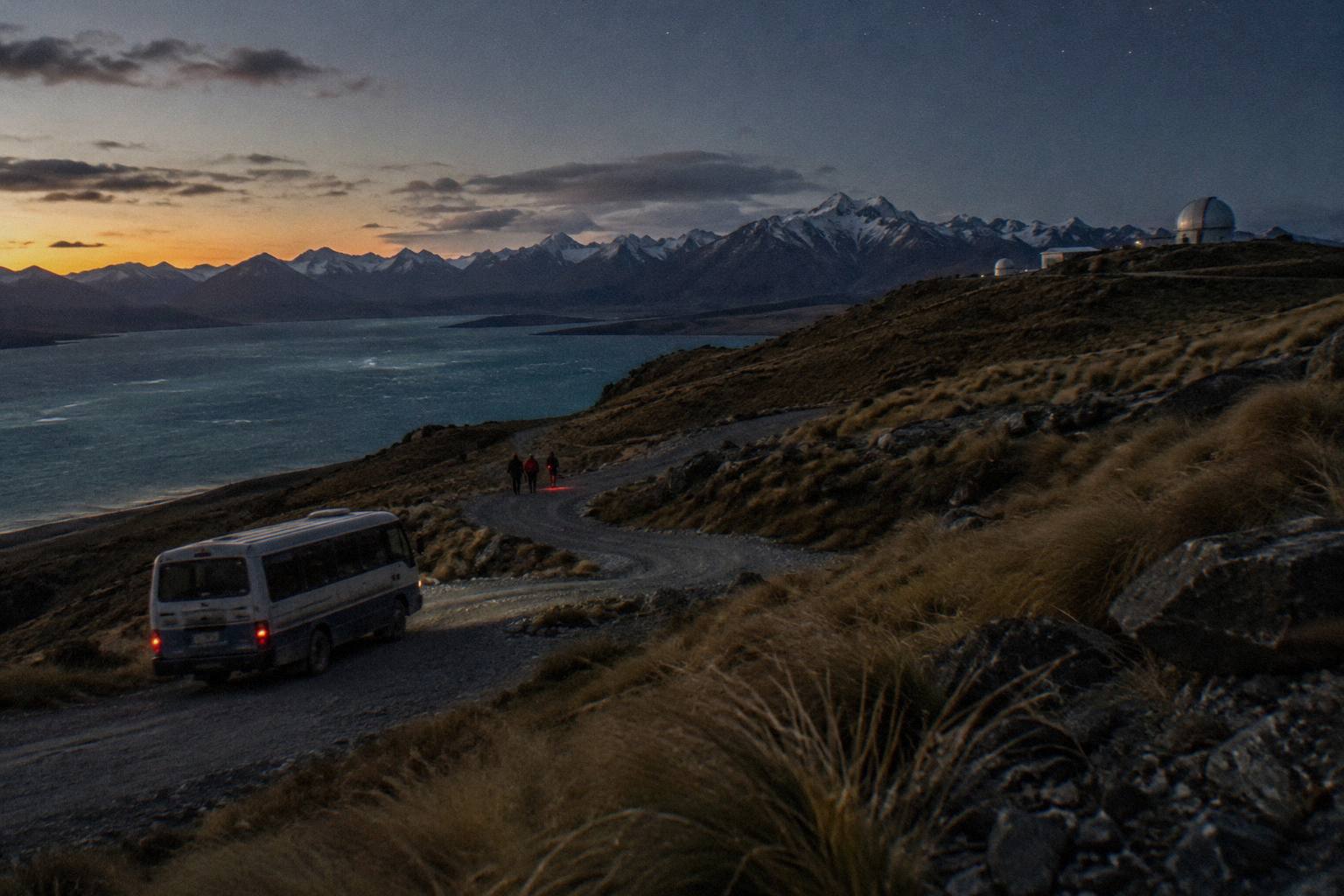
The bus itself replaces every part of the driving decision. There is no gate fee to pay, no road to judge, no vehicle size limit to worry about and no parking at the top. What the ride does require is a little mobility: the operator describes moderate fitness for the Summit Experience, including a 100 m walk on a gravel incline and a few steps in the dark near the summit. Anyone who can manage an uneven footpath by torchlight can manage it, but it is stated for a reason, and it is part of why the minimum age is 10.
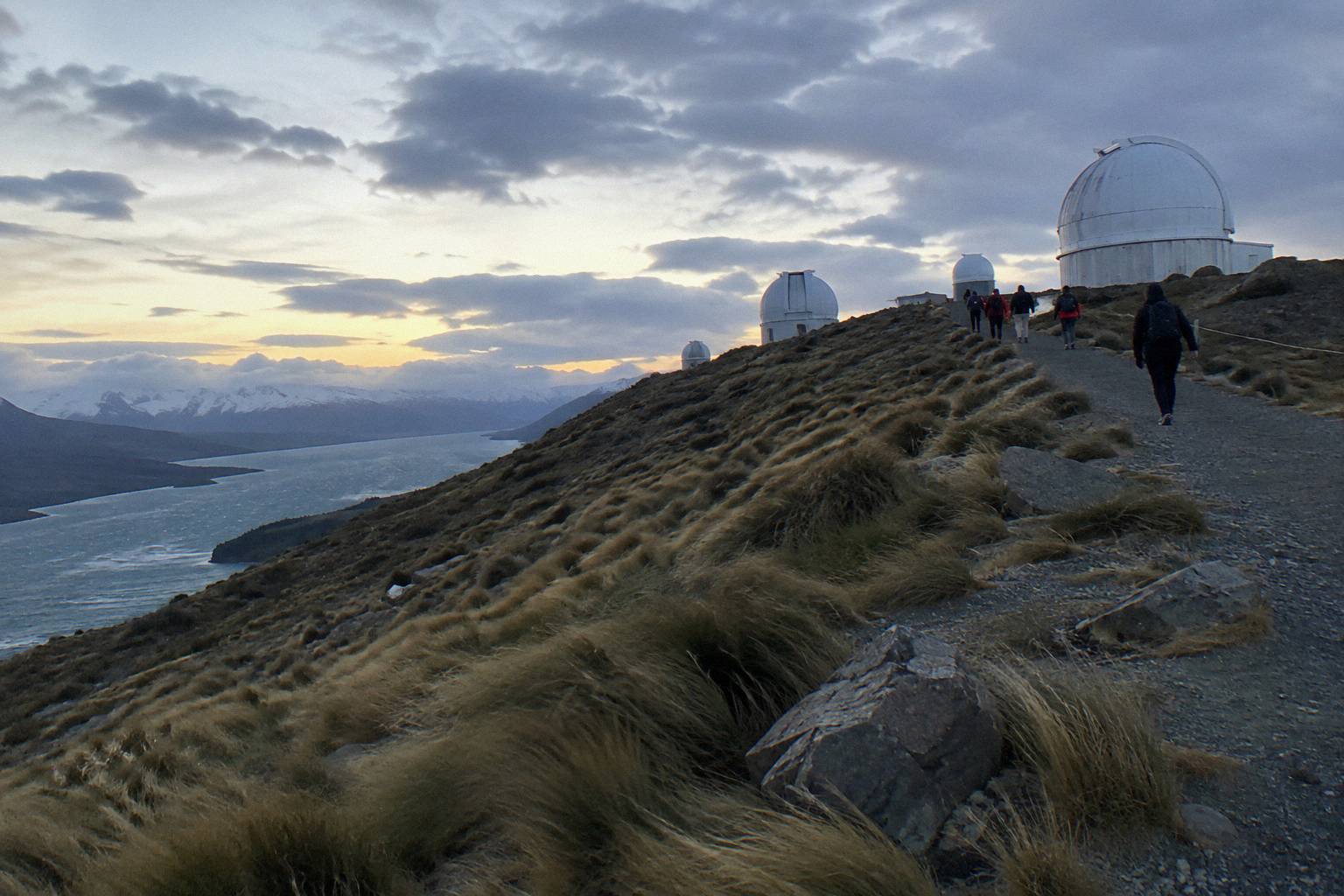
Times for the Summit Experience are deliberately vague in print: the operator says tours run at various times throughout the year depending on time of sunset, seven days a week, and does not publish a clock schedule. That is worth internalising early. A midwinter tour might begin not long after the 4pm road closure would have ended a day visit; a high summer tour could start hours later. Booking pages show the actual departure slots for your date, which is the only reliable way to plan around one.
| Access question | Day visit | Summit Experience |
|---|---|---|
| Who drives | You | The operator's bus |
| When | 9am to 4pm | Various times, year round, after sunset |
| Cost basis | NZD 14 per vehicle | NZD 239 per person, adult and child alike |
| Vehicle limit | Over 12 seats not permitted | Not applicable |
| Minimum age | None stated | 10 |
| At the top | Astro Cafe, views, track access | Private observatory dome, telescopes to 16 inch |
| Weather terms | Road closed in some weather | Indoor alternative, reschedule or refund if no outdoor stargazing |
One more distinction helps set expectations. The observatory at the summit is a working University of Canterbury research facility, with four research telescopes including the 1.8 m MOA telescope, officially opened 1965. A day visitor driving up sees the buildings and the view; a Summit Experience guest is guided around and inside a private observatory dome with telescopes up to 16 inch. The day trip is a scenic drive. The night tour is an astronomy experience. Same hill, different products.
For anyone whose group includes children under 10, or for whom the gravel walk is a barrier, the Crater Experience is the operator's own alternative: minimum age 5, a five-minute drive from the base, and wheelchair users can join provided they drive their own vehicle to Cowan's. That last clause is the one wheelchair-accessible self-drive option in the whole evening lineup, and it applies to the Crater site only, not to Mount John.
What Is The Road Like To Drive?
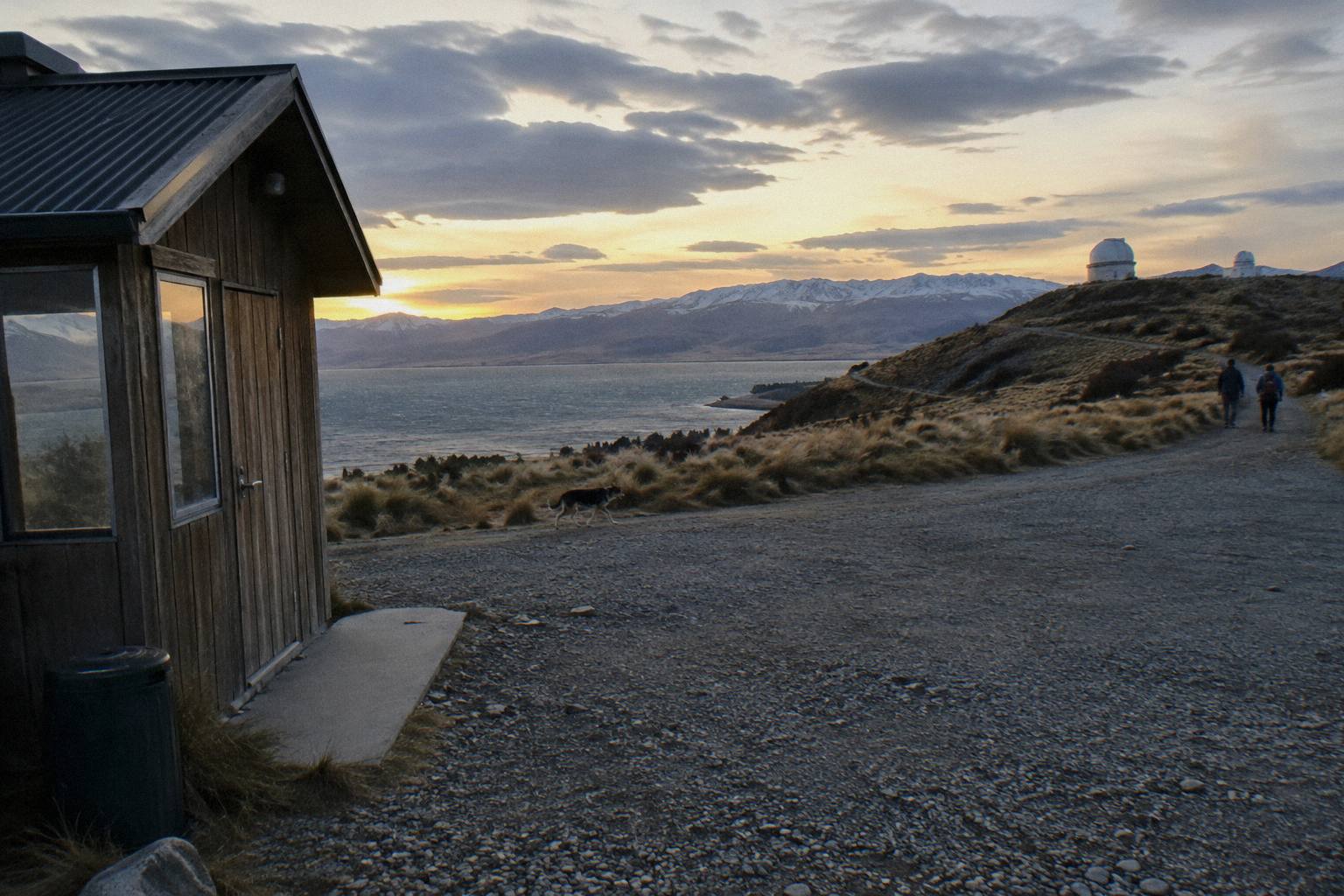
The Mount John access road is a narrow, winding hill road climbing from lake level to 1,029 m, and the operator's own cautions are the vehicle limit, weather closures and the gate. It is driven slowly, shared with the operator's buses, and it is the same road the Summit Experience uses after dark. No driving difficulty rating is stated beyond those rules.
Honesty first: the operator publishes hours, a fee and a vehicle cap, not a road surface description, so anything beyond that here is inference from the stated facts rather than a sourced claim. What can be said is what the rules imply. A road that closes in some weather, bans vehicles over 12 seats and serves a working observatory at 1,029 m is a road to take steadily, in daylight, with the gate fee ready.
The drive is short in distance and long in switchbacks, and the reward at the top is the view over Lake Tekapo and the Mackenzie Basin that makes the Astro Cafe a destination in its own right. Give yourself real time inside the 9am to 4pm window rather than aiming to arrive near the cut-off. The cafe shares the same hours, and a 3:30pm arrival buys minutes, not a visit.
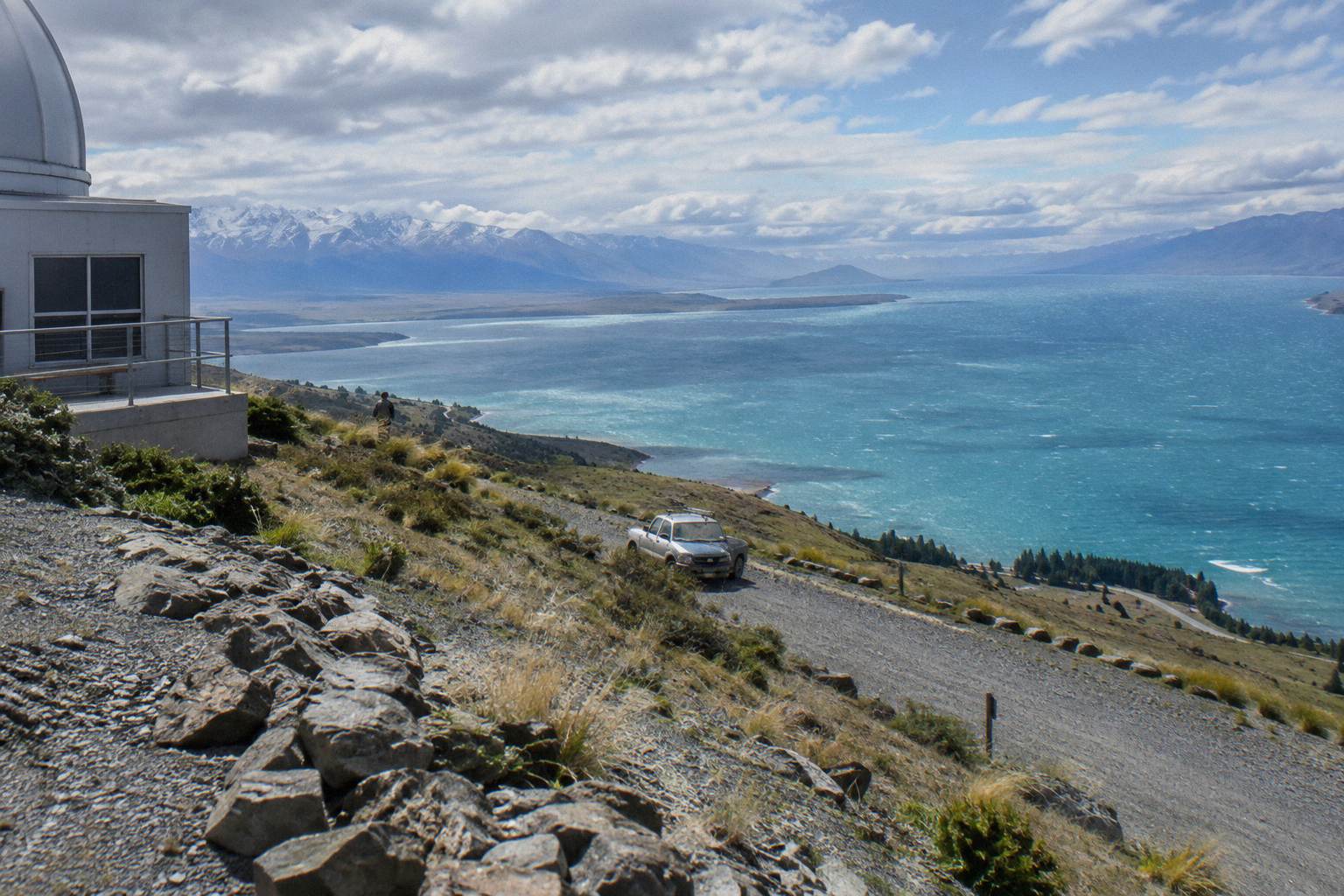
Cyclists and walkers have a separate option that avoids the road question entirely: the Summit Circuit track, an 8.9 km return walking track, which the operator's cafe page references. Walking up through the tussock gives the same summit, the same view and no gate fee, at the cost of a serious hill climb. It is a day activity, subject to the same weather sense any alpine walk demands.
What Trips People Up When Planning A Mount John Visit?
The recurring mistakes are assuming the road is open late, expecting to pay per person rather than per vehicle, and turning up in a vehicle over 12 seats. Others arrive without checking the weather closure note, misread the Summit Experience's sunset-dependent start times as a fixed hour, or bring children under 10 to a tour with a stated minimum age. Each mistake is avoidable with the operator's own published rules.
The per-person assumption is the most common. Groups of four or five budget one cafe-style price each and find a single NZD 14 charge at the gate instead, which is pleasant, but the reverse confusion hurts more: a solo driver pays the full NZD 14 for one car, so the day visit is a per-vehicle cost regardless of headcount.
The age minimums deserve a second check before booking. Summit Experience, minimum age 10. Crater Experience, minimum age 5. Soak in the Stars at Tekapo Springs, minimum age 10, and Tekapo Springs allows no child under 6 on any of its tours, babies carried included. Booking a summit night for a family with an eight-year-old ends in a refund conversation that a two-minute check would have prevented.
| Common mistake | The rule that catches it |
|---|---|
| Planning a sunset or night drive up | Road open 9am to 4pm only |
| Budgeting the gate fee per person | Fee is NZD 14 per vehicle |
| Arriving in a large van or coach | Vehicles over 12 seats not permitted |
| Ignoring weather before the drive | Road is closed in some weather |
| Expecting a fixed Summit start time | Times vary with sunset, unpublished |
| Booking under-10s on the summit tour | Minimum age 10 for Summit Experience |
The last trap is subtler: assuming the day visit and the night tour are interchangeable. They are not, and the operator's own product split says so. The road, the cafe and the track are daytime amenities. The telescopes, the domes and the Tātai Aroraki guiding are evening products reached by bus. Visitors who want the mountain twice can do both on the same day, driving up between 9am and 4pm and checking in at the base later for the tour, and many do exactly that.
If you are still shaping the wider trip, the guides on how many nights you need in Tekapo for stargazing and how much Tekapo stargazing costs cover the planning side in depth, including how Mt John Stargazing rates the different evening products for different travellers.
Common Questions About Driving To Mount John Observatory
Can I Drive Up To Mount John Observatory?
Yes, during the day. The access road is open 9am to 4pm daily, with a road user fee of NZD 14 per vehicle at the gate. Vehicles over 12 seats are not permitted, and the road is closed in some weather. At night, private vehicles do not use the road; the Summit Experience reaches the summit by the operator's bus.
How Much Does It Cost To Drive Up Mount John?
The operator's stated road user fee is NZD 14 per vehicle, collected at the gate. The fee applies to the daytime access hours of 9am to 4pm and is charged per vehicle rather than per person.
Can You Drive Up Mount John At Night For Stargazing?
No evening self-drive option exists on the summit road. The published hours end at 4pm. Evening access to the summit is through the Mt John Summit Stargazing Experience, which transports guests by bus, a 15-minute trip each way from the Dark Sky Project base.
Is The Mount John Road Open In All Weather?
No. The operator states the road is closed in some weather. The same caution applies to the evening tours: the operator cannot guarantee clarity or sky objects, decides close to tour time, and offers an indoor alternative, a reschedule, a voucher or a full refund if outdoor stargazing is not possible.
Can Campervans And Buses Drive Up Mount John?
Private cars and smaller vehicles can use the road within the 9am to 4pm hours and the NZD 14 gate fee. Vehicles over 12 seats are not permitted, which rules out coaches and larger group transport. Larger groups normally book a guided experience with transport included.
Do Summit Experience Guests Pay The Road Fee?
No. The Summit Experience includes transport on the operator's bus, guiding and the loan of an Extreme Cold Weather jacket within its price of NZD 239 per person, adult and child alike. There is no separate gate fee for tour guests riding the bus.
For a night on the mountain, these are the three guided evenings worth comparing side by side.