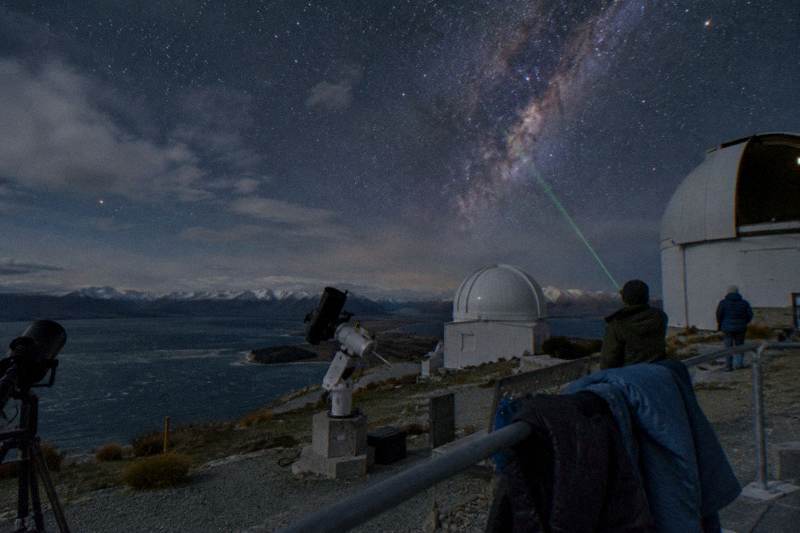
How Cold Does It Get At Mount John On A Stargazing Night?
Conditions on a Mount John stargazing night: the 1,029 m summit, the jacket the operator lends, the sheltered craters at Cowan's, and what to do if cold is a concern.
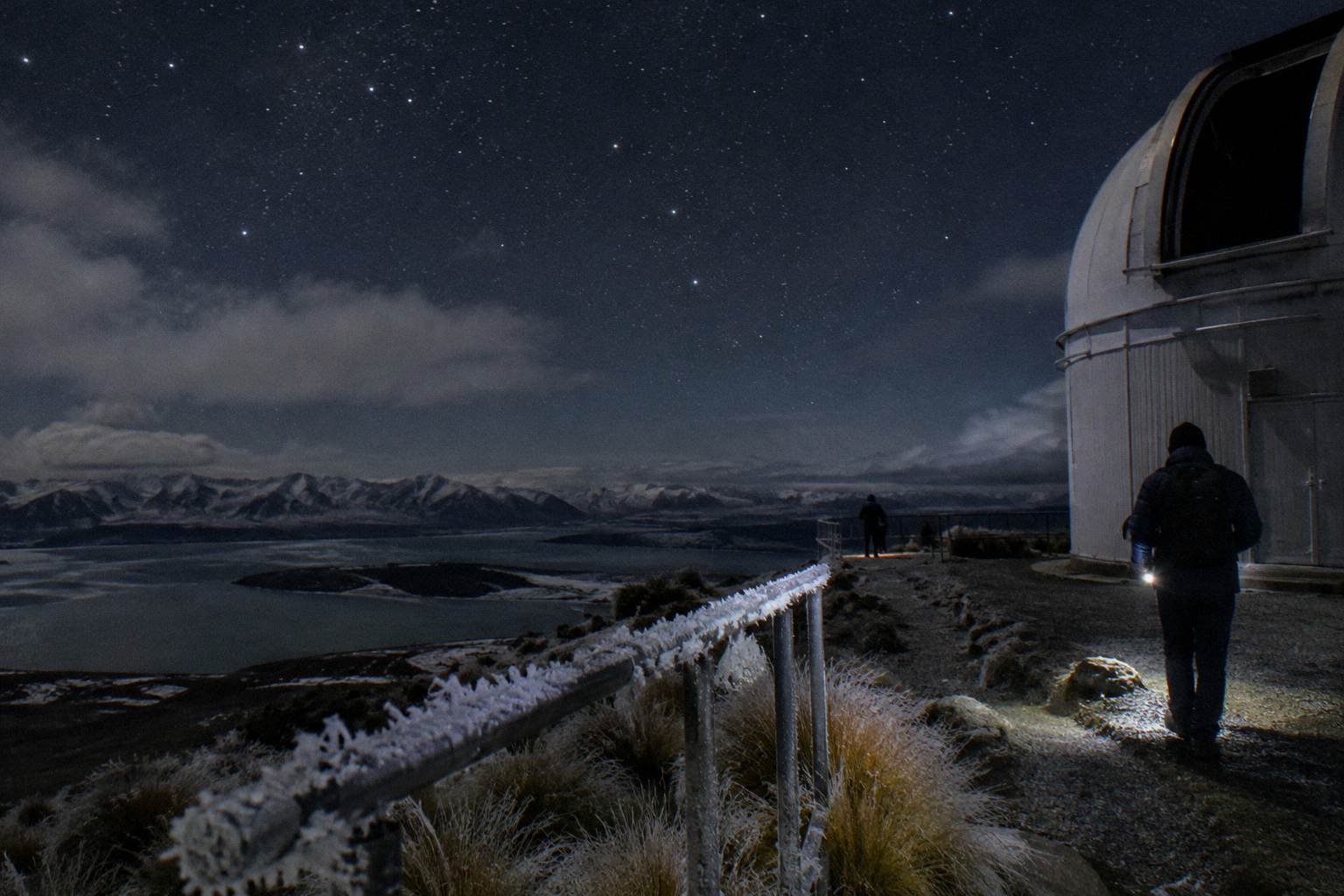
Neither Dark Sky Project nor the University of Canterbury publishes temperature figures for the summit, so no honest number exists to quote. What is documented is the elevation, 1,029 m above sea level, which puts the observatory well above the Lake Tekapo village, and a 100 m gravel incline walk plus a few steps in the dark on the Summit Experience. The operator lends an Extreme Cold Weather jacket on that tour for a reason, and this article walks through exactly what that means for your night.
The short version: plan for a night noticeably colder than anything you feel at lake level, bring your own warm layers regardless of the jacket loan, and know that there are sheltered and even heated alternatives if the summit sounds like more chill than you want. The operators themselves frame the cold as a planning fact, not a hazard, and their own pages are the source for everything below.
The operators do not publish temperature figures for Mount John, so the honest answer starts with what is stated: the summit observatory sits at 1,029 m elevation, several hundred metres above the lake, and the Summit Experience includes a 100 m gravel incline walk and a few steps in the dark, which the operator classes as moderate fitness. Dark Sky Project lends every Summit guest an Extreme Cold Weather jacket, the only tour where it does. Cold is a defining condition of the experience, and the operator's own Summit Experience page treats it that way, but no thermometer reading appears anywhere in the published facts.
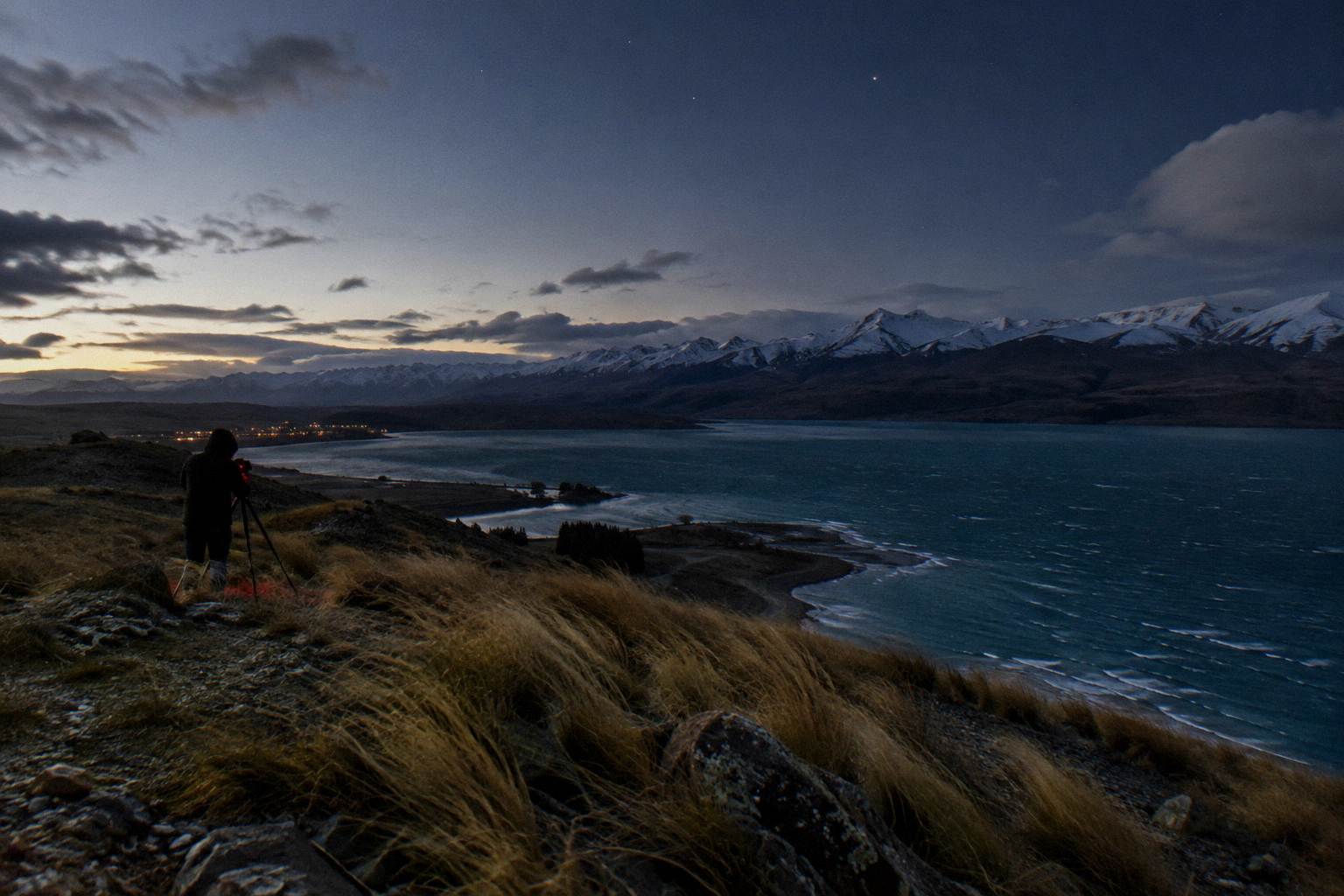
Why does no number exist? Because the operator does not market a temperature, it markets a sky. Night temperatures at elevation in the Mackenzie Basin swing with season, cloud and wind, and any single figure a website printed would be wrong most nights. That is not evasion, it is accuracy. What you can plan around instead is structure: elevation, exposure, duration and what the operator supplies.
The duration matters more than people expect. The Summit Experience runs 1 hour 45 minutes total, including a 15 minute bus ride each way, which means well over an hour standing at 1,029 m at night. Standing still in the cold is a different activity from walking in it, and that is the gap the jacket loan and your own layers fill.
If cold is a genuine concern rather than a curiosity, three decisions shape your night: which tour you pick, what you wear, and how you handle a weather call. The tours below span that range, from the exposed summit to a hot pool at 37.5 to 38.5 °C.
The summit option is the coldest of the three and the highest. The Crater Experience sits at Cowan's Private Observatory, a five minute drive from the Dark Sky Project base, in purpose built observation craters that the operator describes as sheltered from wind and light. The third, Soak in the Stars at Tekapo Springs, ends in a hot pool. Same sky region, three very different relationships with cold.
Why The Summit Feels Colder Than The Village
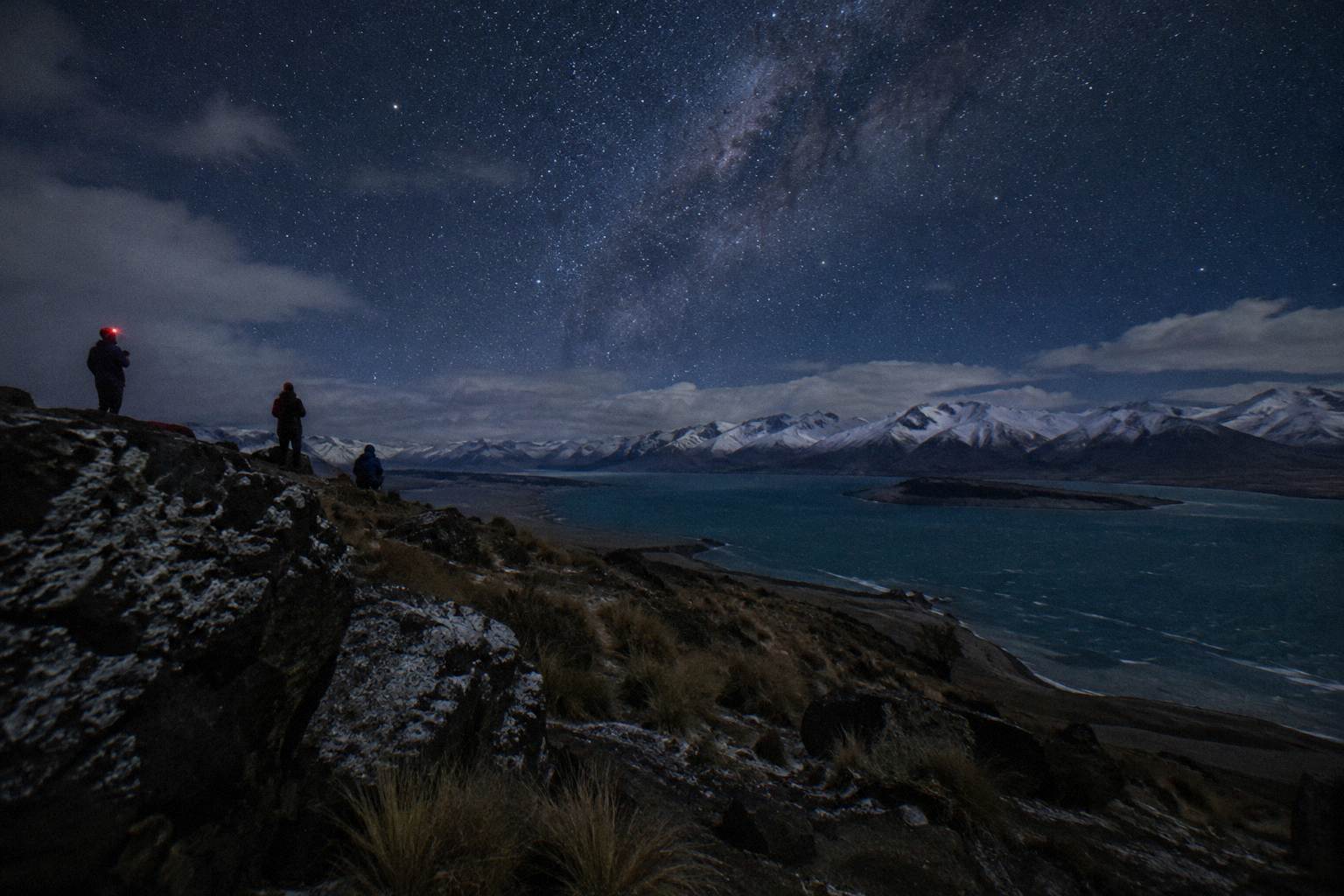
Mount John's summit stands 1,029 m above sea level, and because air temperature falls as elevation rises, the observatory sits naturally cooler than Takapō village below. Exposed high ground also loses heat quickly and offers little shelter, so even on a mild day in the village, conditions near the summit can feel distinctly colder, and warmer layers are a smart choice for any visit up top. The village of Lake Tekapo sits at lake level, meaning the bus ride up covers several hundred vertical metres, and temperature drops with altitude. That drop is a physical fact of the atmosphere, not a marketing claim, and it is the single most reliable thing you can say about the summit at night without a published thermometer reading. Layer it with wind and clear skies and you have the full picture.
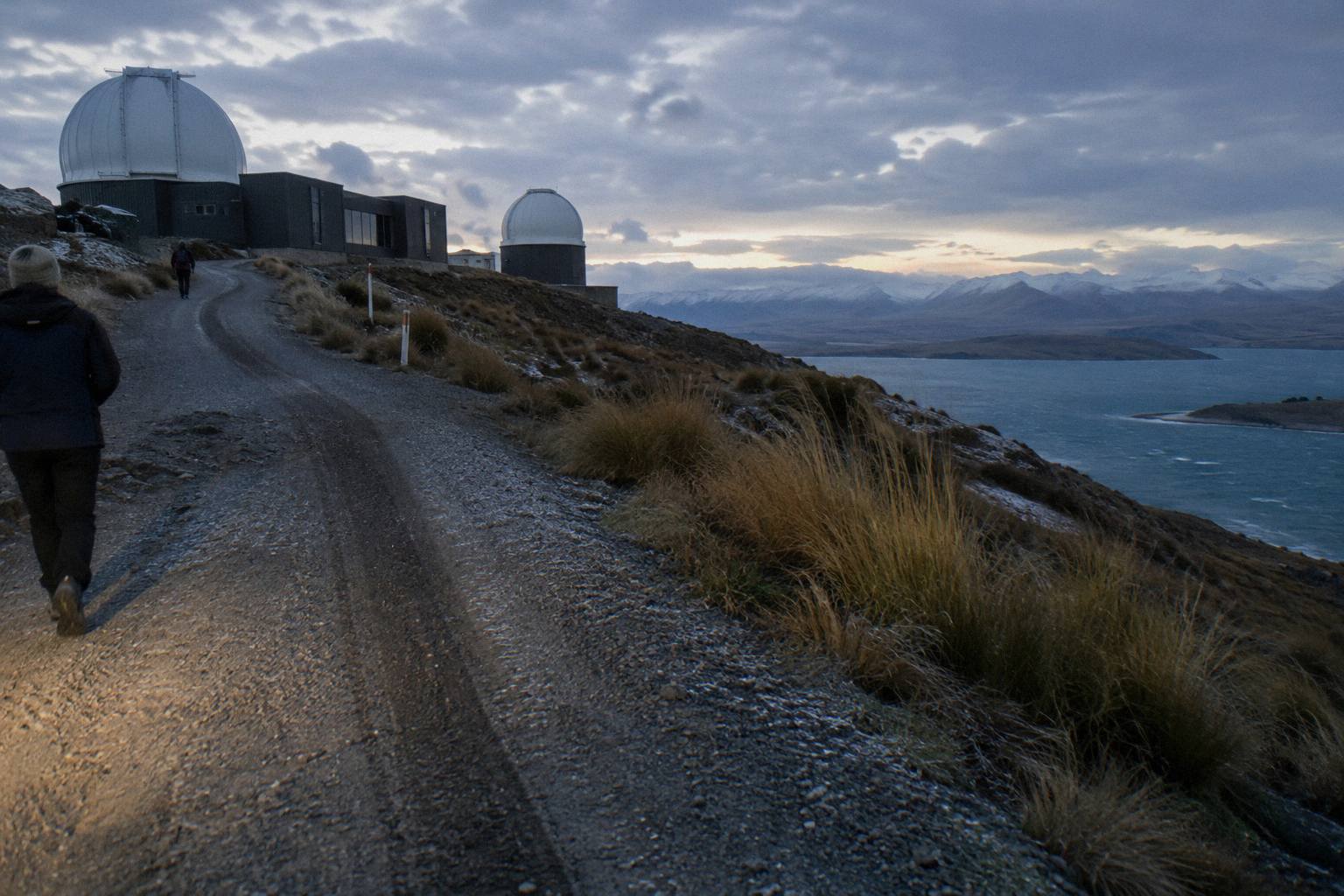
Wind is the multiplier. The Lake Tekapo shoreline can be calm while the exposed ridge above is not, and stargazing by definition happens on clear nights, which are often the colder ones, since cloud acts as a blanket over the land. A clear Mackenzie night under high pressure is a beautiful thing and a cold one. The operators acknowledge wind directly: Cowan's Private Observatory was purpose built with observation craters sheltered from wind and light, which tells you wind is a design problem they solved with earthworks rather than ignored.
Add the standing time. The bus takes 15 minutes each way, and the remaining time on the summit is spent at telescope eyepieces and listening to guides, not moving to keep warm. The operator's fitness note, a 100 m gravel incline walk and a few steps in the dark, is short, but it exists precisely because the summit is not a drive up to a heated room. If you want the deeper background on the site itself, the companion piece on stargazing at the Mount John Observatory covers the telescopes and the research history.
One more Summit specific: check in is at the base at 1 Motuariki Lane, Takapō (Tekapo), 15 minutes before departure, and all Dark Sky Project experiences leave from there. Arriving warm and dry, with your own hat, gloves and closed shoes already on, is the cheapest cold insurance available on this night.
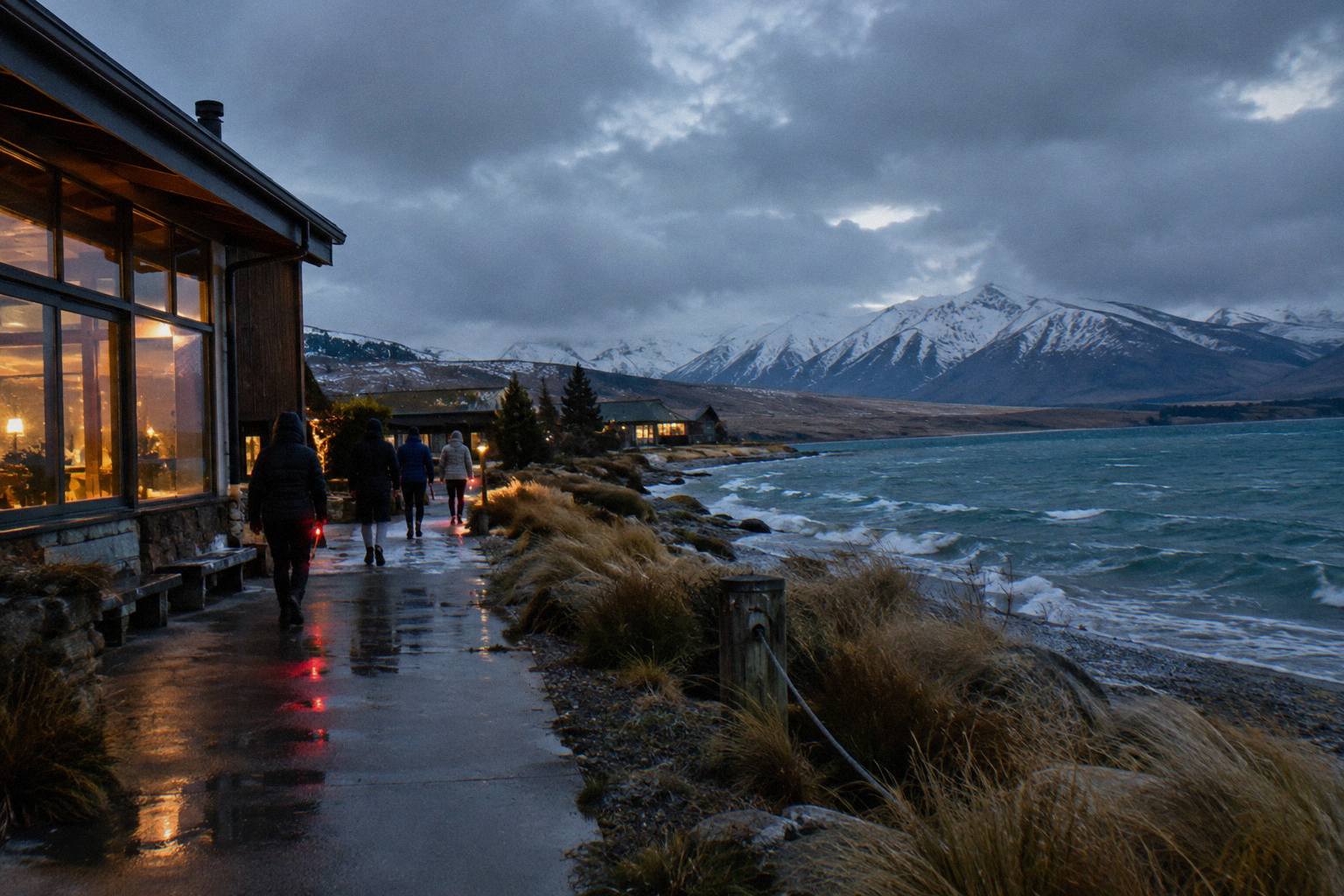
What The Operators Lend You For The Cold
Dark Sky Project lends an Extreme Cold Weather (ECW) jacket to every Summit Experience guest, and the Summit Experience is the only one of its tours where this jacket loan is included. Transport and guiding are also included, so guests are not left to arrange those pieces on their own. Tekapo Springs goes further for its Soak in the Stars tour: towels, robes, hot drinks and warm poncho coats are listed as included, alongside a hot pool at 37.5 to 38.5 °C with the guide poolside. The two operators solve the cold problem in opposite ways, one by insulating you against the night with polar grade outerwear, the other by ending the night in hot water and dry robes.
The ECW jacket is a serious piece of kit, the same style of gear used for polar conditions, and it is included in the NZD 239 operator price, which is the same for adults and children aged 10 and over, the tour's minimum age. The Mt John Summit Stargazing Experience is rated 4.6 across 352 reviews. What the jacket does not cover: your legs, your feet, your hands and your head. The operator lends outer insulation, it does not dress you completely, and guests who arrive in street shoes and a t-shirt under the jacket have a long hour ahead of them.
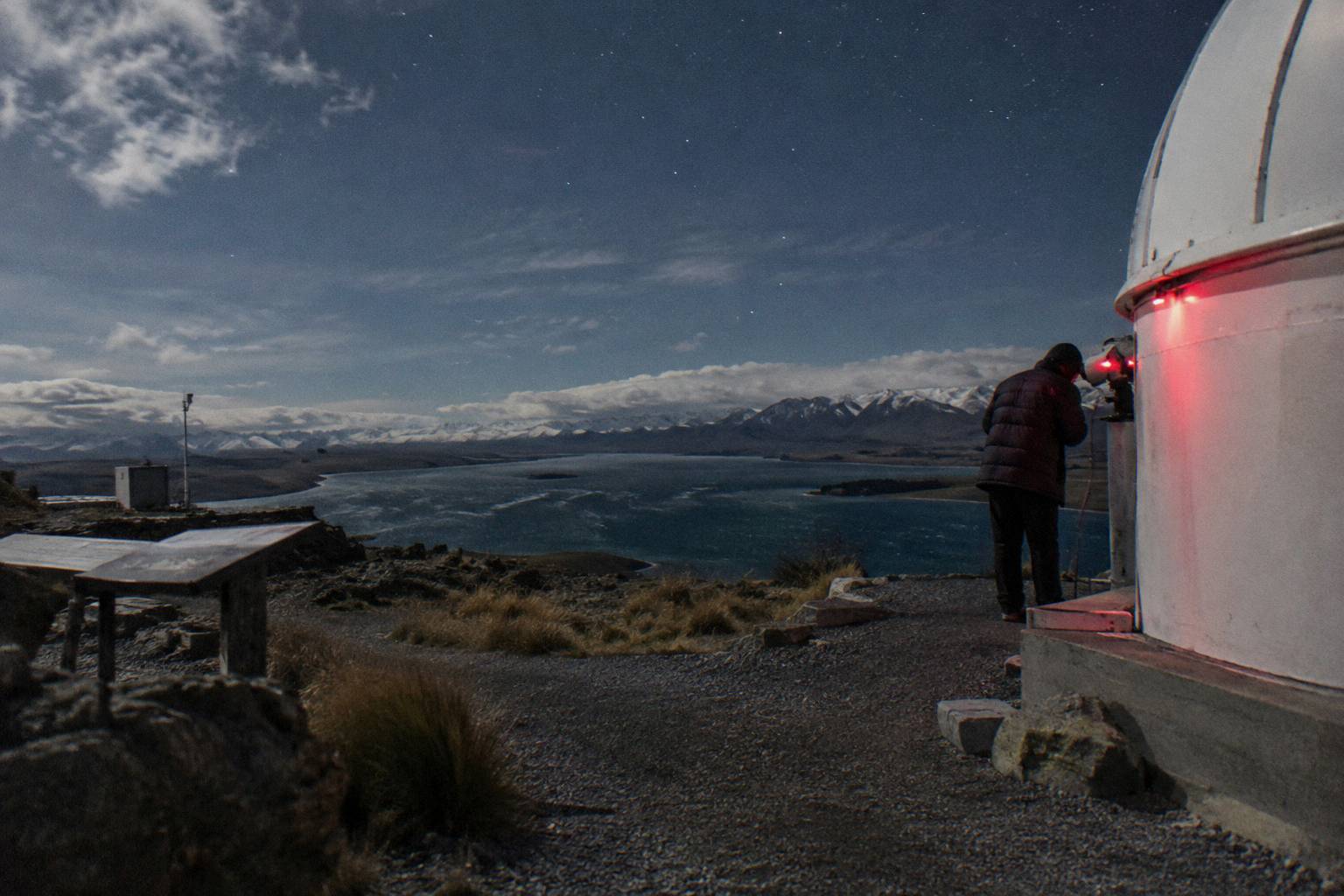
The comparison table below sets out what each of the three featured tours supplies and what it asks of you in return:
| Tour | What the operator supplies for the cold | Physical demands | Minimum age |
|---|---|---|---|
| Mt John Summit Stargazing Experience | Extreme Cold Weather jacket loan, transport, guiding | 100 m gravel incline walk, a few steps in the dark, moderate fitness, 1 hour 45 minutes | 10 |
| Crater Stargazing At Cowan's Observatory | Sheltered observation craters, wind and light protection by design, transport in the 75 minute total | Short transfer from the base, 5 minute drive | 5 |
| Hot Pools And Stargazing At Tekapo Springs | Towels, robes, hot drinks, warm poncho coats, hot pool at 37.5 to 38.5 °C | 90 minutes, telescope viewing then the soak | 10 |
For the Crater Experience, the cold solution is architectural rather than wearable. Cowan's Private Observatory uses purpose built craters dug to shelter observers from wind and light, so the felt cold on a windy night is lower than on the exposed ridge, even though no jacket loan is listed for it. The operator's price is NZD 139 adult and NZD 99 child aged 5 to 17, with a family pass at NZD 377 for two adults and two children, its current schedule. If you want the full picture of that tour, the guide to the Crater Experience at Cowan's Observatory goes into depth.
Soak in the Stars is NZD 179 adult, NZD 159 senior or student, NZD 115 child and NZD 499 for a family, per the operator's price list, and it runs 90 minutes: guided telescope viewing first, then the exclusive hot pool. Note the sequencing, because the telescope portion still happens outside, at night, before the warmth arrives. The poncho coats and hot drinks carry you to the pool, they do not replace the cold first half. More detail sits in the piece on Tekapo Springs stargazing and the hot pools.
Cowan's Craters: The Sheltered Answer To Wind
The Crater Experience takes place in purpose built observation craters that Dark Sky Project describes as sheltered from wind and light, which makes it the operator's lower-exposure option for cold nights and younger families, with a minimum age of 5. The site is Cowan's Private Observatory, a five minute drive from the base at Takapō, and the 75 minute total includes transport. Where the summit asks for a walk on an exposed ridge, Cowan's asks for almost nothing beyond stepping out of a vehicle into a wind-sheltered bowl.
That shelter matters because wind chill, not air temperature alone, is what makes a stargazing night miserable. A calm sub-zero night at a sheltered crater can feel milder than a windy night several degrees warmer on an open summit. The operators do not publish wind or temperature figures either, so the honest planning move is to match your tolerance to the design: exposed ridge and big observatory dome at 1,029 m, or sheltered crater at lake-shore elevation a short drive from town.
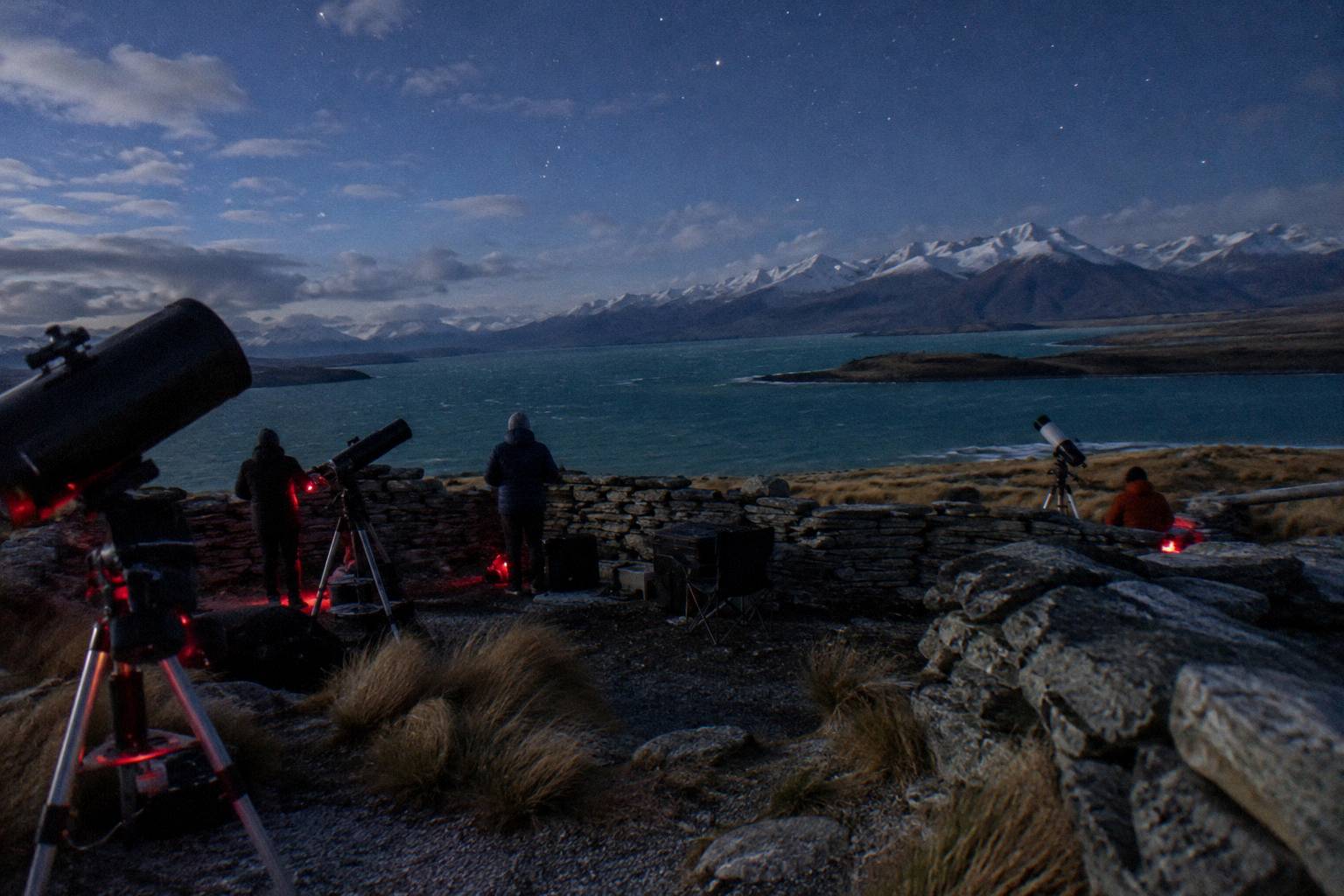
Accessibility is part of the same story. Wheelchair users can join the Crater Experience, though the operator's page says they must drive their own vehicle to Cowan's rather than take the tour transport. For anyone for whom the Summit's gravel incline and steps in the dark are a barrier, stated plainly on the operator's terms page, the Crater Experience is the Dark Sky Project option designed around them. The trade-off is telescopes up to 14 inch at Cowan's versus up to 16 inch inside the private dome on the summit, per the operator's pages.
Families with children between 5 and 9 have their answer here too, since the Summit sets its minimum age at 10 and Soak in the Stars also sets 10. A five year old cannot board the summit bus; the same child can stand in a sheltered crater. Cold tolerance in young children runs out faster than in adults, and the shorter 75 minute format, versus 1 hour 45 minutes on the summit, reduces the exposure window as well.
The Hot Pool Alternative: Stargazing That Ends Warm
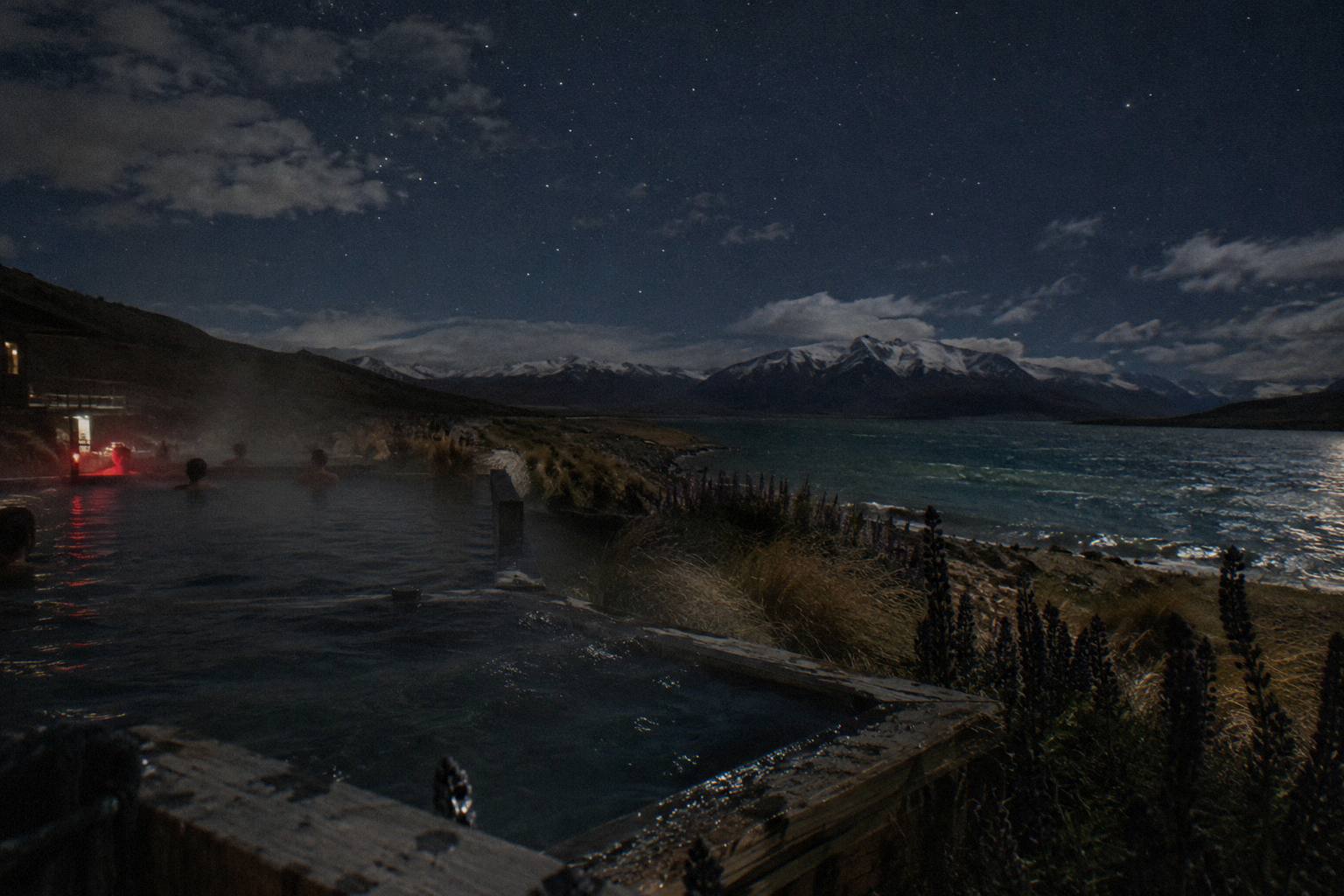
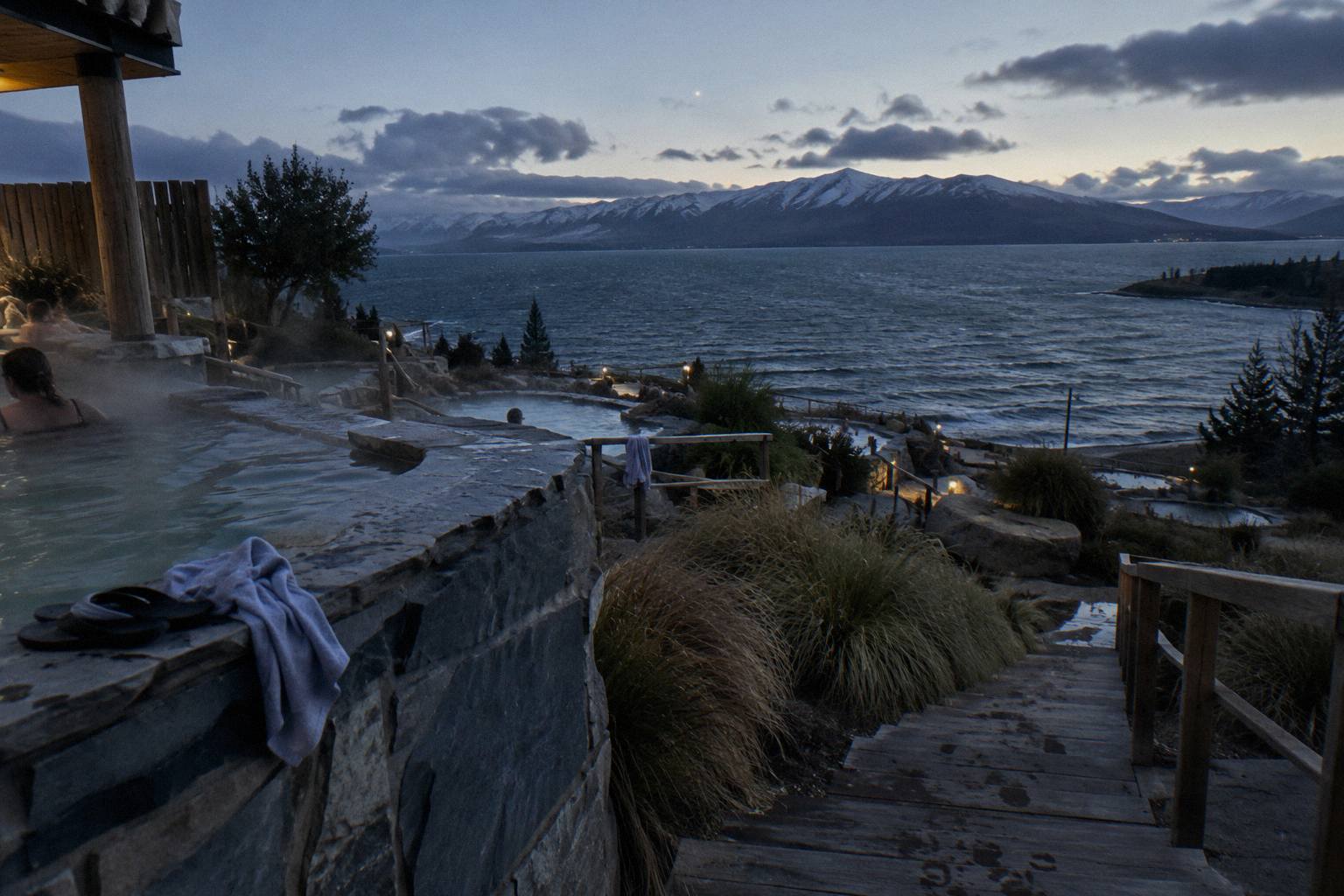
Soak in the Stars at Tekapo Springs is the region's warm-first stargazing option: 90 minutes, guided telescope viewing, then an exclusive hot pool at 37.5 to 38.5 °C with the guide poolside, with towels, robes, hot drinks and warm poncho coats included. The operator's price is NZD 179 adult, NZD 159 senior or student, NZD 115 child and NZD 499 family, and the minimum age is 10. If your honest assessment of standing on a ridge at night is no, this tour removes the after-tour shiver entirely.
The sequencing is worth repeating because it is the one thing people get wrong. The telescope viewing comes first, outside, in the night air, and the pool comes second. You still need your own warm clothing for the first half; the robes and ponchos are for the transition and the soak, and Tekapo Springs asks guests to check in at reception 15 minutes before. The tour runs 7 evenings a week October to April and Thursday to Monday May to September, with some tours beginning after midnight, an example being 12:15am, because the best sky windows move with the season.
Why would a tour start after midnight? Because stargazing tours follow darkness, not dinner. In summer the sky does not darken until late, and the operator schedules accordingly, with start times set by the calendar. That affects cold planning more than it first appears: a 12:15am start means the coldest part of the night, the hours just before dawn approaches, and a body already tired from a day of travel. The hot pool at the end is not a gimmick on that schedule, it is the design.
Tekapo Springs also handles cloud differently from Dark Sky Project: its tours run in all weather, and under cloud a VR indoor experience with 360 degree imagery of the Church of the Good Shepherd and the Mt John summit replaces the telescope viewing. If telescope viewing comes in under 30 minutes, the operator's FAQ gives a 25 percent refund per ticket at the end of the tour, for tours from 18 June 2026. That is a different cold-and-cloud philosophy from the summit model, and it is worth weighing alongside the temperature question.
Weather, Cloud And The Cold Night Decision
Dark Sky Project cannot guarantee clarity or any sky object, makes the go or no-go call as close to tour time as possible, and asks guests to check in 15 minutes early for the update; if outdoor stargazing is off, guests are offered an indoor alternative, a reschedule subject to availability, a gift voucher valid 3 years, or a full refund. Those terms sit on the operator's weather planning page and its terms and conditions. In other words, the cold night you dread may not happen at all, and the operator has a defined ladder of remedies if it does.
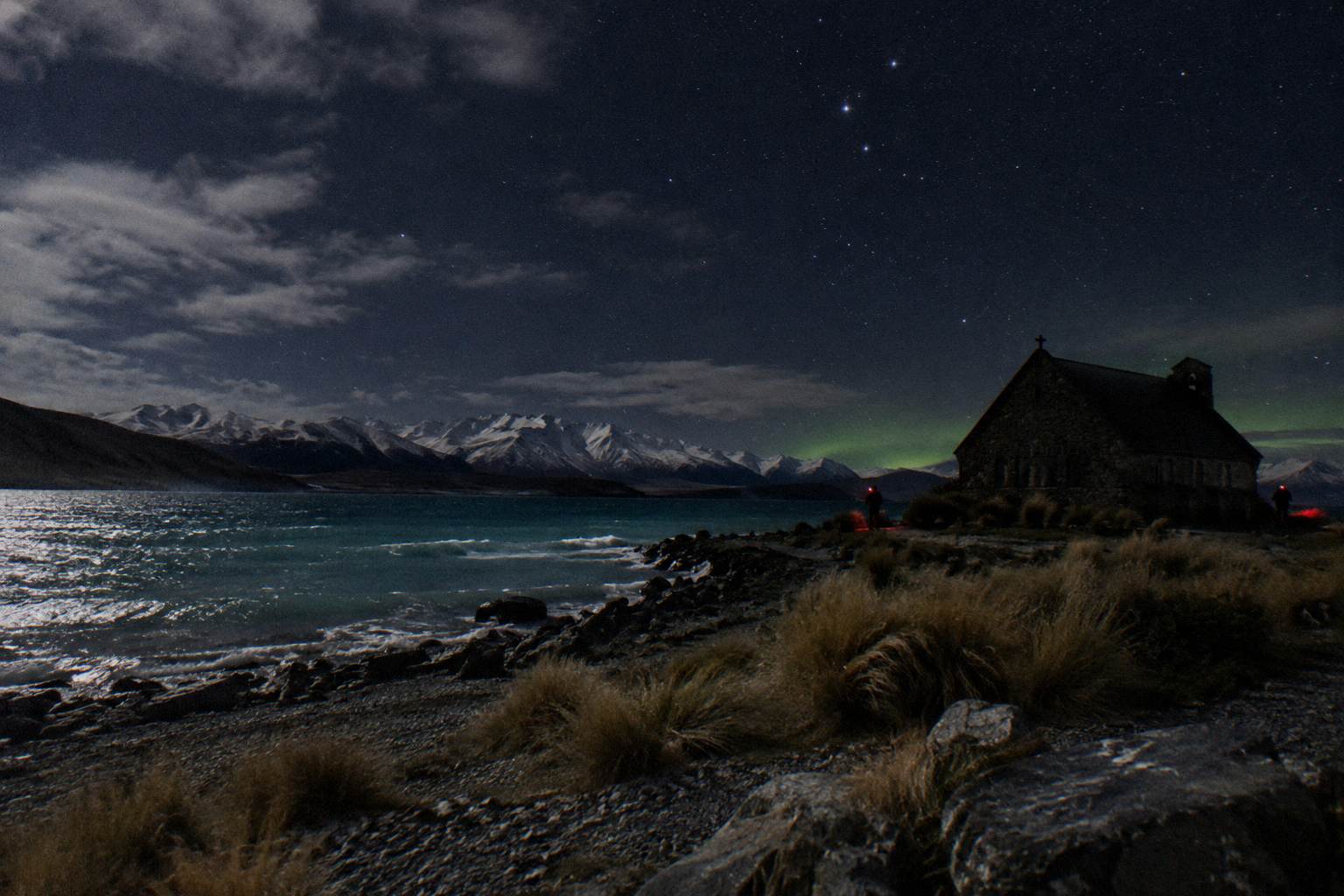
The moon is part of this. The operator's weather page notes that brighter moonlight affects fainter stars and galaxies, while also saying the moon is itself a good target. Tekapo Stargazing says much the same from the other direction: telescopes still show bright objects under a bright moon, and full moon only reduces the naked eye Milky Way. None of this changes the temperature, but it changes what the cold buys you, and a moon-lit cold night rewards different expectations than a dark one. The guide to new moon versus full moon for Tekapo stargazing works through that trade.
Cancellation terms reward early decisions. Direct Dark Sky Project bookings can be cancelled up to 24 hours before for a full refund; inside 24 hours the full price applies. Groups of 10 or more face stricter windows, 72 hours for Summit and Crater, 48 hours for the Dark Sky Experience. Late check in earns no refund at all, which on a freezing night is a real risk if you linger over dinner. Tekapo Springs allows cancellation or change up to 24 hours before for a full refund, date change or voucher.
| Condition or decision | Dark Sky Project (Summit, Crater) | Tekapo Springs (Soak in the Stars) |
|---|---|---|
| Cloudy night | Indoor alternative, reschedule, voucher valid 3 years, or full refund | Tour runs in all weather; VR indoor experience replaces telescope viewing |
| Short viewing | Not stated | 25% refund per ticket if under 30 minutes of telescope viewing |
| Cancellation window | Up to 24 hours before, full refund on direct bookings | Up to 24 hours before, full refund, date change or voucher |
| Weather call timing | As close to tour time as possible | Tour proceeds |
| Warmth provision | ECW jacket on Summit; sheltered craters at Cowan's | Robes, poncho coats, hot drinks, hot pool at 37.5 to 38.5 °C |
One indoor option deserves a plain label: the Dark Sky Experience at the base is a 45 minute indoor, daytime cultural astronomy tour with no stargazing at all, at NZD 59 adult and NZD 39 child. It is the cloud-proof answer for a day when the evening looks hopeless, not a stargazing tour, and the operator prices and schedules it accordingly, with English tours at 10:30am, 12:30pm and 2:30pm, and 4:30pm on Tuesday and Wednesday, subject to availability.
What Trips People Up When Planning For A Cold Night
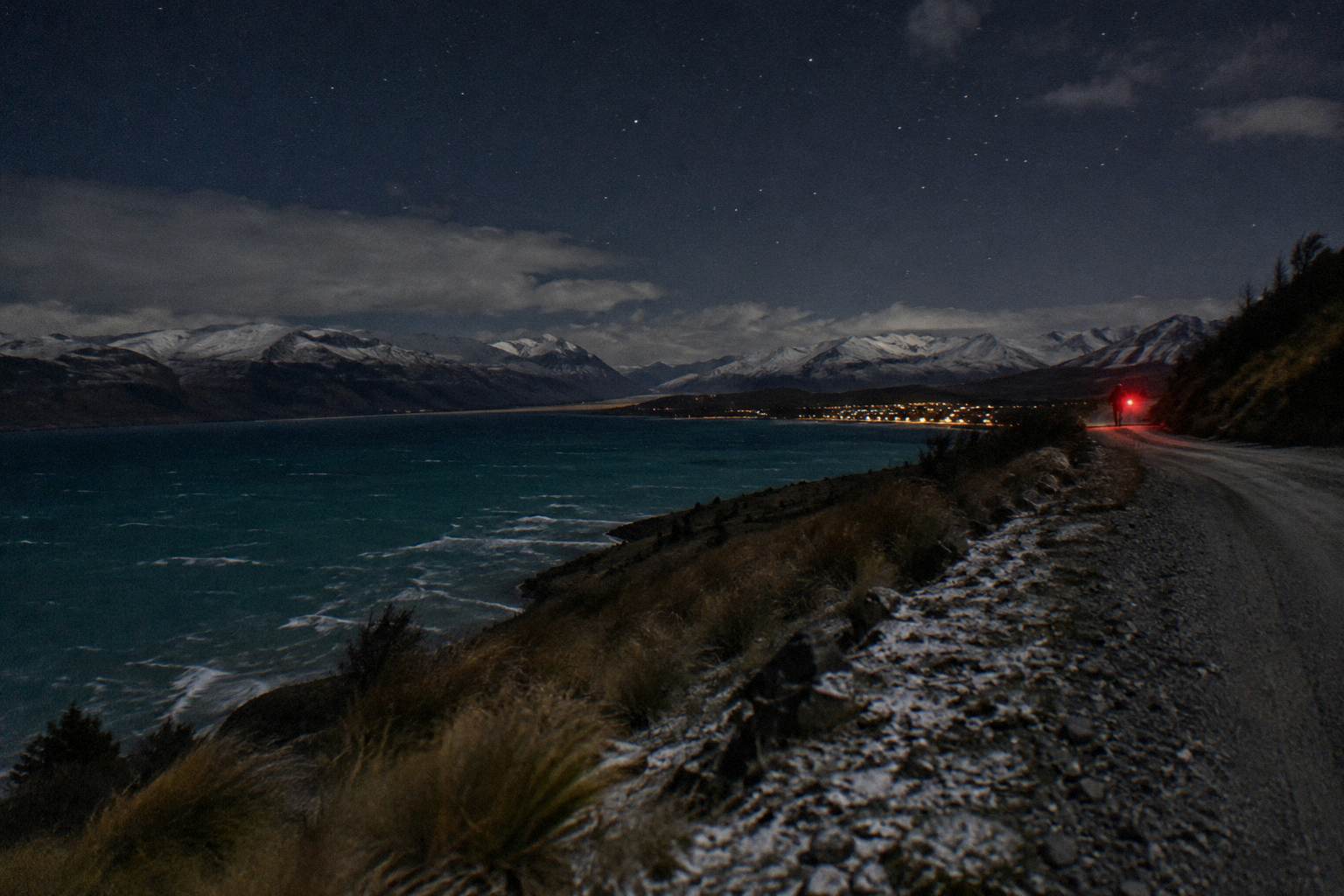
The recurring mistakes are assuming the jacket loan is full cold weather gear, dressing for the village temperature rather than the summit, treating the Summit's short walk as the whole exertion, and ignoring the 24 hour cancellation window on a night that is clearly going wrong. Each of these is avoidable with one decision each, made before departure rather than on the ridge. The operator supplies the outer layer; the legs, feet, hands and head remain yours.
The first mistake is the most common. An Extreme Cold Weather jacket over thin trousers and sneakers still leaves most of your body exchanging heat with the night air. Guides on any cold site will say the same: the jacket is the big outer piece, but hats, gloves and proper closed footwear are what guests most often wish they had brought. There is a fuller checklist in the guide on what to wear for Tekapo stargazing.
The second mistake is treating the fitness note as trivial and the bus as the whole journey. The 100 m gravel incline and a few steps happen in the dark, on the way to the viewing, when your body has just left a warm vehicle. The third is booking the summit when a sheltered or heated format genuinely suits your group better: the Crater Experience takes children from age 5 and offers wind shelter by design, Soak in the Stars ends at 37.5 to 38.5 °C. Choosing against the summit is a legitimate answer, not a failure, and Mt John Stargazing exists to help make exactly that call honestly.
The fourth mistake is waiting past the cancellation window. Both operators' direct terms allow a full refund up to 24 hours before, and inside that window the price stands. Watching a grim forecast for three days before deciding helps nobody. The fifth, smaller one: showing up late. Late check in earns no refund at Dark Sky Project, and on a cold night the temptation to wait in the car until the last minute is exactly how it happens.
Common Questions About Mount John Night Temperatures
How Cold Does It Get At Mount John On A Stargazing Night?
No temperature figure is published by Dark Sky Project or the University of Canterbury, so plan from structure instead: the summit observatory sits at 1,029 m, the Summit Experience lasts 1 hour 45 minutes largely standing outdoors, and the operator lends every guest an Extreme Cold Weather jacket. Dress as if for a cold, windy night at altitude and you will not be far wrong.
Does The Tour Provide Warm Clothing?
On the Mt John Summit Stargazing Experience, yes: an Extreme Cold Weather jacket loan is included, along with transport and guiding, within the NZD 239 price. It is the only Dark Sky Project tour with the jacket loan. Tekapo Springs includes towels, robes, hot drinks and warm poncho coats on Soak in the Stars. Bring your own hat, gloves and warm footwear on any of them.
Is There A Warmer Option Than The Summit?
Two. The Crater Experience at Cowan's Private Observatory uses purpose built observation craters sheltered from wind and light, a five minute drive from the base, with a minimum age of 5. Soak in the Stars at Tekapo Springs ends in an exclusive hot pool at 37.5 to 38.5 °C with towels, robes and hot drinks included.
How Hard Is The Walk On The Summit Experience?
The operator describes moderate fitness as suitable, with a 100 m gravel incline walk and a few steps in the dark between the bus and the viewing area. The total tour is 1 hour 45 minutes, including the 15 minute bus ride each way. The minimum age is 10.
What Happens If It Is Too Cloudy Or Cold?
Dark Sky Project cannot guarantee clarity or sky objects, decides as close to tour time as possible, and offers an indoor alternative, a reschedule subject to availability, a gift voucher valid 3 years, or a full refund. Tekapo Springs tours run in all weather, with a VR indoor experience replacing telescope viewing under cloud and a 25 percent refund per ticket if telescope viewing comes in under 30 minutes.
Can I Cancel If The Forecast Looks Bad?
Direct Dark Sky Project bookings can be cancelled up to 24 hours before for a full refund; inside 24 hours the full price applies, and late check in earns no refund. Tekapo Springs allows cancellation or change up to 24 hours before for a full refund, a date change or a voucher. Groups of 10 or more face longer windows at Dark Sky Project.