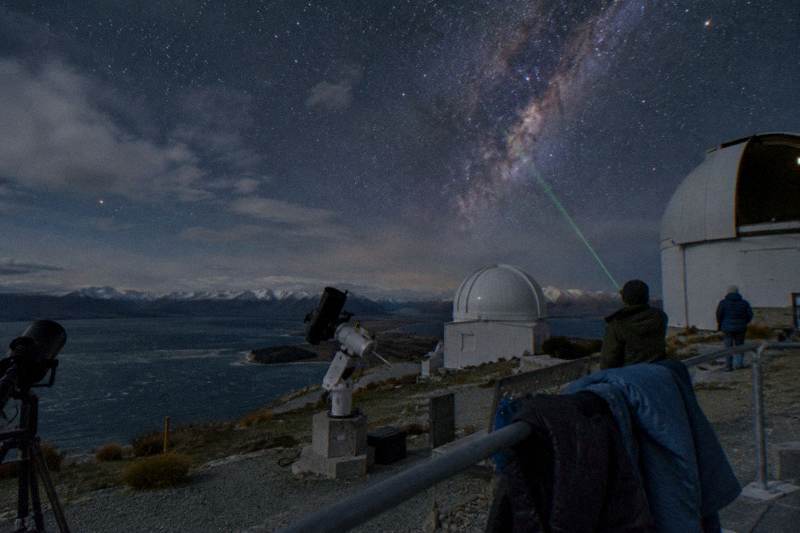
What To Wear For Stargazing At Lake Tekapo: Layers For Alpine Nights
The Summit Experience hands you an Extreme Cold Weather jacket at check-in, Tekapo Springs wraps you in a robe and poncho after the telescopes, and everything in between is your job. Here is how to dress for a Mackenzie Basin night.
Short answer
Dress in three to four layers you can shed, with warm boots, a hat and gloves you can work a zip in. The Summit Experience at NZD 239 lends an ECW jacket but runs a 100 m gravel incline at 1,029 m; the Crater Experience at NZD 139 adult lists no loan jacket; Soak in the Stars at NZD 179 adult includes towels, robes and poncho coats. Wind, not frost alone, is what strips heat.
If you are still choosing between the experiences themselves, the Lake Tekapo stargazing tours compared guide runs the full side-by-side; this page is purely about the night itself and what goes on your body.
| Quick fact | Detail |
|---|---|
| Highest stargazing point | Mt John summit, 1,029 m |
| Warmest item lent by a tour | Extreme Cold Weather (ECW) jacket, Summit Experience only |
| Tekapo Springs inclusions | Towels, robes, hot drinks, warm poncho coats (Soak in the Stars) |
| Summit terrain | 100 m gravel incline walk plus a few steps, in the dark |
| Winter versus summer | No temperature figures are published by the operators; plan for wind on open ground either way |
Why Mt John Nights Demand More Layers Than The Village
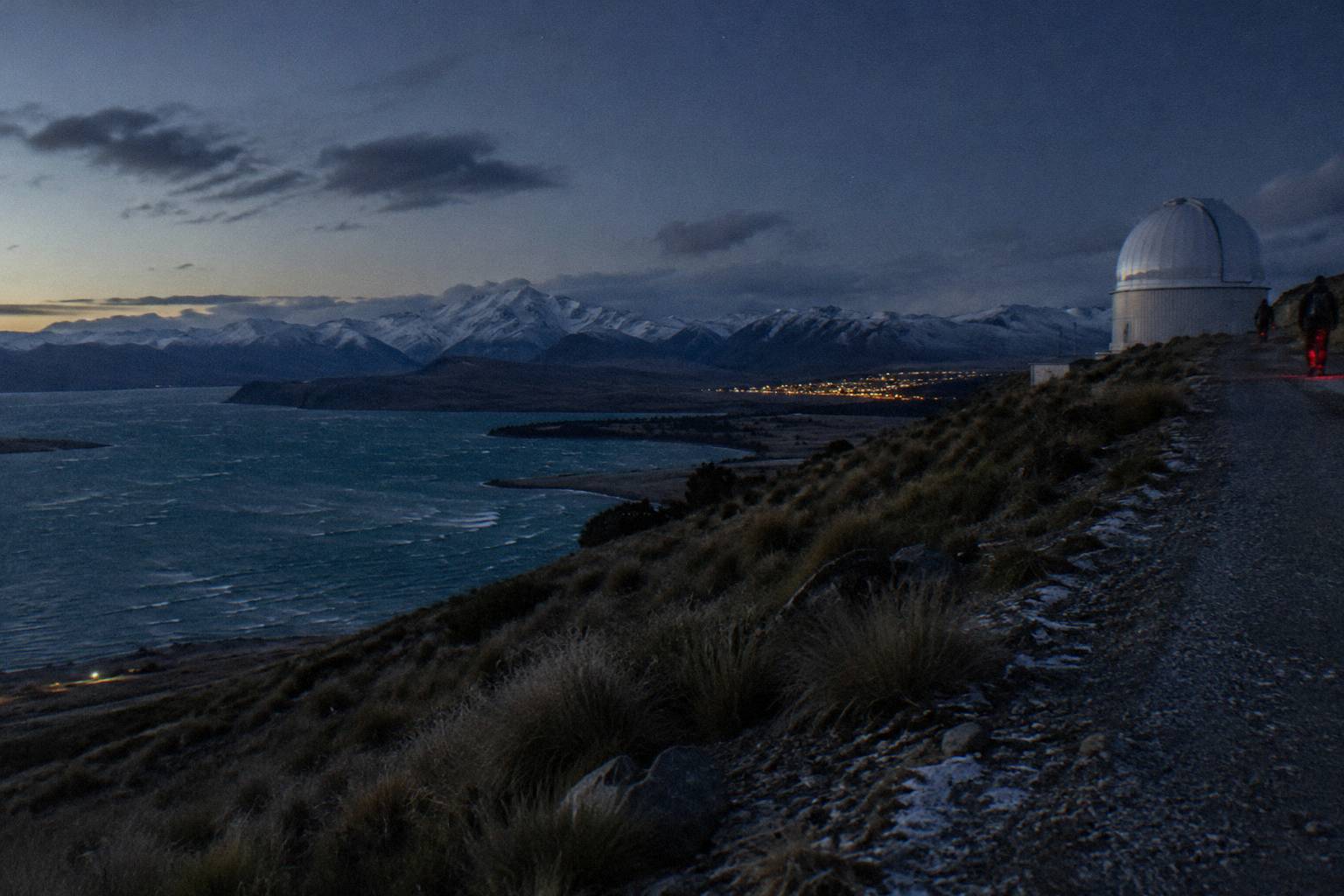
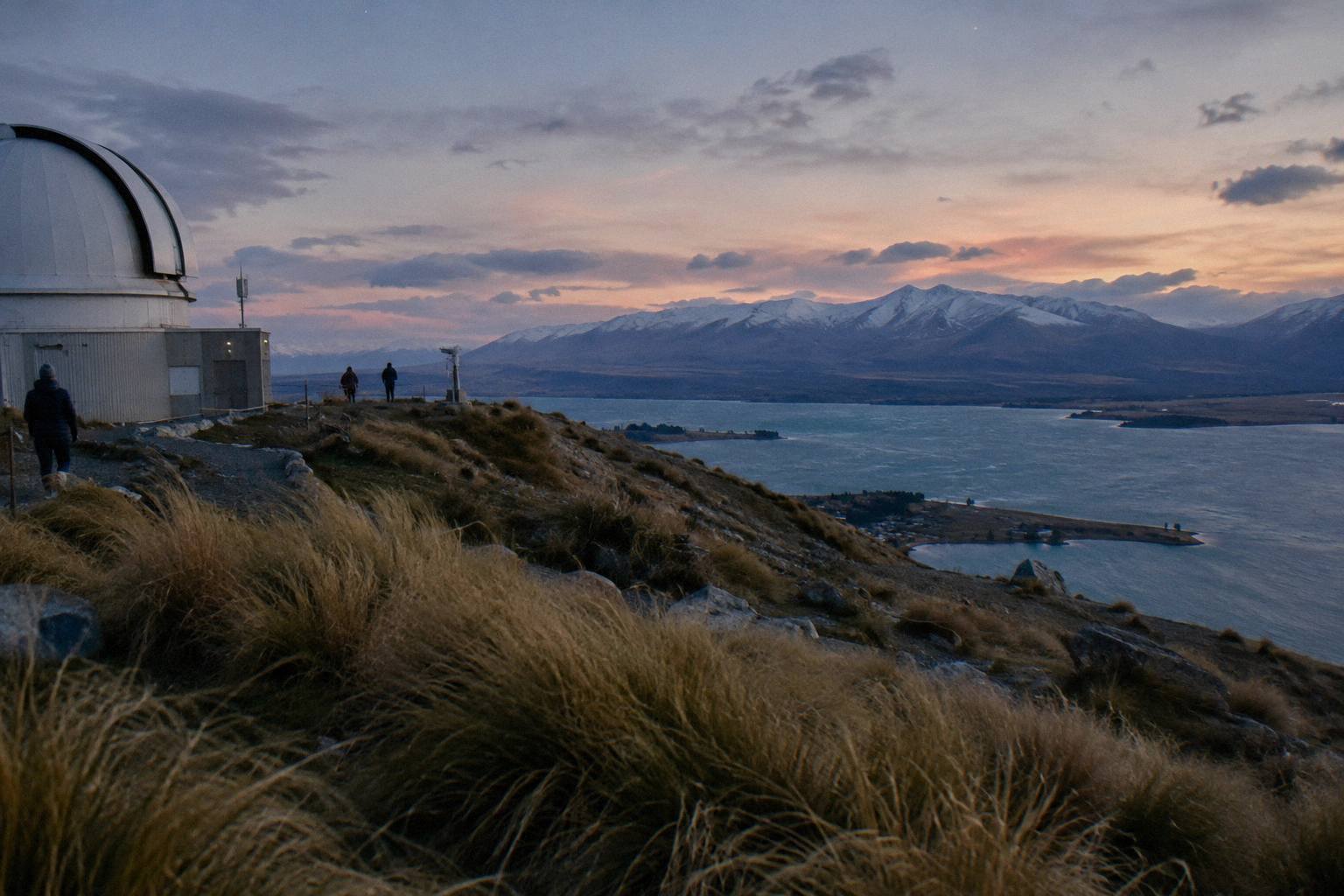
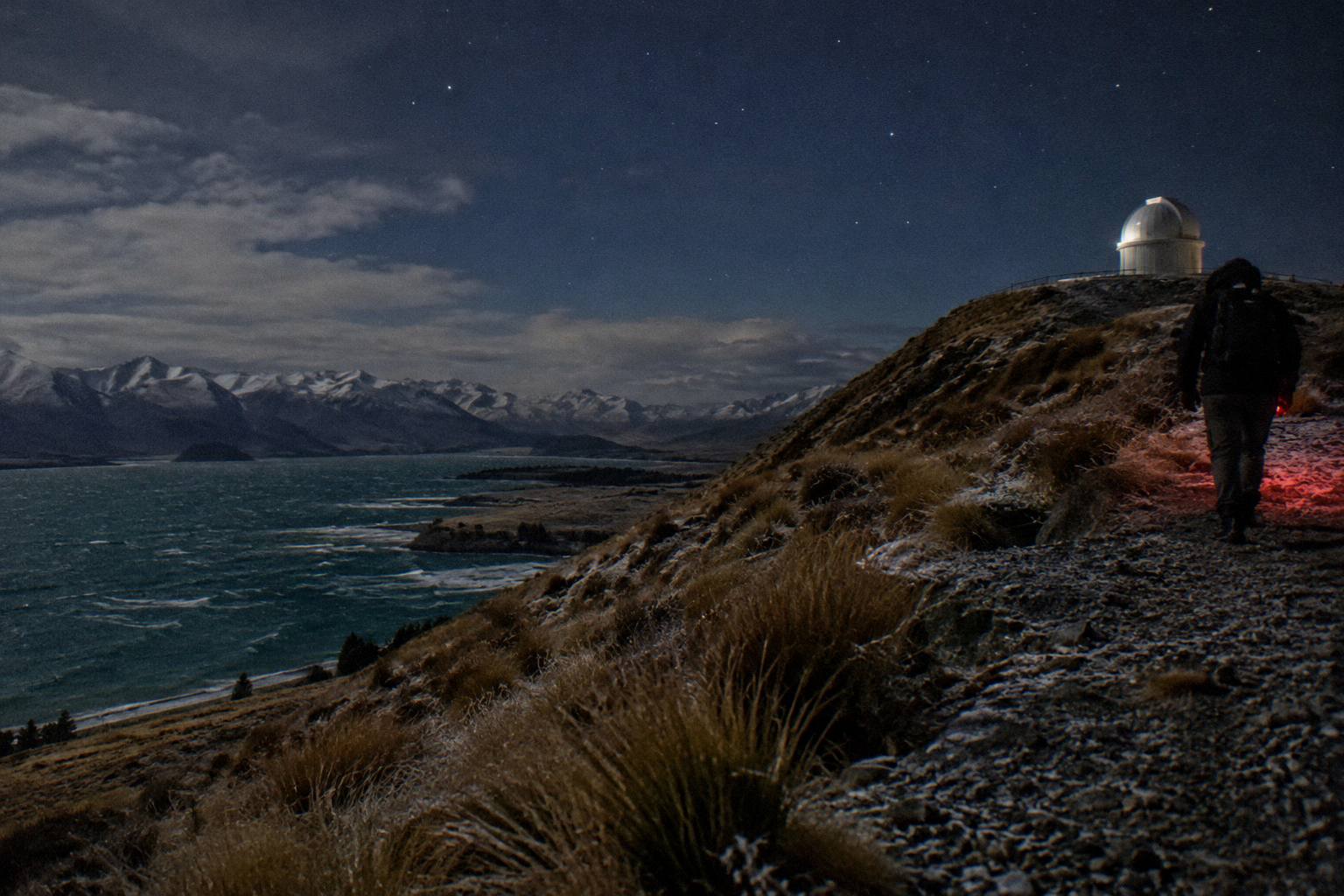
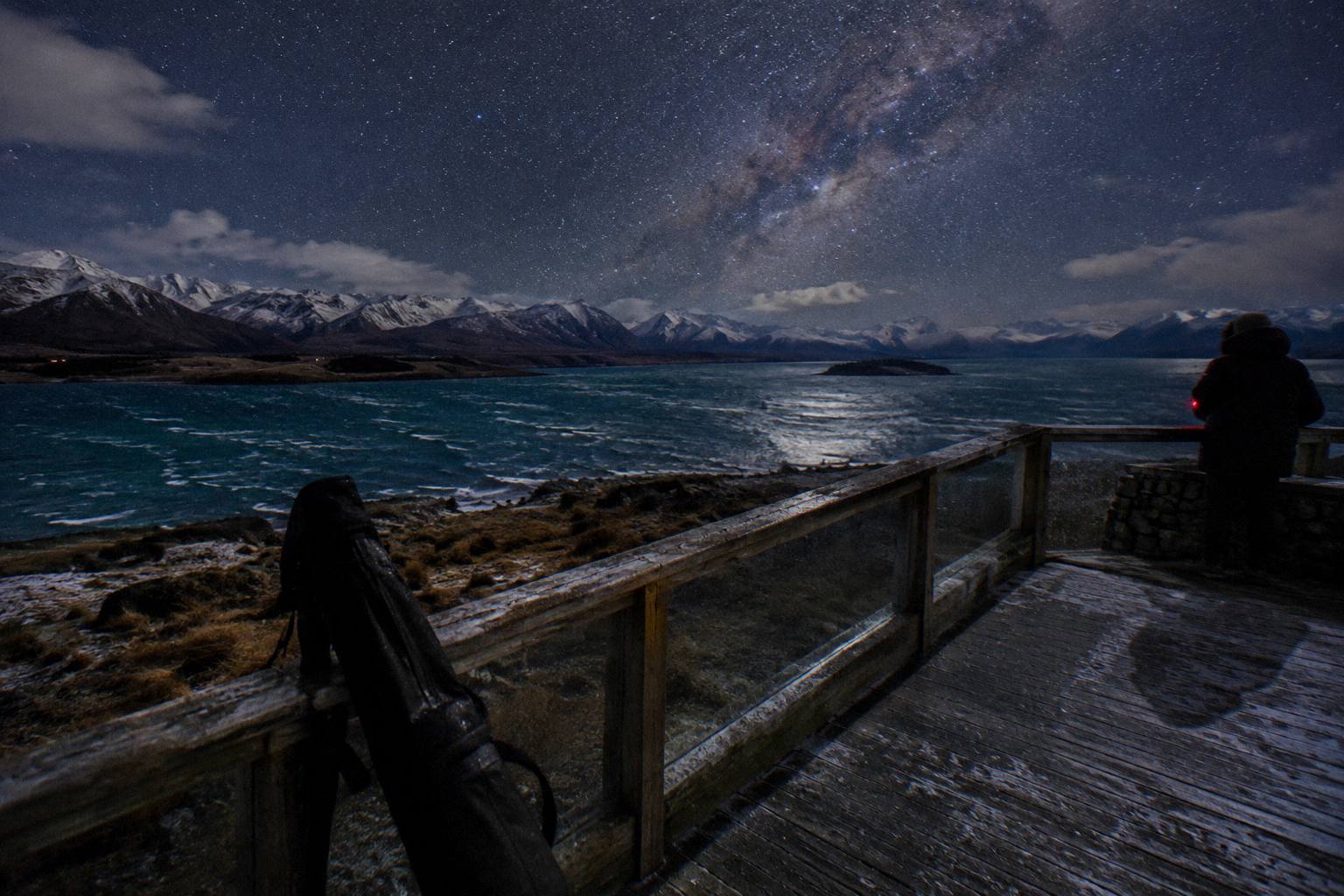
The stargazing ground around Lake Tekapo is high, open and exposed, and the tours stand still on it for an hour or more. Mt John Observatory sits at 1,029 m, and the Summit Experience walks the last 100 m of gravel incline in the dark, so wind reaches you with nothing between you and the basin. Standing still is the trap: a body warm on the walk up cools fast once it stops moving.
The University of Canterbury calls Mt John Observatory New Zealand's largest professional research observatory, and Dark Sky Project runs its flagship Summit Experience there, at the top of a 15-minute bus ride from the lakefront base. The bus is warm. The dome is sheltered. The stretches between them are not, and in the Mackenzie Basin the wind can move across the lake and the tussock with very little to slow it down. A coat that felt ample in Christchurch can feel thin on that summit terrace while you wait your turn at a telescope.
The physics of it is simple and worth internalising before you pack. Still air is an insulator; moving air strips the warm boundary layer off your body constantly. Four thin layers that trap air between them outperform one thick layer in wind, because each trapped gap is its own pocket of still air. You also want the option to remove a layer, because the walk back down or a spell inside a dome can leave you overdressed and sweating, and damp fabric cools you faster afterwards.
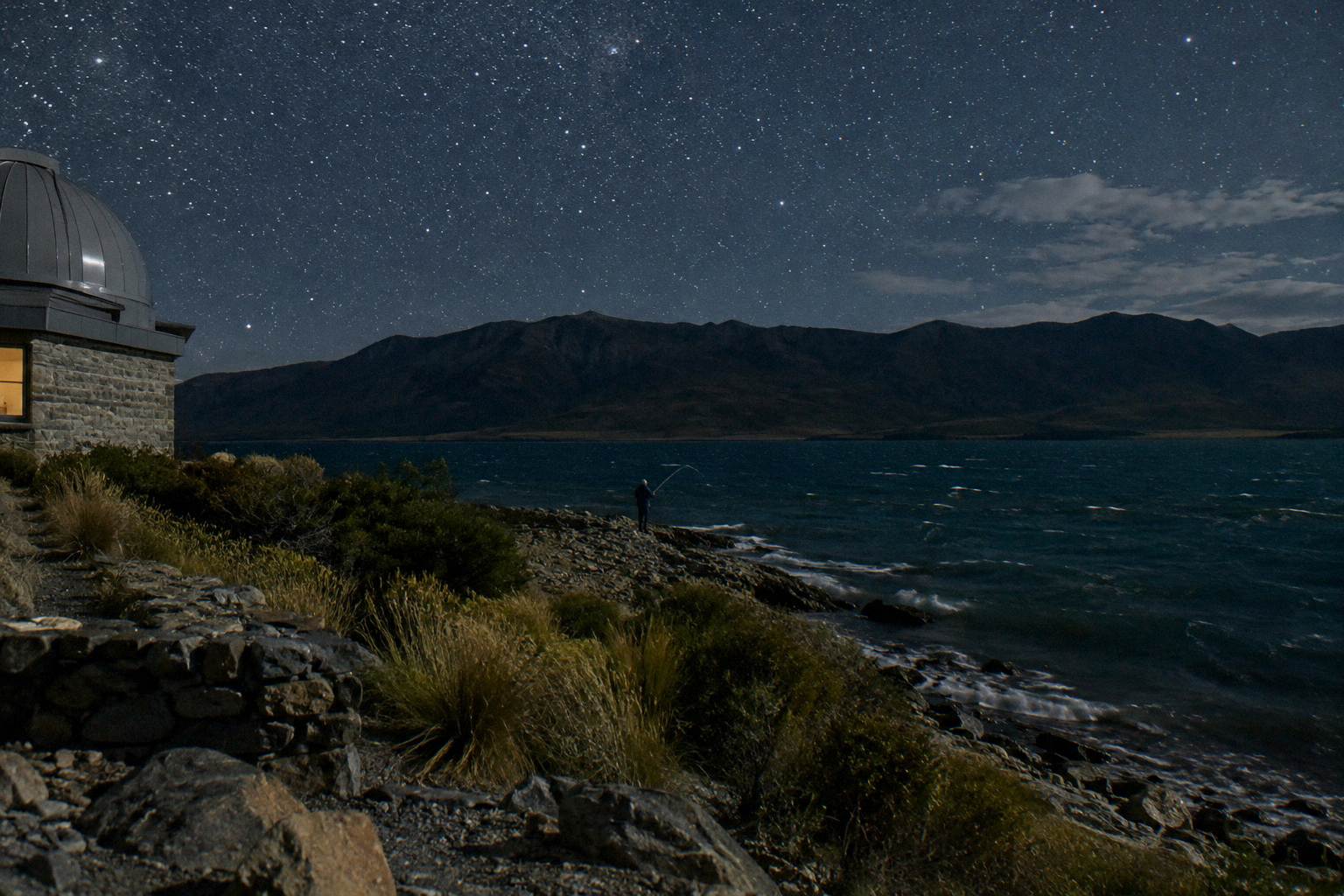
None of the operators publish temperature figures for their tour locations, so do not plan against a number. Plan against the terrain instead: 1,029 m at the summit, open lakeside ground at Tekapo Springs and Takapō Regional Park, and purpose-built craters at Cowan's Observatory that Dark Sky Project describes as sheltered from wind and light. The Crater Experience is, on the facts, the most wind-protected of the three main Tekapo options, which is worth weighing if someone in your group runs cold. For more on how the nights actually vary across the month, the best time for stargazing at Lake Tekapo guide covers moonlight and seasonality.
What Should You Wear For Stargazing At Lake Tekapo?
The core outfit is four layers on the torso, warm trousers, insulated boots, a hat and thin gloves: a thermal base layer, a fleece or insulated mid layer, a windproof outer, and the tour's own loan jacket on top where one is offered. Wear trousers you can crouch in, not jeans, and choose boots with grip because the Summit route is gravel in the dark.
Start from the skin out. A snug synthetic or merino base layer holds a thin film of warm air next to you and moves sweat away when the walk up raises your temperature. Over that, a fleece or light insulated jacket is your adjustable layer: on for standing at the telescopes, off for the bus. The outer layer's single job is wind resistance, and it does not need to be expedition-grade if a tour is lending you the heavy item anyway. Gloves thin enough to work a telescope focuser beat mittens on any astronomy night, since you will be touching metal mounts, focuser knobs and handrails.
Trousers deserve more thought than they usually get. Thermal leggings under a normal pair of walking trousers are the classic combination for standing-around nights, and they pack down to nothing. Skirts and shorts have no place on the summit in any season, and tight jeans restrict both warmth and movement on the gravel incline. Footwear is the other half of the system: the Summit walk is 100 m of gravel rising to the observatory, walked in the dark, so a sole with tread matters as much as insulation. Trainers with mesh panels let wind straight through.
Hands and head are where most of the heat leaves you. A beanie that covers the ears, and thin gloves rather than thick mittens, because a mittened hand cannot feel a focuser. A scarf or neck tube closes the gap between jacket collar and hat, which is the draught line most people forget. If you want the deeper background on how the nights feel across the year, the how long tours run guide explains why a 1 hour 45 minutes Summit night outlasts the warmth you set out with.
This is also the decision moment for which experience you book, because the clothing question differs sharply between them: the summit lends the biggest item, the crater lists no loan jacket but is sheltered, and the hot pools option ends in warm water. These three cover the range.
What The Tours Already Lend You
Three Tekapo operators lend serious warm kit. Dark Sky Project's Summit Experience includes transport, guiding and the loan of an Extreme Cold Weather (ECW) jacket. Silver River Stargazing's Alpine and Ultimate tours include warm down jackets, and the Ultimate adds merino blankets. Tekapo Springs' Soak in the Stars includes towels, robes, hot drinks and warm poncho coats around the hot pool phase. The Crater Experience lists no loan jacket, and Chameleon and Astro Tekapo list blankets only, so on those nights you bring every layer yourself.
The ECW jacket is the detail worth dwelling on. Dark Sky Project's Summit page lists it as included, Summit only, and it means you do not need to own or pack a heavy expedition parka for this one tour: your own windproof shell underneath, a fleece, and the loan jacket on top is a complete stack for standing at 1,029 m. Note the jacket is a loan, sized to fit over your own layers, so still wear the fleece and base layer; the jacket replaces the big outer coat, not the whole system. The operator's Summit Experience page lists the full inclusions.
Soak in the Stars works differently. Tekapo Springs runs 90 minutes: guided telescope viewing first, then an exclusive hot pool at 37.5 to 38.5 °C with a guide poolside, and the towels, robes, hot drinks and warm poncho coats belong to the poolside half. That shapes what you wear for the first half: you will be changing or shedding into the pool afterwards, so base layers and swimwear under warm clothing are the practical call, and you can leave the thick robe-level gear at home because it is handed to you. The operator's own pages spell out the inclusions.
| Tour (operator) | Warm kit stated as included | Duration | Minimum age | Setting |
|---|---|---|---|---|
| Mt John Summit Stargazing Experience (Dark Sky Project) | ECW jacket loan, transport, guiding | 1 hour 45 minutes | 10 | Mt John summit, 1,029 m, 100 m gravel incline |
| Crater Stargazing At Cowan's Observatory (Dark Sky Project) | None stated beyond the experience itself | 75 minutes including transport | 5 | Purpose-built craters, described as sheltered from wind and light |
| Hot Pools And Stargazing At Tekapo Springs (Tekapo Springs) | Towels, robes, hot drinks, warm poncho coats | 90 minutes | 10 | Lakefront ground then hot pool at 37.5 to 38.5 °C |
| Astro Tekapo Lakefront Stargazing (Astro Tekapo) | Not stated | 1.5 hours | 6 | Lakefront, Takapō Regional Park |
| Silver River Alpine Stargazing Experience (Silver River Stargazing) | Not stated | 75 minutes | Not stated | Alpine ground, details on the booking page |
Where nothing is lent, the arithmetic of your own kit changes: the mid layer and the windproof shell both have to be yours, and the value of a good hat and gloves doubles. The Crater Experience compensates with terrain, since the observation craters at Cowan's Private Observatory were purpose-built to be sheltered from wind and light, and it is a 5-minute drive from the base rather than a bus ride up a mountain. For families weighing the two Dark Sky Project outdoor tours, the Dark Sky Project stargazing tours guide compares them fully.
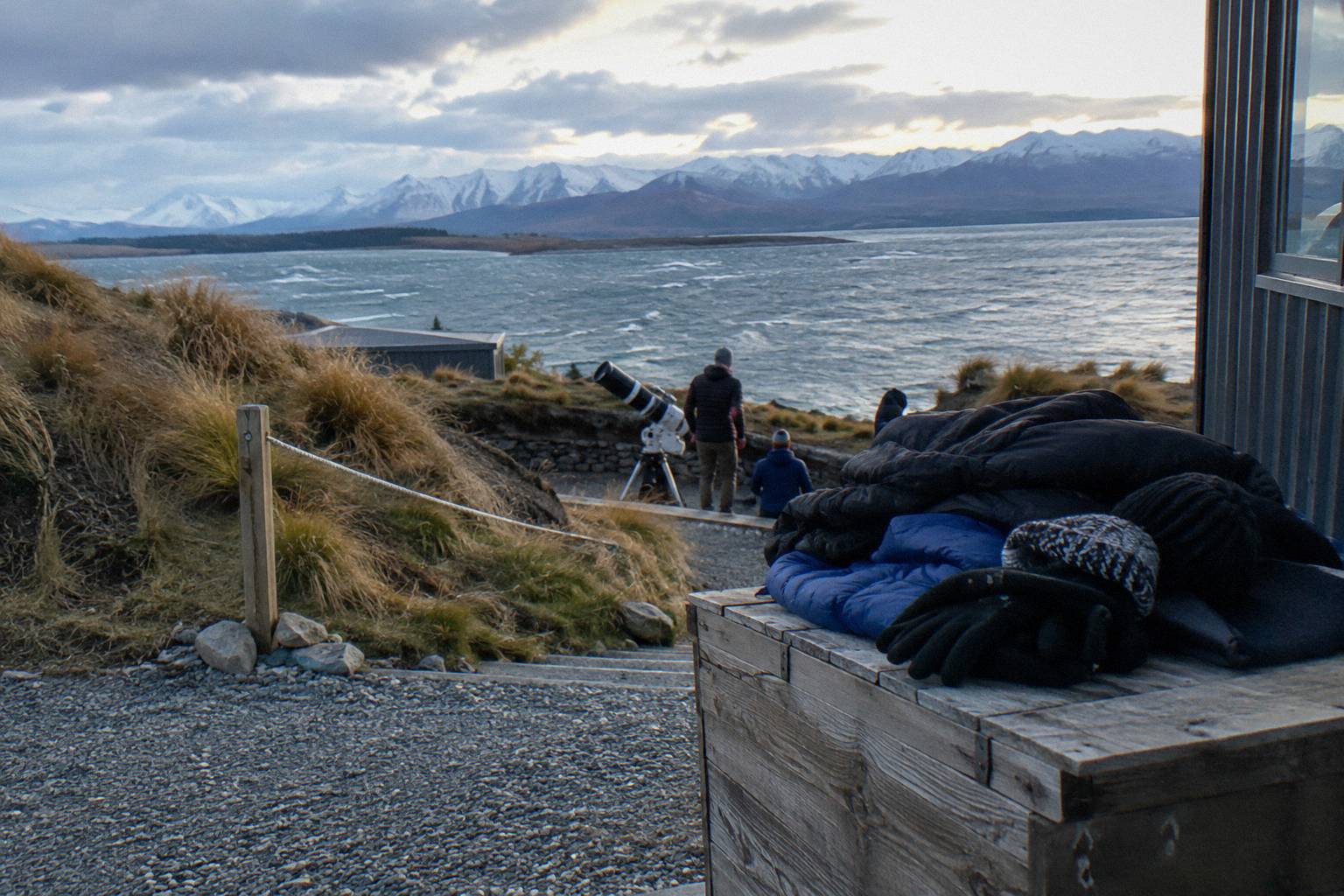
A note on weather honesty, because it affects clothing less than people fear but planning more: Dark Sky Project says it cannot guarantee clarity or objects, makes the call as close to tour time as possible, and if outdoor stargazing is not possible offers an indoor alternative, a reschedule, a gift voucher valid three years, or a full refund. The operator's weather page is the authoritative version. Dress for the temperature and wind, not for a forecast of the sky.
Footwear, Torch Light And The Dark Walk Up
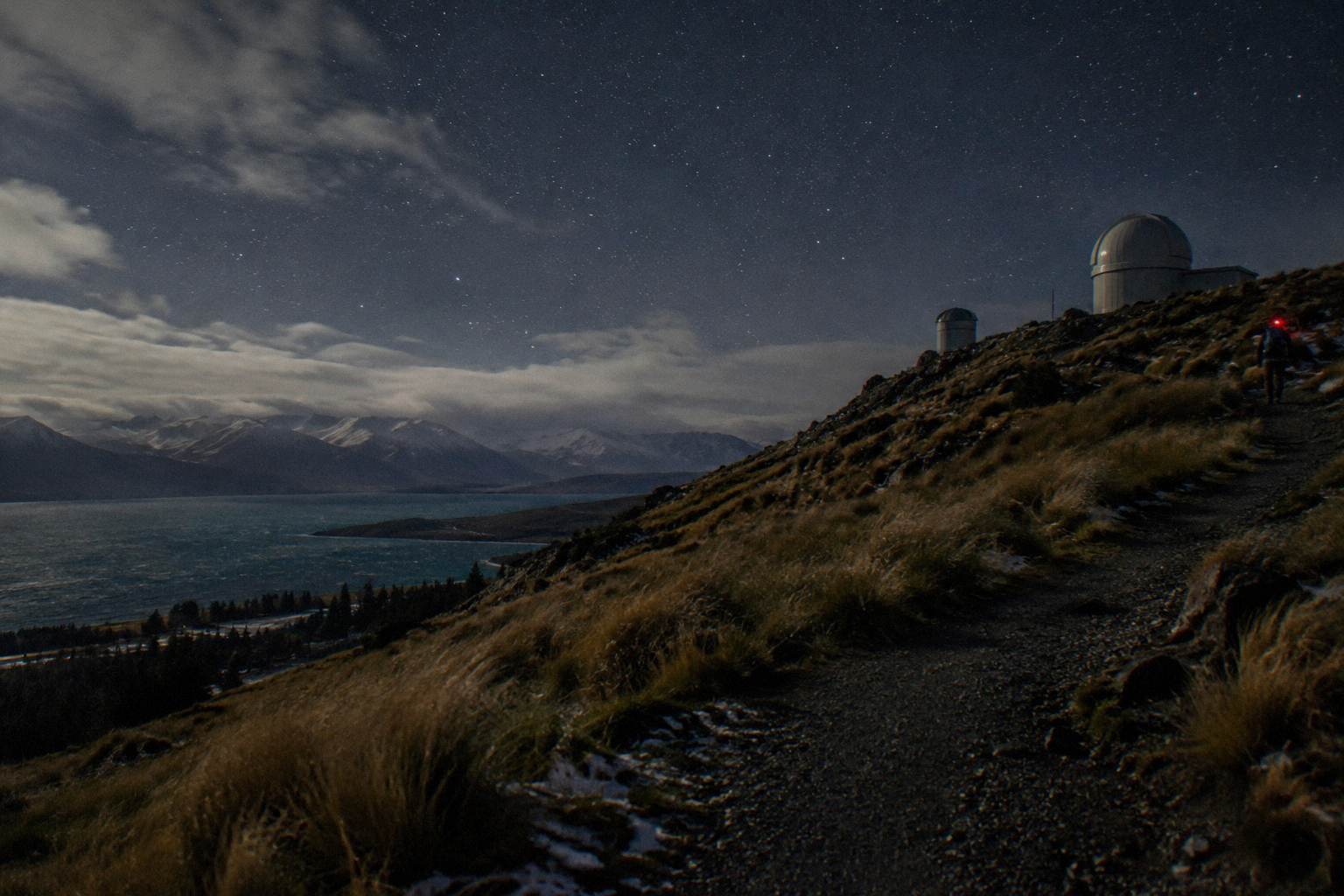
Wear boots or shoes with real tread and closed toes, and bring a dim red torch or headlamp if you own one, because the Summit approach is 100 m of gravel incline plus a few steps walked in the dark. Operators run dark-adapted sites and handheld-laser guiding, so bright white torches work against the tour itself. If you have no red light, a phone screen on lowest brightness facing down beats a white beam any night.
The gravel section is short but genuine: Dark Sky Project's terms describe the 100 m incline and a few steps, and rate the Summit Experience as moderate fitness. In the dark, loose gravel punishes smooth soles and thin sandals equally. Ankle support is a bonus, not a requirement; grip and closed toes are the requirements. The same advice applies to the walk between the Tekapo Springs reception and its observing ground, and to the lakefront meeting points of the small-group operators, where you stand on grass and shingle beside the lake. The full index of guides sits on Mt John Stargazing.
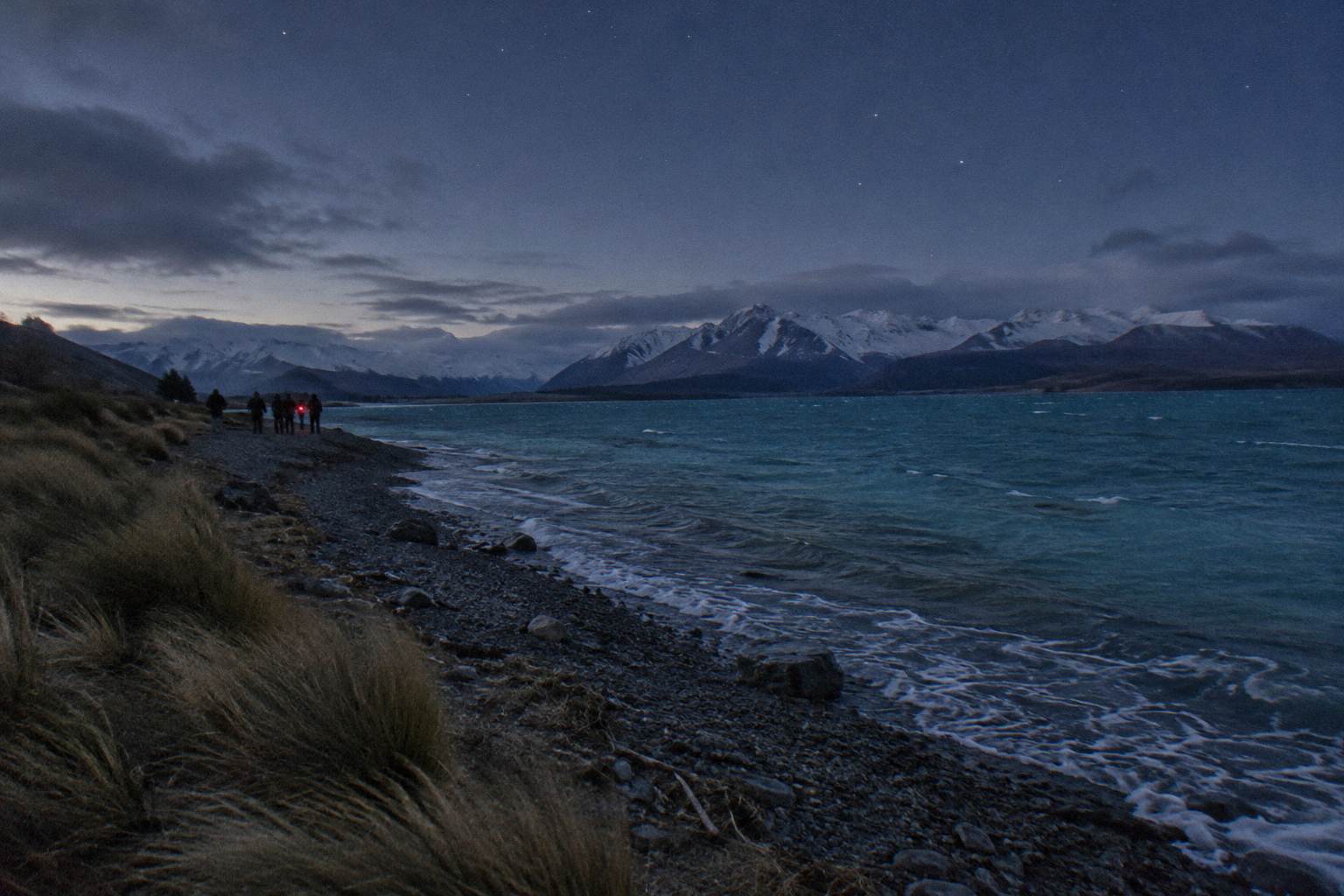
Light discipline is the other half of dark-adaptation. Your eyes need many minutes to become fully dark-adjusted, and one white LED from anyone in the group resets that for everyone nearby. Red light preserves night vision, which is why observatories and astronomy guides use it. Do not buy anything special for one night, but if a headlamp with a red mode is already in your kit, that is the one to pack. Operators on Mt John also note the summit access road and Astro Cafe operate 9am to 4pm with a road user fee of NZ$14 per vehicle, so a daytime scouting drive up the same road is possible before your night tour, which is a good way to preview the terrain you will walk in the dark; the details are on the Mount John Observatory cafe and access page.
One packing caution that belongs here rather than anywhere else: leave the big tripod and specialist camera gear out of your pockets unless you have checked the photography rules first. Whether cameras are welcome on each tour is covered on the Tekapo astrophotography tours page, and bulky equipment competes with warm clothing for space in a jacket you will be lent.
Dressing Children For A Stargazing Night
Children under 10 cannot join the Summit Experience or Soak in the Stars; the Crater Experience takes them from age 5, Astro Tekapo from age 6, and Tekapo Springs allows no child under 6 on any of its tours, babies carried included. Dress children one layer warmer than the adults, because they feel still-cold faster, and give them gloves they cannot drop: the Crater's 75 minutes is the most realistic first stargazing night for young kids.
Age minimums are the gate to check before clothing, because they decide which night you are dressing for at all. Summit sets 10 years and the 100 m dark walk explains why. Soak in the Stars also sets 10. The Crater Experience's minimum of 5 makes it the entry-level Dark Sky Project night, and its family pass, NZD 377 for two adults and two children with extra children at NZD 99 under the operator's schedule valid to 30 September 2027, is built around exactly that use. Tekapo Springs' blanket rule that no child under 6 joins any tour, carried babies included, closes the youngest end entirely for that operator.
For the Dark Sky Experience, the indoor daytime option, clothing barely matters, but it is the honest cloud alternative: 45 minutes indoors at the base, no minimum age with content the operator calls suitable from about 7, and under-5s free with an adult ticket at NZD 59 adult and NZD 39 child. Families whose night gets clouded off are offered this among the alternatives, so pack for the outdoor tour you booked, not for the fallback.
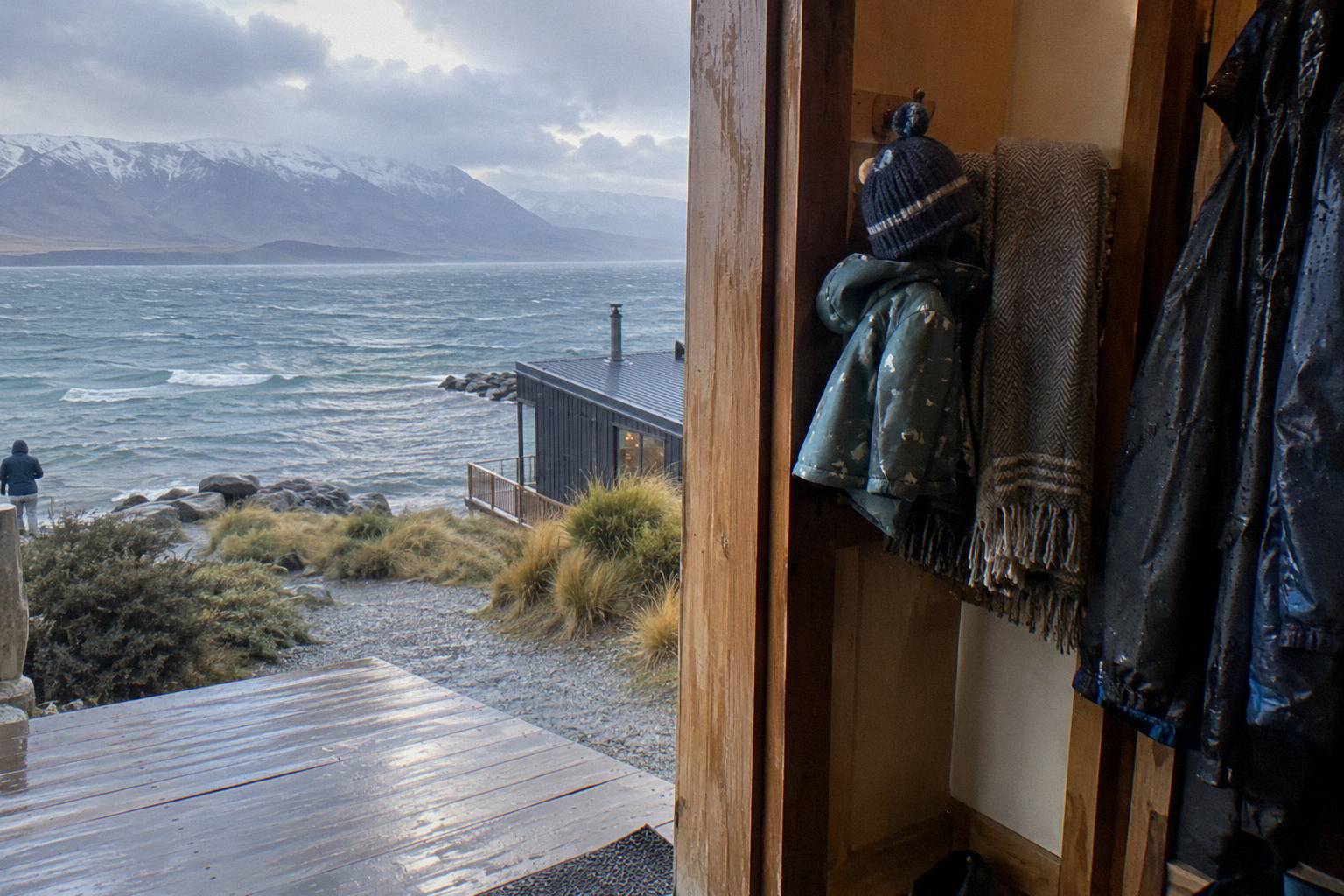
On the clothing itself, the practical rules for children are the same four-layer stack in miniature, plus two child-specific ones. First, sizes matter more than quality: a slightly large ECW-style shell over a fleece works, an exact-size fashion coat does not. Second, hats and gloves that attach or tether themselves save the night, because a dropped glove on dark gravel is often a lost glove. Third, a snack in a pocket is worth more than any extra sock, and it gives restless hands something to do during the guiding talk. For the fuller family framing, see the Tekapo stargazing with kids guide.
What To Pack Beyond The Clothing
Pack small and soft: a beanie, thin gloves, a neck tube, any personal medication, and a phone with charge, in pockets rather than a bag where possible, since you will move between transport and standing ground repeatedly. Hot drinks are provided on Soak in the Stars, and nothing states food or drink is provided on the Dark Sky Project tours, so eat before you check in. A flask is a cold-night upgrade no operator forbids.
Bags are the quiet problem on stargazing nights. Between the check-in at the base, the bus or vehicle leg, the walk, and standing time at the eyepiece, anything you carry has to be either worn or left, and leaving valuables in a vehicle at a dark site is a habit worth avoiding. Pockets close the gap: base layer with a zip pocket, trousers with deep ones, and the loan jacket's own pockets on the Summit for the bulkier items like a hat you shed inside the dome. On Soak in the Stars the same logic applies twice, once for the telescope half and once at the pool where lockers and towels are part of the setup.
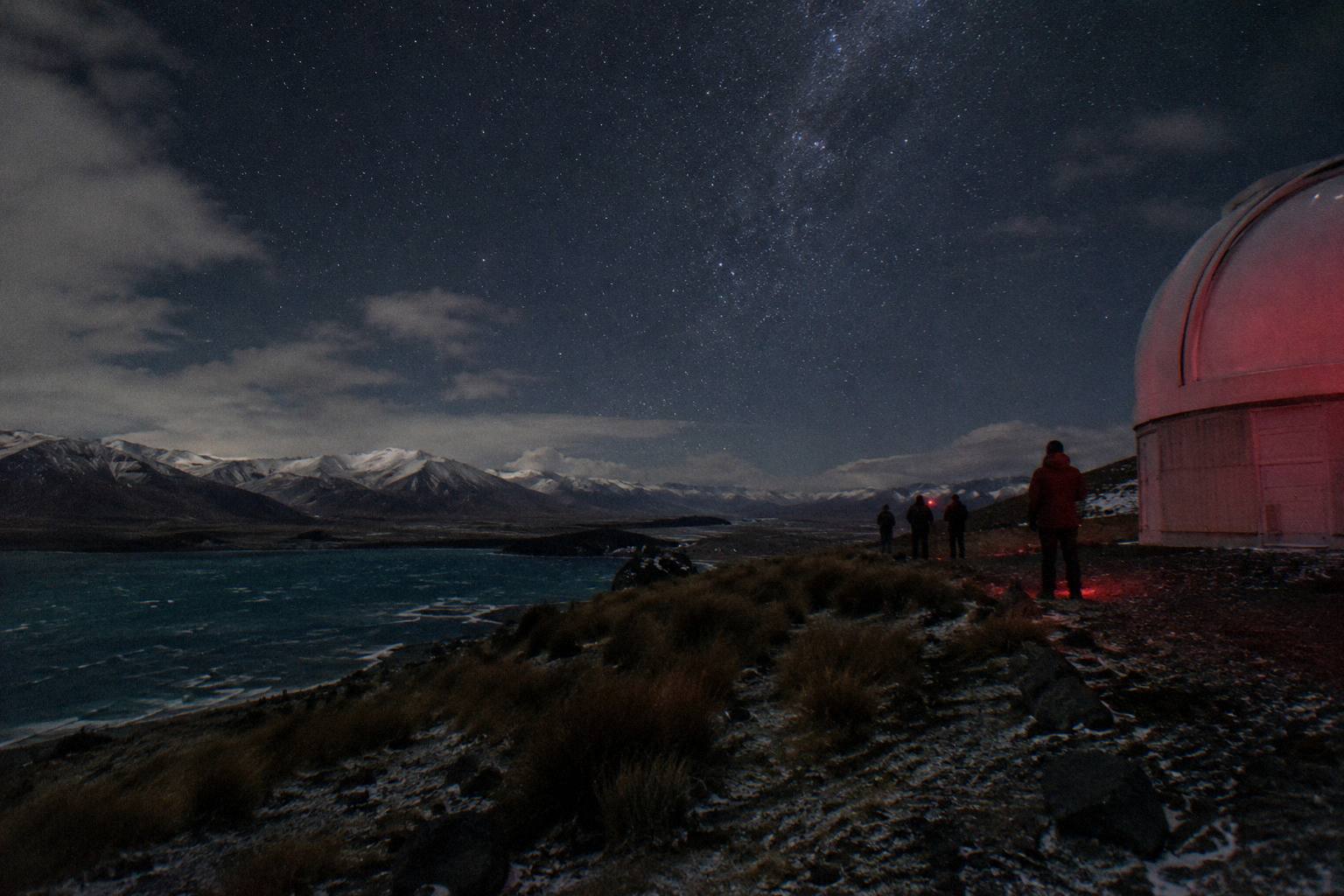
The phone deserves a paragraph of caution. It is your red-light fallback, your camera and your emergency contact, and it is also the brightest object you will bring. Keep it dimmed, pocketed and on silent; the guiding on these tours leans on handheld lasers and naked-eye pointing, and a lit screen fights both. If your reason for bringing a proper camera is the night sky itself rather than people shots, the settings and tour rules are laid out in Tekapo stargazing photography settings.
One more honest note on expectations, because it changes what "comfortable" means on the night: moonlight affects fainter stars and galaxies, and Dark Sky Project also says the moon is a good target in itself, while Tekapo Springs notes telescopes still show bright objects under a fuller moon and only naked-eye Milky Way is reduced. Your layers do not care about the moon phase, but your satisfaction might, and the new moon or full moon Tekapo stargazing guide works through that trade-off.
Common Mistakes When Dressing For A Tekapo Stargazing Night
The recurring mistakes are dressing for the bus instead of the standing hour, relying on one thick coat with nothing under it, wearing city shoes on the summit's gravel, skipping gloves, and turning up to Soak in the Stars without swimwear under the layers. Each is avoidable with the layering logic above, and none is rescued by the tours' loan kit, which covers only the jacket or the poolside robe.
| Mistake | What goes wrong on the night | The fix |
|---|---|---|
| One heavy coat, thin layers beneath | The loan ECW jacket on top of a shirt still leaves legs, feet and neck exposed | Thermal base plus fleece; let the tour jacket be the third layer, not the only one |
| Smooth-soled shoes or sandals | The 100 m gravel incline at the summit is walked in the dark | Closed boots or shoes with tread |
| No hat, no gloves | Standing still for an hour at 1,029 m drains heat through head and hands | Beanie over the ears plus thin gloves that work a focuser |
| Denim on a summit night | Tight cotton stays cold and restricts the walk | Walking trousers, thermal leggings underneath in cooler months |
| Swimwear left at the hotel for Soak in the Stars | The 37.5 to 38.5 °C pool phase is the point of the tour | Wear swimwear under warm layers; towels and robes are provided |
| Bright white torch packed as the "night" light | It resets dark adaptation for the whole group | Red-mode headlamp, or a phone dimmed and faced down |
Two softer mistakes round out the list. Under-dressing a child relative to the adults is the common one, because children stand still on these tours exactly when adults are fiddling with telescopes, and their cold arrives sooner. Over-packing is its mirror image: a daypack per person turns a 1 hour 45 minutes Summit night into a logistics exercise, when four worn layers and full pockets carry the same warmth hands-free. Boots worn once before the tour, rather than straight from the box, close the loop on the footwear half of the system.
The final layer of preparation is timing rather than textile. Summit and Crater departure times vary with sunset across the year and are not published, check-in is 15 minutes before, and Takapō is about three hours' drive from Queenstown and from Christchurch, so the clothing decision is often made in a car arriving with just enough light to change in. Lay the outfit out before you drive, not after you park.
Common Questions About What To Wear For Tekapo Stargazing
Do I Need A Big Winter Jacket For The Summit Experience?
No. The Summit Experience includes the loan of an Extreme Cold Weather (ECW) jacket, Summit only, so the heaviest item is provided. Bring your own thermal base layer, a fleece and a windproof shell to wear underneath, plus a hat, thin gloves and warm trousers; the loan jacket works as the outer layer over that stack.
What Shoes Should I Wear Stargazing At Lake Tekapo?
Closed boots or shoes with tread. The Summit Experience involves a 100 m gravel incline walk plus a few steps in the dark, which Dark Sky Project rates as moderate fitness, and lakeside tours stand on grass and shingle. Smooth soles, sandals and mesh trainers all underperform on cold, dark ground.
Can Children Join The Stargazing Tours, And How Should They Dress?
Age minimums first: Summit and Soak in the Stars both set 10, the Crater Experience sets 5, Astro Tekapo sets 6, and Tekapo Springs allows no child under 6 on any tour including carried babies. Dress children one layer warmer than the adults, with gloves they cannot drop and a snack in a pocket.
Does The Tour Provide Warm Clothing Or Do I Bring My Own?
It depends on the tour. The Summit Experience lends an ECW jacket; Soak in the Stars includes towels, robes, hot drinks and warm poncho coats for the pool phase; Silver River's Alpine and Ultimate tours include warm down jackets; the Crater Experience, Chameleon and Astro Tekapo list no loan jacket, so bring every layer yourself. Base layers, hats and gloves are always your own.
Should I Bring Swimwear For The Hot Pools Tour?
Yes. Soak in the Stars runs 90 minutes, guided telescope viewing first and then an exclusive hot pool at 37.5 to 38.5 °C with a guide poolside, so swimwear under warm layers is the practical outfit. Towels, robes and poncho coats are provided once you are at the pool.
What If The Night Is Too Cloudy After I Have Dressed For It?
Dress anyway. Dark Sky Project says clarity cannot be guaranteed and decides as close to tour time as possible; if outdoor stargazing is not possible it offers an indoor alternative, a reschedule, a gift voucher valid three years, or a full refund. Tekapo Springs tours run in all weather, with a VR indoor experience replacing telescope viewing under cloud, and a 25 percent refund per ticket if telescope viewing is under 30 minutes.