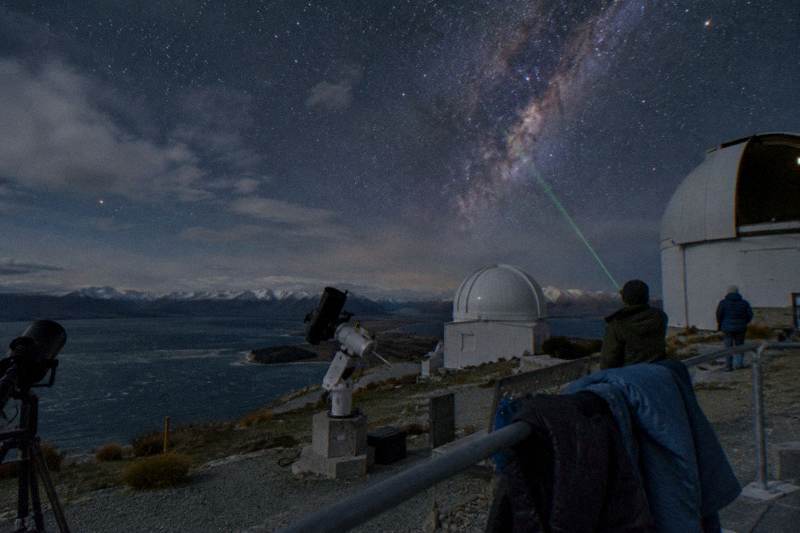
Mount John Observatory Stargazing: What The Summit Night Visit Involves
The Summit Experience is the night tour that takes you inside the working University of Canterbury research observatory on Mount John. Here is what the evening actually involves, what it costs, who can join, and what happens if the sky clouds over.
Short answer
The Mt John Summit Stargazing Experience runs 1 hour 45 minutes, costs NZD 239 per person adult and child alike, and takes a minimum age of 10. You check in at the Dark Sky Project base on the Tekapo lakefront 15 minutes early, take a 15-minute bus to the summit at 1,029 m, and view through telescopes up to 16 inch.
Mount John is a working research mountain. The University of Canterbury Mt John Observatory sits at 1,029 m above Lake Tekapo, opened in 1965, and is described by the University as New Zealand's largest professional research observatory. One night tour, the Mt John Summit Stargazing Experience run by Dark Sky Project, takes visitors up to it after dark. This guide walks through that evening from check-in to the bus back down, with the operator's own prices, ages, fitness notes and weather terms, plus honest alternatives when the Summit is not the right fit.
For the wider picture of every operator around the lake, see the Lake Tekapo stargazing tours compared guide; for the full background on the company running this night, read Dark Sky Project stargazing tours.
| Quick fact | Detail |
|---|---|
| Tour | Mt John Summit Stargazing Experience |
| Operator | Dark Sky Project |
| Location | University of Canterbury Mt John Observatory, Mount John summit |
| Duration | 1 hour 45 minutes |
| Price | NZD 239 per person, adult and child the same |
| Minimum age | 10 |
| Check in | Dark Sky Project base, 1 Motuariki Lane, 15 minutes before |
| Getting up | 15-minute bus each way |
| Included | Transport, guiding, ECW jacket loan, telescopes up to 16 inch |
| Rating | 4.6 across 352 reviews |
What Is The Summit Experience At Mount John Observatory?
The Summit Experience is Dark Sky Project's flagship night tour and the only bookable experience visiting the University of Canterbury Mt John Observatory after dark. It runs seven days a week at times that shift with sunset through the year, and the operator does not publish exact clock times, so the booking calendar is the source. The night combines naked-eye guiding with handheld lasers and telescope viewing through instruments up to 16 inch inside a private observatory dome.
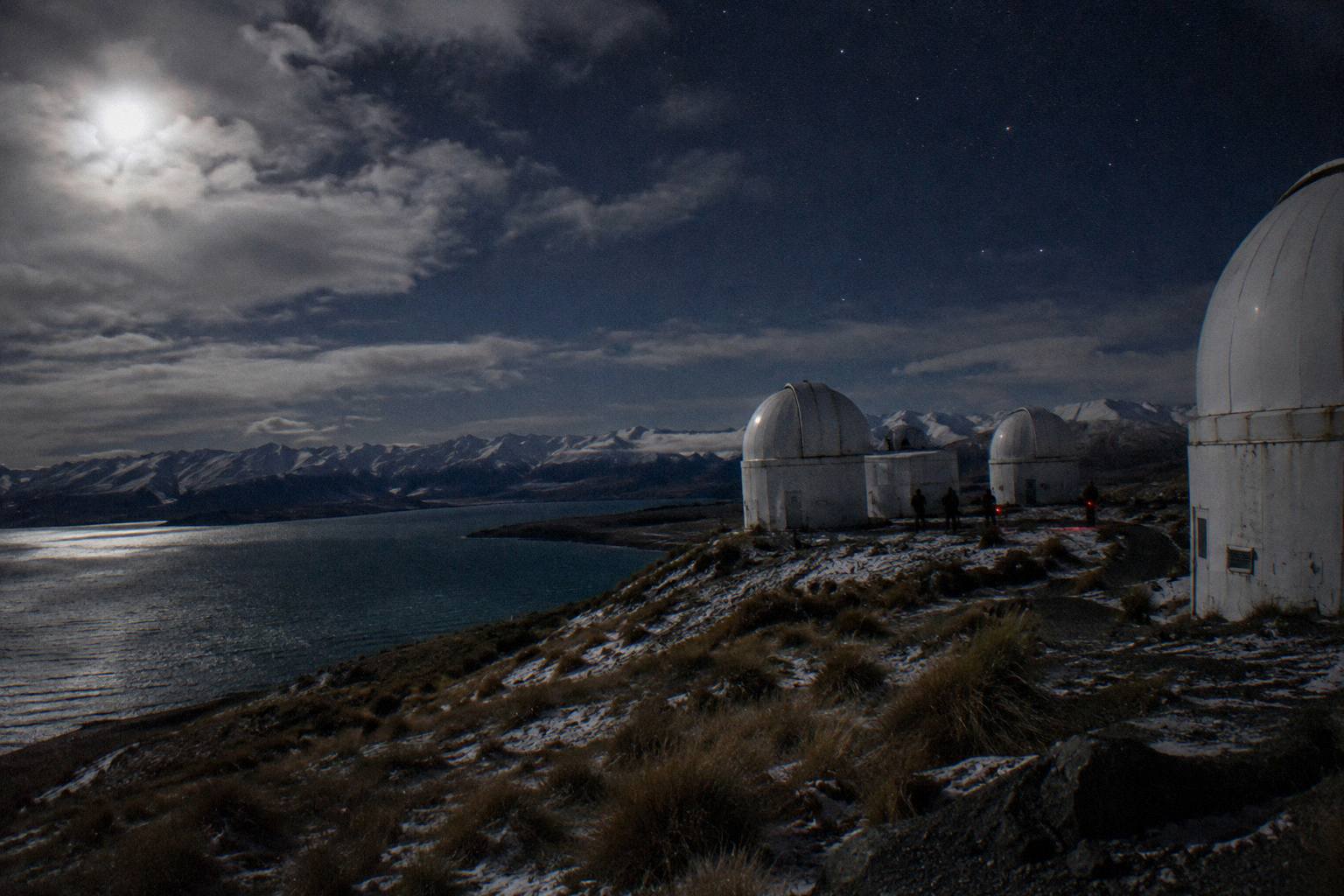
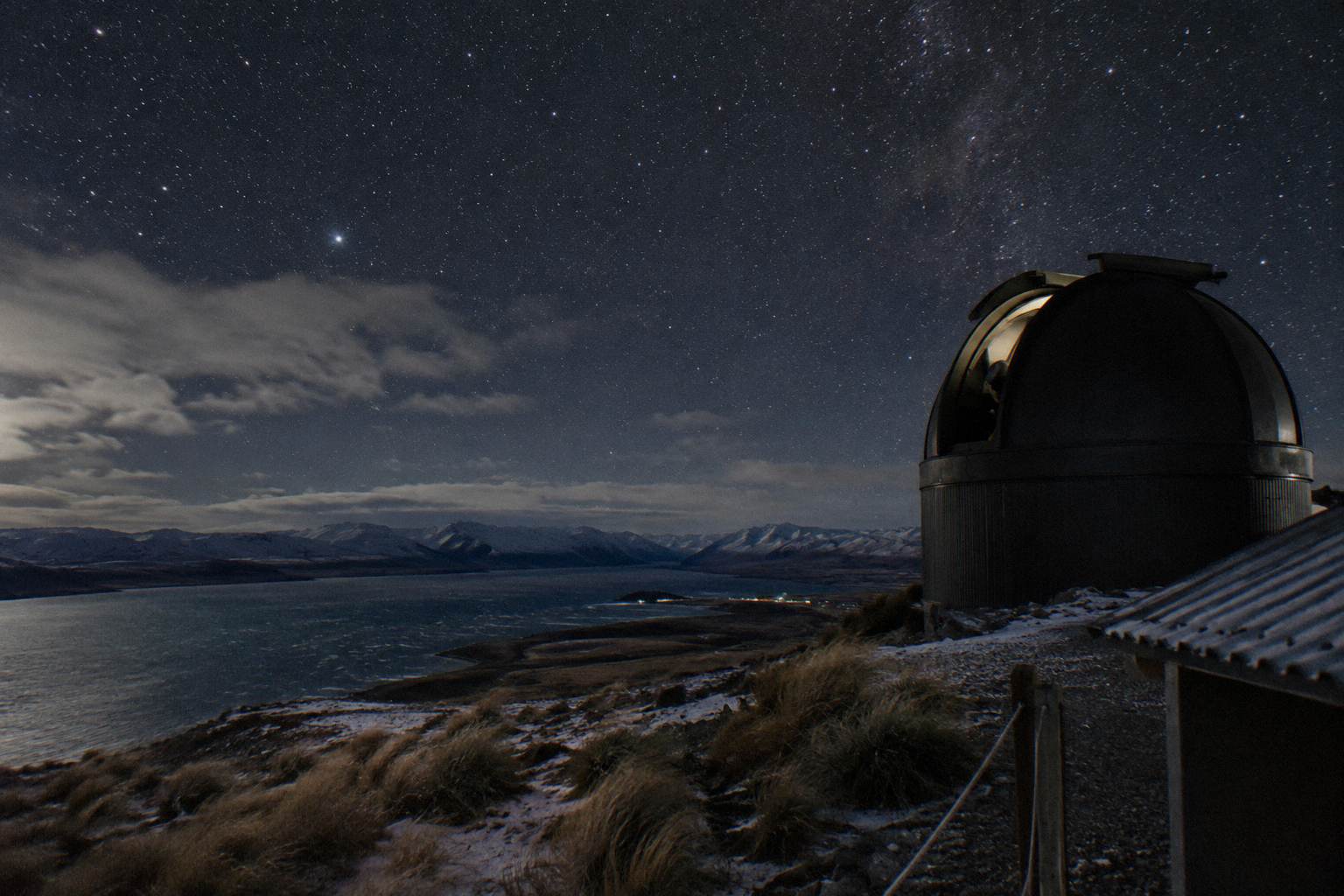
The mountain you stand on has a research history that goes back decades. The University of Canterbury officially opened the observatory in 1965, and its pages list four research telescopes on the summit: the 1 m McLellan, a 0.6 m Optical Craftsmen, a 0.6 m Boller & Chivens, and the 1.8 m MOA telescope run in partnership with Osaka University in Japan. The University's own pages describe it as New Zealand's largest professional research observatory. Visitors on the Summit Experience do not use those research instruments; they use the private dome and telescopes that Dark Sky Project lists at up to 16 inch, from 9 1/4 to 16 inch across its pages.
The cultural layer is part of the tour's design, not an add-on. Dark Sky Project says Tātai Aroraki, Māori astronomy, is woven through the Summit Experience alongside Western astronomy, and the company writes the town's name as Takapō, the name recorded by Ngāi Tahu ancestors on the Ka Huru Manu map. The land the observatory stands on carries that history, and the guides on the summit work both stories into the night.
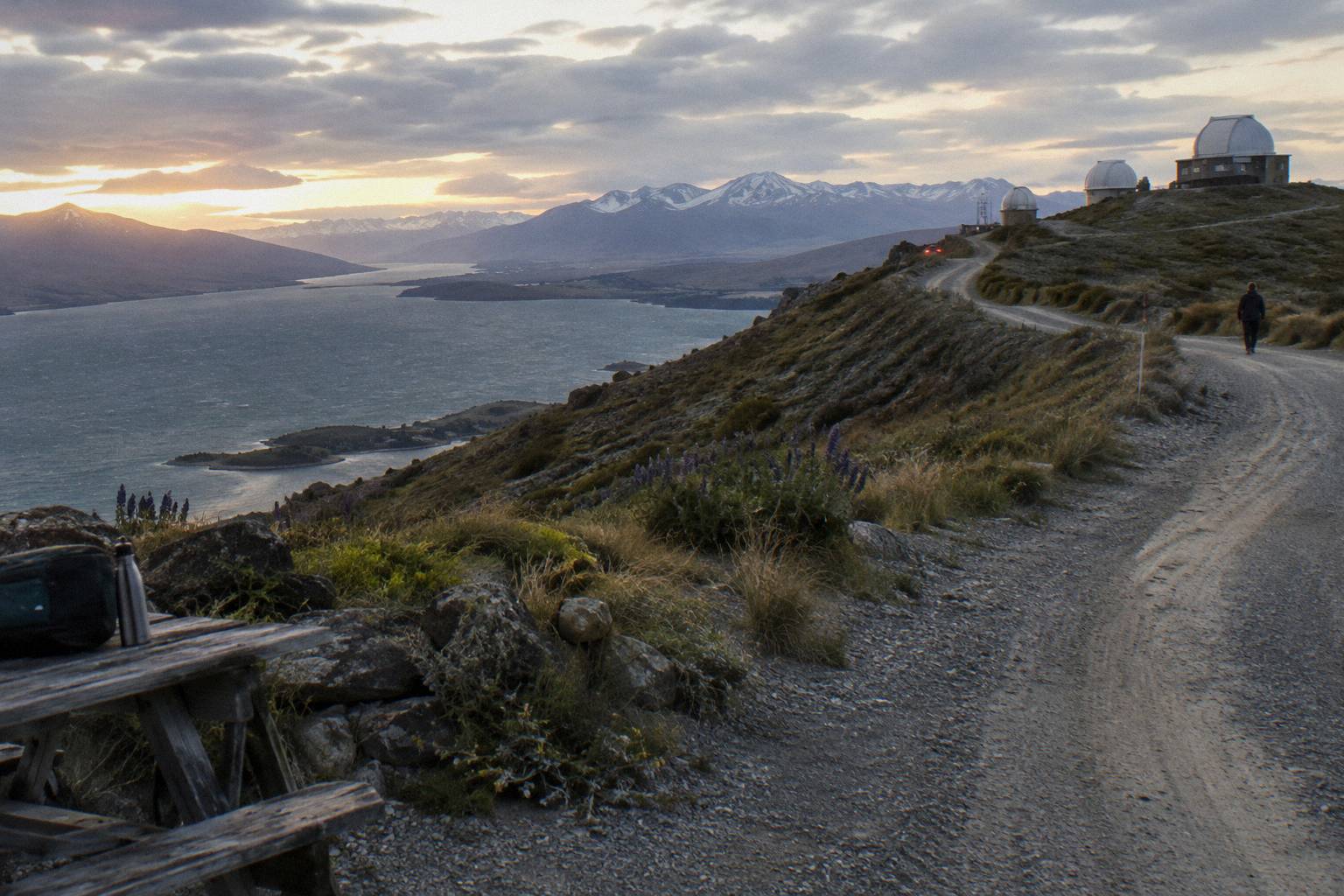
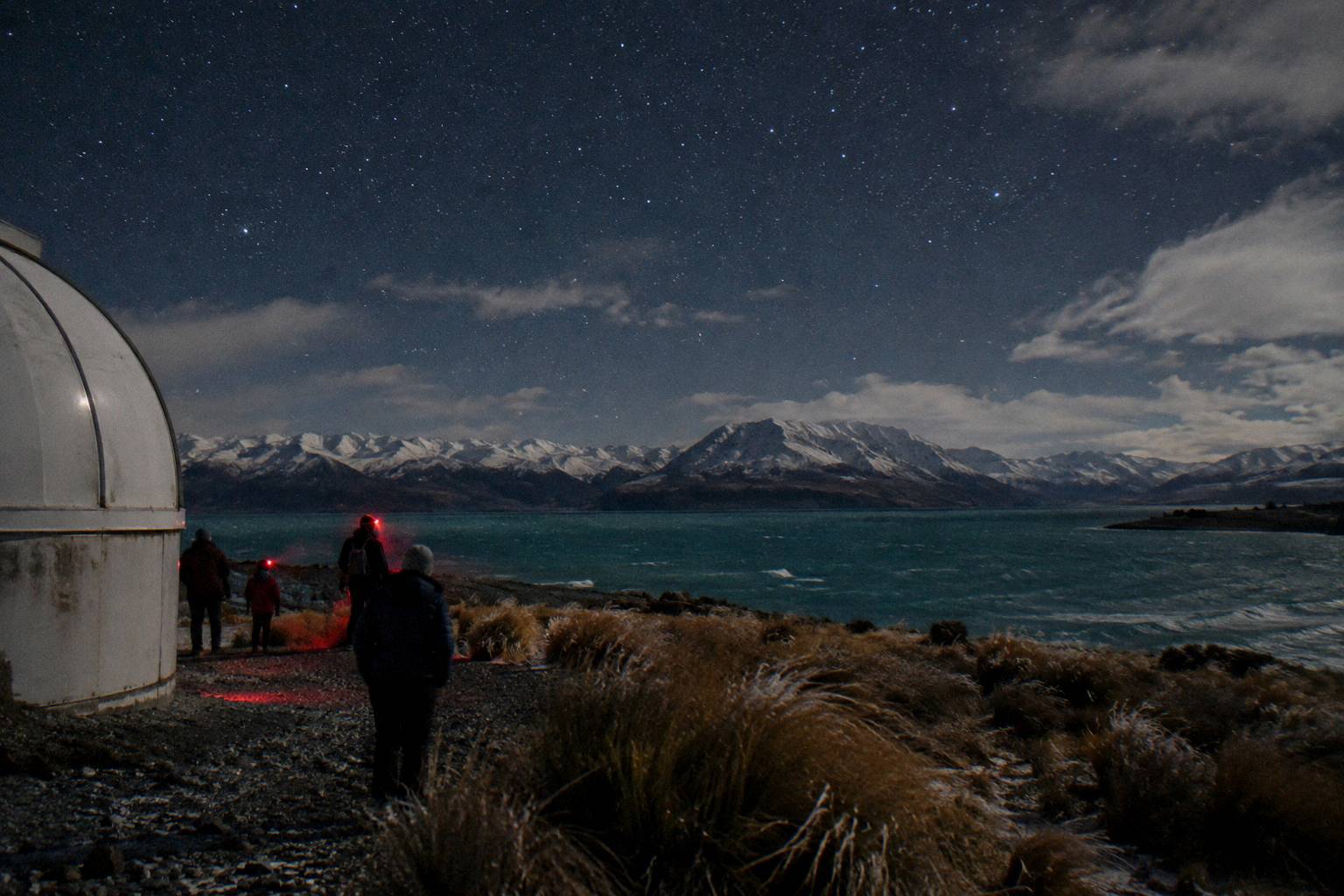
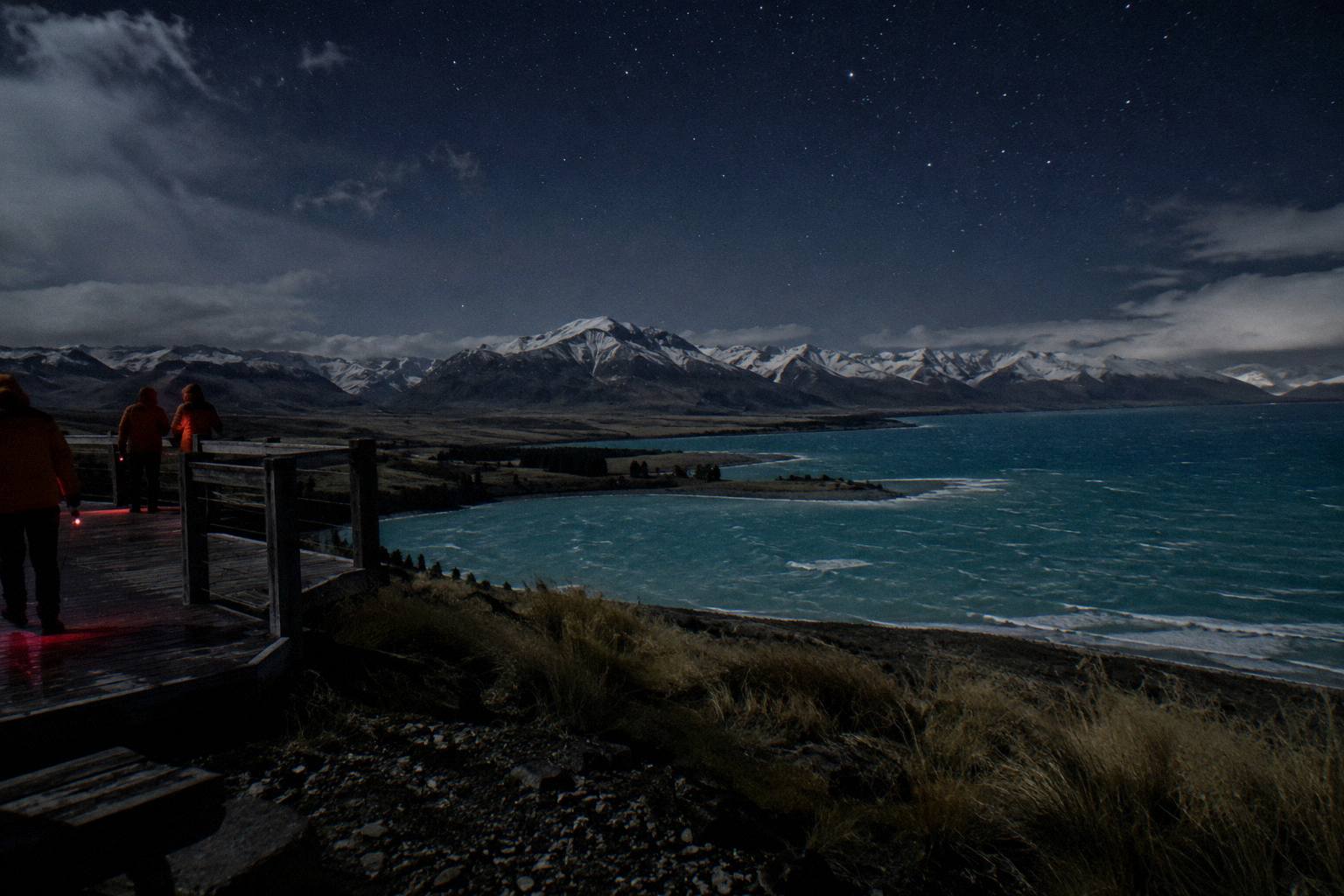
What separates this tour from the others around the lake is the elevation and the setting. At 1,029 m you are above much of the basin's air, inside the Aoraki Mackenzie International Dark Sky Reserve, which covers Aoraki/Mt Cook National Park and the Mackenzie Basin and was awarded reserve status in April 2012. It is the largest dark sky reserve in the Southern Hemisphere, as the operator's dark sky reserve page explains. No other bookable night on this site puts you at a professional research observatory's summit.
How Does The Evening Run, From Check-In To The Bus Down?
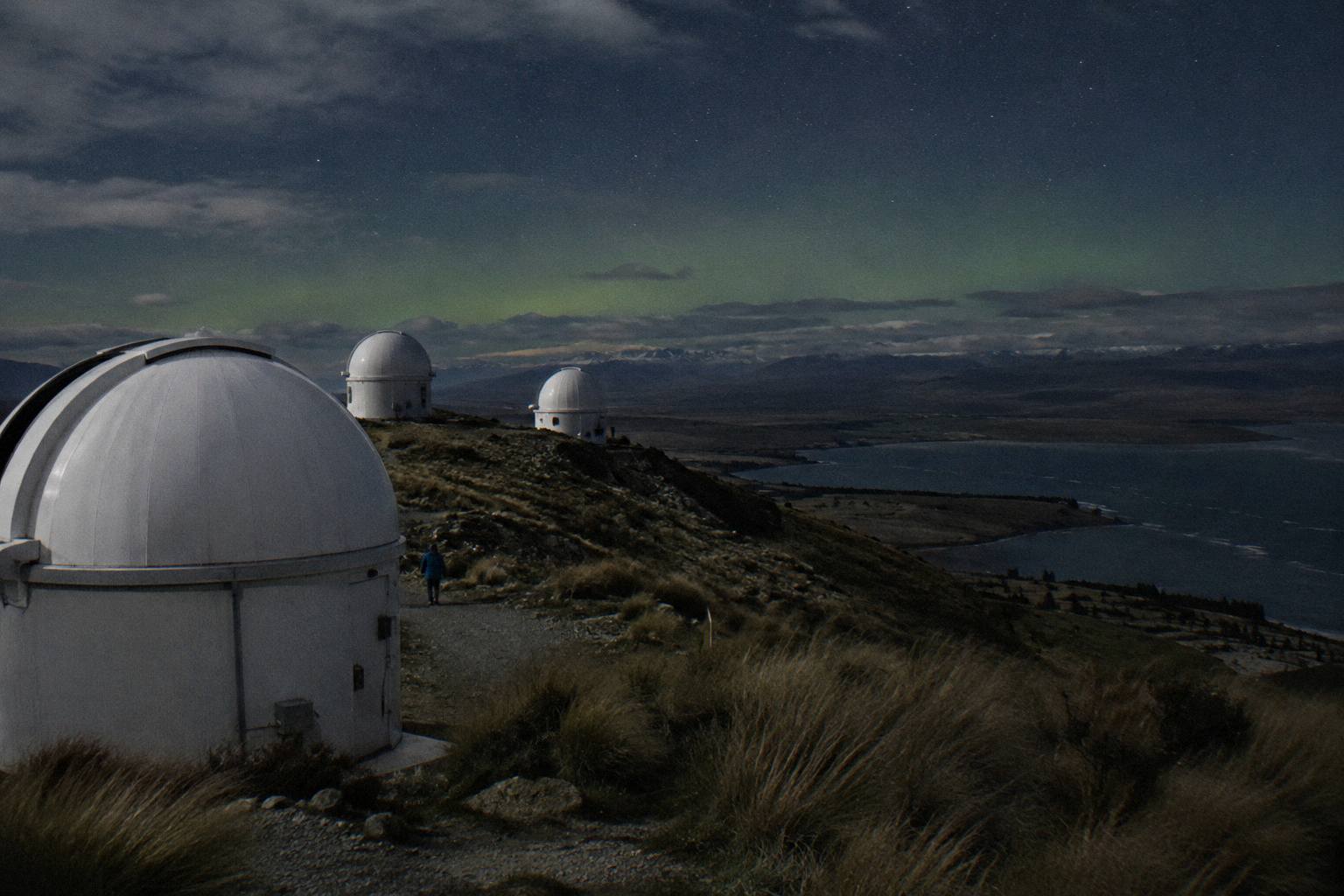
Check in at the Dark Sky Project base at 1 Motuariki Lane on the Tekapo lakefront, between the Four Square and the YHA, 15 minutes before your tour time. From there a bus takes you about 15 minutes up to the summit, you spend the night between naked-eye guiding and dome telescopes, and the same bus brings you back down. Total time is 1 hour 45 minutes; arriving late forfeits the booking with no refund.
The building on the lakefront is easy to find: look for the large observatory dome. All Dark Sky Project experiences depart from this base, so on a busy evening there will be other groups heading to other tours. Checking in 15 minutes early matters for a second reason beyond the no-refund rule: the operator says weather decisions are made as close to tour time as possible, and check-in is when you hear the update for your night.
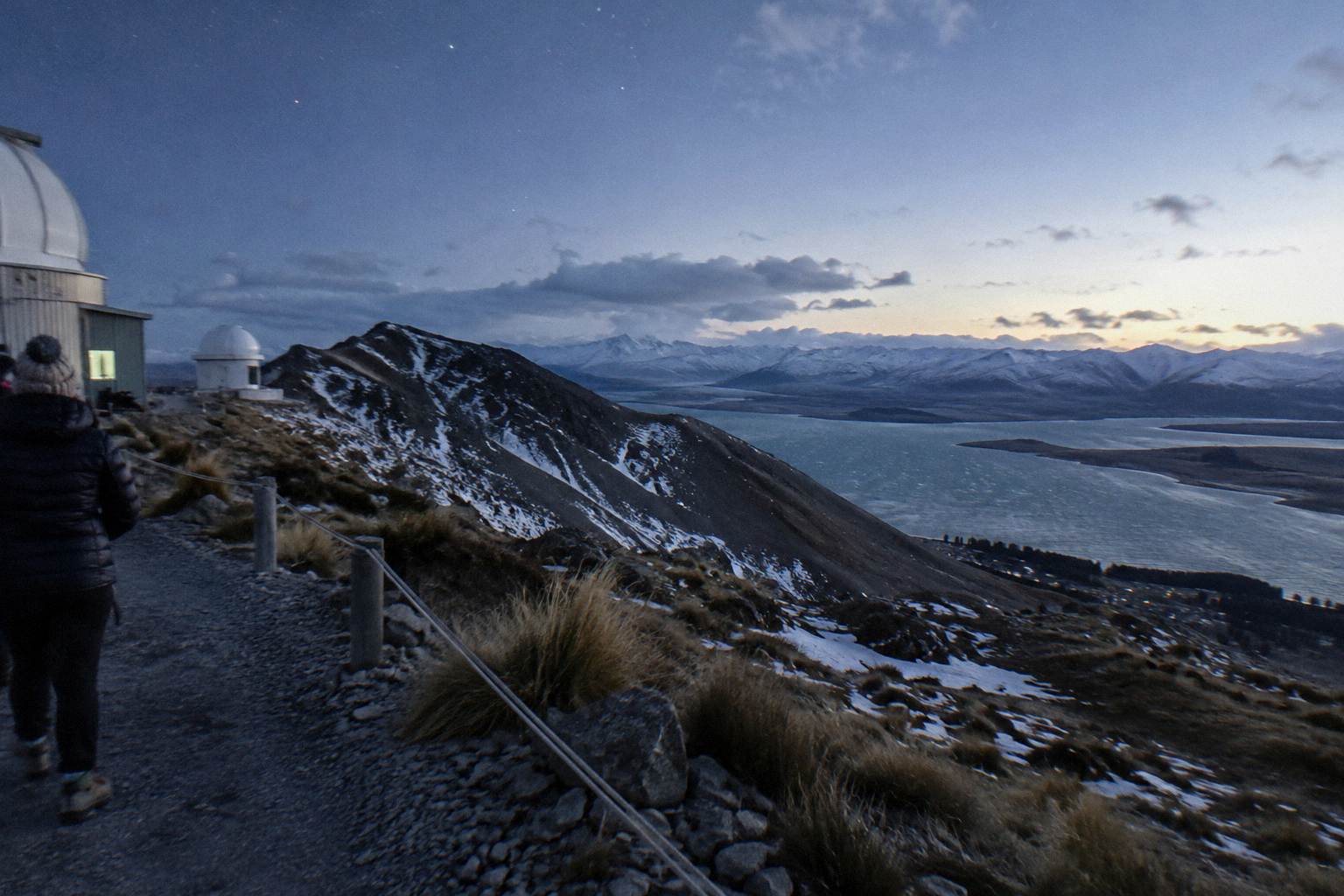
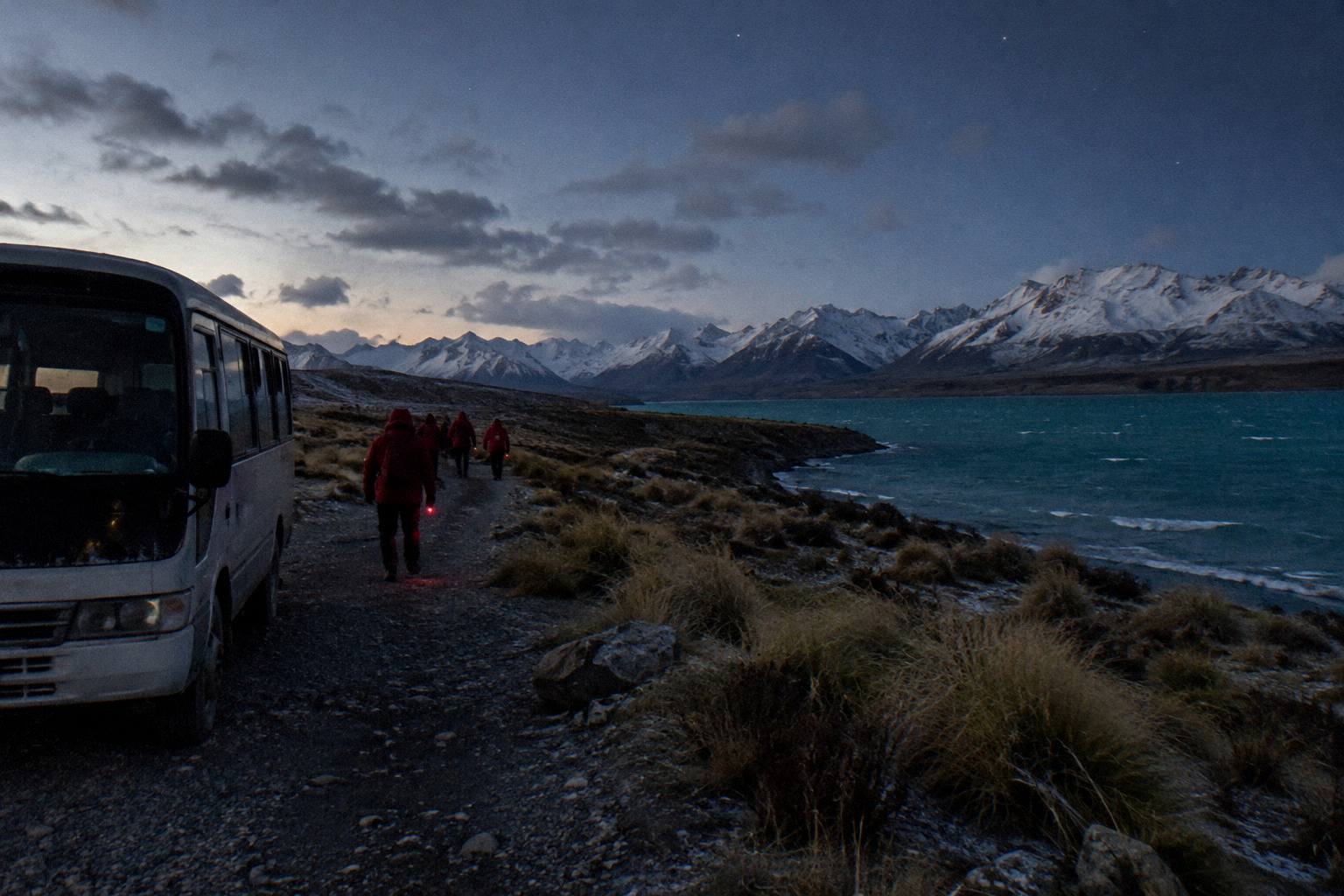
The bus ride is part of the experience, not just transport. The access road to the summit is closed to the public outside 9am to 4pm, so the night bus is the way anyone gets up after dark, tour guests included. The road climbs from the lake edge to 1,029 m, and by the time you step off you have already left the village's lights behind.
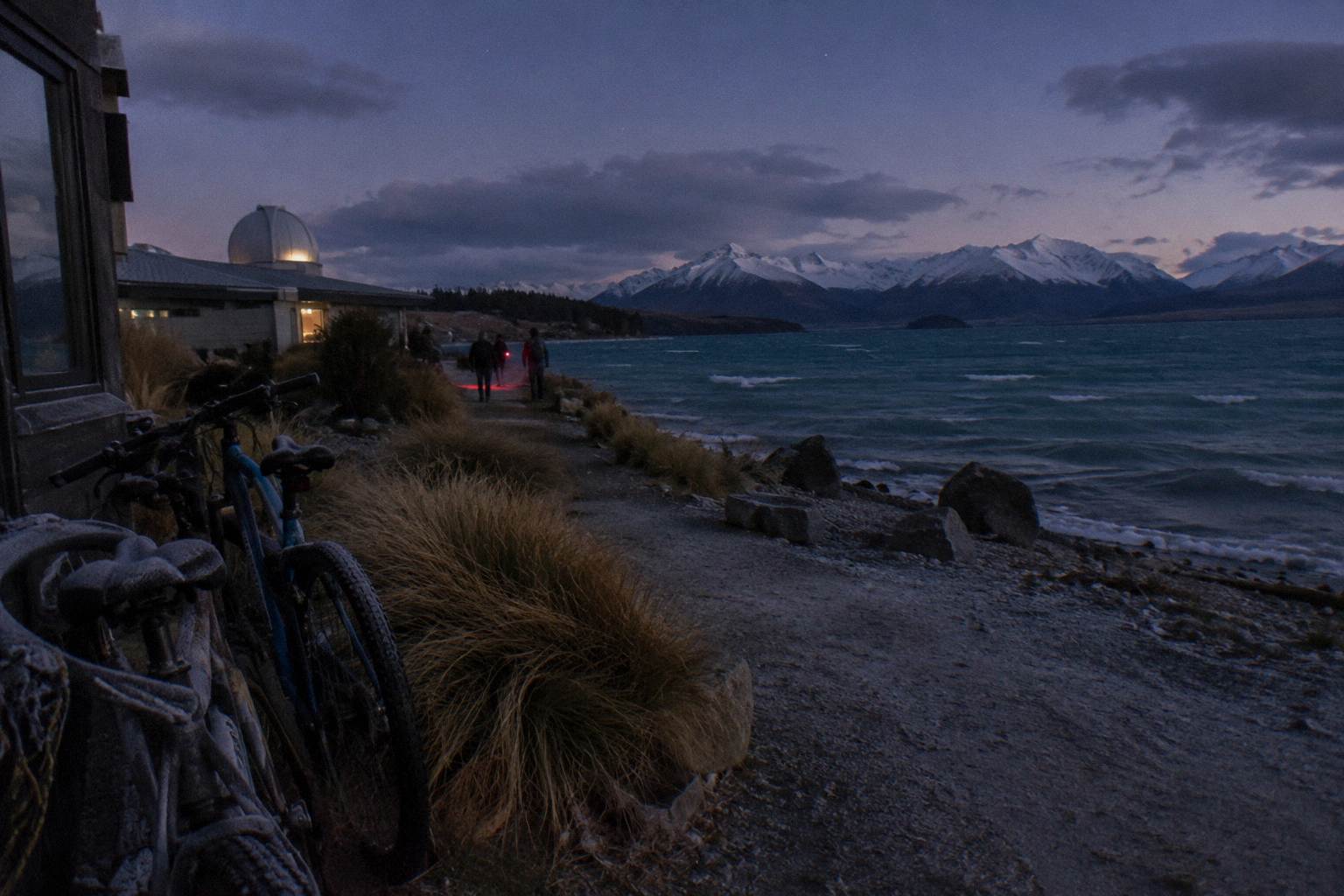
On the summit the night splits into guided naked-eye time and telescope time. Guides use handheld lasers to point at constellations and star fields, moving between Tātai Aroraki storytelling and Western astronomy, and the dome holds telescopes up to 16 inch. The operator's Summit Experience page is the primary source for what the night includes, and it is also where the booking calendar lives: the Summit Experience page. The tour is rated 4.6 across 352 reviews.
Before you commit to the summit night, it is worth seeing the two main alternatives side by side, since they share the same reserve and the same weather but differ in price, age limits and setting.
What Does The Summit Experience Cost And What Is Included?
The operator's price is NZD 239 per person, and adult and child tickets cost the same, with no child discount on this tour. The schedule the operator publishes runs to 30 September 2027 and can change after that. Included are the bus transport up and down, guiding, the loan of an Extreme Cold Weather jacket, and the telescope session inside the private dome; the minimum age is 10.
The equal adult and child price is unusual among Tekapo tours and worth planning around. On the Crater Experience at Cowan's Observatory, children aged 5 to 17 pay NZD 99 against an adult NZD 139, and a family pass for two adults and two children is NZD 377. On the Summit Experience a family of four pays four times NZD 239, so families with children over 10 often weigh the two nights against each other on price as well as setting.
The jacket loan is specific to the Summit Experience; Dark Sky Project offers it on this tour only. The mountain at 1,029 m is colder than the village on most nights, and the tour includes a 100 m walk up a gravel incline plus a few steps in the dark, so the operator lists moderate fitness as a requirement. Dress warmly regardless: the operator's plan your visit page covers the practicalities.
| Dark Sky Project tour | Adult price | Child price | Duration | Minimum age |
|---|---|---|---|---|
| Summit Experience | NZD 239 | NZD 239 (same) | 1 hour 45 minutes | 10 |
| Crater Experience | NZD 139 | NZD 99 (5 to 17) | 75 minutes | 5 |
| Dark Sky Experience (indoor) | NZD 59 | NZD 39 | 45 minutes | None stated |
The indoor Dark Sky Experience sits in the table because it is the weather-proof member of the family: a 45-minute daytime, indoor astronomy tour at the base with no stargazing, priced from NZD 59 adult and NZD 39 child, with under 5s free with an adult ticket. It is not a substitute for a summit night, but it is the fallback Dark Sky Project itself offers when the sky does not cooperate.
If the summit night is the one you want, the tour page carries full details and live availability: the Summit Experience tour page, or check availability for tonight's calendar.
What Happens If The Weather Turns On The Summit?
Dark Sky Project cannot guarantee clarity or any sky object, and the go or no-go decision is made as close to tour time as possible. If outdoor stargazing is not possible, the operator offers an indoor alternative or the Virtual Stargazing Experience, a reschedule subject to availability, a gift voucher valid three years, or a full refund. Check in 15 minutes early partly to receive that update in person.
This is the single most important thing to understand about booking any Mount John night: nobody controls the sky, and the operator says so plainly on the operator's weather page. Moonlight, cloud and seeing conditions all vary. Brighter moonlight affects fainter stars and galaxies, though the operator also notes the moon is a good target in its own right. The Milky Way and Aurora Australis depend entirely on conditions and are never promised on any tour here.
The fallback ladder matters when you plan. An indoor alternative or the Virtual Stargazing Experience keeps something of the evening alive; a reschedule works if your stay has spare nights; a voucher valid three years suits travellers who will return; a full refund suits everyone else. Groups should note the stricter terms: for Summit and Crater bookings of 10 or more, no refunds apply inside 72 hours.
Cancellation on your side is simpler. Direct bookings can be cancelled up to 24 hours before for a full refund; inside 24 hours the full price applies. The booking page for the Summit Experience shows a 24-hour free cancellation window. Third-party bookings follow the agent's own terms.
| Situation | What the operator's terms say |
|---|---|
| Cloud blocks outdoor stargazing | Indoor alternative or Virtual Stargazing Experience, reschedule, voucher valid 3 years, or full refund |
| You cancel more than 24 hours ahead (direct booking) | Full refund |
| You cancel inside 24 hours | 100% of the price |
| Group of 10 or more, inside 72 hours (Summit and Crater) | No refund |
| Late check-in | No refund |
If a sky-dependent summit night feels risky for your dates, the hot pools alternative runs on different rules entirely.
Soak in the Stars, the stargazing night at Tekapo Springs, runs in all weather: under cloud, a VR indoor experience with 360 degree imagery of the Church of the Good Shepherd and the Mt John summit replaces the telescope viewing, and if telescope viewing comes in under 30 minutes the operator refunds 25 percent per ticket at the end of the tour. It is a 90-minute night from NZD 179 adult and NZD 115 child, minimum age 10, pairing guided telescope viewing with an exclusive hot pool at 37.5 to 38.5 °C with the guide poolside. Some tours begin after midnight, at 12:15am for example, because the best sky windows move with the season.
Who Can Join The Summit Night: Ages, Access And Fitness?
The Summit Experience carries a minimum age of 10 and a moderate fitness requirement: a 100 m walk up a gravel incline and a few steps, all in the dark. The Crater Experience at Cowan's Observatory is the younger-family option from age 5, and wheelchair users can join it by driving their own vehicle to the site. The indoor Dark Sky Experience has no stated minimum age, with content the operator says suits about 7 and up.
Those three age doors decide most family itineraries. A household with a 7-year-old cannot take the Summit Experience at any price; the Crater Experience from age 5 is the Dark Sky Project night that fits, at NZD 99 per child against NZD 139 per adult, with a family pass at NZD 377 for two adults and two children and extra children at NZD 99. Tekapo Springs adds its own blanket rule: no child under 6 on any of its tours, babies carried included.
The fitness note on the summit is short but real. After the bus drops you near the top there is a 100 m gravel incline and a few steps, walked in darkness. The operator lists moderate fitness for this reason. The Extreme Cold Weather jacket loan is included on the Summit Experience only, which tells you how much colder the summit runs than the village; the operator's terms and the Summit page both flag the walk and the jacket.
Access at Cowan's works differently. The Crater Experience's observatory is a 5-minute drive from the base, built as purpose-built observation craters sheltered from wind and light, and wheelchair users can join the tour by driving their own vehicle there rather than taking the group transport. For anyone for whom the summit walk rules the night out, that is the Dark Sky Project route to a telescope evening.
| Tour | Minimum age | Access and fitness notes |
|---|---|---|
| Summit Experience | 10 | 100 m gravel incline walk, a few steps in the dark, moderate fitness |
| Crater Experience | 5 | Wheelchair users join by driving their own vehicle to Cowan's |
| Soak in the Stars (Tekapo Springs) | 10 | No child under 6 on any Tekapo Springs tour, babies carried included |
| Dark Sky Experience (indoor) | None stated | Content suitable from about 7, under 5s free with an adult ticket |
What Are The Mount John Observatory Facts Worth Knowing?
The University of Canterbury Mt John Observatory stands at 1,029 m, was officially opened in 1965, and hosts four research telescopes: the 1 m McLellan, two 0.6 m instruments, and the 1.8 m MOA telescope run with Osaka University. The University describes it as New Zealand's largest professional research observatory, and Dark Sky Project's Summit page calls it the southernmost facility of its kind in the world.
Those two claims come from the operators' own pages and are best quoted as theirs. The mountain also carries a Māori name: Dark Sky Project's cafe page gives Ōtehīwai Mount John, and the University uses Ōtehīwai Mt John Observatory on its own pages. Takapō, the town's name as recorded by Ngāi Tahu ancestors, is the spelling Dark Sky Project uses throughout, explaining that it does so to support revitalising Māori place names.
The reserve framing explains why the observatory is here at all. The Aoraki Mackenzie International Dark Sky Reserve was awarded status in April 2012 and covers Aoraki/Mt Cook National Park and the Mackenzie Basin; it is the largest dark sky reserve in the Southern Hemisphere. The Mackenzie District Council runs lighting rules in its District Plan, covering shielding of lights so they point downward and limits on timing, which is why the basin's towns stay as dark as they do.
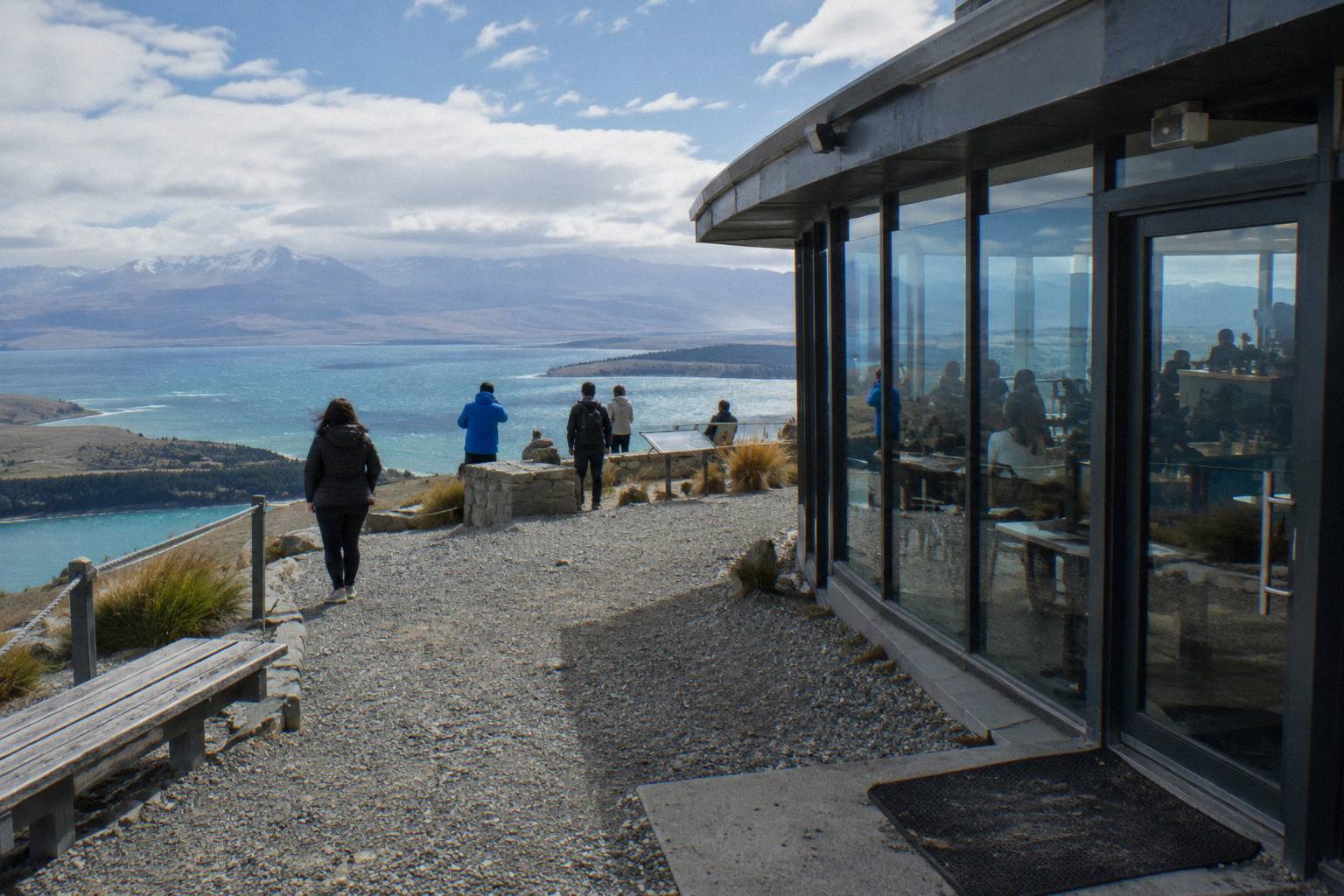
Daytime Mount John is a different visit again. The Astro Cafe on the summit opens daily 9am to 4pm, the access road keeps the same hours with a NZD 14 per vehicle road user fee at the gate, vehicles over 12 seats are not permitted, and the road closes in some weather. The Summit Circuit track is 8.9 km return if you would rather walk up by day. Whether the summit road is open to private drivers is covered in full in can you drive up to Mount John Observatory.
Summit, Crater Or Hot Pools: Which Mount John Night Fits You?
Choose the Summit Experience for the research-observatory setting, the 16 inch dome telescopes and the 1,029 m elevation, at NZD 239 per person aged 10 and over. Choose the Crater Experience for younger children from age 5, a sheltered crater setting and a lower price at NZD 139 adult and NZD 99 child. Choose Soak in the Stars for a night that runs in all weather and ends in a hot pool, from NZD 115 per child.
The decision usually turns on three questions. First, who is coming: children under 10 rule out the summit immediately, and under 5s rule out every Tekapo Springs tour. Second, what the sky might do: Dark Sky Project nights depend on clarity with an indoor fallback, while Soak in the Stars runs in all weather with the VR experience and the 25 percent refund rule. Third, budget: the summit is the premium night and prices everyone the same, while the Crater Experience's family pass and child pricing soften a family's total.
Beyond the big three, the lake has quieter options. The small group or private stargazing guide covers operators like Astro Tekapo, whose lakefront night runs 1.5 hours from age 6, and Silver River's two Tekapo nights, 75 minutes and 2 hours. Further afield, Stargaze Mackenzie runs a 75-minute astronomer-led tour from Twizel from age 6, and Silver River runs a 75-minute Mt Cook night meeting at the Tasman Glacier car park.
| Night | Setting | Weather plan | Duration | Price basis |
|---|---|---|---|---|
| Summit Experience | Research observatory summit, 1,029 m | Indoor alternative, reschedule, voucher or refund | 1 hour 45 minutes | NZD 239 all guests aged 10+ |
| Crater Experience | Sheltered private craters, 5-minute drive | Same Dark Sky Project fallback ladder | 75 minutes | NZD 139 adult, NZD 99 child 5 to 17 |
| Soak in the Stars | Hot pools and telescope terrace | Runs in all weather, VR under cloud, 25% refund rule | 90 minutes | NZD 179 adult, NZD 115 child |
The Crater Experience earns its own look for families and for anyone who wants the Dark Sky Project guiding without the bus and the walk. It is rated 4.6 across 93 reviews, runs seven days a week at various times in the evening after twilight, and uses 14 inch telescopes or the observatory dome, from 9 1/4 to 14 inch across the operator's pages.
Common Mistakes When Booking A Mount John Summit Night
The mistakes that cost people are booking only one night in Tekapo, expecting a published start time, arriving later than 15 minutes before check-in, and dressing for the village rather than the summit at 1,029 m. Each has a fix: build in a spare night, trust the booking calendar for the time, treat check-in as the real appointment, and take the offered jacket plus warm layers underneath.
One night in town is the structural risk. Because the weather call comes close to tour time, a traveller with a single evening has no reschedule window if cloud sits over the basin. Dark Sky Project itself offers the reschedule option subject to availability, which only works if you have another night. The post on how many nights to book works through this in detail.
Expecting a clock time is the second trap. Summit tour times are various through the year, depending on the time of sunset, and the operator does not publish exact times on the page; the calendar you book from is the authority. In deep summer that can mean a very late start indeed, and in winter an earlier one. Plan dinner around the booking, not around a guessed hour.
The third is fitness and clothing. The 100 m gravel incline and the steps in the dark are on the operator's own terms page, and the Extreme Cold Weather jacket is a loan, not a full wardrobe. Warm layers, closed shoes and the operator's jacket cover the summit at 1,029 m, which runs colder than the lakefront where you check in. Whether the night itself suits first-timers is covered in our Dark Sky Project verdict.
The last mistake is ignoring the moon. Brighter moonlight affects fainter stars and galaxies, while the moon itself is a good target through a telescope, so a moon-heavy night is not a wasted one, just a different one. The new moon or full moon guide sets out the trade-off.
For the indoor, daytime option that sidesteps weather entirely, the Dark Sky Experience runs 45 minutes at the base with English tours at 10:30am, 12:30pm and 2:30pm, and on Tuesday and Wednesday also 4:30pm, subject to availability.
Whichever night you choose, the summit visit remains the one that trades the highest price for the highest ground: a working observatory at 1,029 m, dome telescopes up to 16 inch, and a bus ride down to the lakefront with the whole evening behind you. Mt John Stargazing exists to make that decision, and every alternative around it, plain.
Common Questions About Mount John Observatory Stargazing
How Much Does The Mount John Summit Experience Cost?
The operator's price is NZD 239 per person, the same for adults and children, on a schedule the operator runs to 30 September 2027. The minimum age is 10. The price includes the bus to the summit, guiding, telescope viewing through instruments up to 16 inch, and the loan of an Extreme Cold Weather jacket.
How Long Is The Summit Night?
One hour 45 minutes in total, from check-in at the Dark Sky Project base on the Tekapo lakefront. That includes the 15-minute bus ride each way to the summit at 1,029 m. Check-in is 15 minutes before the tour, and late check-in carries no refund under the operator's terms.
What Time Does The Mount John Tour Start?
The operator does not publish exact times. Tour times vary throughout the year depending on the time of sunset, and the tours run seven days a week. The booking calendar shows the available start times for your date, so treat that as the authority rather than any fixed hour.
What Happens If It Is Cloudy On The Night?
Dark Sky Project cannot guarantee clarity or sky objects, and the decision is made as close to tour time as possible. If outdoor stargazing is not possible, the operator offers an indoor alternative or the Virtual Stargazing Experience, a reschedule subject to availability, a gift voucher valid three years, or a full refund.
Can Children Join The Summit Experience?
From age 10, at the same NZD 239 price as adults. Families with children aged 5 to 9 are better matched to the Crater Experience at Cowan's Observatory, minimum age 5, at NZD 99 per child. The indoor Dark Sky Experience has no stated minimum age, with content the operator says suits about 7 and up.
Can You Visit Mount John Observatory Without A Tour?
By day, yes: the access road is open 9am to 4pm with a NZD 14 per vehicle road user fee at the gate, and the Astro Cafe on the summit keeps the same hours. Vehicles over 12 seats are not permitted and the road closes in some weather. After dark the road is closed to the public, and the Summit Experience bus is the way up.