Mt John Summit Or Tekapo Springs: Which Stargazing Night Suits You?
Two of Tekapo's best known stargazing nights could not be more different: a bus ride to a research observatory summit, or a telescope session that ends in a hot pool by the lake. Here is how they compare on the facts that decide a booking.
Short answer
The Summit Experience is the operator's price of NZD 239 for every participant aged 10 and over, runs 1 hour 45 minutes, and includes a 15-minute bus up Mt John and a loan jacket. Soak in the Stars at Tekapo Springs is NZD 179 adult, 115 child, 90 minutes, and ends in a 37.5 to 38.5 °C hot pool with robes and hot drinks.
For the wider field of ten bookable nights, the Lake Tekapo stargazing tours compared guide covers every operator; this page is the head to head between the two most booked against each other, on the facts that actually move a booking decision.
| Quick facts | Mt John Summit Experience | Hot Pools And Stargazing (Soak in the Stars) |
|---|---|---|
| Operator | Dark Sky Project | Tekapo Springs (Tekapo Stargazing) |
| Operator price | NZD 239 adult and child alike | NZD 179 adult, NZD 115 child |
| Duration | 1 hour 45 minutes | 90 minutes |
| Minimum age | 10 | 10 (no child under 6 on any Tekapo Springs tour) |
| Setting | University of Canterbury Mt John Observatory, 1,029 m | Lakeside, with an exclusive hot pool at 37.5 to 38.5 °C |
| Transport | 15-minute bus from the base | Complimentary hotel shuttle subject to availability |
| Weather fallback | Indoor alternative, reschedule, voucher or full refund | Tour runs in all weather; VR indoor experience replaces telescope viewing |
| Cancellation (direct) | Full refund up to 24 hours before | Full refund up to 24 hours before |
What Each Stargazing Night Actually Is
The Summit Experience is a bus trip to the top of a working research observatory, while Soak in the Stars is a telescope session on the lakefront that ends with a soak in a heated pool. They share a town, a dark sky reserve and a minimum age of 10, and apart from that they are different products for different evenings. Neither is a version of the other.
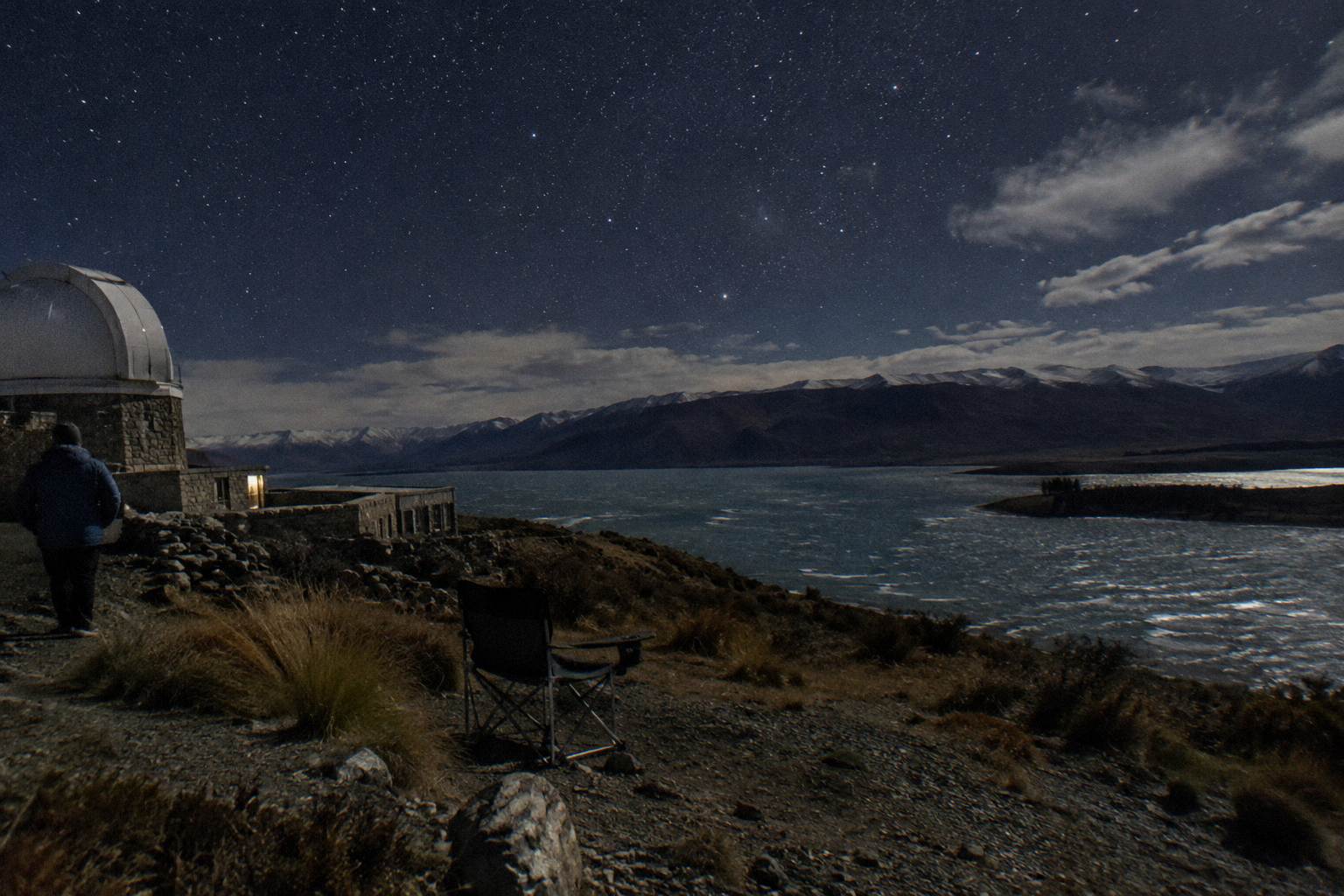
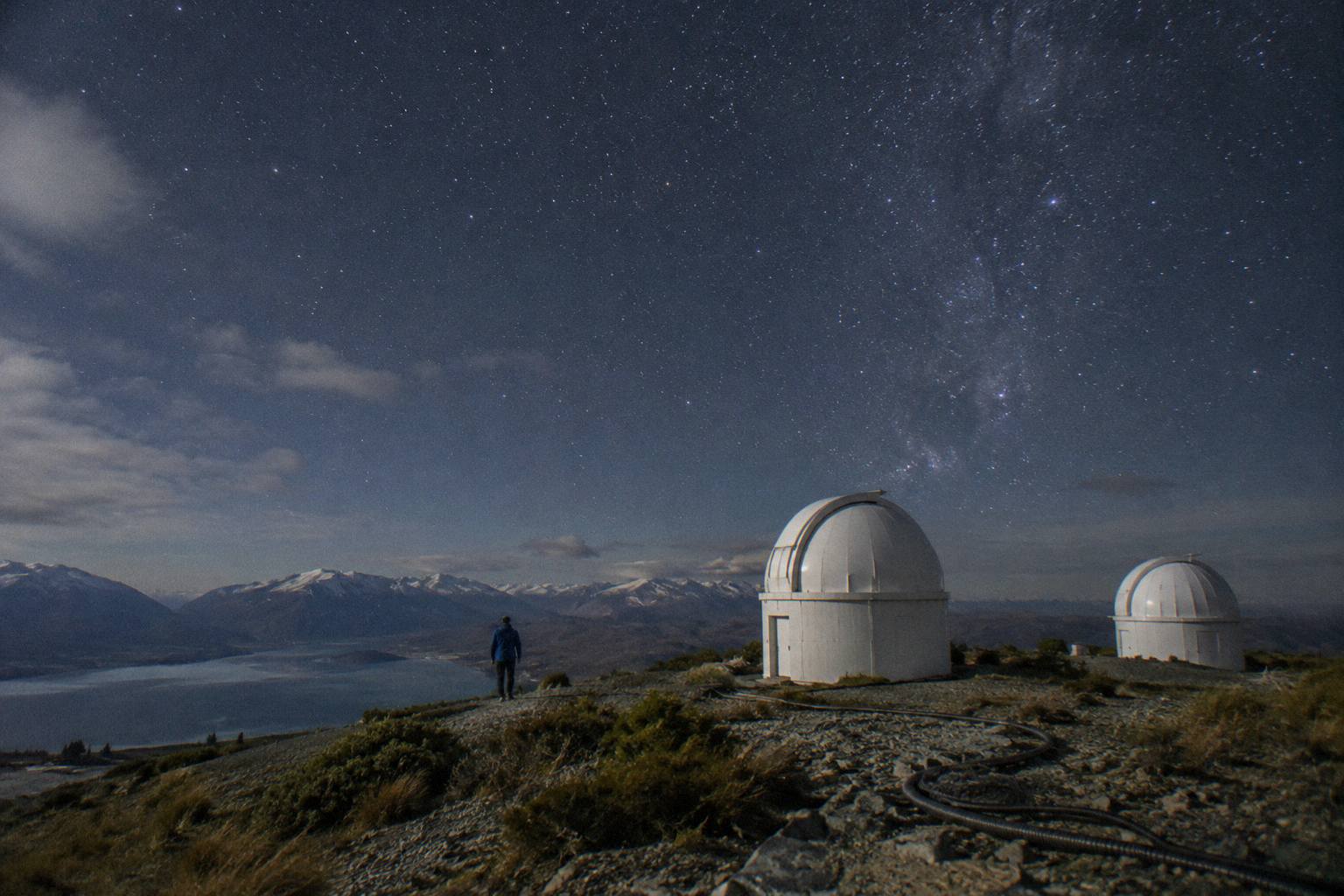
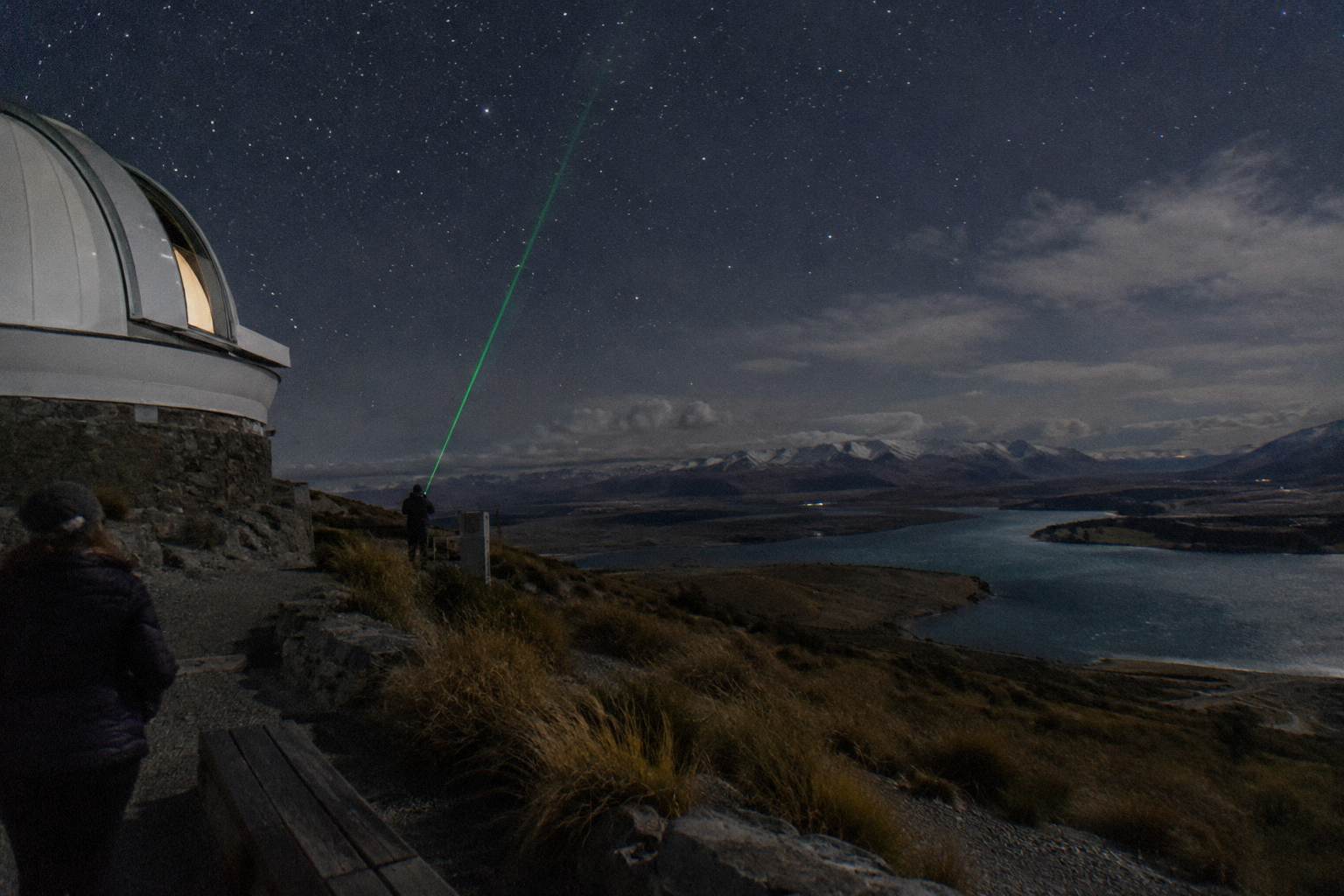
Dark Sky Project runs the Summit Experience from its base at 1 Motuariki Lane in Takapō (Tekapo), on the lakefront between the Four Square and the YHA. You check in 15 minutes before departure, ride a 15-minute bus to the top of Mt John, and spend the night at the University of Canterbury Mt John Observatory, which the University describes as New Zealand's largest professional research observatory, officially opened in 1965. Guiding is by handheld laser for naked-eye viewing plus telescopes up to 16 inch inside a private observatory dome, with Tātai Aroraki, Māori astronomy, woven through the telling alongside Western astronomy, as the operator describes it. Total time is 1 hour 45 minutes.
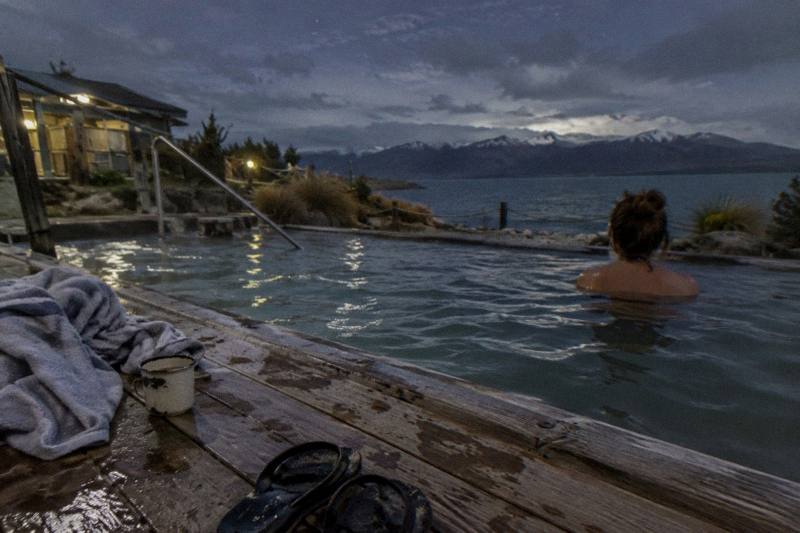
Tekapo Springs runs Soak in the Stars from its reception at 300 Lakeside Drive. The 90 minutes split into guided telescope viewing and then an exclusive hot pool held at 37.5 to 38.5 °C with the guide poolside, and the operator lists towels, robes, hot drinks and warm poncho coats in the ticket. Tekapo Springs frames its star stories as Māori star lore and as a Pacific navigation compass, naming Matariki and the Southern Cross. The mechanics of the two nights are the real comparison: one is built around altitude and a research-grade dome, the other around warmth and water.
Both sit inside the Aoraki Mackenzie International Dark Sky Reserve, which comprises Aoraki/Mt Cook National Park and the Mackenzie Basin and was awarded reserve status in April 2012. It is the largest dark sky reserve in the Southern Hemisphere. That shared sky is the reason the choice feels hard, and it is also the reason the choice can safely come down to comfort, budget and children rather than to which night has the better stars.
How The Two Prices Compare
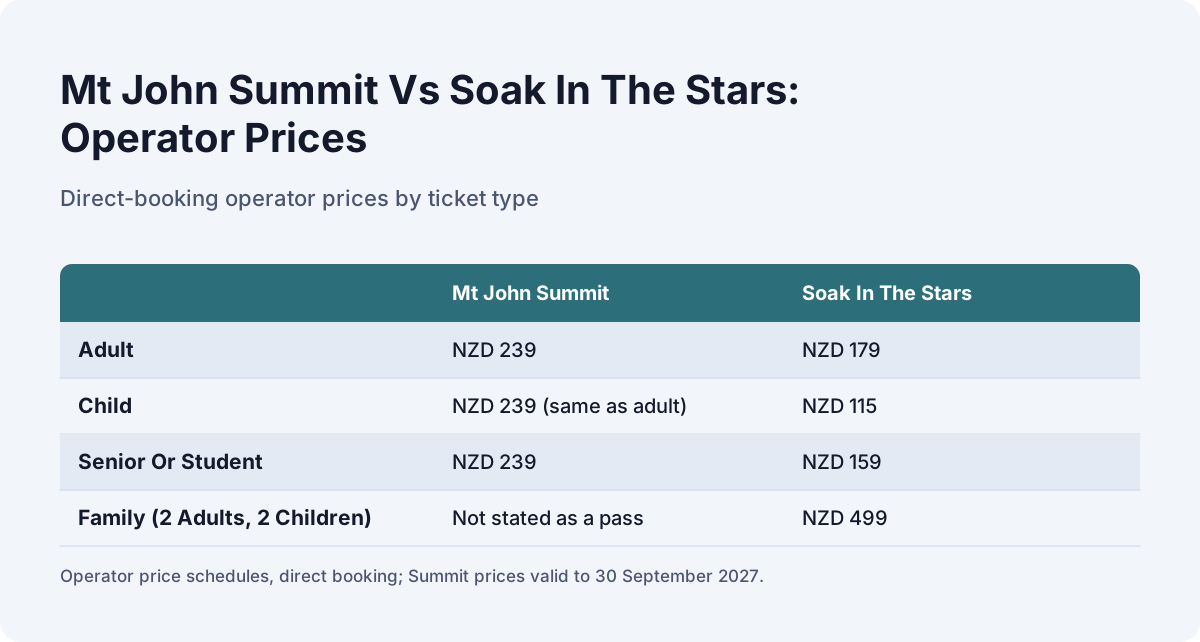
Counted on the operator's own price schedule, the Summit Experience costs NZD 239 for every participant, adult or child, while Soak in the Stars costs NZD 179 per adult, NZD 159 per senior or student, NZD 115 per child and NZD 499 for a family of two adults and two children. For adults travelling without children the flat summit rate sits above the tiered adult rate at the Springs.
Those are direct-booking figures. Prices on the booking pages follow the platform and may differ, so treat these as the operators' own schedules, valid to 30 September 2027 for Dark Sky Project, with prices able to change. The Summit's flat NZD 239 matters when you are pricing a family: there is no child discount, because minimum age is 10 and every seat on the bus is the same price. Tekapo Springs, by contrast, prices Soak in the Stars in tiers, and the family pass NZD 499 covers two adults and two children.
The structure is what to compare rather than any single total. Every adult on the Summit pays the same NZD 239 as every child aged 10 and over, so a party's cost scales person by person with no tiered relief. At Tekapo Springs the tiers do the work: children cost less than adults, seniors and students cost less again, and the family pass bundles two adults and two children at NZD 499. A solo traveller faces one flat rate on the summit bus and a lower adult rate at the Springs. None of this is a saving claim; it is the arithmetic shape of the published rates, and the schedule is the operator's own.
Before settling on either headline night, it helps to look at the third Dark Sky Project option in that set. The Crater Experience at Cowan's Observatory runs NZD 139 adult and NZD 99 child from age 5, which undercuts both headline nights for younger families, though its details belong on its own page. The full pricing picture, including the free and self guided options, is in how much Tekapo stargazing costs.
| Price basis | Summit Experience | Soak in the Stars |
|---|---|---|
| Adult | NZD 239 | NZD 179 |
| Child | NZD 239 (same as adult) | NZD 115 |
| Senior or student | NZD 239 | NZD 159 |
| Family (2 adults, 2 children) | Not stated as a pass | NZD 499 |
| Schedule | Operator price, valid to 30 September 2027 | Operator price, current schedule |
Duration, Times And Who Can Go
The Summit runs 1 hour 45 minutes with a minimum age of 10; Soak in the Stars runs 90 minutes, also from age 10, and no child under 6 can join any Tekapo Springs tour, carried babies included. Neither operator publishes a fixed clock time: Summit times vary with sunset through the year and Tekapo Springs times are seasonal and set by calendar.
Start times are where people trip up. Dark Sky Project says the Summit departs at various times throughout the year, depending on time of sunset, seven days a week, and does not publish exact times on its Summit Experience page{: rel="noopener"}. Tekapo Springs runs Soak in the Stars seven evenings a week from October to April and Thursday to Monday from May to September, with some tours beginning after midnight, the operator's example being 12:15am. In summer that means either night can start very late indeed, which matters if you are driving on after, or travelling with children whose bedtime has opinions.
The age rules are close but not identical. Both headline nights use 10 as the minimum, so the decision between them is not about a nine year old, who can join neither. If your children are aged 5 to 9, neither of these two nights is the family option: the Crater Experience takes age 5 and up, and Tekapo Springs' shorter telescope-only night takes age 6. That comparison is covered in the Tekapo stargazing with kids guide.
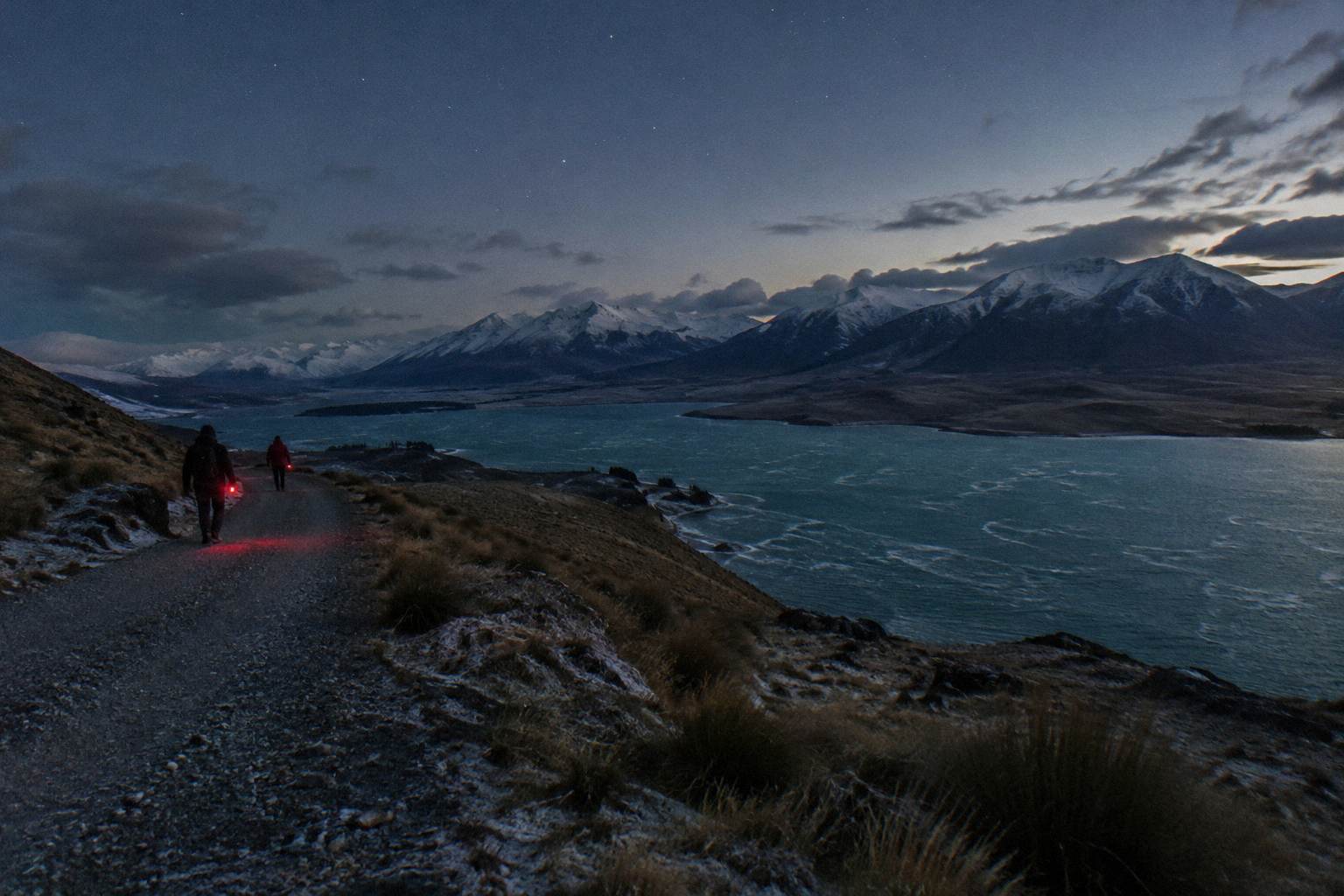
Access differs too. The Summit asks for moderate fitness: a 100 m walk up a gravel incline and a few steps, in the dark. The operator says wheelchair users can join the Crater Experience by driving their own vehicle to Cowan's, but the summit bus and terrain make the hot pool night the more straightforward proposition for anyone whose mobility is the deciding factor. Neither page states a fitness requirement for Soak in the Stars.
The Setting: A Summit Observatory Or A Lakeside Pool
One night happens at 1,029 m beside the University of Canterbury's research telescopes, reached by a 15-minute bus; the other happens beside Lake Tekapo at the Springs, with the telescope session flowing straight into a private hot pool. The choice of setting is really a choice between altitude and warmth.
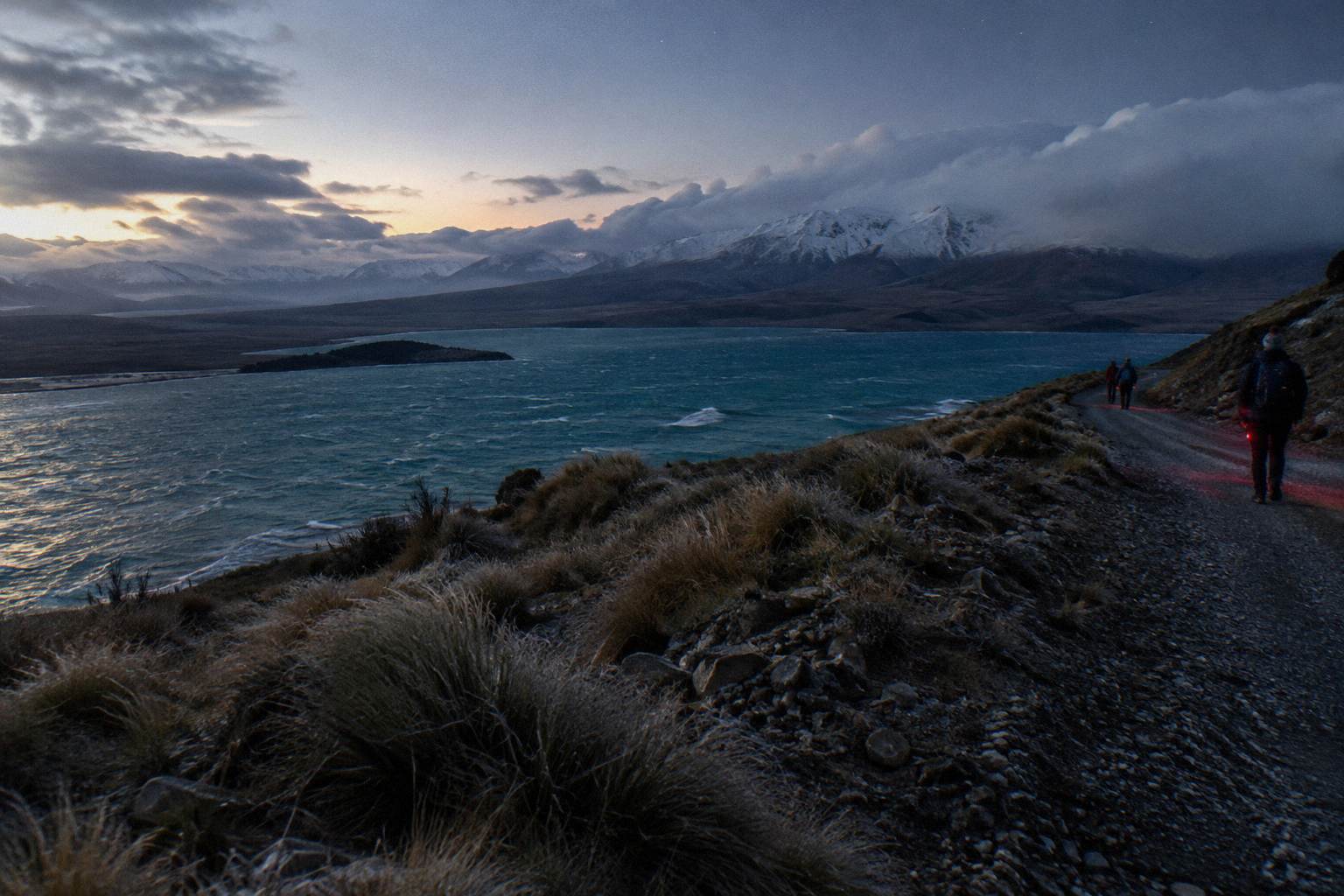
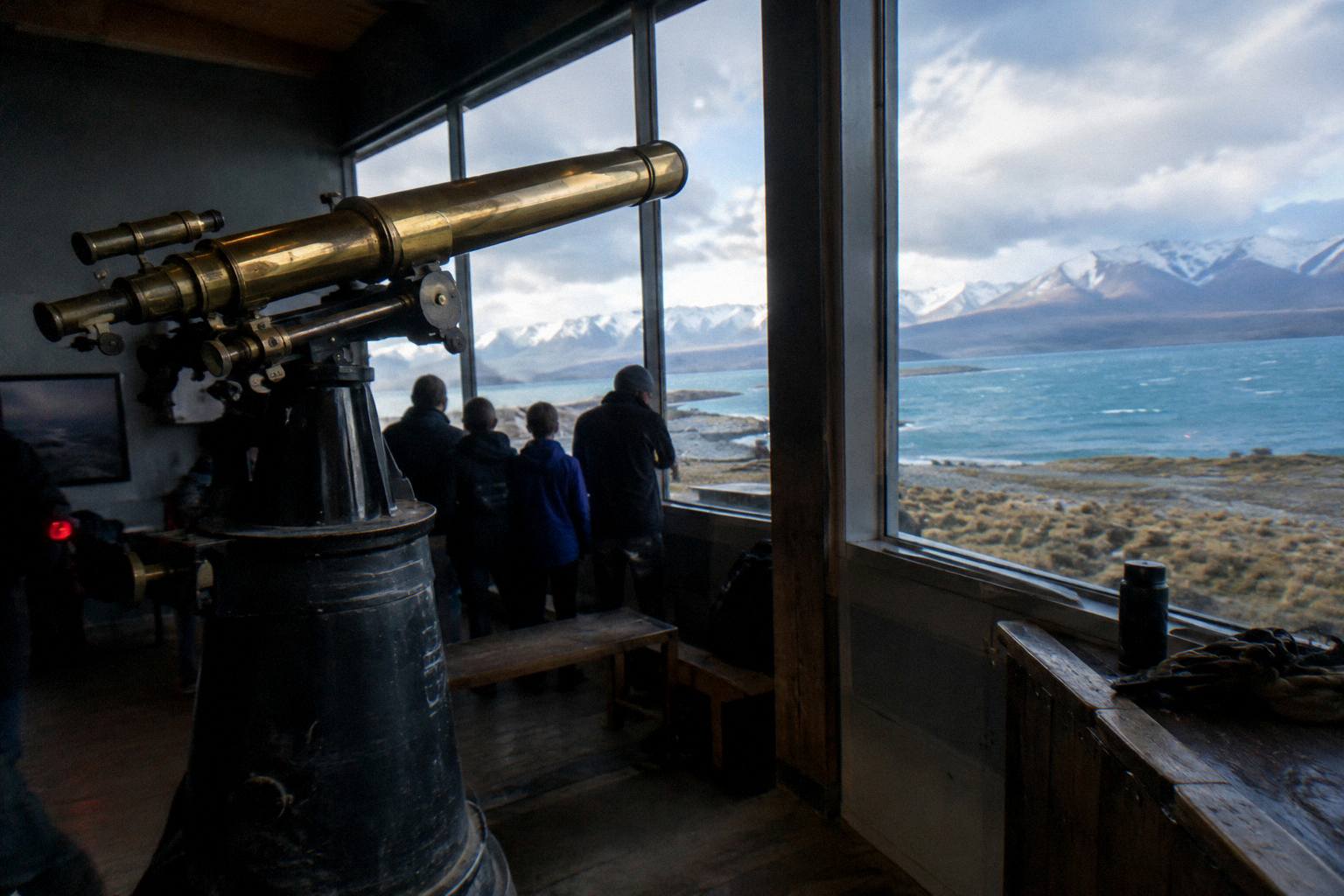
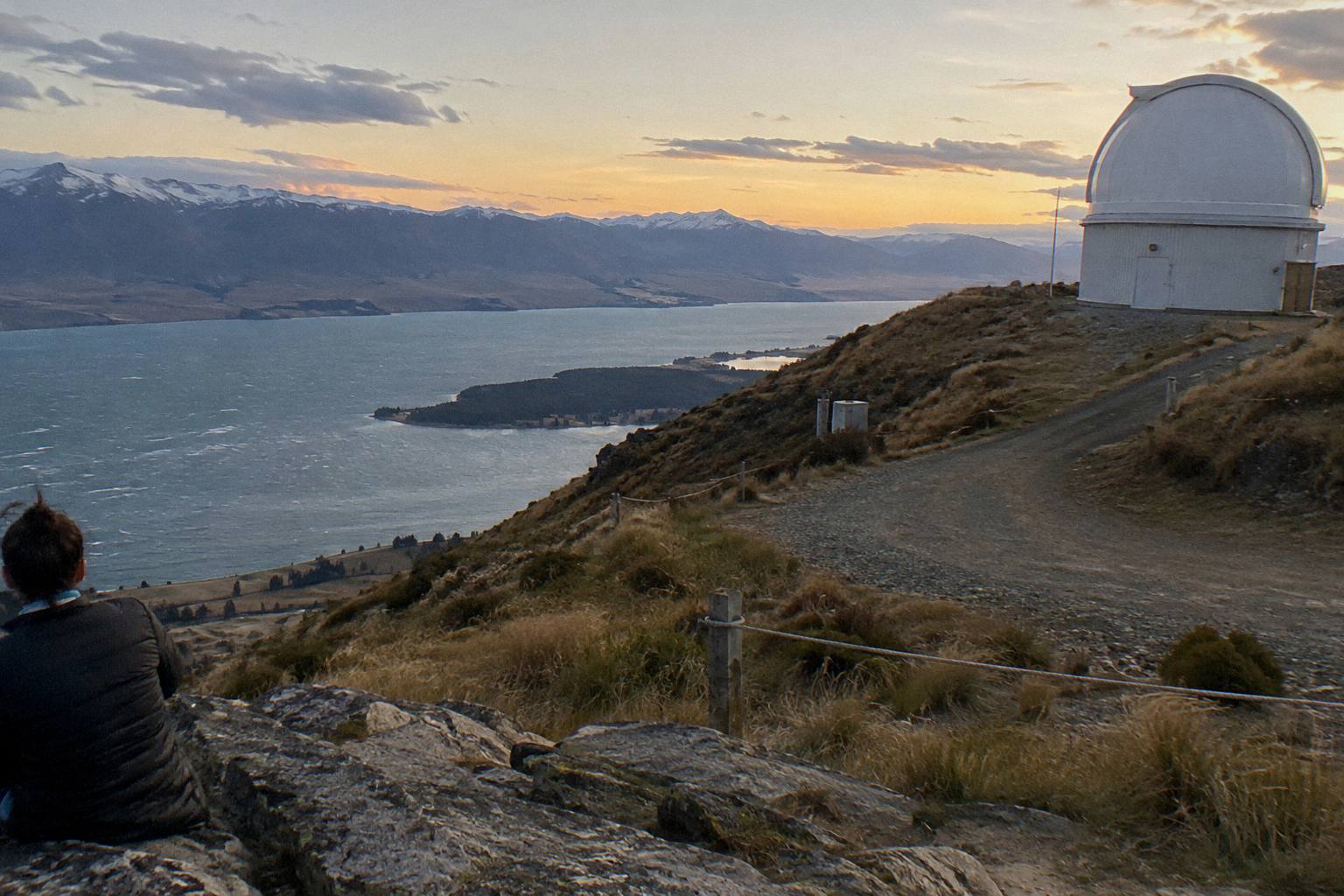
Mt John is not a viewpoint with a telescope bolted on. The University of Canterbury runs four research telescopes on the summit, including the 1.8 m MOA telescope operated with a Japanese university partner, and the Summit Experience uses its own private dome with telescopes up to 16 inch. The trade for that altitude is comfort: the operator lends an Extreme Cold Weather jacket, which tells you what the summit temperature can do, and the walking surface is gravel and steps. How cold the summit gets at night is its own question, covered in how cold Mount John gets at night.
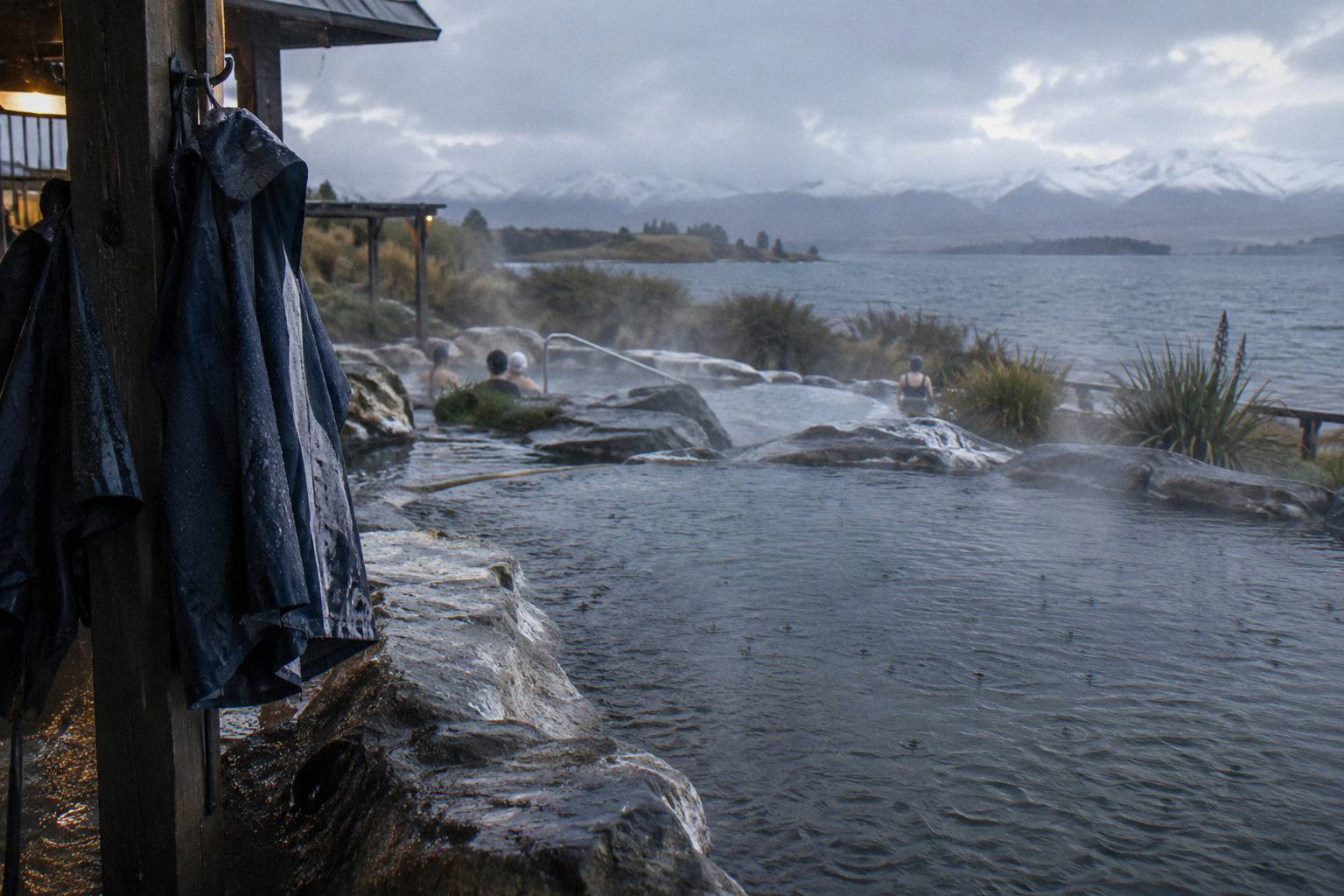
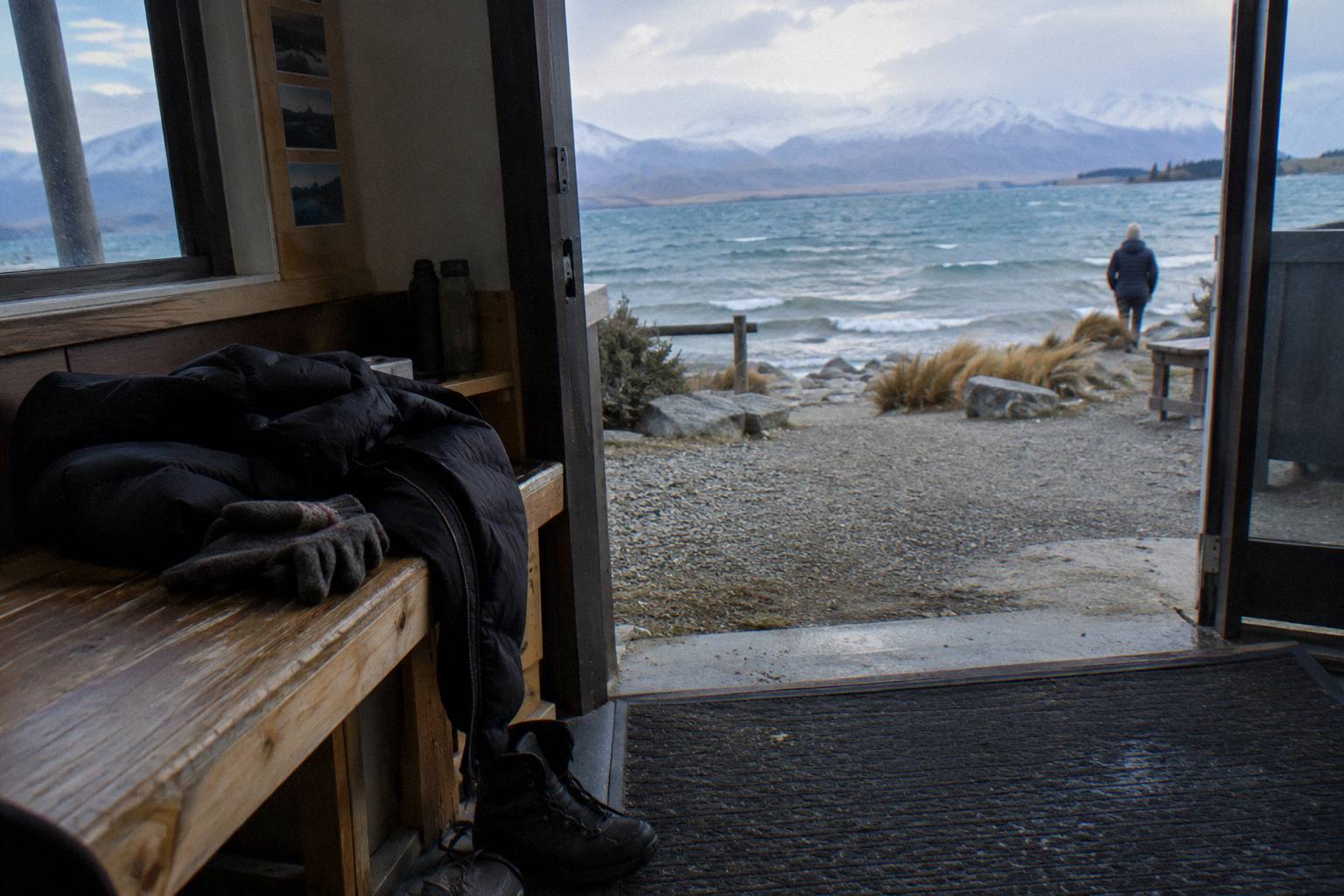
Tekapo Springs stays at lake level. The telescope viewing happens at the Springs, and the pool you finish in is exclusive to the tour group, held at 37.5 to 38.5 °C, with the guide remaining poolside. Robes, towels, hot drinks and poncho coats are included. On paper the setting is less dramatic than a mountain observatory; in practice, the difference between standing on gravel at altitude in a borrowed jacket and sitting in the heated pool with a hot drink is the whole decision for some travellers, and there is no wrong answer to it.
One structural difference worth naming: the Summit's 1 hour 45 minutes includes the bus up and down, so time at the top is less than the headline duration, while Soak in the Stars' 90 minutes includes both the viewing and the soak. Neither operator breaks its duration into components beyond that, so ask at booking if the split matters to you: Dark Sky Project on +64 3 680 6960 or info@darkskyproject.co.nz, Tekapo Springs on +64 3 680 6550 or bookings@tekapostargazing.co.nz.
Weather Fallbacks And Cancellation Rules
If cloud closes the summit, Dark Sky Project offers an indoor alternative, a reschedule, a gift voucher valid three years or a full refund, and decides as close to tour time as possible. Tekapo Springs runs in all weather: a VR indoor experience replaces the telescope viewing, and if telescope viewing falls under 30 minutes you get a 25 percent refund per ticket.
These are two genuinely different weather philosophies, and they should weigh in your decision as heavily as price. Dark Sky Project cannot guarantee clarity or any object, and says so plainly on its weather page{: rel="noopener"}; the go or no go call is made as close to tour time as possible, and you check in 15 minutes early for the update. If the outdoor stargazing cannot happen, the choice of indoor alternative, reschedule subject to availability, voucher or full refund is yours. Direct bookings cancelled more than 24 hours ahead are refunded in full; inside 24 hours the full price is charged, and groups of ten or more face tighter windows.
Tekapo Springs takes the opposite approach: the tour runs in all weather, and under cloud a 360 degree VR indoor experience, with imagery of the Church of the Good Shepherd and the Mt John summit, replaces the telescope portion. It is not a standalone tour. The operator's FAQ adds that if telescope viewing runs under 30 minutes, each ticket receives a 25 percent refund at the end of the tour, on tours from 18 June 2026. Note that Tekapo Springs markets the night as a guaranteed adventure in some copy, while its own terms say clarity cannot be guaranteed; treat the VR fallback, not the word guaranteed, as the substance. The rest of the planning pages sit on Mt John Stargazing.
| Weather and cancellation | Summit Experience | Soak in the Stars |
|---|---|---|
| Runs in cloud? | No; operator decides close to tour time | Yes, in all weather |
| Fallback | Indoor alternative, reschedule, voucher (3 years) or full refund | VR indoor experience replaces viewing |
| Partial refund | Not stated | 25 percent per ticket if under 30 minutes of telescope viewing |
| Direct cancellation | Full refund up to 24 hours before | Full refund up to 24 hours before |
| Sky promise | None; clarity and objects not guaranteed | None; clarity not guaranteed |
Neither operator promises the Milky Way, aurora or any particular object; both say conditions decide. What each promises instead is a defined fallback, and the honest comparison is between those fallbacks: a possible refund at Dark Sky Project versus a definitely-running, partly indoor night at Tekapo Springs. If your trip allows only one evening in Tekapo and a cancelled summit would mean no stargazing at all, that asymmetry is the single strongest argument for the hot pool night. The wider odds, and how to read the forecast before booking, are in the Tekapo stargazing forecast guide.
What Each Ticket Includes
The Summit ticket includes the bus, the guiding, telescope time in the private dome and the loan of an Extreme Cold Weather jacket. The Soak in the Stars ticket includes the guiding, telescope viewing, the exclusive hot pool, towels, robes, hot drinks and warm poncho coats, plus a possible hotel shuttle. Neither includes food beyond drinks.
Inclusions are where the gap between the adult rates becomes easier to judge. The Summit's jacket loan is not a courtesy: at 1,029 m after dark the operator treats proper cold weather gear as part of the product, and you keep your own layers underneath. Transport is a 15-minute bus each way from the lakefront base. There is no food element stated on the Summit page; the operator runs a Dark Sky Diner at the base as a separate offer.
Tekapo Springs' inclusions are comfort items: robes and towels mean you do not bring your own, hot drinks are poured poolside, and the poncho coats cover the telescope portion. The complimentary hotel shuttle is subject to availability and requested at booking, which the operator's FAQ states directly on its stargazing page{: rel="noopener"}. Neither ticket states photography support, and whether cameras are welcome on a stargazing tour is covered separately.
What neither ticket includes is a guaranteed sky, a point worth repeating because marketing copy elsewhere can blur it. Dark Sky Project's own terms say clarity and objects cannot be guaranteed; Tekapo Springs' terms say the same despite sunnier advertising language. Both operators are honest in the fine print, and the fallbacks in the section above are the real contract.
Which Night Suits Which Traveller
Couples choosing one splurge night lean to the Summit for the observatory and the research setting; families with children over 10 often land on Soak in the Stars for the tiered pricing and the pool; travellers with one night only and no schedule slack may prefer the always-running Tekapo Springs evening. Nobody should choose on sky quality alone, because the sky is shared and unbookable.
Working through traveller types is the most honest way to finish the comparison, using only the figures above. A couple on a anniversary trip who want the story of standing beside New Zealand's largest professional research observatory, as the University describes Mt John, is buying the Summit's altitude, dome and jacket, at the flat NZD 239 adult rate for both. The same couple who would rather end the night in warm water than on cold gravel pays the NZD 179 adult rate each and gets robes and hot drinks included.
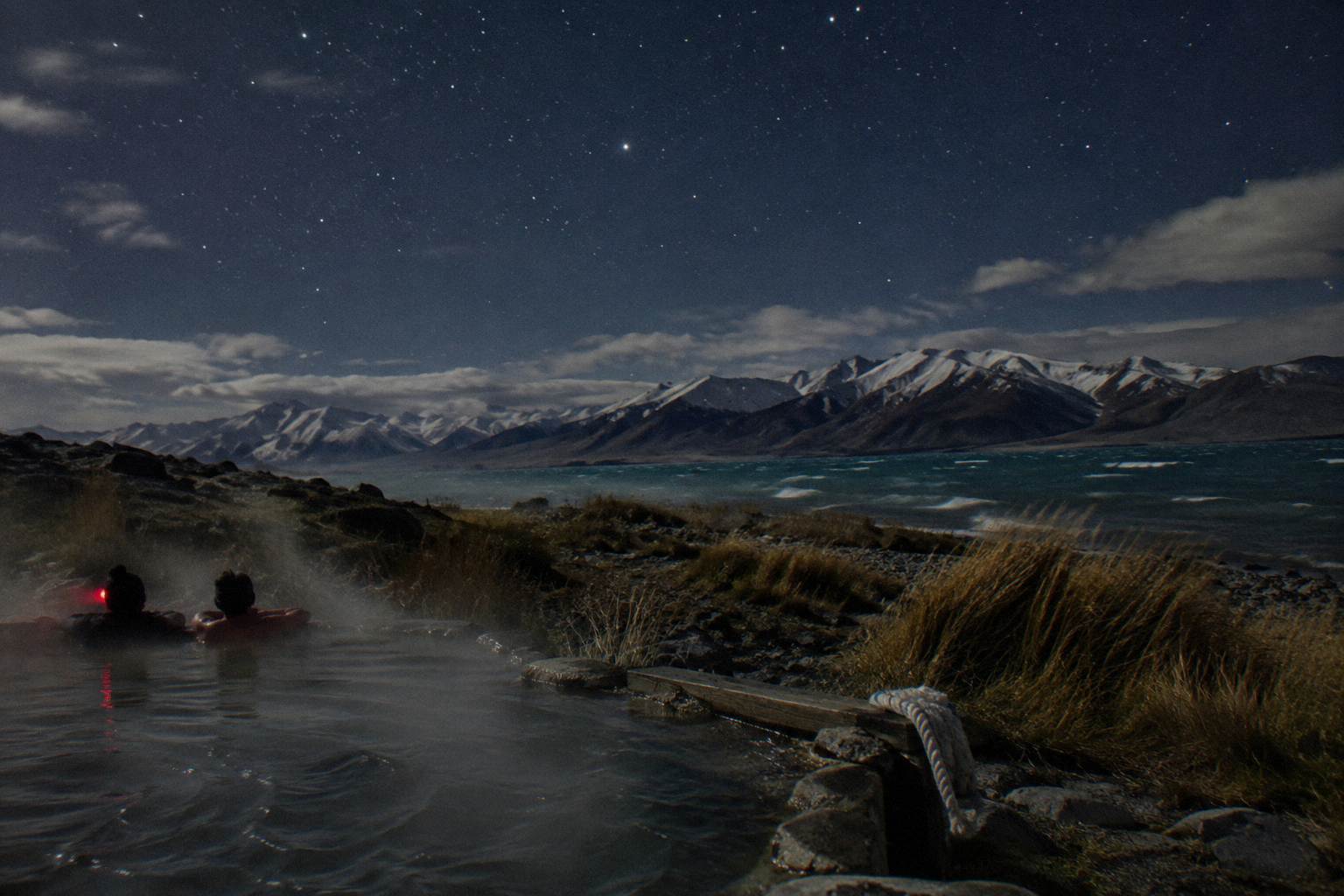
Families weigh differently. With the Summit flat at NZD 239 from age 10, every family member pays the full rate with no relief; Tekapo Springs offers the family pass at NZD 499 for two adults and two children, child tickets at NZD 115, and the pool is a natural ending for children who have already been up past bedtime. Children aged 5 to 9 exclude both nights and point instead to the Crater Experience, as the Tekapo stargazing with kids guide sets out.
Solo travellers and photographers lean Summit: the dome's telescopes up to 16 inch and the laser-guided naked eye session are the deeper astronomy product, and the Mt John Summit stargazing guide covers what that night looks like in detail. Anyone connecting the trip to a wider Mackenzie itinerary, Twizel or Aoraki, may prefer to keep the Tekapo evening flexible and book a basin tour on another night, a route covered in the Mount Cook stargazing tours guide. The Summit Experience's own page takes bookings for its dates, and you can also check availability alongside the Summit Experience tour page before committing.
Common Mistakes When Choosing Between The Summit And The Hot Pools
The recurring mistakes are assuming a child discount exists on the Summit, expecting a published start time, booking the hot pool night expecting a refund when cloud rolls in, and comparing the two on sky quality as if one operator owned better stars. Each of these comes from reading summaries rather than the operators' own pages, and each changes what you pay or get.
The first mistake is pricing the Summit with a child rate. Adult and child are both NZD 239, minimum age 10; a family budgeting child tickets at a discount will be short on the night. The second is planning around a clock time. Neither headline night publishes one: Summit times vary with sunset, and Tekapo Springs times are seasonal, with summer departures that can pass midnight. Build your evening plan around the time on your booking confirmation, not around a time you read somewhere.
The third mistake is misunderstanding the weather deal on each side. Booking Soak in the Stars and expecting a refund when the sky clouds over does not match the operator's terms: the tour runs, the VR experience replaces the viewing, and the 25 percent refund applies only under 30 minutes of telescope viewing. Booking the Summit and assuming it runs regardless is the mirror error: it can be called off close to tour time, with the refund and reschedule options described above. The fourth mistake is treating the sky as a product feature. Both nights sit under the same reserve; the post on why Tekapo is famous for stargazing explains what the reserve designation actually protects.
A final, quieter error: assuming Mt John Stargazing, this site, runs either tour. It does not; it compares them. The operators are Dark Sky Project and Tekapo Springs, and every figure on this page is theirs.
The Bottom Line For Your Booking
Pick the Summit for the research observatory, the dome telescopes and the full 1 hour 45 minute structured night at NZD 239 flat. Pick Soak in the Stars for the NZD 179 adult price, the tiered family rates and an evening that runs in any weather and ends in hot water. Both refund in full up to 24 hours before, so the honest risk is only the weather clause on each side.
If you are still split, book the one whose cancellation terms fit your itinerary better rather than the one whose photos you liked. A traveller with three nights in Tekapo can afford a summit call off and a rebooking; a traveller passing through for one evening cannot, and the always-running pool night removes that risk entirely. Whichever way you lean, book direct-booking aware: the operator prices on this page are the operators' own schedules, and booking pages may carry different terms.
Common Questions About The Summit Or The Hot Pools
Is The Mt John Summit Or Tekapo Springs Stargazing Better?
Neither is better on the facts: they are different products. The Summit offers the research observatory setting, dome telescopes up to 16 inch and a 1 hour 45 minute night at NZD 239 flat from age 10. Soak in the Stars offers 90 minutes ending in an exclusive 37.5 to 38.5 °C pool at NZD 179 adult, NZD 115 child. Choose on setting, comfort and budget.
Which One Is Cheaper For A Family?
Tekapo Springs. The Summit charges NZD 239 for every participant aged 10 and over with no child rate, so each family member pays the full flat price. Soak in the Stars has a family pass at NZD 499 for two adults and two children, with child tickets at NZD 115. Both prices are the operators' own schedules.
Can Children Under 10 Join Either Tour?
No. Both the Summit Experience and Soak in the Stars set a minimum age of 10, and Tekapo Springs allows no child under 6 on any of its tours, carried babies included. For children aged 5 to 9, the Crater Experience at Cowan's Observatory takes age 5 and up at NZD 99 per child.
What Happens If It Is Cloudy?
Dark Sky Project decides close to tour time; if outdoor stargazing is not possible it offers an indoor alternative, a reschedule, a gift voucher valid three years or a full refund. Tekapo Springs runs in all weather, with a VR indoor experience replacing telescope viewing, and a 25 percent refund per ticket if telescope viewing falls under 30 minutes.
Do Either Tours Have Set Start Times?
No published fixed times. Summit times are described by the operator as various times throughout the year, depending on time of sunset. Soak in the Stars runs seven evenings a week October to April and Thursday to Monday May to September, with some departures after midnight, and times are seasonal.
Can I Cancel Either Booking?
Yes on direct bookings, up to 24 hours before, for a full refund, on both operators' terms. Inside 24 hours the Summit is charged in full. Groups of ten or more face tighter windows at Dark Sky Project, and bookings made through agents follow the agent's terms.