Why Is Tekapo Famous For Stargazing?
Tekapo's stargazing fame rests on a gold-status dark sky reserve, a working research observatory on Mt John and a cluster of guided night tours. Here is how the pieces fit together.
Tekapo is famous for stargazing because it sits inside the Aoraki Mackenzie International Dark Sky Reserve, awarded reserve status in April 2012 and described by the operators as the largest dark sky reserve in the Southern Hemisphere, while the University of Canterbury has run Mt John Observatory above the village since 1965. A third reason is commercial: Dark Sky Project, Tekapo Springs and several smaller operators run guided night tours from the lakefront, which turned a research site into a destination people travel for. The Mt John Stargazing site covers all of it, and this piece walks through each layer of the story.
The fame is not folklore. It rests on paperwork, telescopes and a lighting code, and each layer is worth understanding before you book anything, because the tours differ more than their postcards suggest.
The Aoraki Mackenzie International Dark Sky Reserve
The Aoraki Mackenzie International Dark Sky Reserve covers Aoraki/Mt Cook National Park and the Mackenzie Basin together, treating the park and the basin as one combined area. The reserve was awarded dark sky reserve status in April 2012, and that designation applies across both parts of the region. Dark Sky Project, the largest operator in Tekapo, describes it as the largest dark sky reserve in the Southern Hemisphere. Reserve status is a formal designation rather than a marketing label: it recognises measured sky quality and a local commitment to keeping it that way, and the Mackenzie District Council's district plan includes rules on outdoor lighting, shielding lights so they point downward and limiting how long and how often they run. That legal layer is what separates Tekapo from any other place in New Zealand with a nice view of the stars.
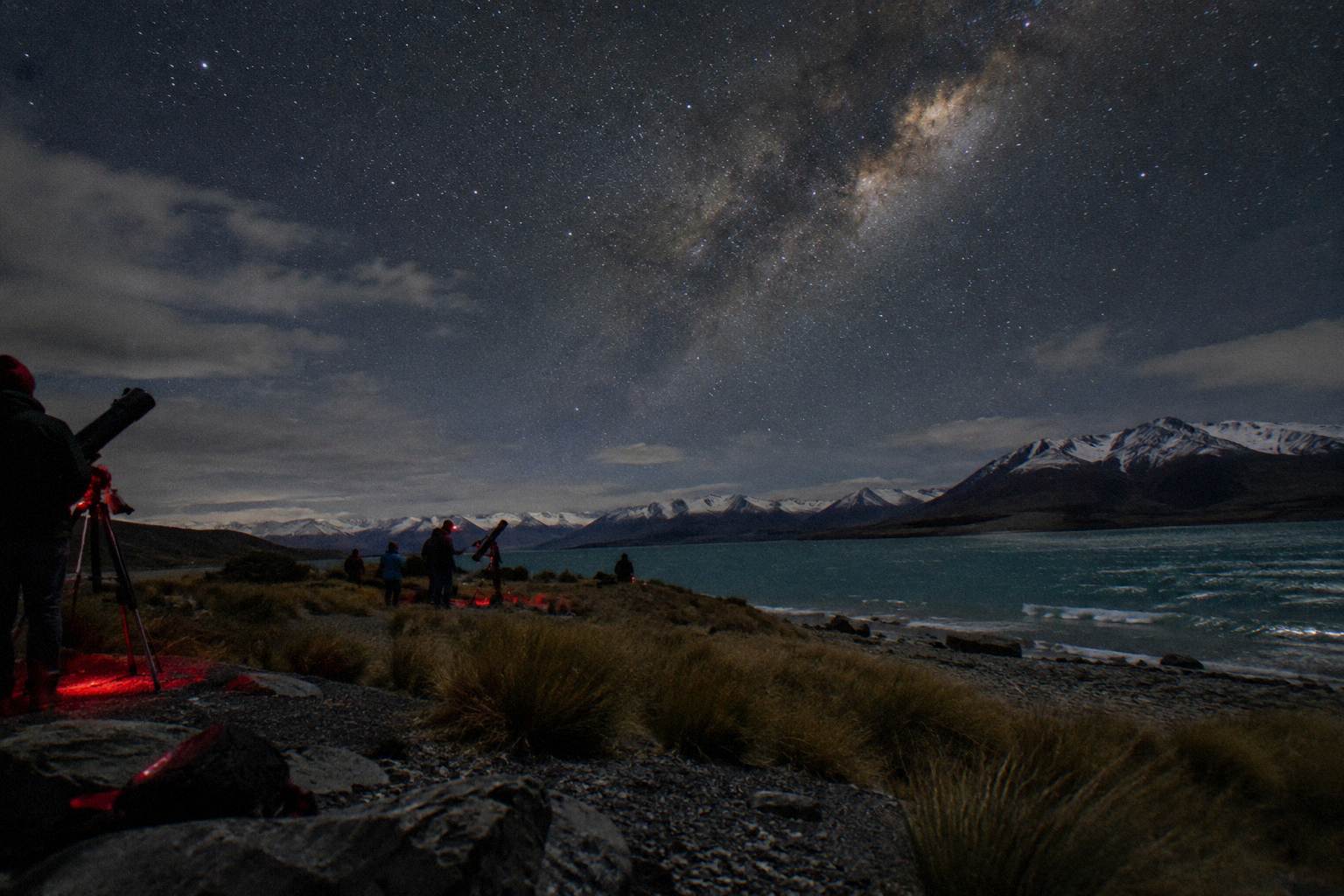
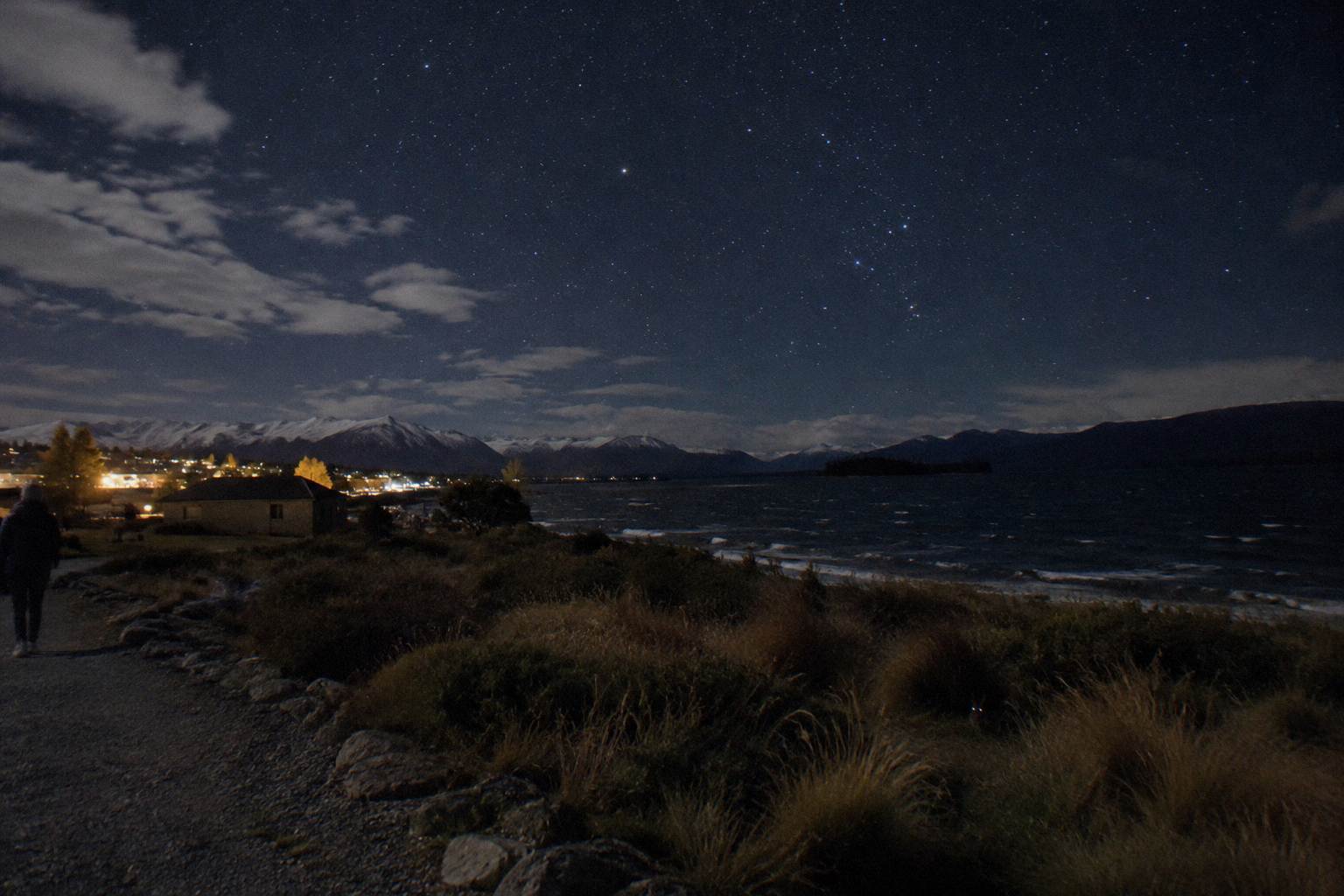
The geography does half the work before the rules even apply. The basin sits at altitude, far from large cities, with the Southern Alps blocking much of the light and moisture that would wash out the sky elsewhere. The reserve designation then protects the darkness that the landscape provides. The result is a place where the Milky Way can be visible to the naked eye from the village edge, and where tour operators can plan entire businesses around conditions holding.
Dark Sky Project's reserve page spells out what the designation covers and when it was awarded. The company's history page adds the timeline from its own founding in 2004, when it traded as Earth & Sky, through the 2012 reserve award, to the Rehua building opening on the lakefront in 2019. Reading the two together gives you the full arc: the darkness came first, the designation protected it, and the visitor industry grew around it.
| Fact | Detail |
|---|---|
| Reserve name | Aoraki Mackenzie International Dark Sky Reserve |
| Status awarded | April 2012 |
| What it comprises | Aoraki/Mt Cook National Park and the Mackenzie Basin |
| Size claim | Largest dark sky reserve in the Southern Hemisphere (operator wording) |
| Local lighting rules | Mackenzie District Council district plan includes outdoor lighting rules, downward shielding, limits on time and frequency |
One caution: reserve status protects the sky, not the weather. Cloud still closes tours, and no operator in the basin will promise clarity. That is covered in detail further down, because it shapes which booking makes sense for a short stay.
Mt John Observatory, The Research Base Above The Lake
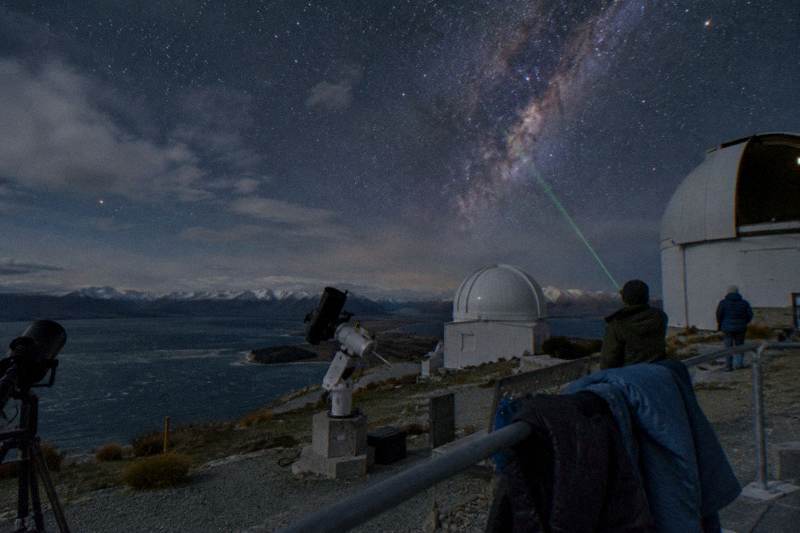
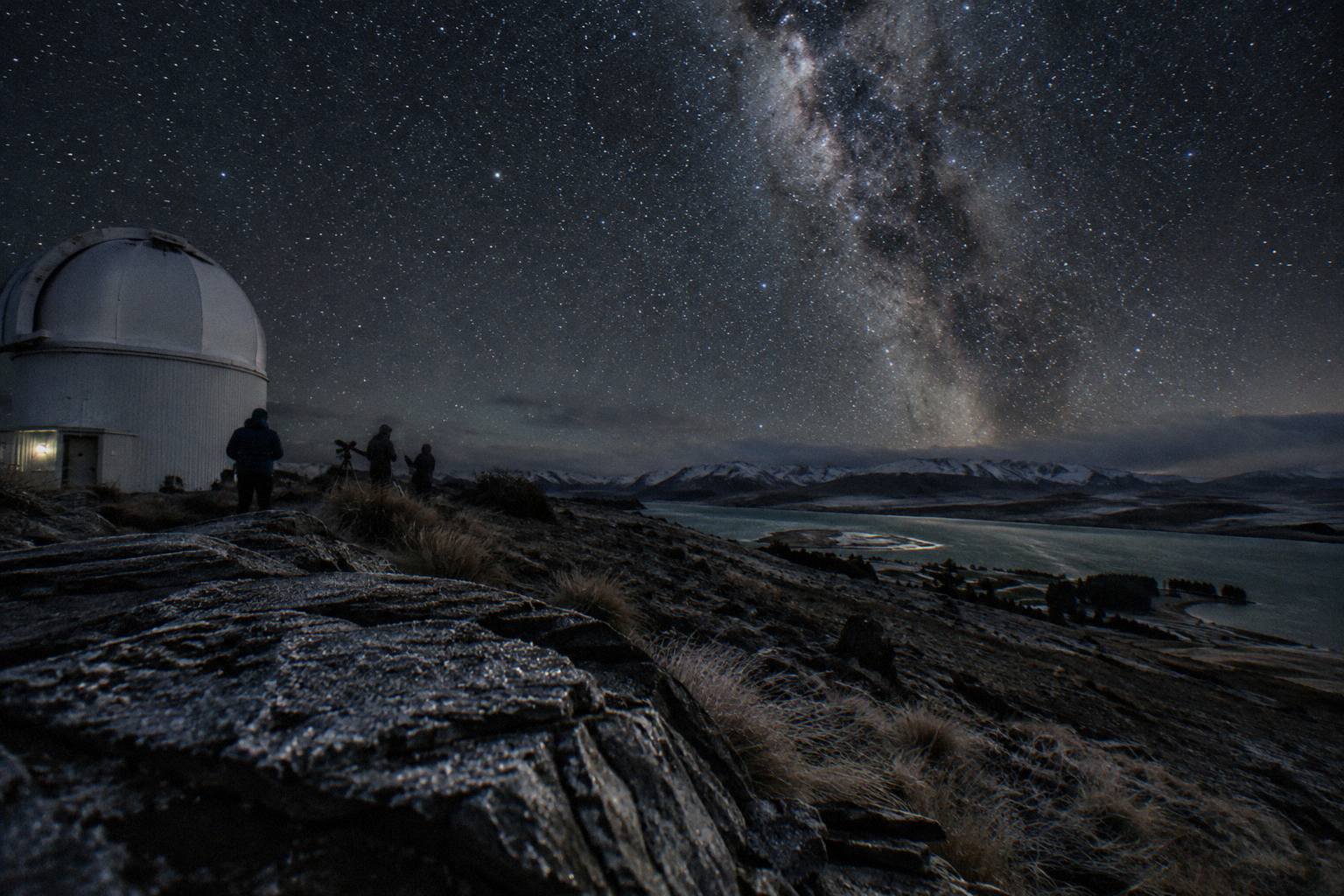
Mt John Observatory is the research base that crowns the summit above Lake Tekapo, sitting at 1,029 m. Officially opened in 1965, it is described by the University of Canterbury as New Zealand's largest professional research observatory, and it remains an active scientific site with its telescopes positioned high above the lake. The site hosts four research telescopes, including the 1 m McLellan and the 1.8 m MOA telescope run in partnership with Osaka University. This is a working scientific facility, not a visitor attraction built for tourists, and that is the second pillar of Tekapo's fame: the village sits under a sky that a university has considered worth studying for six decades.
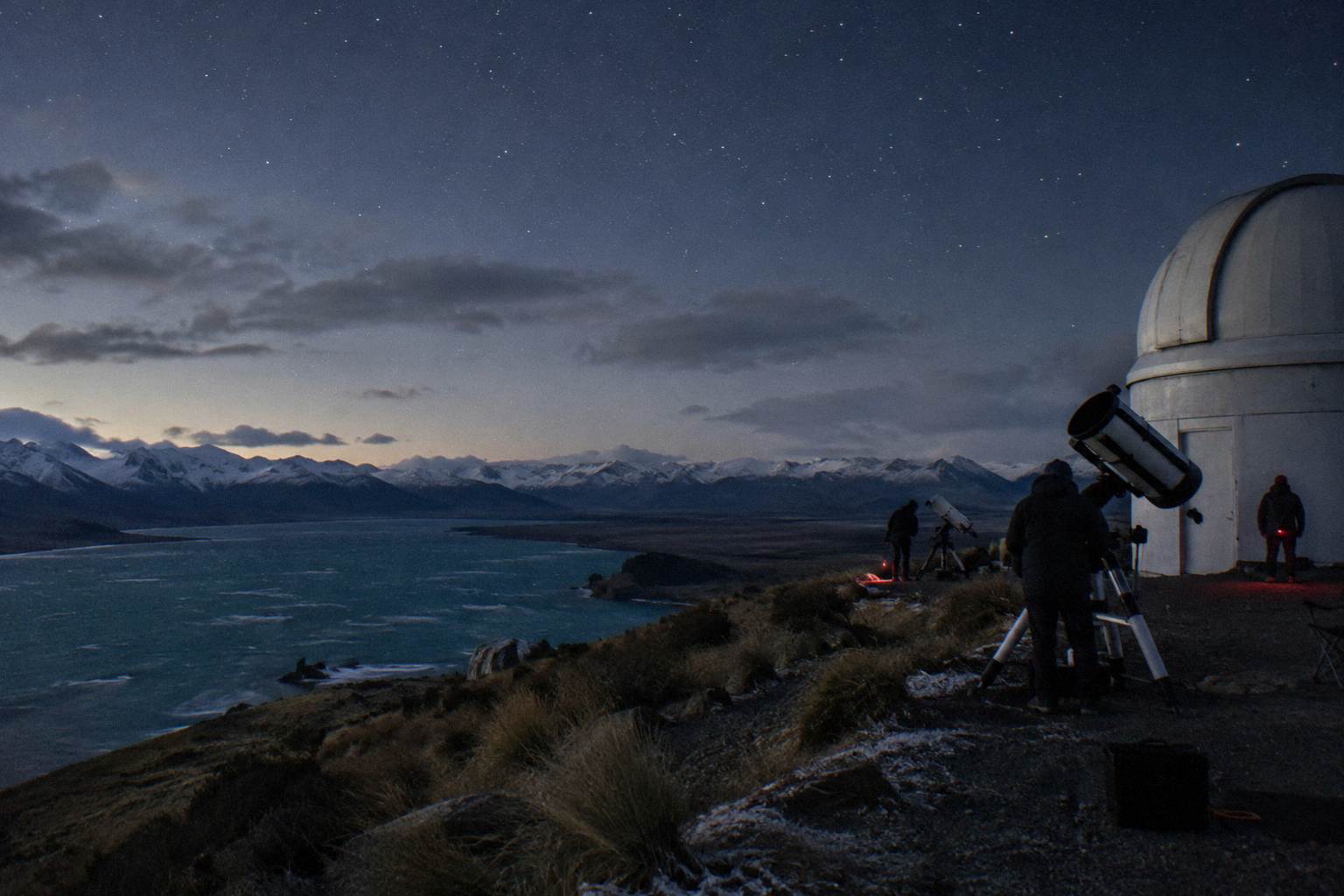
The practical consequence for visitors is odd and interesting. During the day the summit is publicly accessible by a toll road, with the Astro Cafe operating daily from 9am to 4pm and a road user fee of NZD 14 per vehicle at the gate, while vehicles over 12 seats are not permitted and the road closes in some weather. At night the area around the working telescopes is controlled, and public access is through guided tours. Dark Sky Project's Summit Experience is the tour that uses the site: a 15-minute bus from the lakefront base, telescopes up to 16 inch inside a private observatory dome, and guiding that combines Western astronomy with Tātai Aroraki, Māori astronomy. The operator's price is NZD 239 for adults and children alike, the tour runs 1 hour 45 minutes, and the minimum age is 10.
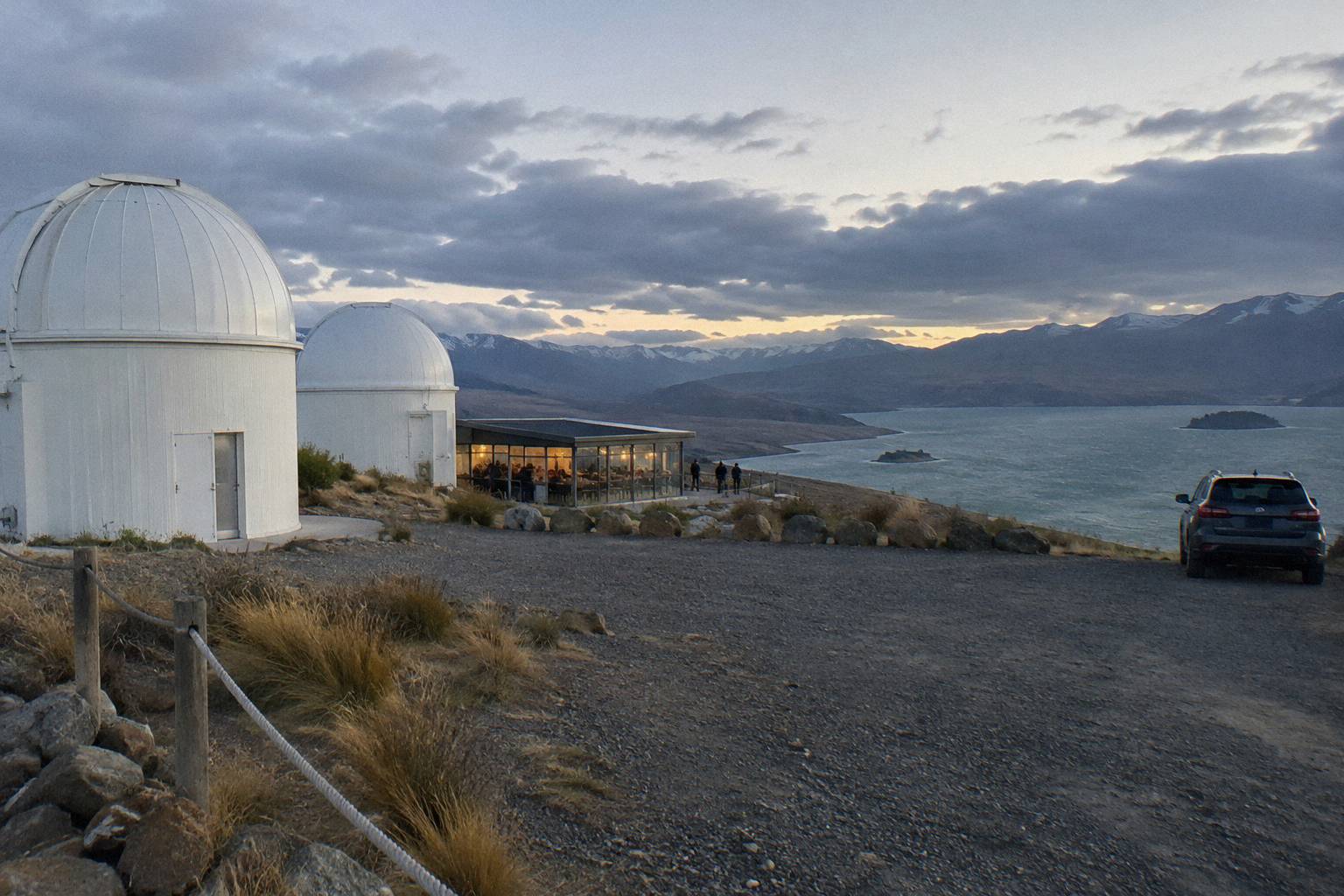
The observatory's research role explains some of the tour logistics that catch people out. The 100 m gravel incline walk and a few steps in the dark, the loan of an extreme cold weather jacket, and the requirement to check in 15 minutes before departure all come from running visitors around a facility whose first job is science. The Summit Experience page on the operator's site carries the current detail, including that tour times vary throughout the year because they depend on the time of sunset.
If the summit walk or the minimum age of 10 rules your party out, the same operator runs the Crater Experience at Cowan's Private Observatory a five minute drive from the base, with a minimum age of 5 and wheelchair users able to join if they drive their own vehicle to the site. It runs 75 minutes including transport, and the operator's price is NZD 139 adult, NZD 99 for children aged 5 to 17, with a family pass at NZD 377 for two adults and two children.
The Takapō Name And Ngāi Tahu Connections
Takapō is the name recorded by Ngāi Tahu ancestors for the place, shown on the Ngāi Tahu cultural mapping project Ka Huru Manu, and Dark Sky Project explains that it writes Takapō with a macron to support revitalising Māori place names. The company's own address reads 1 Motuariki Lane, Takapō (Tekapo), and its cafe page gives the summit the Māori name Ōtehīwai Mount John. Tekapo Springs, the other large operator, writes Tekapo without the macron, so you will see both spellings around the village and both refer to the same place.
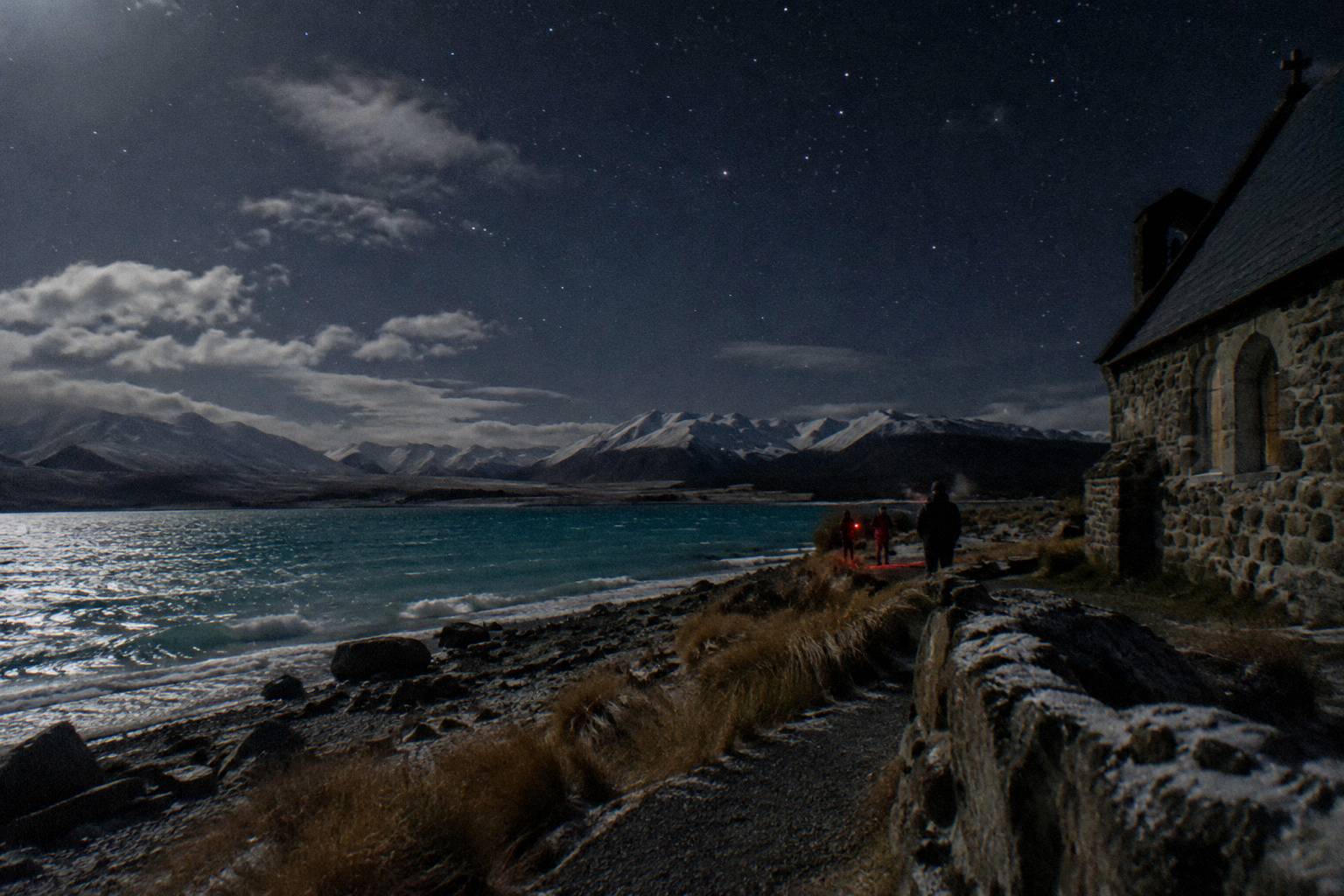
The connection runs deeper than spelling. Dark Sky Project says Tātai Aroraki, Māori astronomy, is woven through its Summit Experience, Crater Experience and indoor Dark Sky Experience, and the company shares the proverb "Nā te pō, ko te ao, ko te ao mārama" on its own pages. Tekapo Springs tells Māori star stories on its tours and describes stars as a Pacific navigation compass, naming Matariki and the Southern Cross. None of this is decoration added for visitors; the operators present it as part of how the sky has been read from this lakeshore for a long time.
That cultural layer matters to the fame question for a simple reason: a place where the night sky carries navigation, seasonal and storytelling meaning, sitting inside a modern research reserve, gives stargazing here a depth that a scenic viewpoint cannot match. What you get on a tour depends on the operator, so it is worth reading what each one says it covers before choosing, rather than assuming every guide tells the same stories.
The Operators Who Built Tekapo's Stargazing Scene
Seven operators run ten bookable stargazing tours out of the Tekapo area and the wider Mackenzie Basin, from Dark Sky Project's three experiences to small-group lakefront walks and observatory visits as far afield as Twizel and Mt Cook. This density is the third reason the village is famous. A research observatory with no tours would stay a research observatory; a reserve with a dozen ways to see it becomes a destination that travellers plan evenings around.
Dark Sky Project anchors the market. Founded in 2004 as Earth & Sky, a Ngāi Tahu Tourism partner since 2016 and housed in the Rehua building on the lakefront since 2019, it says it hosts over 45,000 visitors a year. Its Mt John Summit Stargazing Experience carries a rating of 4.6 across 352 reviews, and its Crater Stargazing At Cowan's Observatory a rating of 4.6 across 93 reviews. Both figures come from the operator's booking pages. The company also runs an indoor option, covered below, which matters for cloudy nights.
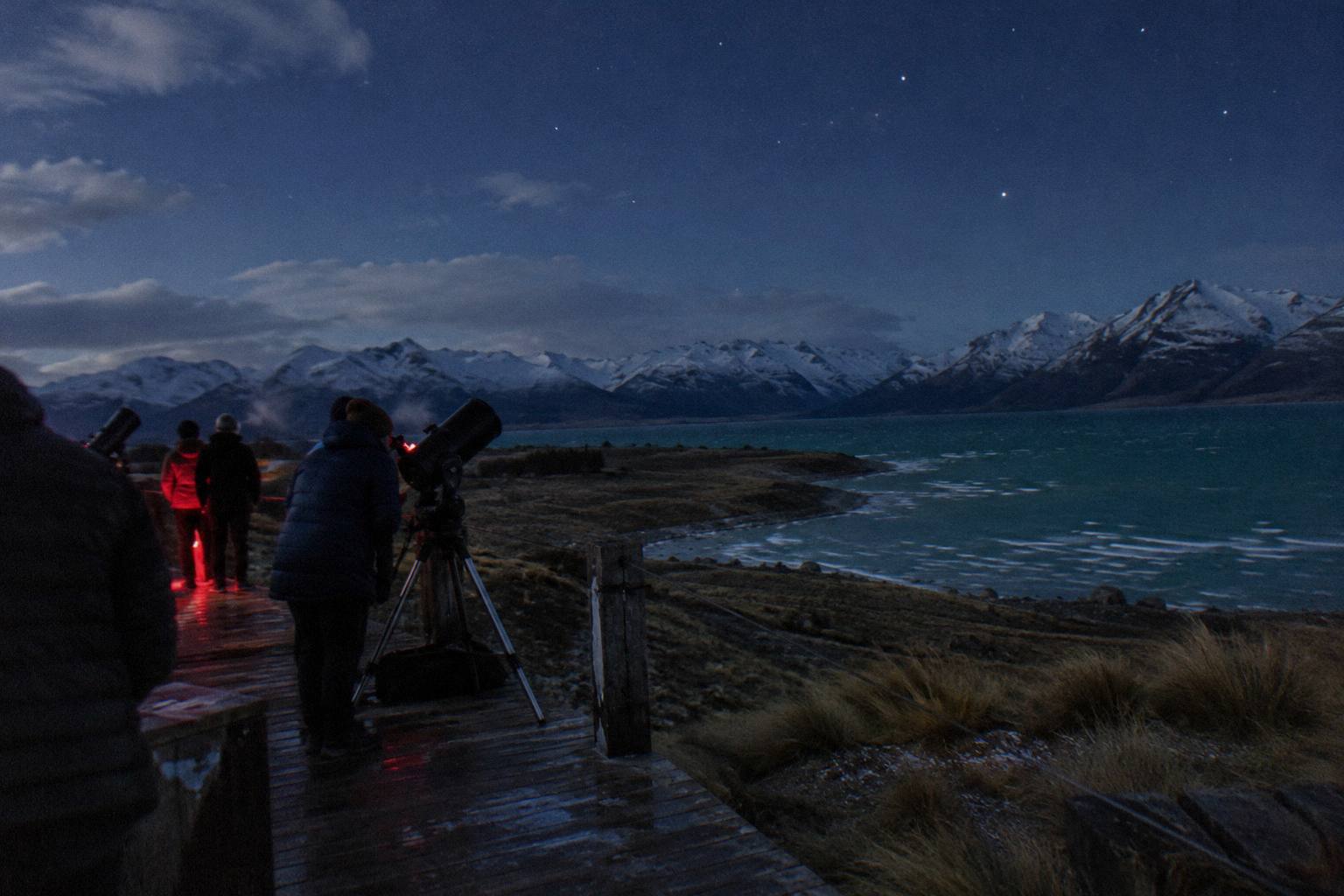
Tekapo Springs is the second anchor, combining stargazing with its hot pools. Its Soak in the Stars tour runs 90 minutes, pairs guided telescope viewing with an exclusive hot pool at 37.5 to 38.5 degrees Celsius with the guide poolside, and the operator's price is NZD 179 adult, NZD 115 child, with a family ticket at NZD 499. Around these two sit smaller operators: Chameleon Stargazing with a shared experience of about 1.5 hours, Astro Tekapo with lakefront stargazing at Takapō Regional Park, and Silver River Stargazing with alpine, ultimate and Mt Cook experiences running 75 minutes to 2 hours. Further out, Stargaze Mackenzie runs a Twizel tour with an astronomer and telescope.
| Tour | Operator | Duration | Minimum age | Operator price |
|---|---|---|---|---|
| Mt John Summit Stargazing Experience | Dark Sky Project | 1 hour 45 minutes | 10 | NZD 239 adult and child |
| Crater Stargazing At Cowan's Observatory | Dark Sky Project | 75 minutes | 5 | NZD 139 adult, NZD 99 child, NZD 377 family |
| Hot Pools And Stargazing At Tekapo Springs | Tekapo Springs | 90 minutes | 10 | NZD 179 adult, NZD 115 child, NZD 499 family |
| Chameleon Shared Stargazing Experience | Chameleon Stargazing | About 1.5 hours | Not stated | Not stated |
| Astro Tekapo Lakefront Stargazing | Astro Tekapo | 1.5 hours | 6 | Not stated |
| Silver River Ultimate Stargazing Experience | Silver River Stargazing | 2 hours | Not stated | Not stated |
| Twizel Stargazing Tour With An Astronomer | Stargaze Mackenzie | 75 minutes | 6 | Not stated |
Where a price is not stated, the booking page for that tour carries it. The spread matters when you are planning: the cheapest stated Dark Sky Project option is the indoor Dark Sky Experience at NZD 59 adult, while the outdoor experiences step up from the Crater Experience to the Summit Experience, and the soak tour prices somewhere between. A fuller comparison of the two headline tours is in the Summit versus Tekapo Springs breakdown, and the overview of Lake Tekapo stargazing tours covers the rest.
The Crater Experience deserves its own word here because it is the family workhorse of the Dark Sky Project range: the minimum age of 5 is the youngest stated age among the outdoor tours in this group, the purpose-built observation craters are sheltered from wind and light, and the family pass structure means a party of two adults and two children pays NZD 377 rather than four adult fares. For families with children too young for the summit's age 10 minimum, it is the guided option that fits.
What The Sky Actually Offers
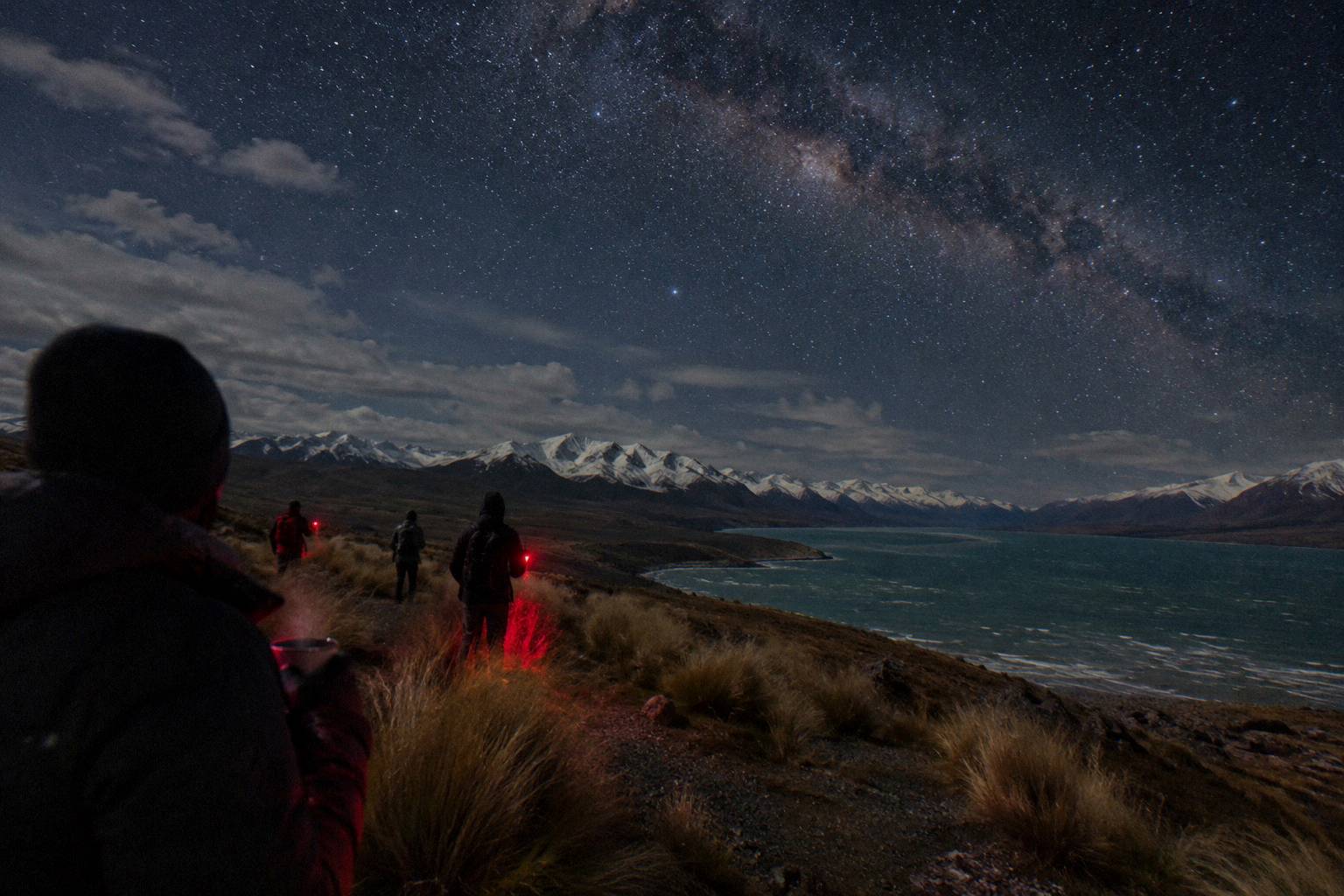
No operator can promise what you will see: they are explicit that clarity, the Milky Way, aurora, or any particular object cannot be guaranteed, and Dark Sky Project makes its weather decisions as close to tour time as possible, so the sky you get on the night is simply the sky that shows up. What the reserve offers is dark-sky quality, not certainty. Brighter moonlight affects fainter stars and galaxies, as the operator's weather page notes, though the moon itself is also a good telescope target. Aurora Australis and the Milky Way both depend on conditions, and Dark Sky Project does not promise either. This honesty is not a legal footnote; it is the single most useful planning fact about the destination.
The moon question is the one travellers most often get backwards. A full moon reduces naked-eye Milky Way visibility, as Tekapo Springs' own FAQ puts it, but telescopes still show bright objects. So a moonlit night is poor for galaxy hunting and fine for lunar or planetary viewing, and the right tour for a full-moon week may be a different one than for a dark-sky week. The planning logic is covered in the new moon versus full moon comparison, and the guide to the best time for stargazing at Lake Tekapo works through the seasons.
Weather handling differs between the two big operators, and the difference should shape your booking. Dark Sky Project offers an indoor alternative or its Virtual Stargazing Experience if outdoor stargazing is not possible, plus a reschedule subject to availability, a gift voucher valid three years, or a full refund; direct bookings can be cancelled up to 24 hours before for a full refund. Tekapo Springs tours run in all weather, with a VR indoor experience using 360 degree imagery replacing telescope viewing under cloud, and its FAQ says that if telescope viewing comes in under 30 minutes, a 25 percent refund per ticket applies at the end of the tour. Neither company guarantees the sky, and Tekapo Springs' own terms say clarity cannot be guaranteed even though its advertising uses the word guaranteed elsewhere.
How To Choose A Tour In The Reserve
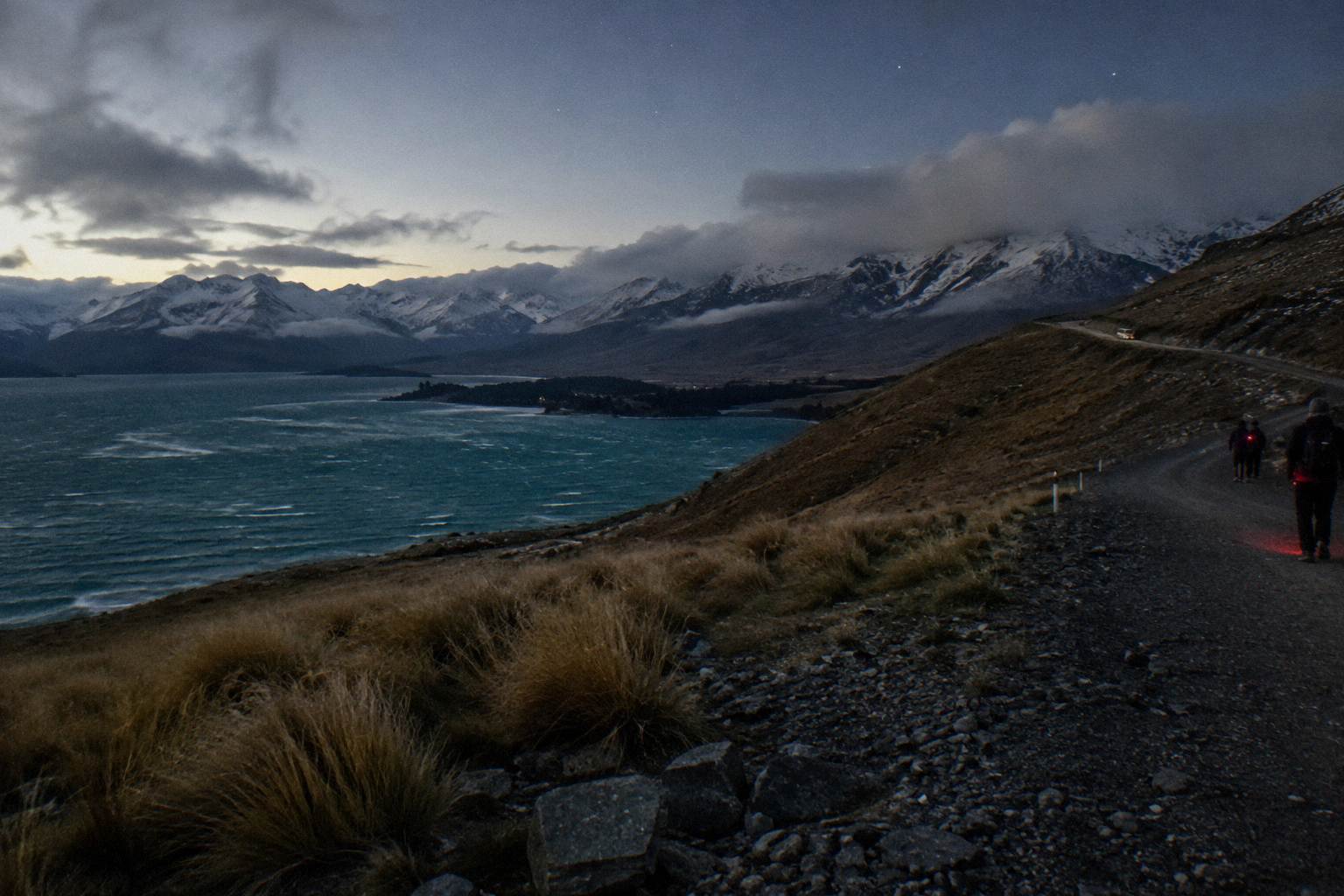
Start with your group's ages, then your budget, then your weather risk: age minimums and restrictions knock out more travelers than ticket prices do, so a tour everyone in your party can actually join beats a cheaper one somebody can't. From there, pick the option that fits both what you can spend and the conditions you're likely to face. The Summit Experience needs everyone to be 10 or older and able to manage a 100 m gravel incline and a few steps in the dark; the Crater Experience takes children from 5; Tekapo Springs' Soak in the Stars needs age 10 and its FAQ states no child under 6 on any of its tours, including babies carried. If your group spans those thresholds, the operator choice is made for you before you look at a single price.
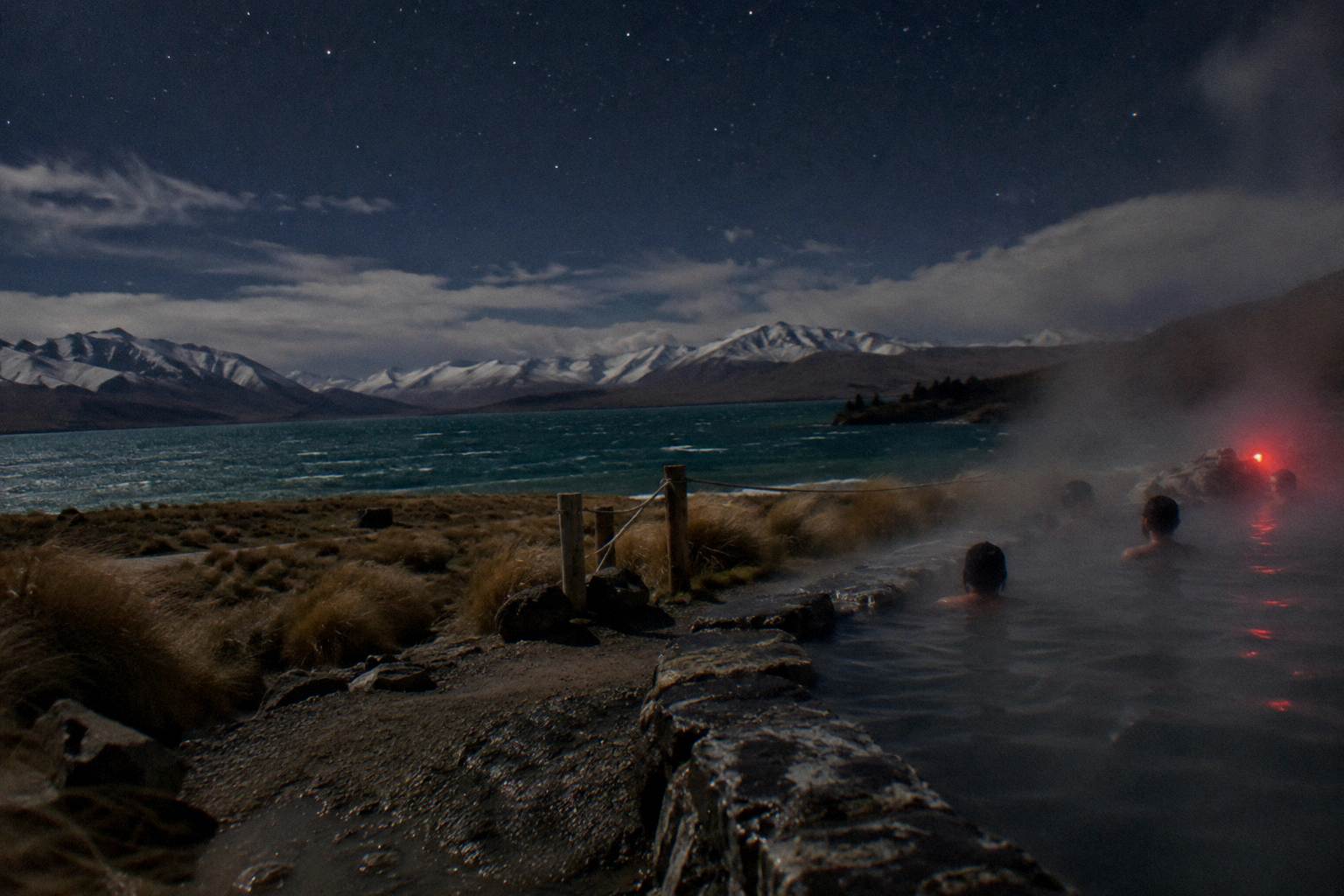
Budget logic then narrows it further. The Summit Experience is NZD 239 per person with no child discount, adult and child priced alike, which makes it the most expensive stated family option in the group. The Crater Experience's family pass brings two adults and two children to NZD 377. Tekapo Springs' Soak in the Stars prices a family at NZD 499 and adds towels, robes, hot drinks, warm poncho coats and the pool. The smaller operators do not state prices, so for those the booking page is the source. Where a stated detail is missing, such as a start time, ask the operator directly: Dark Sky Project is on +64 3 680 6960 or info@darkskyproject.co.nz, and Tekapo Springs on +64 3 680 6550 or bookings@tekapostargazing.co.nz.
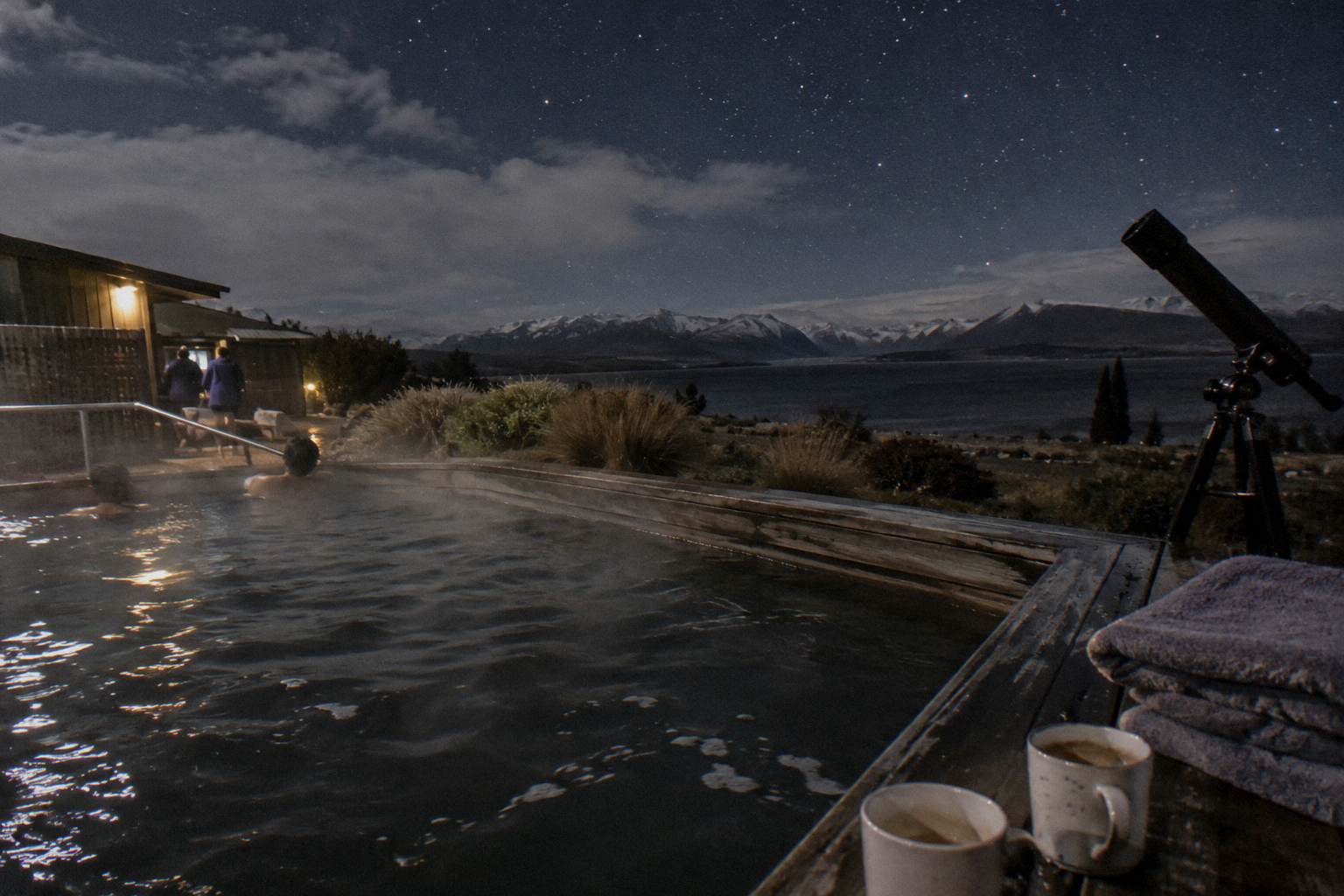
Timing is the remaining variable, and the honest answer is that most of it is unpublished by design. Summit tour times vary throughout the year with sunset, and the exact times are not on the operator's page; Soak in the Stars runs seven evenings a week from October to April and Thursday to Monday from May to September, with some tours beginning after midnight, a 12:15am example among them. Booking early in your stay rather than your last night gives you a reschedule window if the weather turns, which matters more here than in almost any other destination activity.
For the soak-and-sky combination, the decision moment is simple: if a hot pool at 37.5 to 38.5 degrees with a guide poolside, towels, robes, hot drinks and poncho coats sounds like the right way to meet a cold night, that tour's booking page has the live calendar, and check availability shows current slots.
What Trips People Up When Visiting Tekapo
What trips people up in Tekapo is booking only the last night of a stay instead of planning the whole visit, ignoring age minimums, assuming the sky is guaranteed when it may well not be, and turning up late for a booked session. Dark Sky Project's terms are blunt on the last one: late check-in means no refund, and cancellations inside 24 hours are charged at 100 percent of the price, with groups of 10 or more facing a 72 hour window on the Summit and Crater experiences. Each of these is avoidable with a little planning, and none is hidden; the terms sit on the operator's terms and conditions page.
The single-night booking is the most common and the most expensive error. Because Dark Sky Project decides on weather as close to tour time as possible, a visitor with one night available has no fallback if cloud arrives. Booking your first or second evening in the village keeps the reschedule option alive, and the operator's voucher path, valid three years, is a consolation rather than a plan. The guide to what happens when Tekapo stargazing is cancelled for weather works through every outcome.
| Pitfall | What happens | How to avoid it |
|---|---|---|
| Booking only your final night | Weather closes the tour with no time to reschedule | Book early in your stay; the reschedule option needs spare nights |
| Ignoring age minimums | Under-10s cannot join the Summit Experience; Tekapo Springs takes no child under 6 | Check ages first: Summit 10, Crater 5, Soak in the Stars 10, Pukaki 12 |
| Expecting a guaranteed sky | Neither major operator guarantees clarity or any object | Treat the sky as likely, not certain; read each operator's weather terms |
| Arriving late | No refund for late check-in under Dark Sky Project's terms | Check in 15 minutes before departure, as the operator requires |
| Assuming every tour drives up Mt John | Only the Summit Experience uses the observatory site | Match the tour to the location you actually want |
The location assumption deserves a flag too. Not every Tekapo stargazing tour goes up the mountain: the Crater Experience stays near the lakefront at Cowan's, Soak in the Stars stays at Tekapo Springs, and the smaller operators work from the lakefront or further afield. Travellers who book by price and then discover the tour they chose never touches Mt John are a recurring disappointment, and the fix is simply reading where each tour runs before paying.
Common Questions About Tekapo Stargazing
Why Is Tekapo Famous For Stargazing?
Tekapo sits inside the Aoraki Mackenzie International Dark Sky Reserve, awarded status in April 2012 and described by operators as the largest dark sky reserve in the Southern Hemisphere, and the University of Canterbury has operated Mt John Observatory above the village since 1965. Around those two anchors, six operators run ten bookable night tours from the lakefront and the wider basin.
Can You See The Milky Way From Tekapo Village?
The Milky Way depends on conditions, and no operator guarantees it. Dark Sky Project states that the Milky Way and Aurora Australis both depend on conditions and are not guaranteed, and that brighter moonlight affects fainter stars and galaxies. Under clear, moonless conditions the reserve's darkness makes naked-eye viewing possible from the area, which is the reason for its reputation.
Is A Tour Needed, Or Can You Stargaze For Free?
Free viewing is possible from public spots around the lake, and many travellers enjoy the sky that way. A guided tour adds telescopes, guiding in both Western astronomy and Tātai Aroraki depending on the operator, and access to sites that are otherwise closed at night, including the working observatory on Mt John through the Summit Experience. The choice comes down to whether the telescope and guiding matter to you.
What Happens If It Is Cloudy On The Night Of The Tour?
Dark Sky Project cannot guarantee clarity and makes its decision as close to tour time as possible; if outdoor stargazing is not possible it offers an indoor alternative, a reschedule subject to availability, a gift voucher valid three years, or a full refund. Tekapo Springs tours run in all weather, with a VR indoor experience replacing telescope viewing under cloud and a 25 percent refund per ticket if telescope viewing comes in under 30 minutes.
When Was The Dark Sky Reserve Created?
Reserve status was awarded in April 2012. The Aoraki Mackenzie International Dark Sky Reserve comprises Aoraki/Mt Cook National Park and the Mackenzie Basin, and Dark Sky Project describes it as the largest dark sky reserve in the Southern Hemisphere.
Why Do Some Signs Say Takapō And Others Say Tekapo?
Takapō is the name recorded by Ngāi Tahu ancestors and shown on the Ka Huru Manu cultural map. Dark Sky Project writes Takapō, explaining it does so to support revitalising Māori place names, while Tekapo Springs writes Tekapo. Both names refer to the same place, and the village uses both.