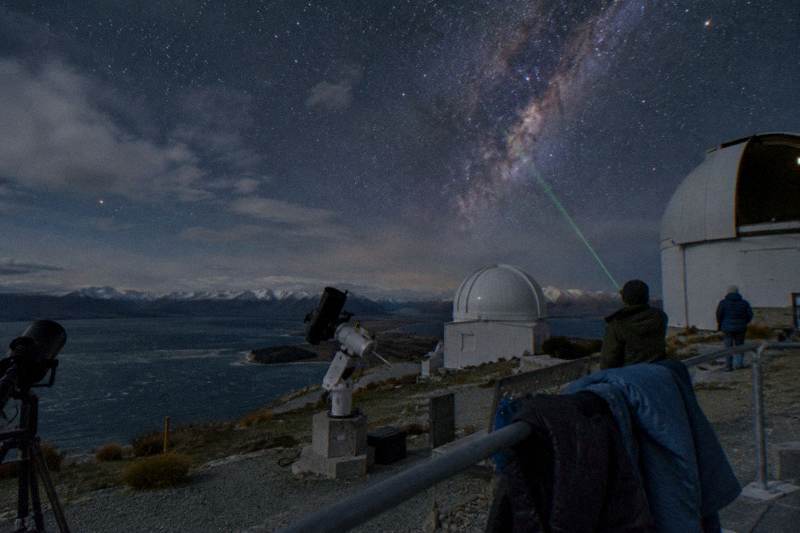
What Time Is Best For Stargazing In Lake Tekapo?
Tour times in Tekapo follow the sun, not a fixed clock: what the operators say about Summit, Crater and hot pools stargazing start times, and how to pick your slot.
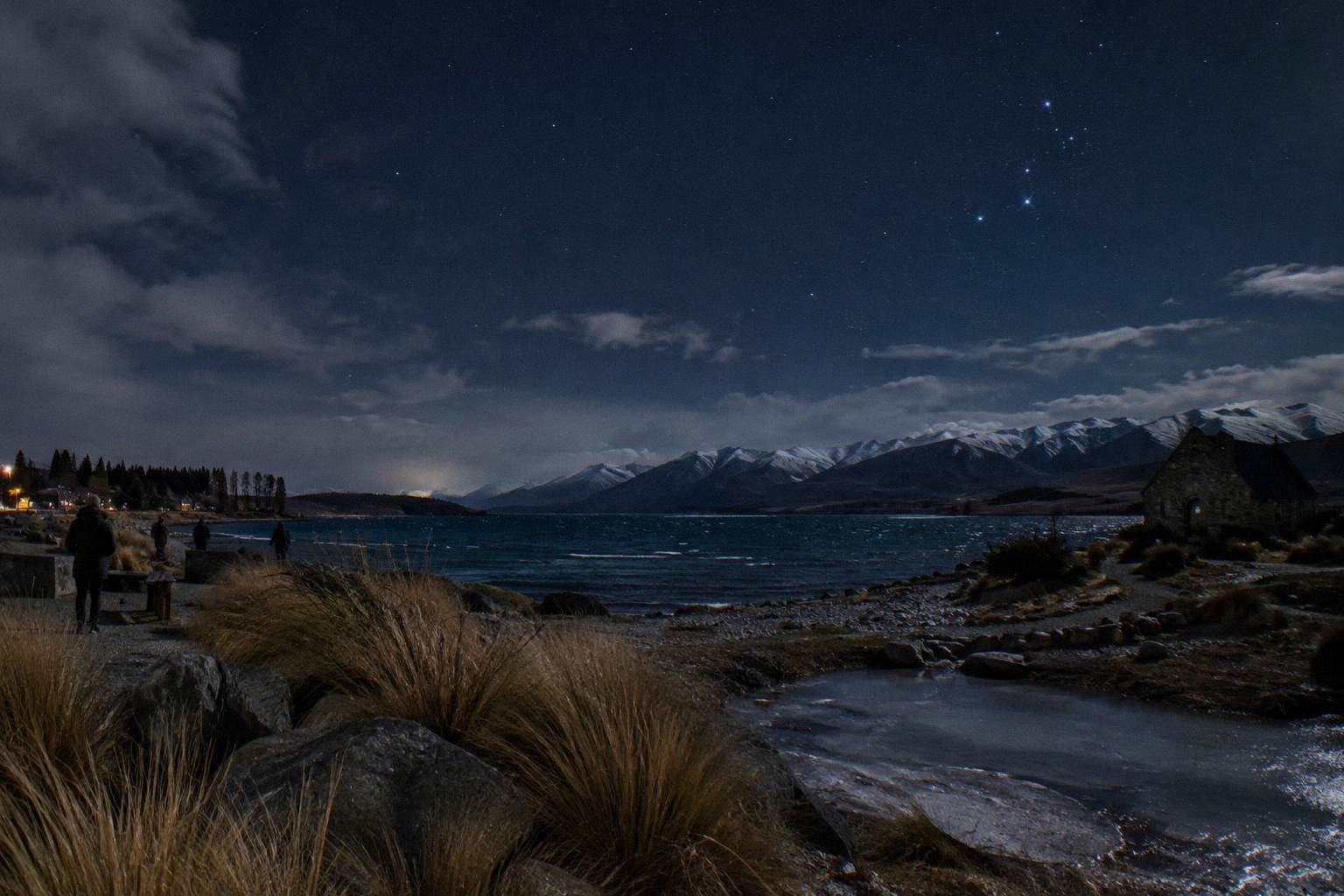
There is no single fixed hour, because the best time in Tekapo is set by the sun rather than a schedule: the darker the sky after twilight, the better the viewing, so the ideal start moves from mid evening in summer to early evening in winter. The Summit Experience and Crater Experience times are not published as clock times; Dark Sky Project says they run at various times depending on sunset and twilight. Tekapo Springs publishes seasonal calendars instead, and some Soak in the Stars tours begin after midnight, with a 12:15am example on the operator's own pages. In practice, the best time is the slot the operator offers on the night you are there, booked around the moon.
That answer frustrates people who want a number, so this article unpacks why Tekapo works this way, what each of the main tours says about timing, and how the season, the moon and your own energy levels should shape the slot you book. The short version: in winter the sky is dark early and late tours are a short evening; in summer, dark skies arrive late, which is why midnight departures exist at all.
If you are still choosing between tours rather than times, the Lake Tekapo stargazing tours compared guide lays out the full field, and the site's Mt John Stargazing homepage covers the summit in depth.
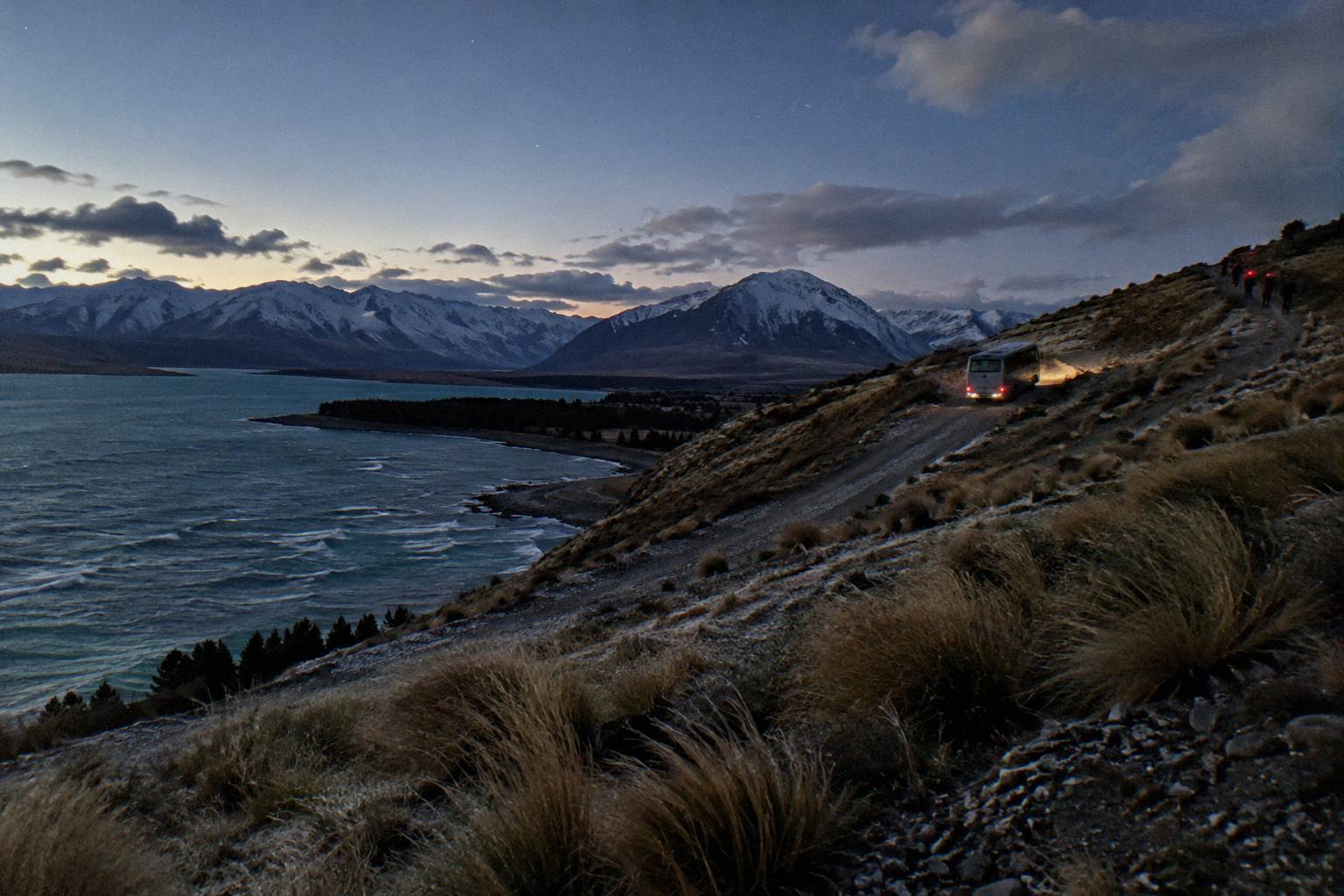
The best time for stargazing in Lake Tekapo is simply the darkest workable window after astronomical twilight ends, because true darkness, not the clock, is what brings the stars out. Unlike many destinations, Tekapo hands you that window rather than letting you choose from a menu: local operators set their tour times to match the deepest darkness of the season. Dark Sky Project states that Summit Experience tour times are "various times throughout the year, depending on time of sunset", and that Crater runs "various tour times in the evening after twilight, 7 days a week". Neither page publishes a clock time. Tekapo Springs runs Soak in the Stars seven evenings a week from October to April and Thursday to Monday from May to September, with seasonal start times and some tours beginning after midnight.
Why the vagueness? Because a stargazing tour that starts before the sky is properly dark wastes its own telescope time. Sunset in the Mackenzie Basin shifts by roughly four to five hours between midsummer and midwinter, and twilight length changes with it. An operator that fixed a 9pm start year round would run some tours in bright dusk and others deep into the small hours. Moving the start with the sun keeps every departure inside the dark window, which is the whole point of booking a guided tour in the Aoraki Mackenzie International Dark Sky Reserve rather than standing in a car park on your own.
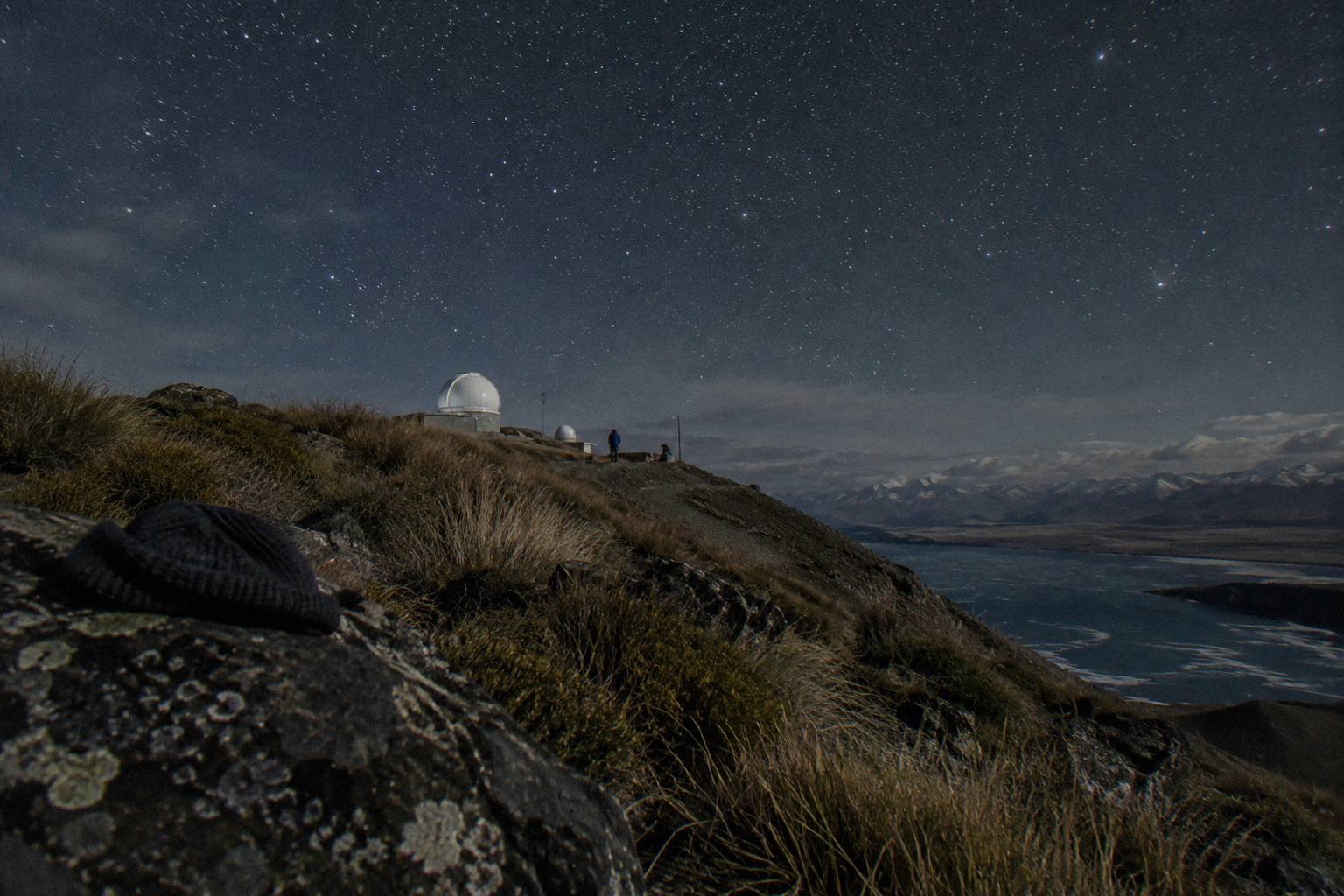
The practical consequence for your planning is simple: you book a date, not an hour. When you book the Summit Experience, the departure time for that evening is set by the operator's schedule around sunset, and you check in at the Dark Sky Project base on the Takapō lakefront 15 minutes before. If knowing the exact start matters to you, say for a early morning drive the next day, ask the operator directly: Dark Sky Project takes questions on +64 3 680 6960 or info@darkskyproject.co.nz, and Tekapo Springs on +64 3 680 6550 or bookings@tekapostargazing.co.nz.
Between the three main bookable evenings, the shape of the choice looks like this:
| Tour | What the operator says about timing | Duration |
|---|---|---|
| Mt John Summit Stargazing Experience | Various times through the year, depending on sunset; 7 days | 1 hour 45 minutes |
| Crater Stargazing At Cowan's Observatory | Various tour times in the evening after twilight; 7 days a week | 75 minutes |
| Hot Pools And Stargazing At Tekapo Springs | Seasonal calendar; 7 evenings a week October to April, Thursday to Monday May to September; some tours begin after midnight (12:15am example) | 90 minutes |
If you want the deepest-dark option, the last departure of the evening is generally the one furthest from twilight, but every departure the operator runs is already inside a usable dark window. The gains from going later are modest compared with the gain from simply avoiding bright moonlight, which the moon guide below covers.
Why Tour Times In Tekapo Depend On Sunset
Tour times in Tekapo depend on sunset because every stargazing operator in town is selling darkness, and darkness arrives at a different hour every week. Rather than running fixed departure times year-round, operators anchor their evening schedules to the sun, adjusting start times as sunset shifts so guests experience genuinely dark skies. Dark Sky Project says its Summit times depend on the time of sunset and its Crater times follow twilight; Tekapo Springs publishes seasonal calendars and moves some departures past midnight in the warmer months. None of this is awkwardness, it is the only honest way to run a night sky tour in a place where summer dusk can linger late into the evening.
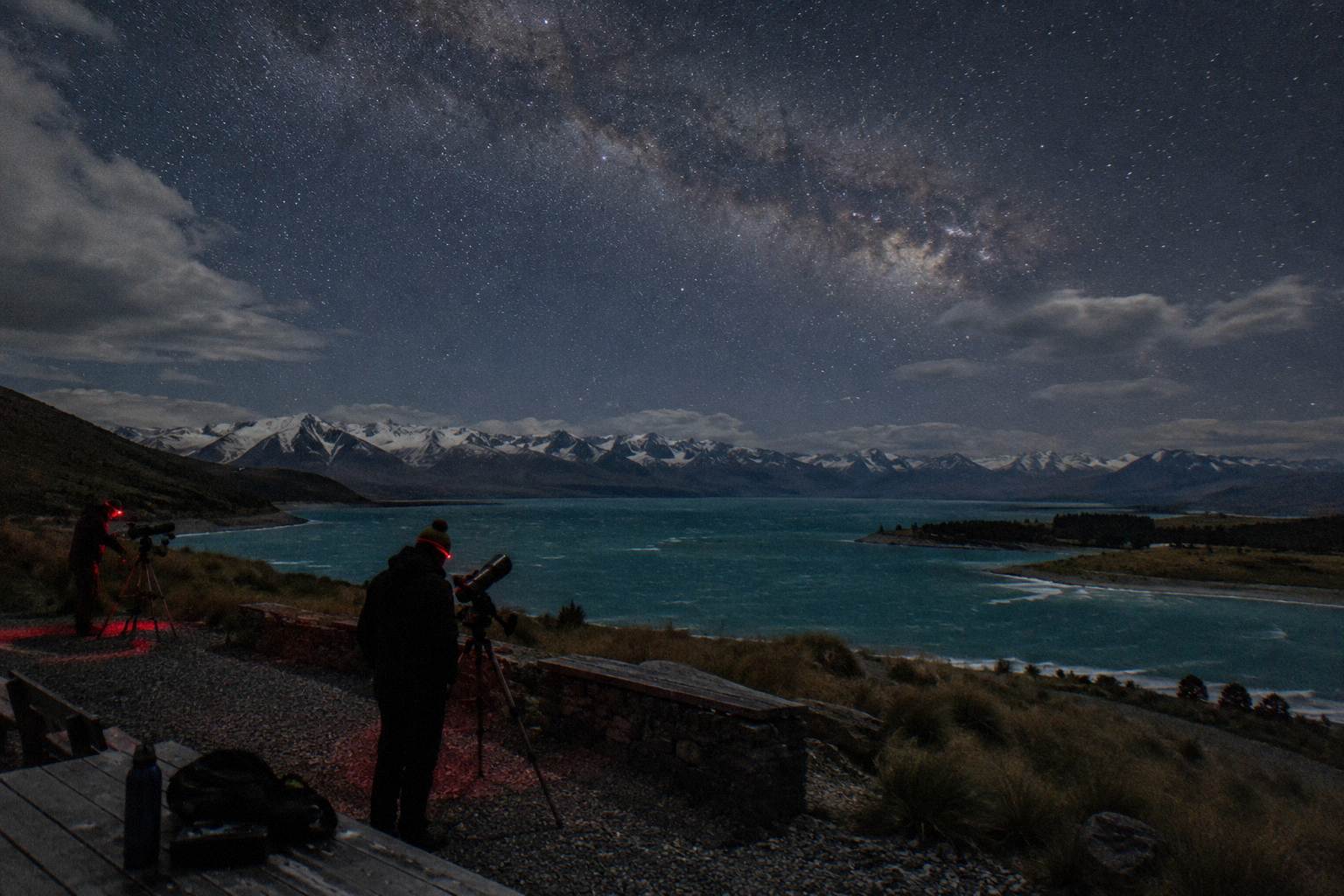
Twilight itself is the hidden variable. The sky does not snap from light to dark at sunset; it dims through civil, nautical and astronomical twilight, and only after the last stage can fainter stars and the Milky Way stand out properly. In New Zealand's summer those twilight stages stretch out, which pushes viable tour starts later and later. In winter the opposite happens: full darkness can arrive before dinner, which is why a winter stargazing tour can feel like a conveniently short evening rather than a endurance event.
The moon is the second clock. The new moon or full moon question at Tekapo matters as much as the hour you pick, because Dark Sky Project's own weather page says brighter moonlight affects fainter stars and galaxies, while also noting the moon is a good telescope target in its own right. A departure at the perfect dark hour under a full moon still shows you a bright-sky night; a slightly earlier departure under a new moon can show you far more. Tekapo Springs makes the same point from the other direction, saying telescopes still show bright objects under moonlight and only naked-eye Milky Way viewing is reduced.
One more consequence of sunset-driven scheduling: your tour time can differ from the one your friend took in a different season, and that is not a discrepancy. The Summit page explains times vary throughout the year, so a March departure and a June departure on the same booking can sit hours apart. When someone tells you "the tour starts at 10pm", treat that as one season's answer, not the tour's answer.
When The Summit Experience Runs
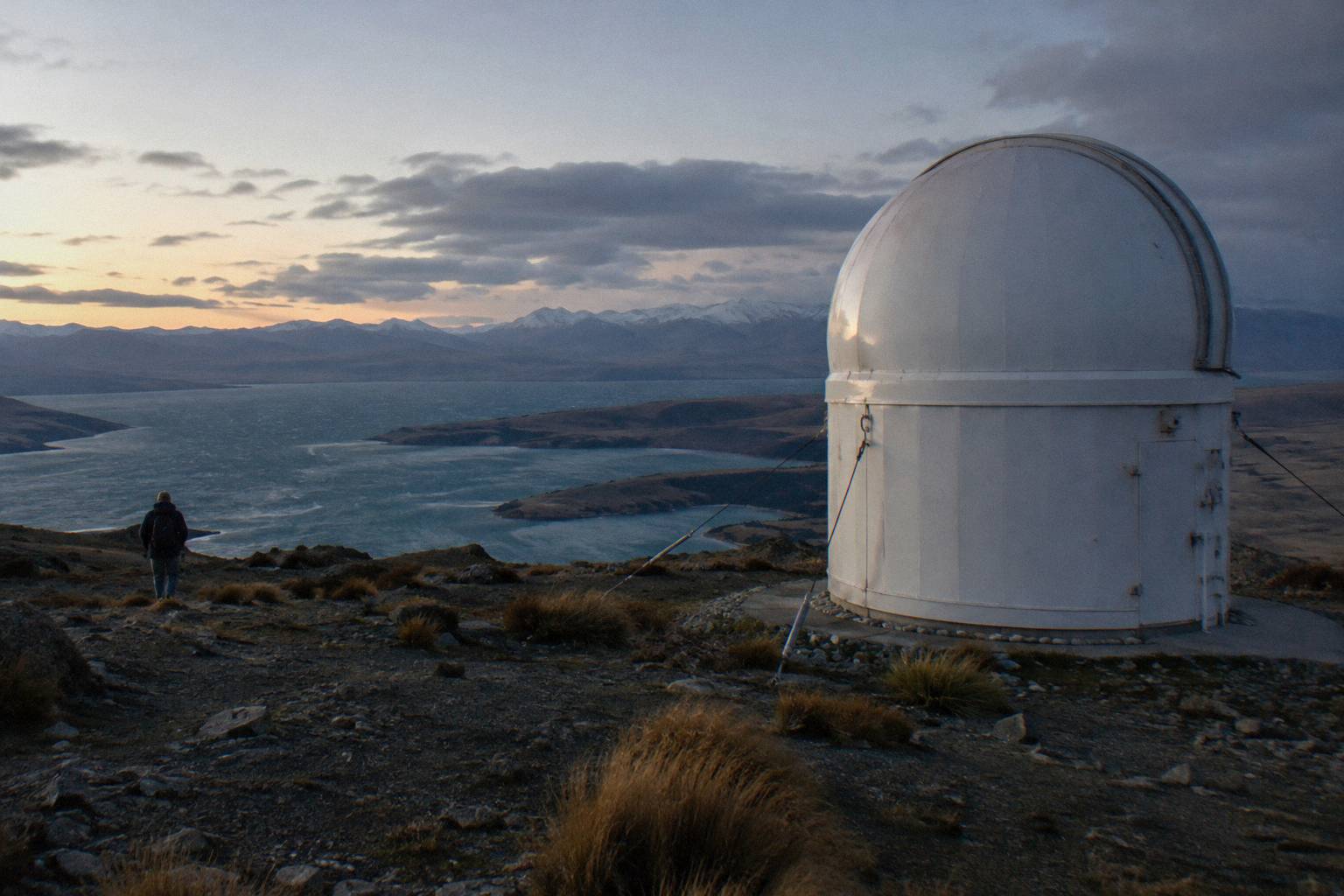
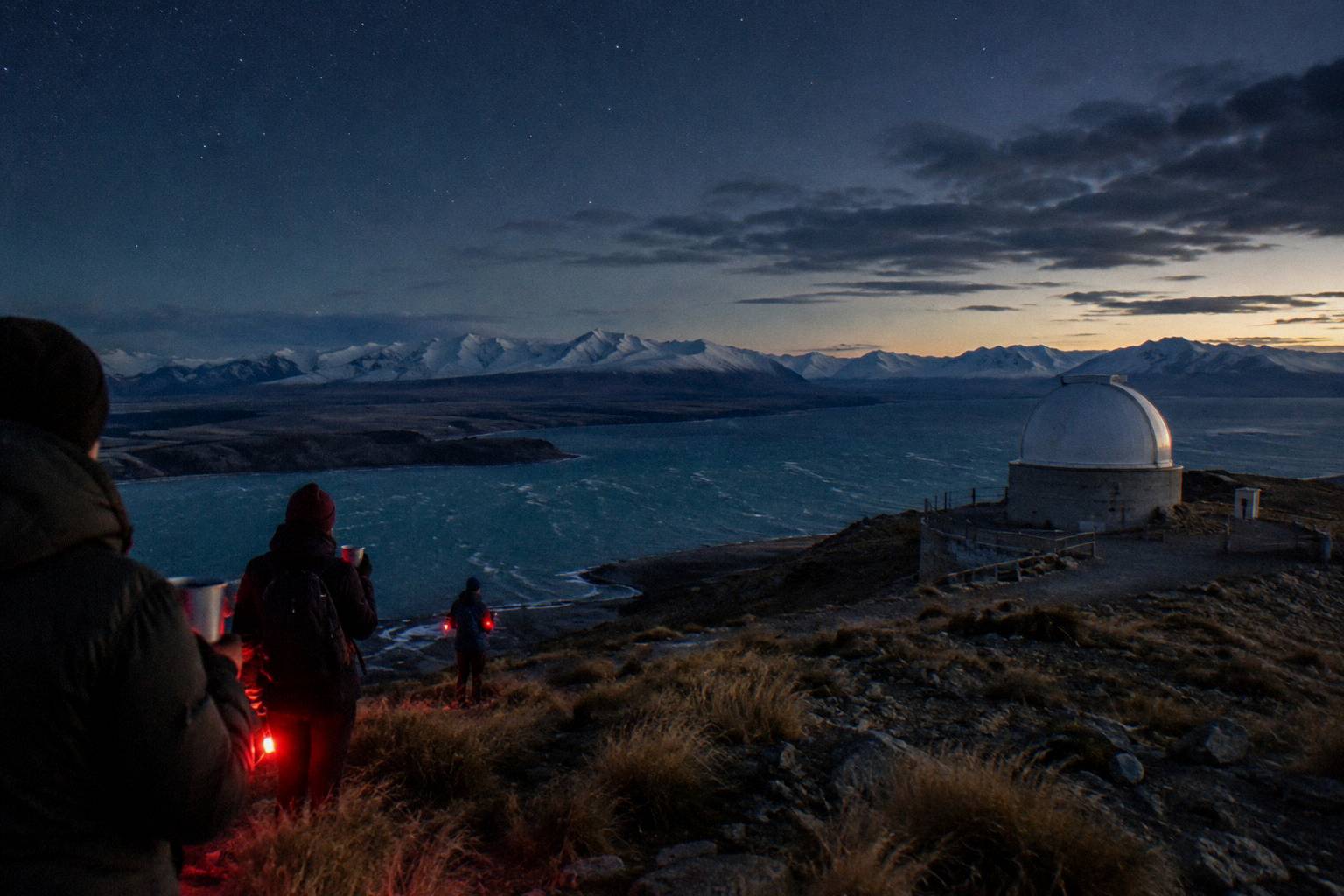
The Mt John Summit Stargazing Experience runs seven days at times that shift with sunset, and the operator deliberately does not publish a fixed clock time; you check in at the Takapō base 15 minutes before, then take a 15-minute bus up to the observatory on Mount John. The tour lasts 1 hour 45 minutes all told, and the operator's price is NZD 239 for adults and children alike, with a minimum age of 10. It is rated 4.6 across 352 reviews, the largest review count of the three tours with published ratings here.
The summit itself is the University of Canterbury Mt John Observatory, at an elevation of 1,029 m, which the University describes as New Zealand's largest professional research observatory. Being that high, on that ridge, means the darkness is excellent and the temperature drops with it; the Summit is the one Dark Sky Project tour that includes loan of an Extreme Cold Weather jacket, and the operator asks for moderate fitness because of a 100 m gravel incline walk and a few steps in the dark. If a late-night mountain departure sounds like a lot, that is worth weighing before you book, and the Dark Sky Project Summit Experience guide goes deeper on what the tour involves.
Timing-wise, the Summit's sunset dependency cuts both ways. In the deepest winter, the departure can land early enough that you are back in town with the whole evening ahead of you. Around the summer solstice, the wait for darkness pushes the start late, and you should plan dinner accordingly: the operator's own Summit Experience page is the place to confirm what the schedule looks like for your dates, and its base team can tell you the check-in window when you book.
Details for the summit decision at a glance:
| Detail | What the operator states |
|---|---|
| Duration | 1 hour 45 minutes |
| Operator price | NZD 239 adult, NZD 239 child (same price) |
| Minimum age | 10 |
| Schedule | Various times through the year, depending on sunset; runs 7 days |
| Getting there | Check in at 1 Motuariki Lane, Takapō, 15 minutes before; 15-minute bus to the summit |
| Weather policy | No outdoor stargazing if conditions rule it out: indoor alternative, reschedule, gift voucher valid 3 years, or full refund |
If the summit's timing and price fit, it is the tour to book for the biggest instruments: the operator lists telescopes up to 16 inch inside a private observatory dome, plus naked-eye guiding with handheld lasers and Tātai Aroraki, Māori astronomy, woven through the experience.
Crater Experience Times After Twilight
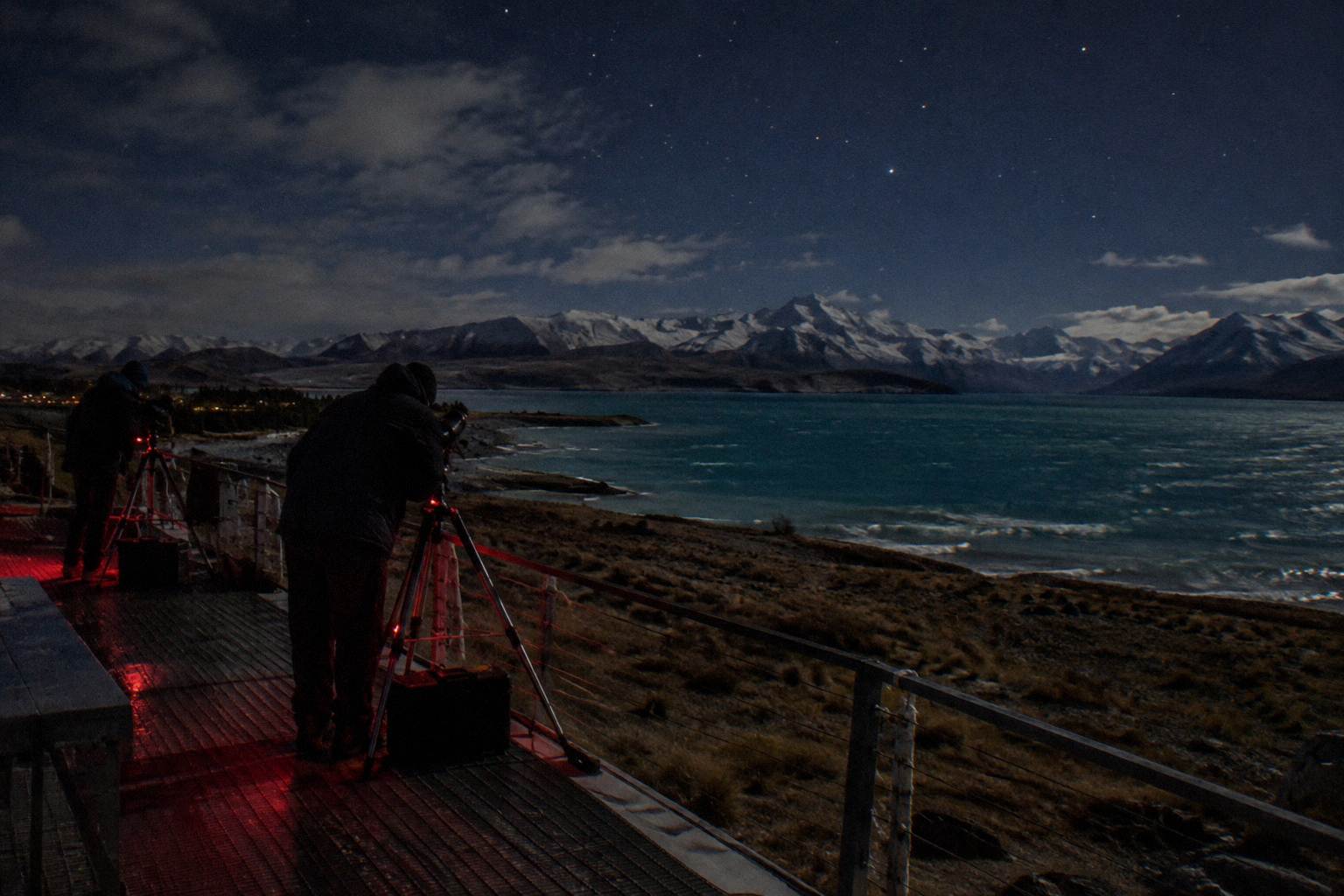
Crater Stargazing At Cowan's Observatory runs seven evenings a week, with sessions beginning at various times after twilight. Each experience lasts 75 minutes including transport, and it stands as the shorter, earlier-feeling option among the two Dark Sky Project outdoor tours. The operator's price is NZD 139 adult, NZD 99 for children aged 5 to 17, with a family pass at NZD 377 for two adults and two children, and a minimum age of 5, which makes it the tour that works for younger families whose children cannot stay up for a late summit departure.
Cowan's is a private observatory a 5-minute drive from the Dark Sky Project base, built with purpose-designed observation craters the operator describes as sheltered from wind and light. Because the site sits below the summit ridge rather than on it, the physical demands are lighter, and the operator notes wheelchair users can join, driving their own vehicle to Cowan's rather than taking the transport. The Crater Experience page carries the current evening schedule shape: times after twilight, seven days a week, with the exact slot again set by the season.
For timing strategy, Crater tends to suit three kinds of visitor: families with primary-age children, anyone with an early start the next morning who still wants a proper guided night, and travellers who want the telescope-and-guide experience at a lower price than the summit. The trade-off is honest: you are not on the Mount John summit, and the instruments run to 14 inch rather than the summit's 16 inch, per the operator's home page description of its two outdoor experiences.
Soak In The Stars And Midnight Starts
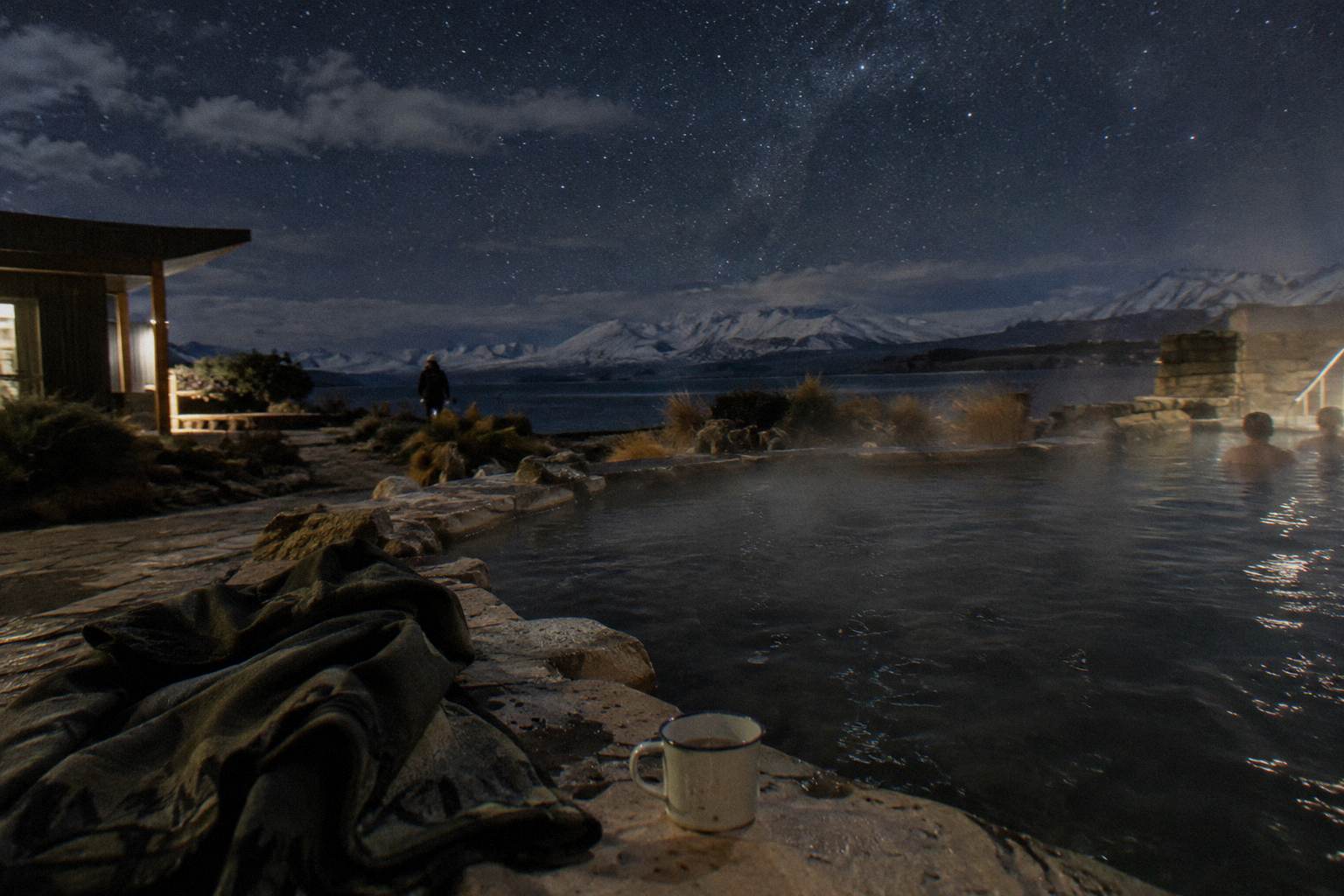
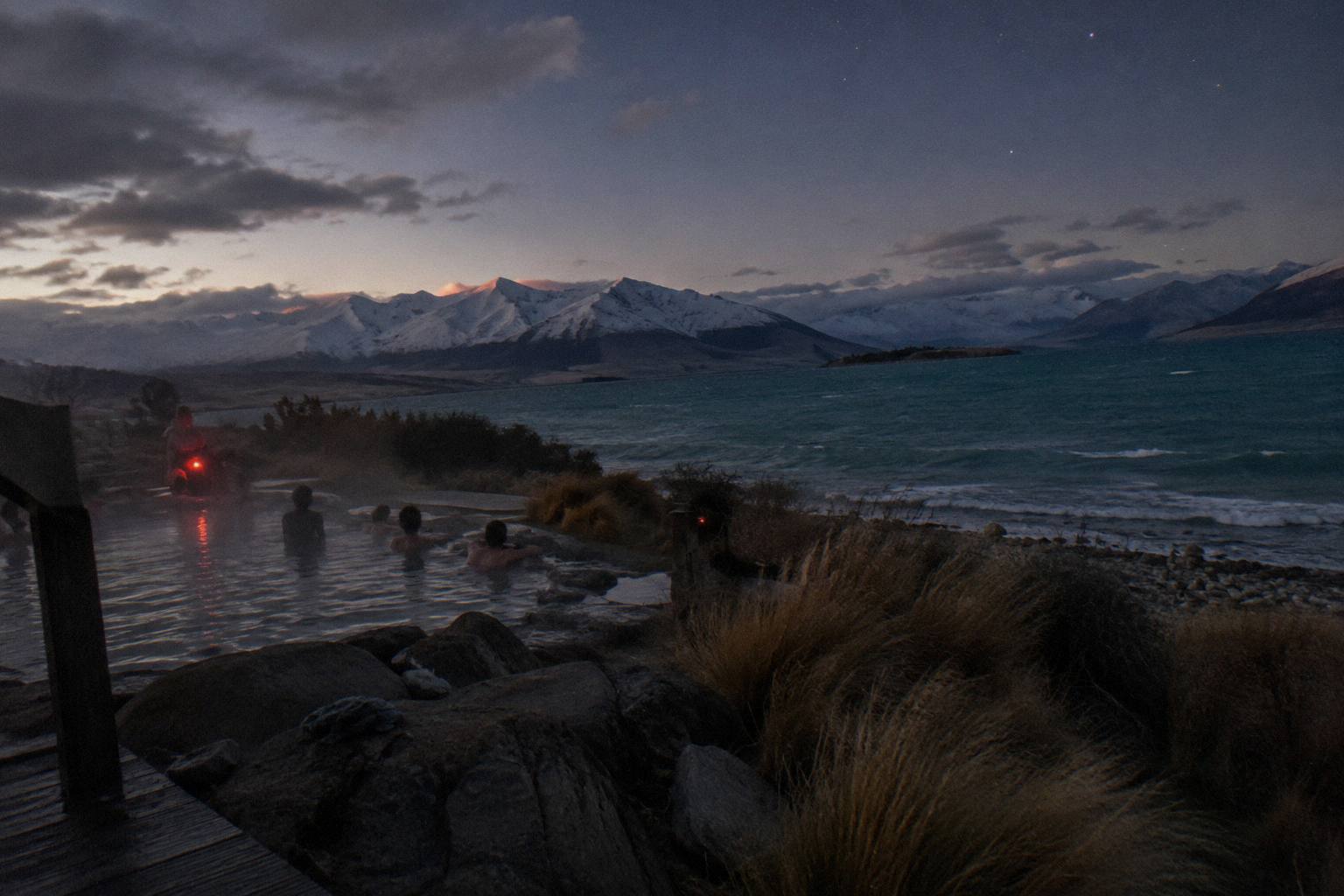
Soak in the Stars, the hot pools and stargazing combination at Tekapo Springs, is the one Tekapo tour with published evidence of genuine midnight departures: the operator's pages cite tours beginning after midnight, with a 12:15am start given as an example, and the schedule is seasonal. It runs 90 minutes, combining guided telescope viewing with an exclusive hot pool at 37.5 to 38.5 degrees Celsius with the guide poolside, and the operator's price is NZD 179 adult, NZD 159 senior or student, NZD 115 child, NZD 499 for a family, minimum age 10.
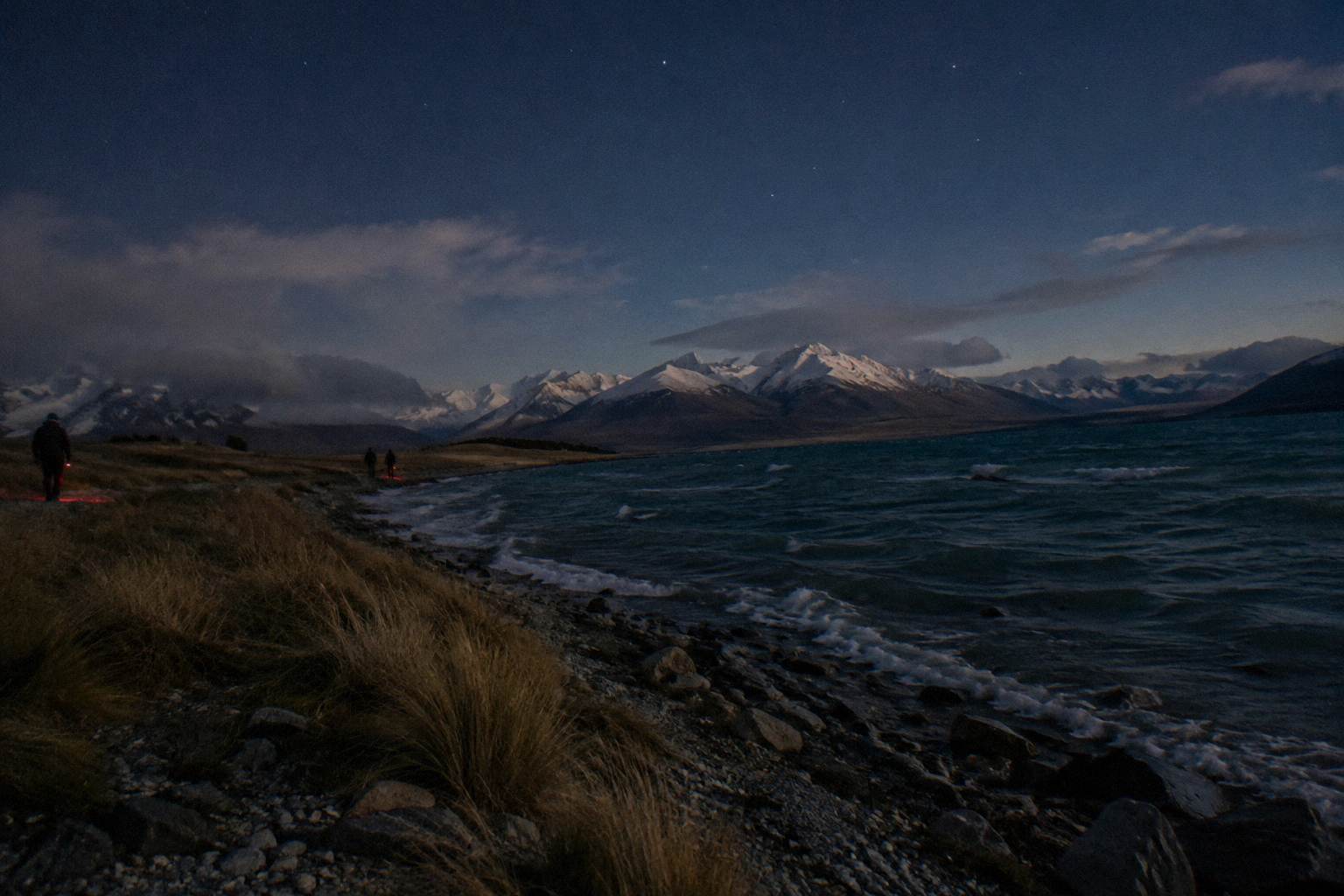
The seasonal rhythm matters here more than for any other tour: seven evenings a week from October to April, Thursday to Monday from May to September, with start times set by calendar rather than a fixed clock. Those after-midnight slots exist because summer darkness in the Mackenzie Basin arrives late, and a hot pool is one of the few stargazing formats where waiting until 12:15am is genuinely appealing rather than a slog. Towels, robes, hot drinks and warm poncho coats are included, which changes the comfort maths of a very late night.
Timing is also where this tour's weather policy diverges from Dark Sky Project's. Tekapo Springs runs in all weather: if cloud rules out telescope viewing, a VR indoor experience with 360 degree imagery of the Church of the Good Shepherd and the Mt John summit replaces it, and if telescope viewing comes in under 30 minutes, the operator gives a 25 percent refund per ticket at the end of the tour. So a late slot is not a gamble on the tour being cancelled, though clarity itself can never be guaranteed, as the operator's own terms make plain on the Tekapo Stargazing site.
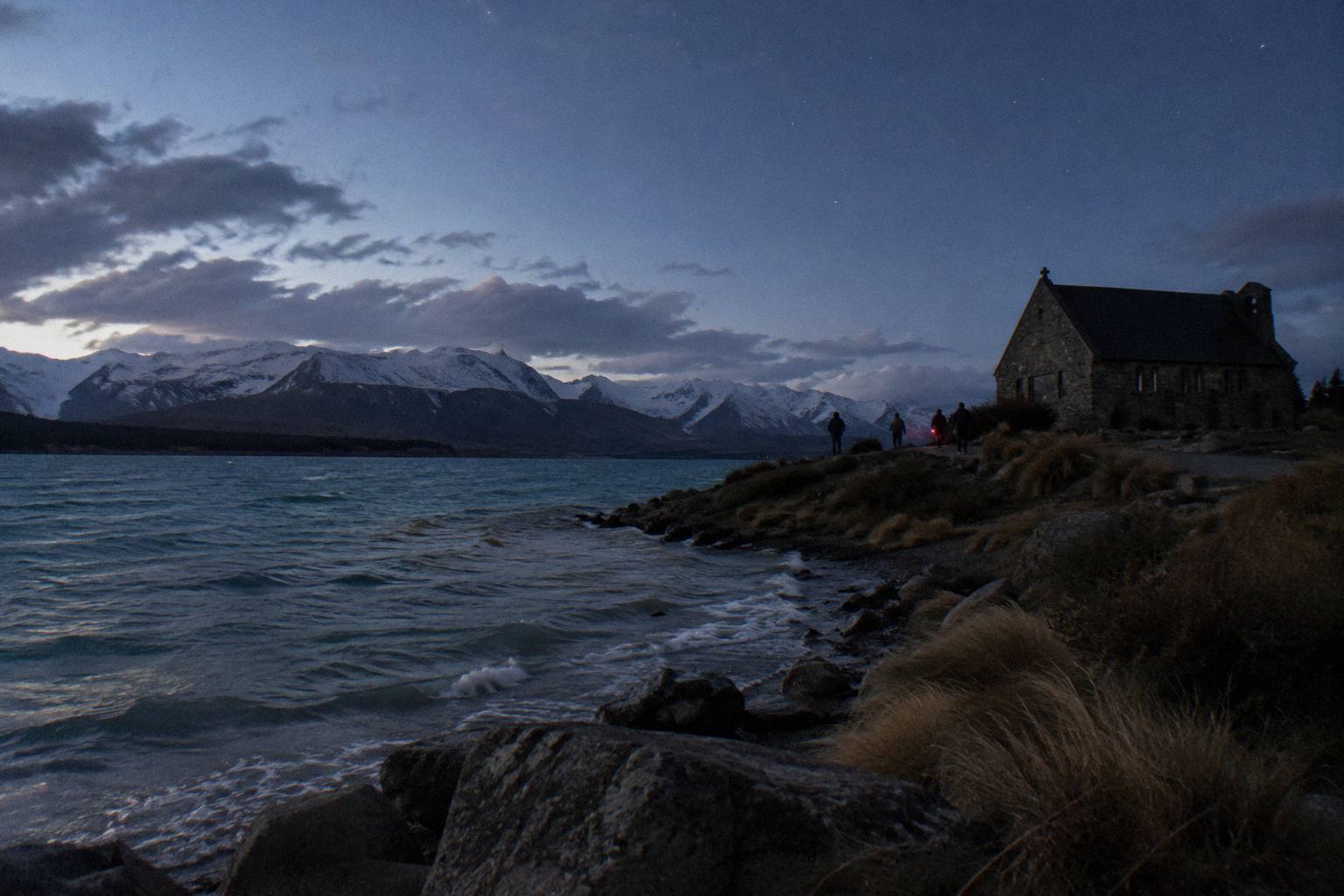
Booking detail worth knowing when you time your evening: check-in is at Tekapo Springs reception, 300 Lakeside Drive, 15 minutes before the tour, and a complimentary hotel shuttle is available subject to availability if you request it at booking. If your slot is 12:15am and your accommodation is out on the lake road, arrange that shuttle when you book rather than on the night.
The Indoor Option With Published Clock Times
The only stargazing-adjacent tour in Tekapo with fixed, published clock times is the Dark Sky Experience, an indoor, daytime 45-minute cultural astronomy tour at the base building, running English sessions at 10:30am, 12:30pm and 2:30pm, with 4:30pm added on Tuesday and Wednesday, subject to availability. The operator's price is NZD 59 adult, NZD 39 child, NZD 157 for a family of two adults and two children, under 5s free with an adult ticket, and the operator suggests the content suits ages about 7 and up.
It matters to a timing article for one reason: it decouples your astronomy from the night entirely. If your Tekapo evening is blown out by cloud, or your itinerary only allows a daylight stop, the Dark Sky Experience is the slot that always exists, at a known hour, whatever the sky is doing. It walks through four zones including the restored 125-year-old Brashear telescope, and weaves in Tātai Aroraki, Māori astronomy, in the same voice the operator uses across its tours.
Treat it as a complement rather than a substitute. It offers no stargazing, no telescopes on the sky, no night air; it is the indoor, cloud-proof layer of the town's astronomy offering, and Dark Sky Project itself offers its Virtual Stargazing Experience as an indoor alternative when outdoor tours cannot run. If your trip has room for both a daytime session and a night tour, the pairing covers you against weather in a way a single outdoor booking cannot.
Moon, Season And How To Actually Pick Your Slot
Pick your date by the moon first and your hour second: Dark Sky Project says brighter moonlight affects fainter stars and galaxies, while Tekapo Springs says telescopes still show bright objects and only naked-eye Milky Way viewing is reduced under a full moon. Once the date is moon-friendly, the hour is largely decided for you by the operator's sunset-driven schedule, and your real choice is between the tour formats: summit, crater or hot pools.
A worked example shows how the pieces fit. Suppose you have two nights in Tekapo in late March. You check the moon phase and find the first night near a full moon and the second near last quarter rising late. You book nothing for night one and take the Summit Experience on night two, accepting whatever start time the season dictates, because the sky transparency matters more than the clock hour. If the weather turns on night two, Dark Sky Project's policy offers an indoor alternative, a reschedule subject to availability, a gift voucher valid three years, or a full refund, with the decision made as close to tour time as possible.
Season by season, the timing picture looks like this:
| Season | Darkness timing effect | What it means for your booking |
|---|---|---|
| Summer, December to February | Dark arrives late; tours start late, some after midnight | Expect the latest departures; the hot pools format makes late starts comfortable |
| Autumn, March to May | Twilight shortens; starts move earlier through the season | A transitional window; either format works |
| Winter, June to August | Dark arrives early; departures sit early in the evening | Crater suits early nights; the summit is less of a late finish |
| Spring, September to November | Twilight lengthens again; starts drift later | Check the seasonal calendar when booking the hot pools tour |
For planning around conditions, the site's Tekapo stargazing forecast guide explains how to read cloud and moon together, and the month-by-month best time guide covers the month-by-month picture in more depth than an article about hours can.
What Trips People Up When Choosing A Time
The classic mistakes are assuming a published clock time exists for the Summit or Crater tours, booking a summer date without realising the departure may sit near midnight, and fixing on an hour while ignoring the moon phase that governs what the sky can actually show. People also misjudge check-in, which is 15 minutes before departure at both the Dark Sky Project base and Tekapo Springs reception, and late check-in carries no refund under Dark Sky Project's terms.
The first mistake usually surfaces as a search for "what time does the summit tour start", and the honest answer is that the operator does not publish one because sunset moves. Anyone needing a firm time, say to arrange a babysitter or a dawn drive to Mount Cook, should phone the operator before booking rather than assume. The second mistake bites harder: a traveller books the hot pools tour in January picturing a 9pm soak and finds the calendar offering slots around or past midnight. That is not a fault, it is the season, and it is exactly why the operator runs the summer schedule it does.
The third and costliest mistake is treating a late or early hour as the quality lever while the moon does the real damage. A perfectly timed departure under a bright moon shows a different sky from the same departure under a dark one, and no tour can promise the Milky Way or aurora, since both depend on conditions the operators do not control. Booking two nights in town, keeping one unbooked as a weather and moon backup, is the single most effective timing strategy there is, a point the how many nights you need in Tekapo article expands on.
Common Questions About Stargazing Times In Lake Tekapo
What Time Is Best For Stargazing In Lake Tekapo?
The best time is the darkest window after twilight on a moon-friendly night, and in practice the tour operators set that window for you: Summit times depend on sunset, Crater runs after twilight, and Soak in the Stars uses a seasonal calendar with some post-midnight starts. Book the date around the moon and take the slot the operator schedules.
Does The Summit Experience Have A Published Start Time?
No. Dark Sky Project states Summit tour times are "various times throughout the year, depending on time of sunset" and runs the tour seven days. Ask the operator directly for the check-in window on your date.
Do Any Tekapo Stargazing Tours Start After Midnight?
Yes. Tekapo Springs' Soak in the Stars has tours beginning after midnight, with 12:15am given as an example on the operator's pages, mainly in the warmer months when darkness arrives late.
Which Tour Has Fixed Clock Times?
The Dark Sky Experience, an indoor daytime cultural astronomy tour at the Dark Sky Project base, runs English sessions at 10:30am, 12:30pm and 2:30pm, with 4:30pm added on Tuesday and Wednesday, subject to availability.
How Early Do I Need To Check In?
Fifteen minutes before departure, at the Dark Sky Project base for Summit and Crater, or at Tekapo Springs reception for the hot pools tours. Late check-in carries no refund under Dark Sky Project's terms.
What If The Time I Book Is Too Cloudy?
Dark Sky Project makes the call as close to tour time as possible and offers an indoor alternative, a reschedule subject to availability, a gift voucher valid three years, or a full refund. Tekapo Springs tours run in all weather, with a VR indoor experience replacing telescope viewing under cloud and a 25 percent per-ticket refund if telescope viewing comes in under 30 minutes.