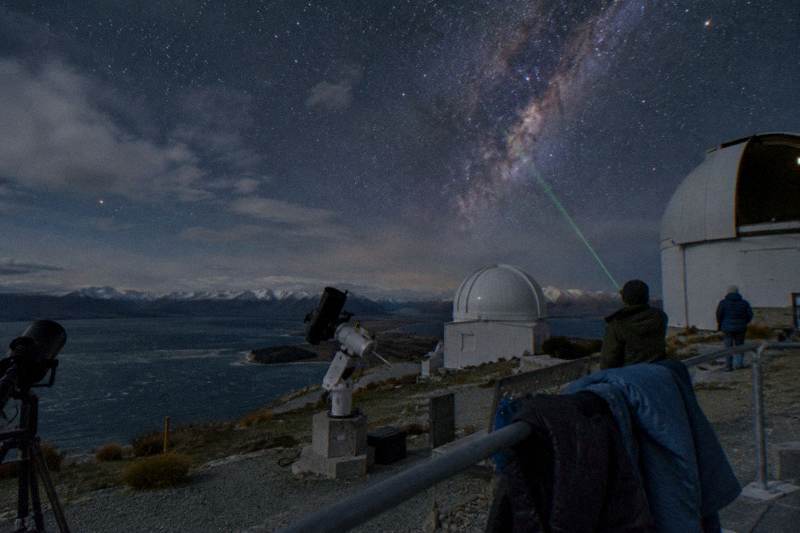
Aoraki Mackenzie Dark Sky Reserve: Where Tekapo Stargazing Is Protected
The Aoraki Mackenzie International Dark Sky Reserve covers Aoraki/Mt Cook National Park and the Mackenzie Basin, and it is described as the largest dark sky reserve in the Southern Hemisphere. Here is what that protection means and how to experience it.
Short answer
The Aoraki Mackenzie International Dark Sky Reserve was awarded reserve status in April 2012 and spans Aoraki/Mt Cook National Park and the Mackenzie Basin. It is described as the largest dark sky reserve in the Southern Hemisphere. Tekapo sits at its heart, with tours from NZD 59 to NZD 239 per adult inside the reserve.
If you want the wider picture of the mountain at the centre of it all, start with the guide to Mount John Observatory stargazing; this page is about the reserve itself, the rules that keep its sky dark, and how to book a tour inside it.
| Quick Facts | |
|---|---|
| Designation | Aoraki Mackenzie International Dark Sky Reserve |
| Status awarded | April 2012 |
| Coverage | Aoraki/Mt Cook National Park and the Mackenzie Basin |
| Scale claim | Described as the largest dark sky reserve in the Southern Hemisphere |
| Key town | Lake Tekapo (Takapō), Mackenzie Basin |
| Bookable tours in this guide | 11 |
| Operator prices | NZD 59 to NZD 239 per adult |
| Reserve entry | No entry fee to stargaze independently |
What Is The Aoraki Mackenzie Dark Sky Reserve?
It is a protected zone covering Aoraki/Mt Cook National Park and the Mackenzie Basin, awarded dark sky reserve status in April 2012, and described by Dark Sky Project as the largest dark sky reserve in the Southern Hemisphere. The designation recognises both the quality of the night sky and local efforts to control artificial lighting. Lake Tekapo, Twizel, Mt Cook village and Lake Pukaki all sit inside or beside its boundaries.
A dark sky reserve is not a national park in the astronomical sense. The land already carried protections through the national park; what the reserve designation added was a formal commitment to the sky above it. Dark Sky Project, the operator based on the Tekapo lakefront, explains the reserve on its own dark sky reserve page, and its history of the designation is worth reading alongside the practical pages.
The reserve's story runs long before 2012. Takapō is the name recorded by Ngāi Tahu ancestors, according to the Ka Huru Manu cultural map that Dark Sky Project cites, and Tātai Aroraki, Māori astronomy, is woven through the operator's Summit, Crater and Dark Sky experiences. The Victorian-era night sky of the Mackenzie was already famously clear; the reserve designation gave that clarity a governance framework.
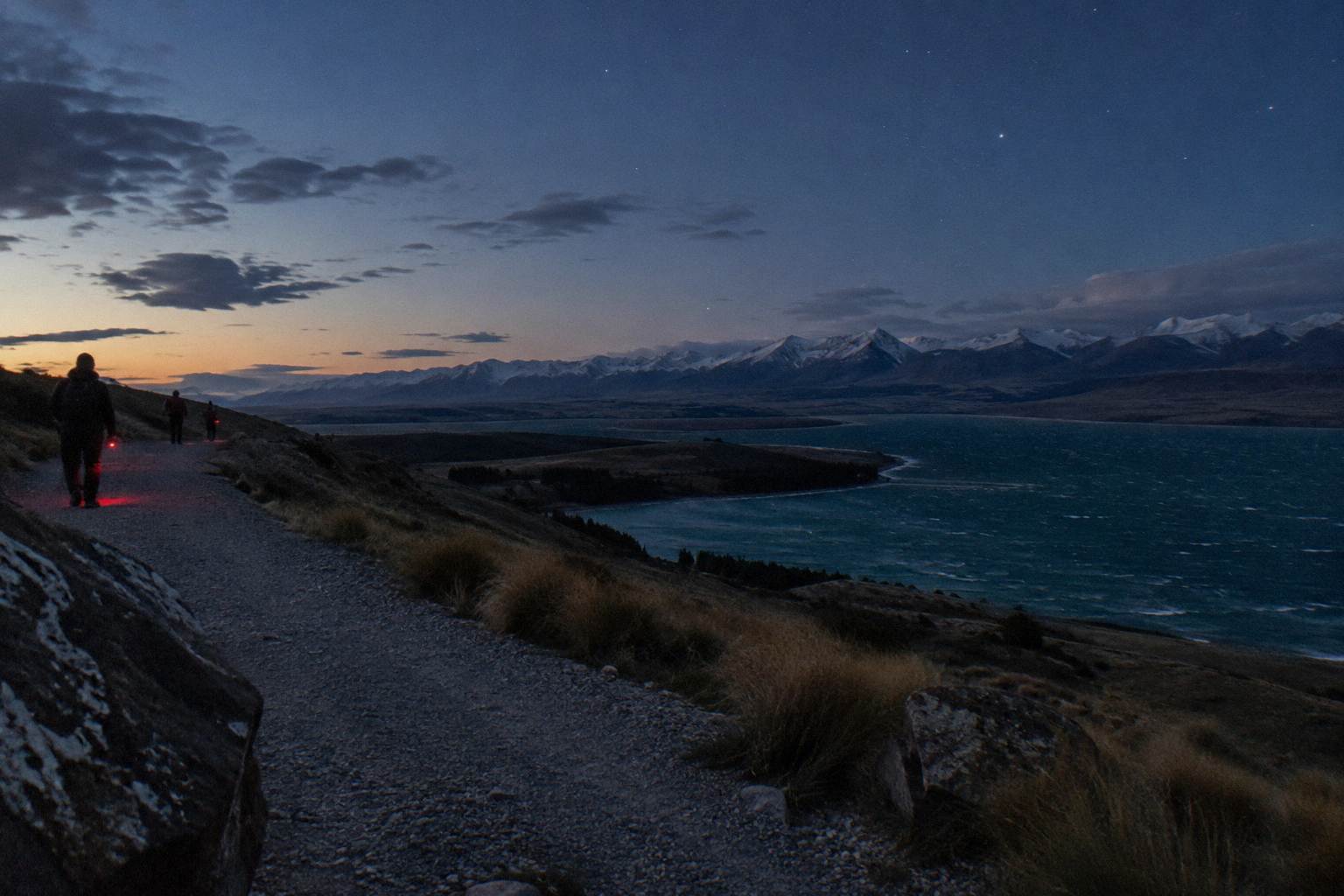
For a traveller, the practical meaning is simple. Light pollution across the basin is controlled, so the sky you look up at from Tekapo, Twizel or the Mt Cook road is closer to what the human eye evolved to see than almost anywhere you can drive to from a town. Mt John Stargazing exists as a site because of exactly that fact.
That darkness is not an accident of geography alone. The next section covers the mechanics.
Where Is The Reserve And What Does It Cover?
The reserve spans the Mackenzie Basin, roughly in the centre of the South Island, and takes in Aoraki/Mt Cook National Park to the north and the basin's lake country around Tekapo, Twizel and Lake Pukaki. Tekapo is about three hours' drive from both Queenstown and Christchurch, Dark Sky Project says, which puts the reserve within a day trip of both cities. Everything departs from small towns, not cities.
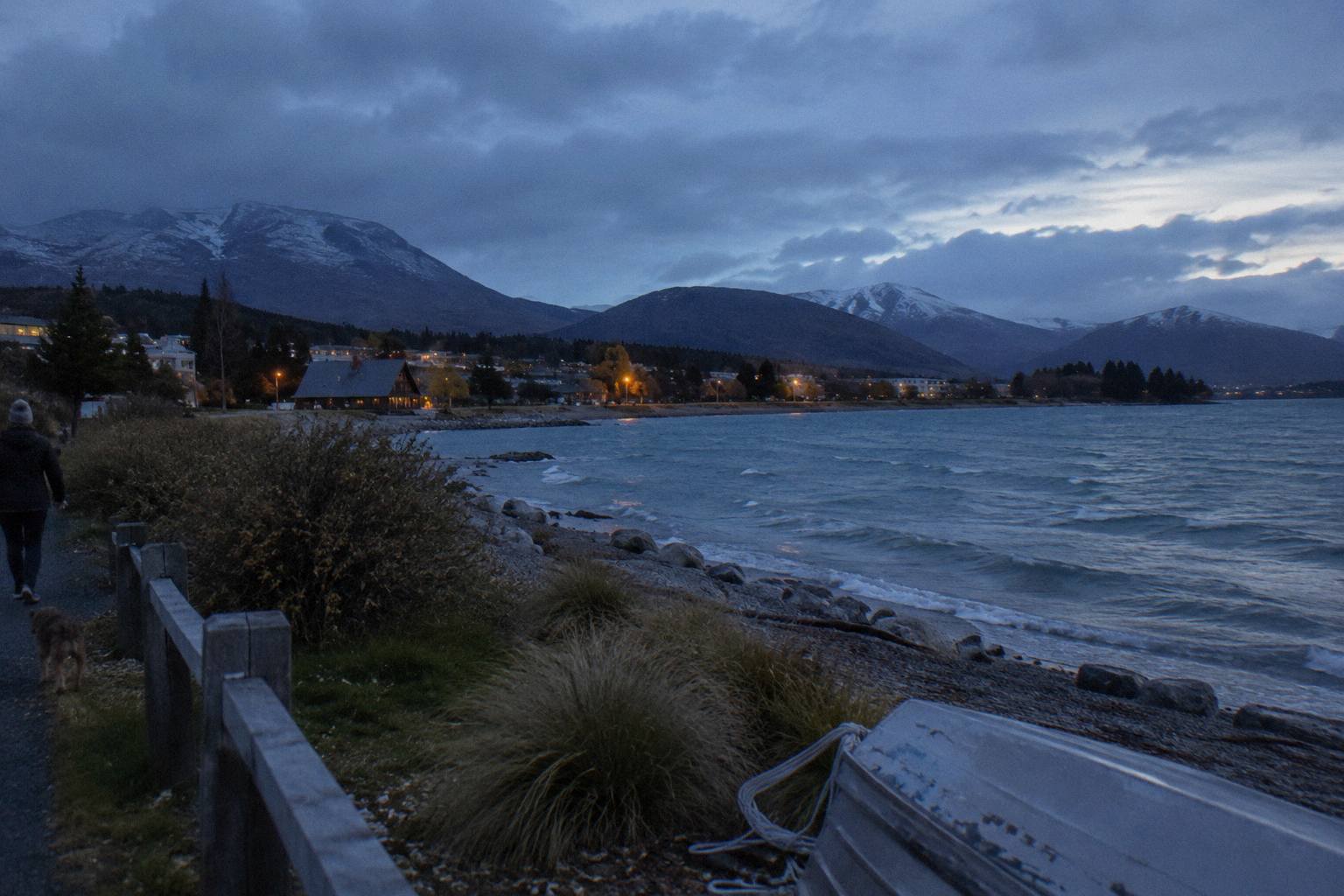
The geography matters for planning. State Highway 8 runs the length of the basin past Lake Tekapo and Twizel, and State Highway 80 branches north along Lake Pukaki to Aoraki/Mount Cook village. Every stargazing tour in this guide meets at a point on one of those two roads: the Tekapo lakefront, the Tekapo Springs complex, Twizel, the Tasman Glacier car park at Mt Cook, or 86 Mt Cook Road at Lake Pukaki. If your accommodation is in the basin, no tour requires more than a short drive to check in.
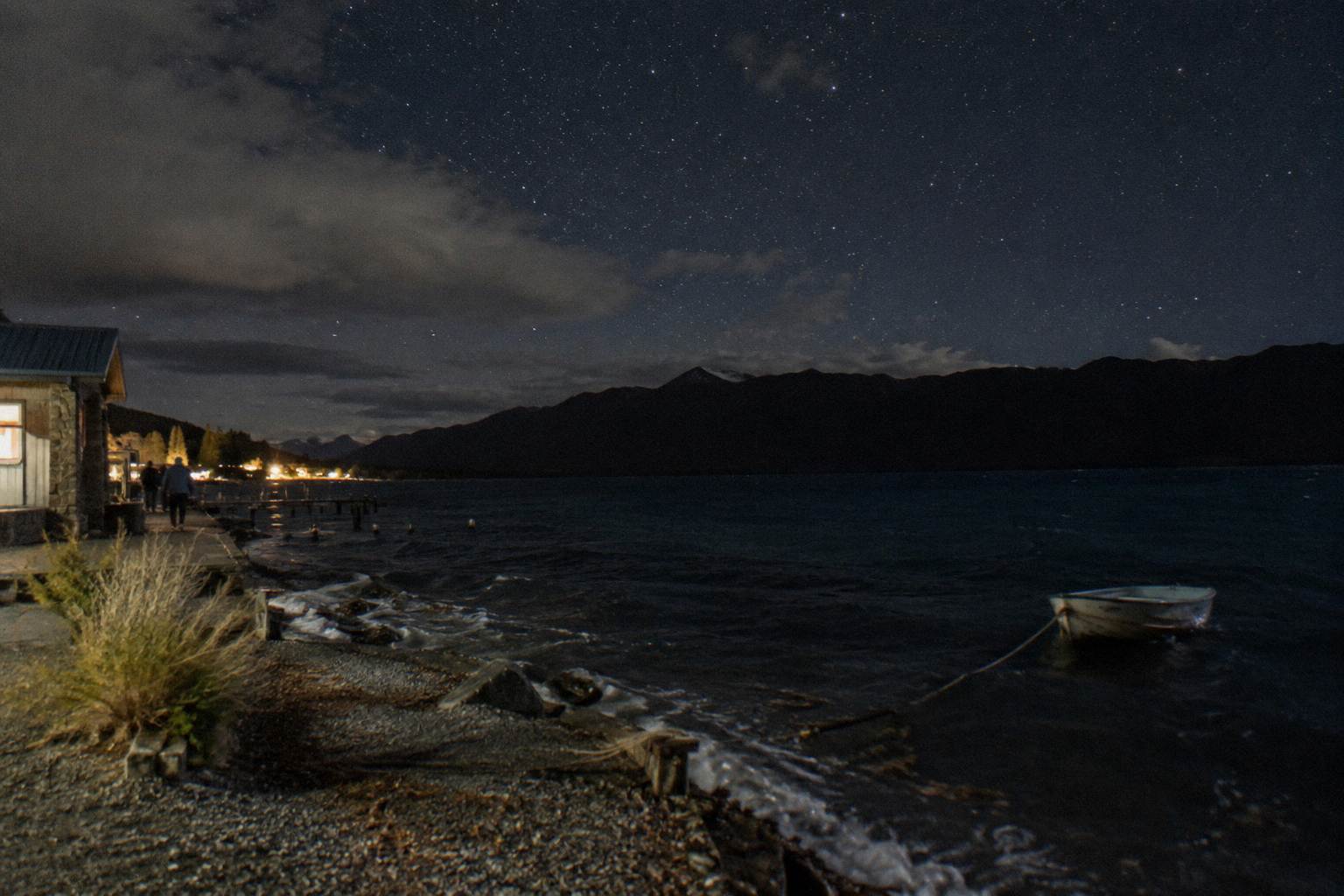
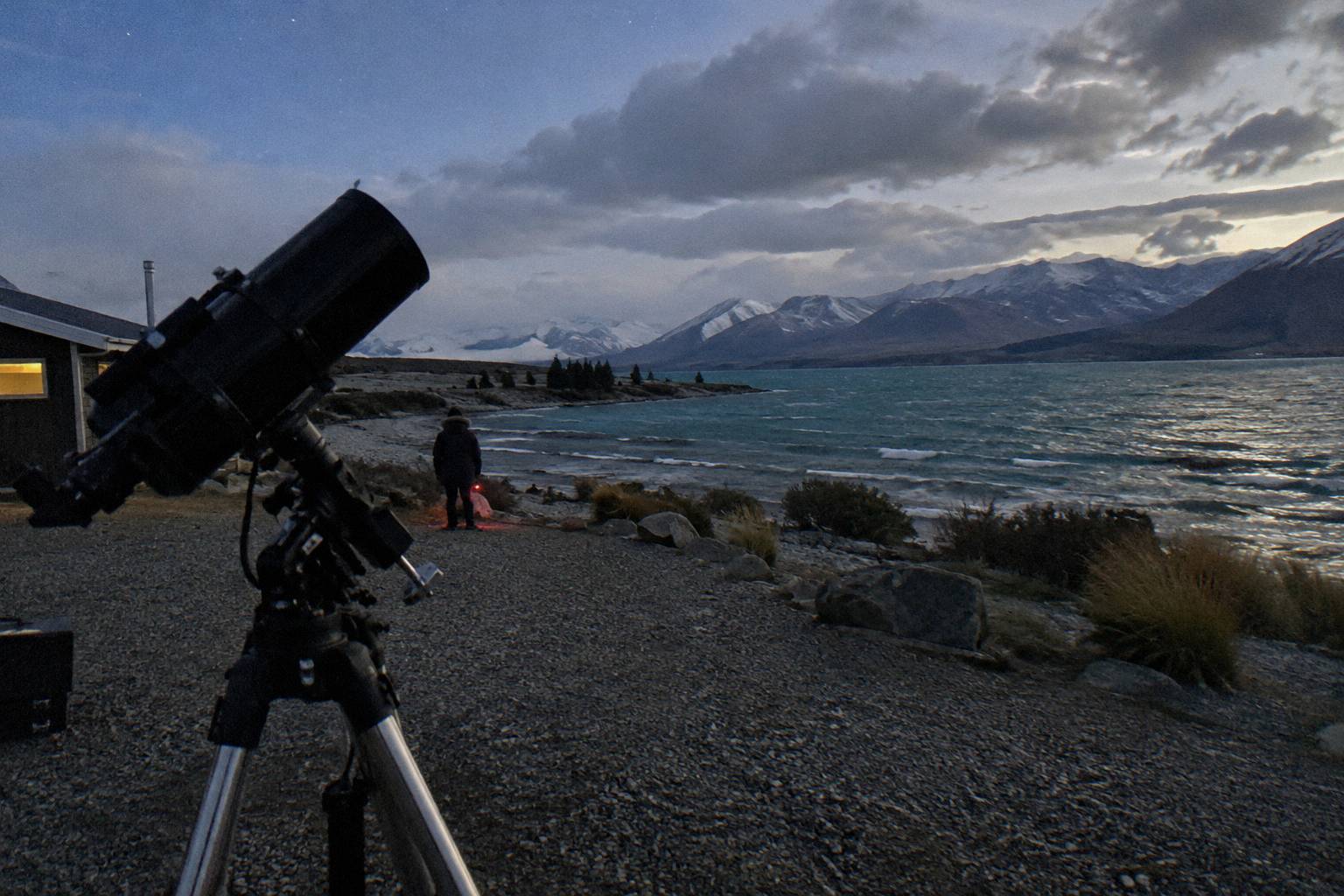
The reserve is also big enough that you can stargaze inside it without any tour at all. The lakefront at Tekapo, the shores of Lake Pukaki and the back roads near Twizel all sit under the same protected sky, and the free stargazing spots around Lake Tekapo are worth a night of your trip on their own. A tour buys you three things a roadside stop does not: a telescope, a guide who can name what you are looking at, and transport up to Mount John, whose summit road is otherwise restricted to tour buses and daytime visitors.
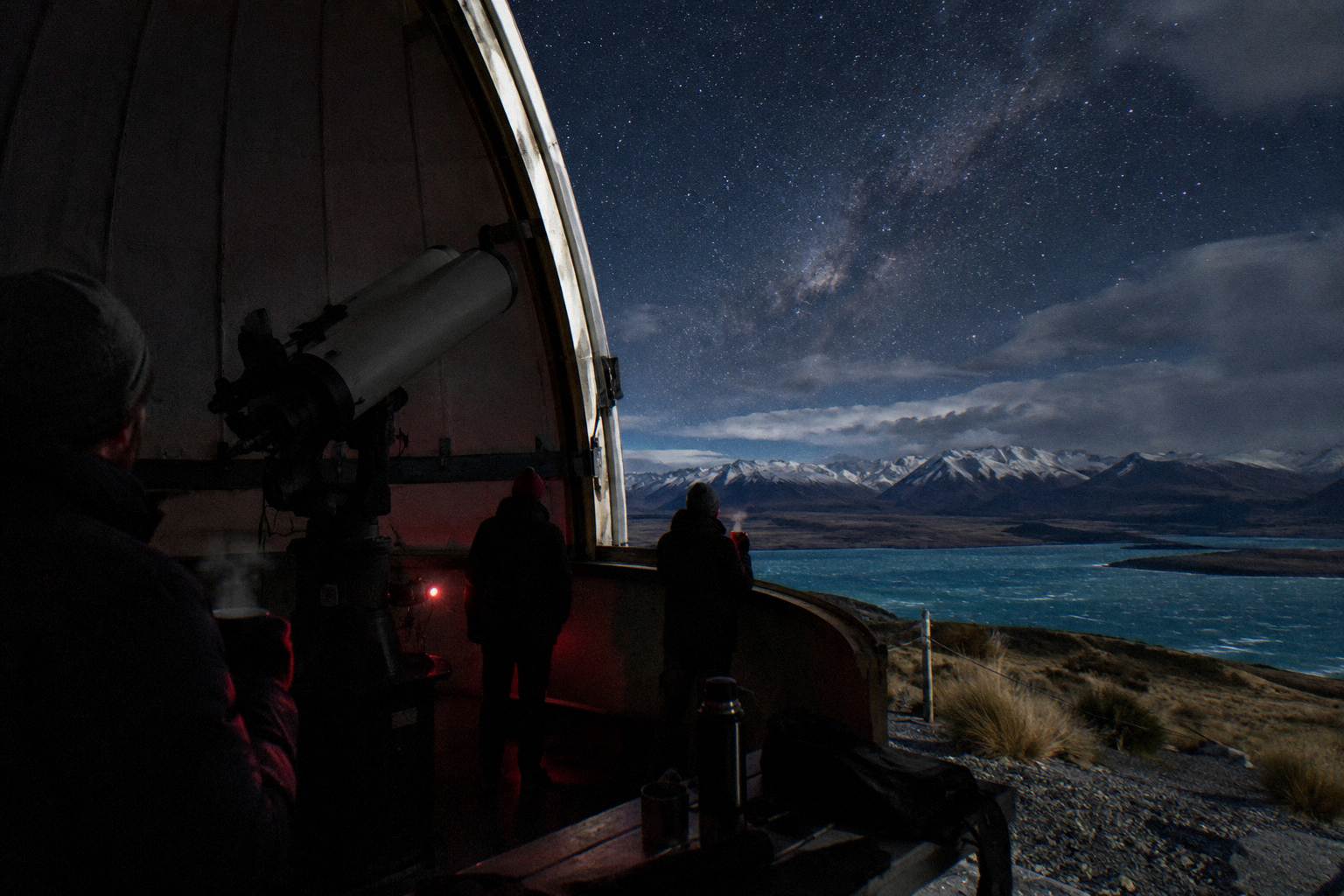
The Summit Experience takes a 15-minute bus from the Dark Sky Project base up to the University of Canterbury Mt John Observatory at 1,029 m. The Crater Experience uses Cowan's Private Observatory, a five-minute drive from the same base, with purpose-built observation craters sheltered from wind and light. Soak in the Stars pairs telescope viewing with a hot pool at Tekapo Springs. Three operators, three formats, one reserve.
Why Is The Night Sky So Dark At Tekapo?
The Mackenzie District has rules on outdoor lighting, including requirements that lights point downward and limits on when and how they run, and the basin's settlements are small and widely spaced. Mount John sits at 1,029 m above the lake, above much of the low haze. Together these things keep the sky over the reserve far darker than a normal rural sky, which is why the designation was awarded here.
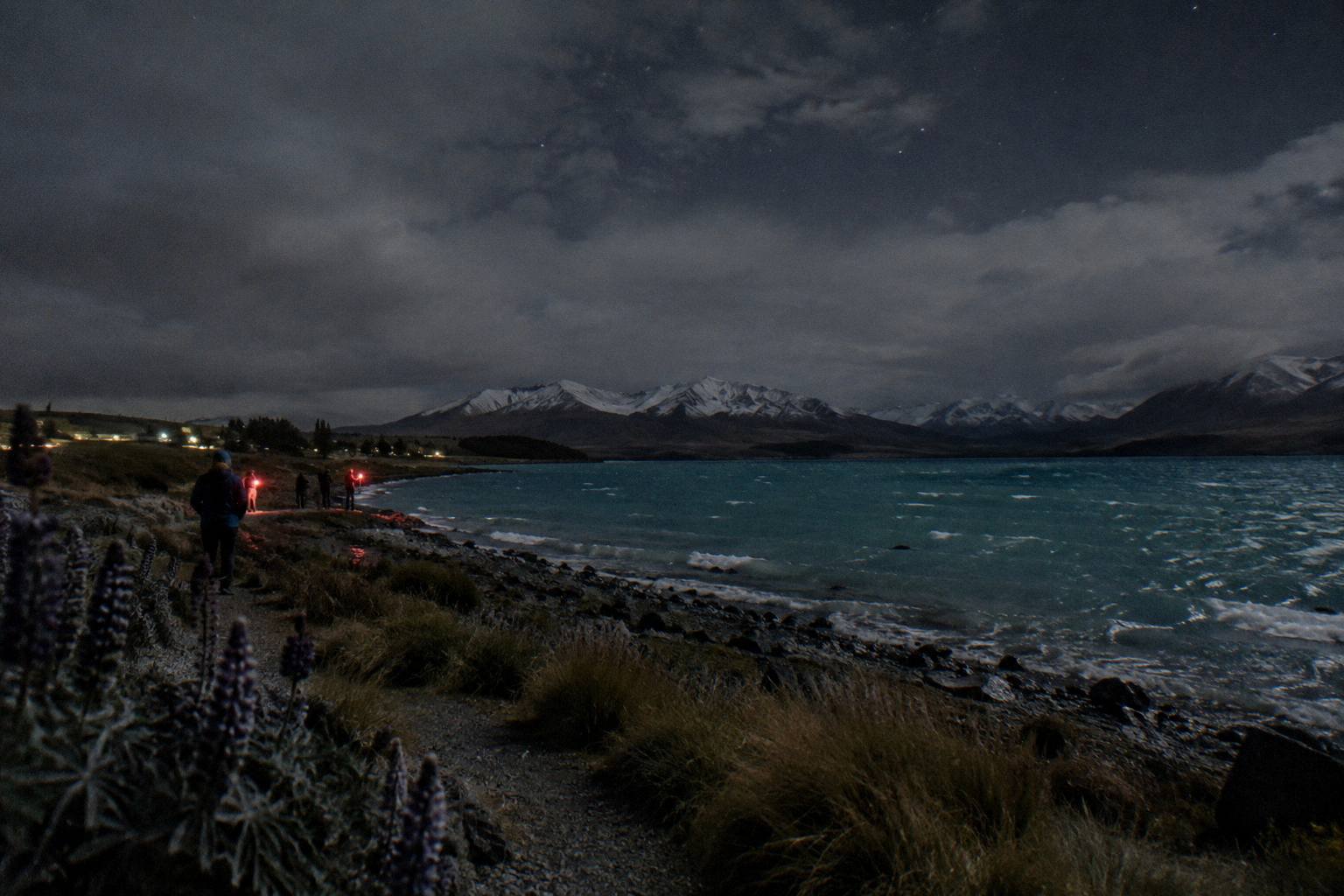
The lighting controls sit in the Mackenzie District Plan, which covers artificial lighting district-wide. The detail worth knowing as a visitor: the rules are why Tekapo's streets and buildings glow so little at night, and why a short walk out of the village drops you into genuine darkness. Respect it when you visit. Use a red torch if you have one, dim your phone, and do not leave headlights or cabin lights blazing at a roadside stop; the darkness is the shared asset the whole basin protects.
Altitude does the rest on Mount John. The University of Canterbury calls Mt John Observatory New Zealand's largest professional research observatory, with four telescopes including the 1.8 m MOA telescope operated with a Japanese university partner, and it officially opened in 1965. Researchers chose the summit for exactly the reason tourists are driven up it: elevation, stable air and a horizon unbroken by towns.
Whether you visit the summit on a tour or not, the decision moment for most readers is which tour to book. Check availability on the Mt John Summit Stargazing Experience if the observatory summit is what draws you; the operator's price is NZD 239 for adults and children alike, the tour runs 1 hour 45 minutes, and the minimum age is 10.
What Tours Run Inside The Reserve?
Seven operators run ten bookable stargazing tours across the reserve's Tekapo and Mackenzie Basin hubs. Dark Sky Project runs three from its lakefront base, Tekapo Springs runs the hot-pool combination, and smaller operators including Chameleon Stargazing, Astro Tekapo, Silver River Stargazing and Stargaze Mackenzie run the rest. Durations run from 45 minutes to 2 hours.
| Tour | Operator | Setting | Duration | Min age |
|---|---|---|---|---|
| Mt John Summit Stargazing Experience | Dark Sky Project | Mount John summit observatory | 1 hour 45 minutes | 10 |
| Crater Stargazing At Cowan's Observatory | Dark Sky Project | Cowan's Private Observatory | 75 minutes | 5 |
| Dark Sky Experience, Indoor Cultural Astronomy | Dark Sky Project | Indoor, lakefront base | 45 minutes | Not stated |
| Hot Pools And Stargazing At Tekapo Springs | Tekapo Springs | Tekapo Springs hot pools | 90 minutes | 10 |
| Chameleon Shared Stargazing Experience | Chameleon Stargazing | Not stated | About 1.5 hours | Not stated |
| Astro Tekapo Lakefront Stargazing | Astro Tekapo | Lakefront, Takapō Regional Park | 1.5 hours | 6 |
| Silver River Alpine Stargazing Experience | Silver River Stargazing | Not stated | 75 minutes | Not stated |
| Silver River Ultimate Stargazing Experience | Silver River Stargazing | Not stated | 2 hours | Not stated |
| Twizel Stargazing Tour With An Astronomer | Stargaze Mackenzie | Twizel | 75 minutes | 6 |
| Mt Cook Stargazing Experience | Silver River Stargazing | Mt Cook, Tasman Glacier car park | 75 minutes | Not stated |
Reading the table as a decision tool rather than a catalogue: the Dark Sky Project pair are the structured, telescope-led options with the strongest infrastructure, and they are the only Tekapo tours with a printable rating, the Summit at 4.6 across 352 reviews. The smaller operators are harder to compare because their booking pages state durations and meeting points but not prices or ratings; treat their pages as the source of truth and ask the operator directly where a detail matters.
For families, the age column does most of the work. The Crater Experience takes children from 5, Astro Tekapo from 6, and the Summit and the hot-pools combination from 10; Tekapo Springs allows no child under 6 on any of its tours, babies carried included, and the Pukaki wine-cellar experience has a minimum age of 12. The indoor Dark Sky Experience has no minimum age, with content the operator says suits about 7 and up, and under 5s are free with an adult ticket.
The Crater Experience is the pick for younger families and for anyone who wants the telescope experience without the summit price or the summit walk:
Cowan's Private Observatory sits a five-minute drive from the Dark Sky Project base, and its observation craters are purpose-built to shelter viewers from wind and stray light. The operator's price is NZD 139 adult, NZD 99 for children aged 5 to 17, with a family pass at NZD 377 for two adults and two children. Wheelchair users can join but must drive their own vehicle to the site rather than take the transport.
Mount John: The Observatory At The Heart Of The Reserve
Mount John is a working University of Canterbury research observatory at 1,029 m above Lake Tekapo, and it is the only place in the reserve where the public can reach the summit at night, on a Dark Sky Project tour bus. The road is closed to general traffic after hours, and the Astro Cafe at the top opens daily 9am to 4pm with a NZD 14 per vehicle road user fee at the gate.
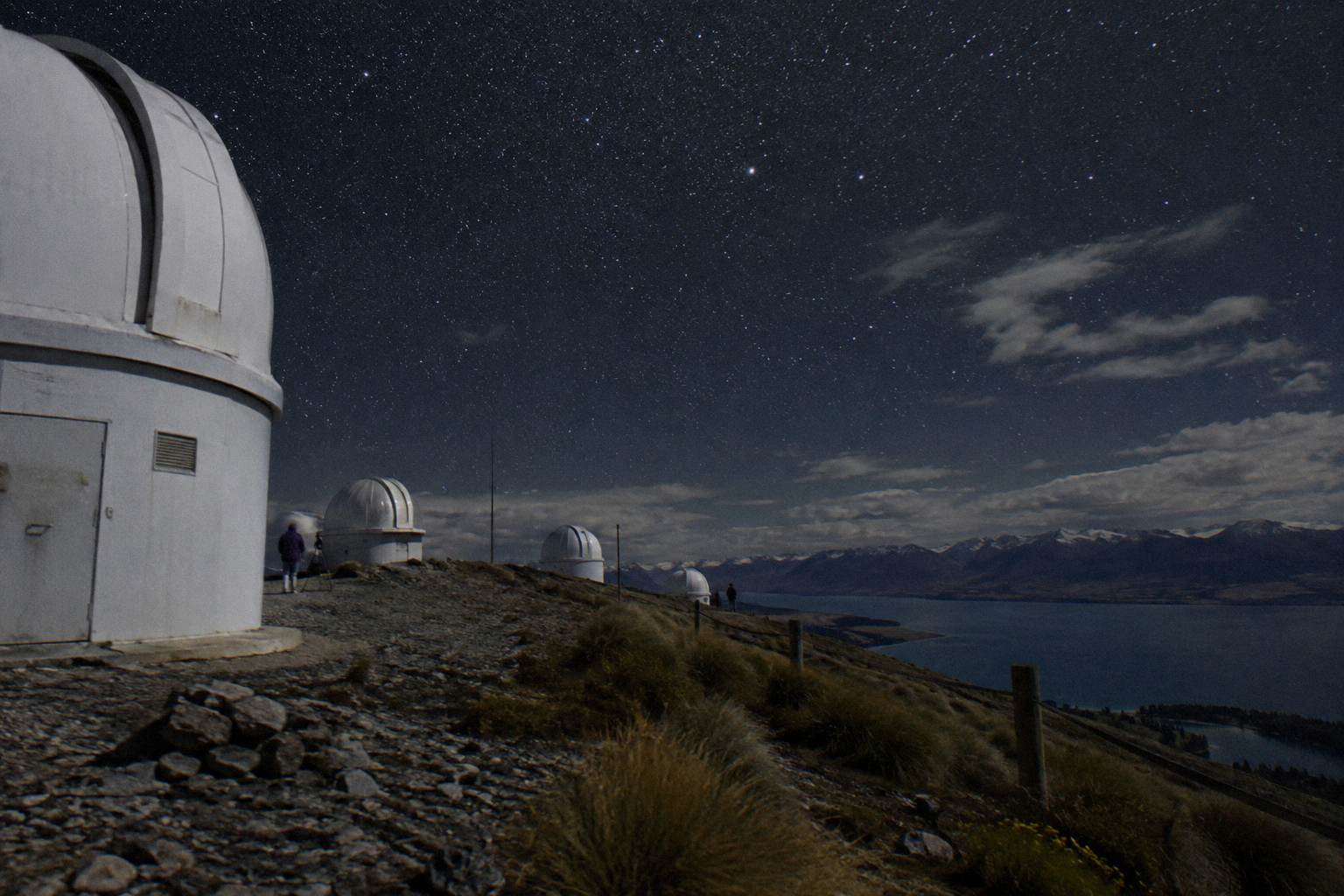
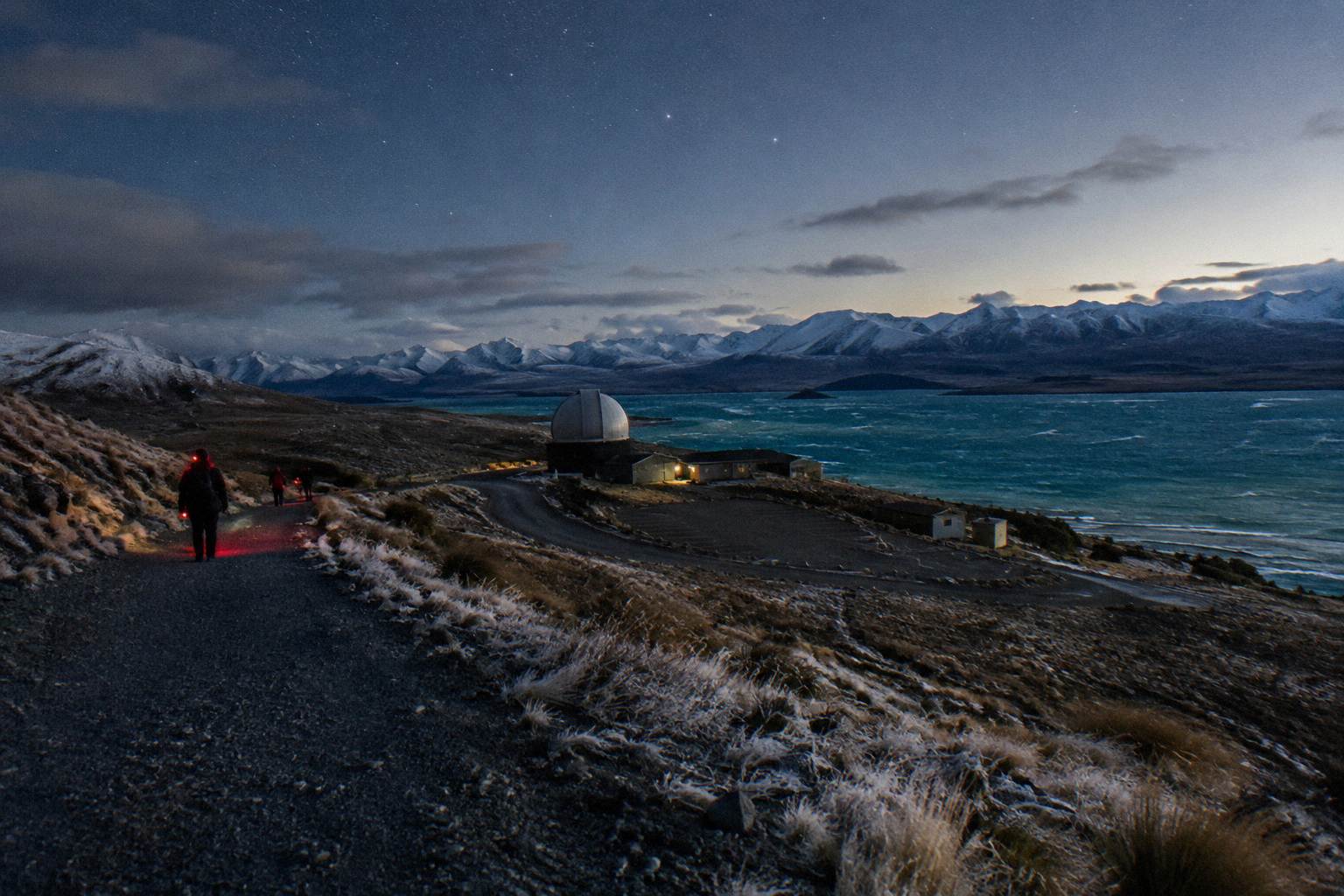
The dual identity is the interesting part. By day, Mount John is a café stop on a scenic drive, reachable by the Summit Circuit track, an 8.9 km return walk, or by the toll road. By night it reverts to research and to the Summit Experience, whose guests check in at the Dark Sky Project base 15 minutes early, take a 15-minute bus ride up, and spend the 1 hour 45 minute tour between telescopes up to 16 inch inside a private observatory dome and naked-eye viewing guided by handheld lasers. The tour weaves Tātai Aroraki, Māori astronomy, through the Western astronomy, Dark Sky Project says, and the price includes an Extreme Cold Weather jacket, which the summit alone offers.
The walk from bus to dome is short but real: a 100 m gravel incline and a few steps in the dark, which is why the operator asks for moderate fitness and sets the minimum age at 10. Adults and children pay the same NZD 239 on the operator's schedule valid to 30 September 2027; there is no child discount on this tour. Tour times are published only as "various times throughout the year, depending on time of sunset", so the booking calendar is the place to find what is running on your date.
If you are weighing the two Dark Sky Project outdoor tours against each other, the comparison of the Summit and Crater experiences and the Crater Experience guide break the choice down further. In short: the Summit buys altitude, the research observatory setting and the biggest telescopes; the Crater buys shelter, a lower price and younger children.
Beyond Tekapo: Stargazing Across The Basin
The reserve extends well past Tekapo, and two bookable tours cover its southern and northern reaches: the Twizel Stargazing Tour With An Astronomer and the Mt Cook Stargazing Experience. Each meets at a different hub, Twizel and the Tasman Glacier car park respectively, so where you sleep can decide which one fits your trip.
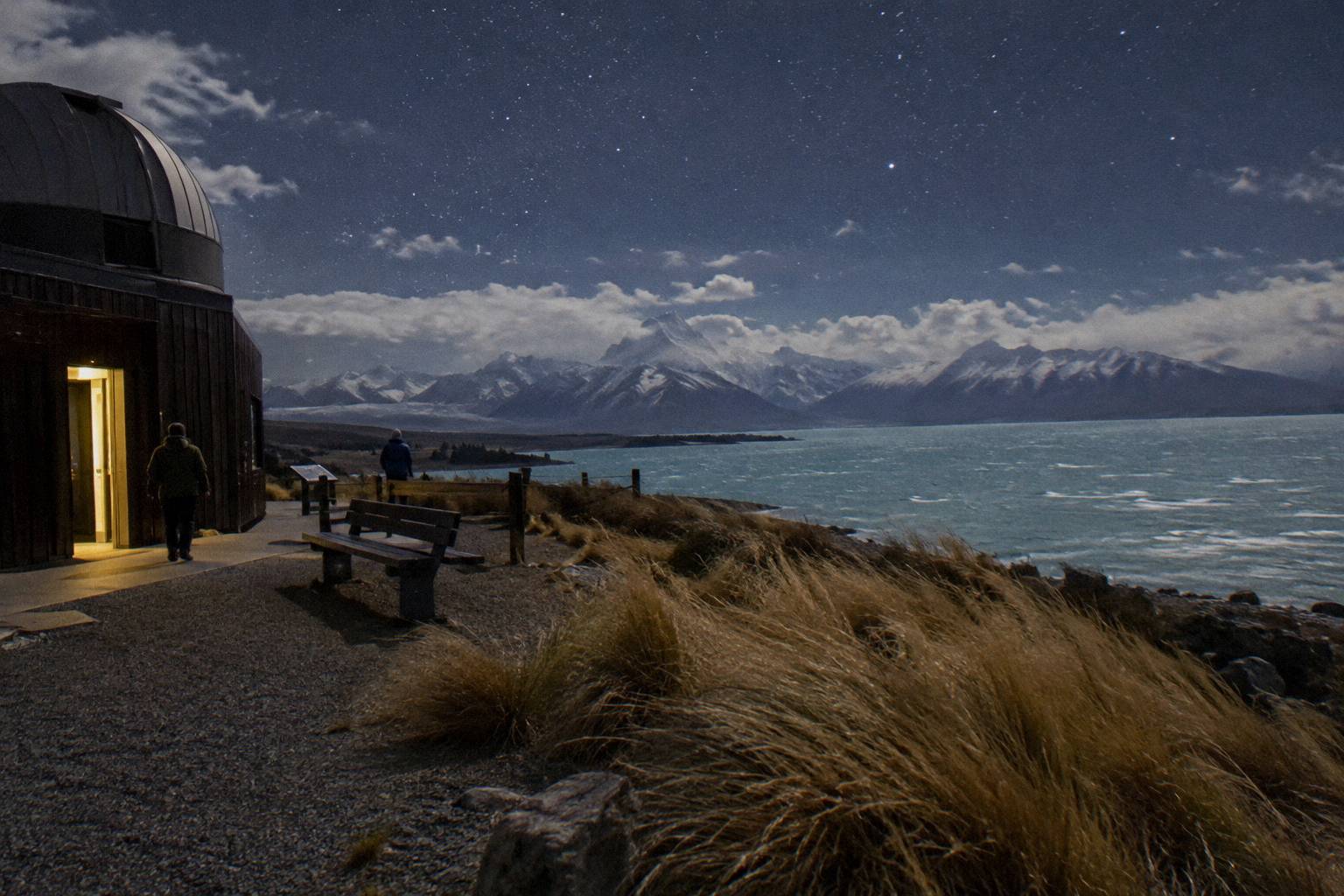
Twizel sits about 40 minutes' drive south of Tekapo on State Highway 8, and Stargaze Mackenzie's tour there runs 75 minutes with a minimum age of 6, meeting in Twizel itself. At the northern end, Silver River Stargazing's Mt Cook Experience also runs 75 minutes and meets at the Tasman Glacier car park, which puts it under the sky of Aoraki/Mt Cook National Park, the reserve's northern half. The Mt Cook stargazing guide and the Twizel night sky guide cover both hubs in detail.
For Mt Cook based travellers:
The Mt Cook Experience's 75-minute format and Tasman Glacier car park meeting point make it the simplest fit for a night in the village, and the booking page shows a 24-hour free cancellation window. Whether the sky cooperates is another matter, which is the next section's subject.
Weather, Cloud And What Happens If The Sky Will Not Cooperate
No operator in the reserve guarantees the sky. Dark Sky Project states it cannot guarantee clarity or objects, makes the call as close to tour time as possible, and if outdoor stargazing is not possible offers an indoor alternative, a reschedule subject to availability, a gift voucher valid 3 years, or a full refund. Tekapo Springs tours run in all weather, with a VR indoor experience replacing telescope viewing under cloud.
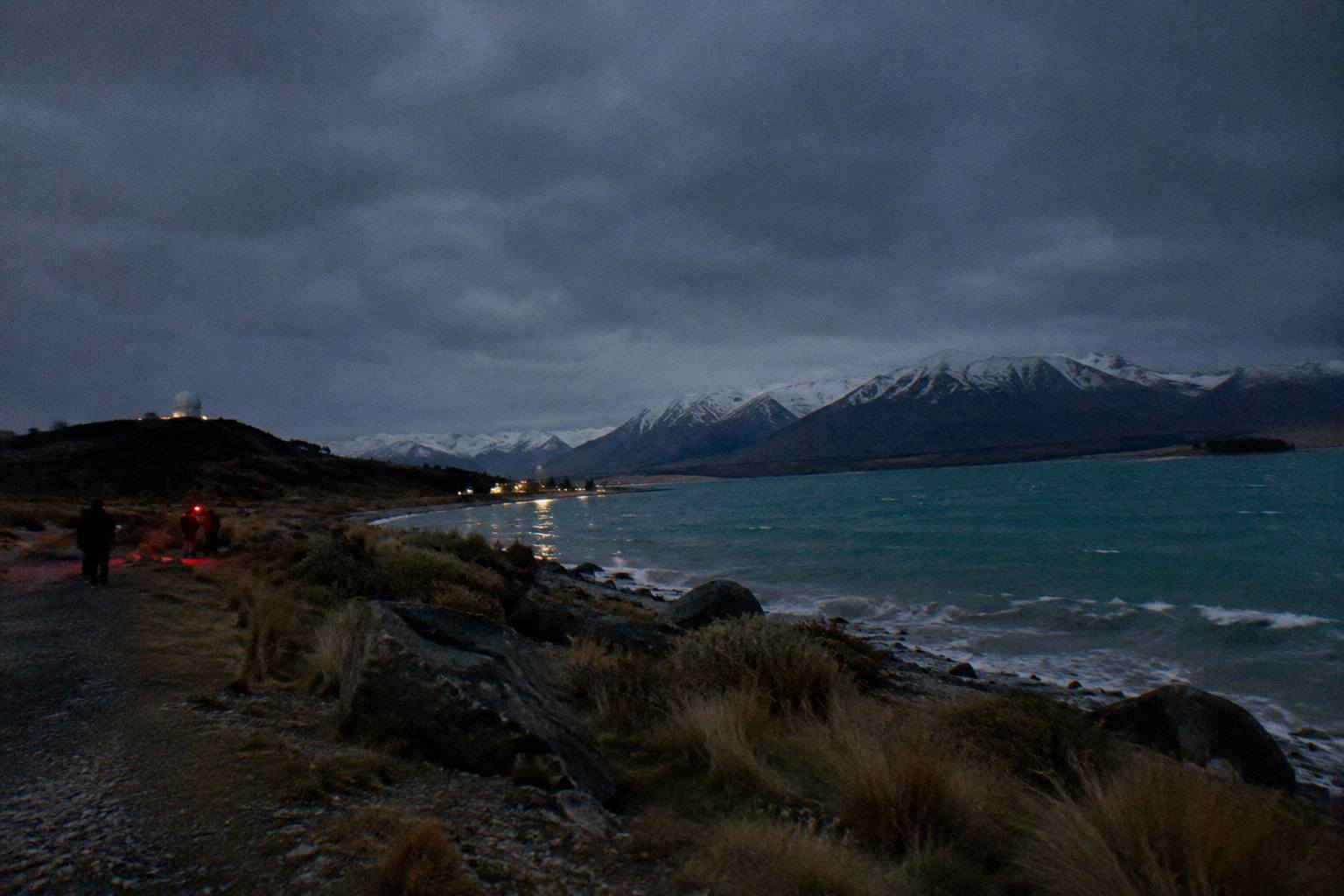
This is the part of the planning that catches visitors out, so read the operators' own words rather than summaries. Dark Sky Project's weather planning page explains the decision process and the moon's effect: brighter moonlight affects fainter stars and galaxies, though the operator also points out the moon is a good target in its own right. Check in 15 minutes early, because that check-in is where you learn the night's verdict.
Tekapo Springs takes the opposite approach to the same problem. Its tours run in all weather; under cloud, a VR indoor experience built on 360 degree imagery of the Church of the Good Shepherd and the Mount John summit replaces the telescope portion. If the telescope viewing comes in under 30 minutes, the operator refunds 25 percent per ticket at the end of the tour, for tours from 18 June 2026. Clarity itself is not guaranteed, whatever the advertising elsewhere on its site implies.
| If the sky is grey | Dark Sky Project outdoor tours | Tekapo Springs tours |
|---|---|---|
| Does the tour run? | Decision made close to tour time | Yes, in all weather |
| Substitute | Indoor alternative or Virtual Stargazing Experience | VR indoor experience |
| Refund | Full refund, reschedule or voucher valid 3 years | 25 percent per ticket if under 30 minutes of viewing |
| Cancellation by you | Free up to 24 hours before (direct bookings) | Free up to 24 hours before |
The indoor Dark Sky Experience deserves a mention here as the weather-proof option: it is a 45-minute indoor guided astronomy tour at the Dark Sky Project base, daytime, with the restored 125-year-old Brashear telescope, and it offers no stargazing at all. Treat it as the cloud-cover alternative and the cultural primer, not a stargazing tour. English tours run at 10:30am, 12:30pm and 2:30pm, with 4:30pm added on Tuesday and Wednesday, subject to availability.
If soaking rather than standing sounds like the right way to meet the reserve's night, the hot-pool combination handles weather better than most:
Soak in the Stars runs 90 minutes, pairing guided telescope viewing with an exclusive hot pool at 37.5 to 38.5 degrees, towels, robes, hot drinks and warm poncho coats included. The operator's price is NZD 179 adult, NZD 115 child, with a family option at NZD 499, and the minimum age is 10. It runs seven evenings a week from October to April and Thursday to Monday from May to September, with some starts after midnight, so check the calendar against your energy levels.
How Much Does Stargazing In The Reserve Cost?
Only four tours publish operator prices: the Summit Experience at NZD 239, the Crater Experience at NZD 139 adult, the Dark Sky Experience at NZD 59 adult, and Soak in the Stars at NZD 179 adult. Every other tour carries its price on the booking page. Family passes exist for three of the four, and free cancellation up to 24 hours before applies to direct bookings.
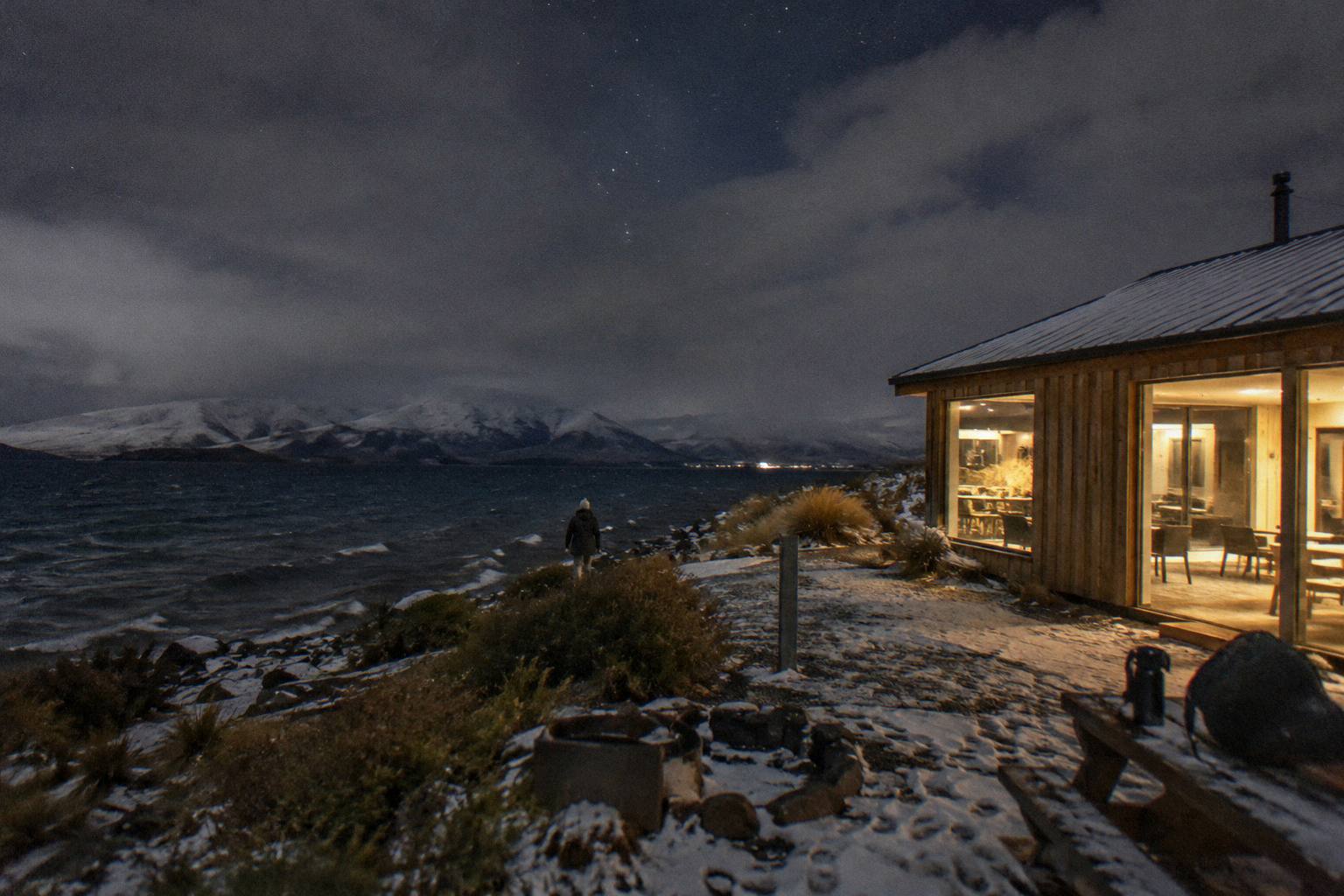
| Tour | Adult | Child | Family | Price basis |
|---|---|---|---|---|
| Mt John Summit Stargazing Experience | NZD 239 | NZD 239 | Not stated | Operator price, valid to 30 September 2027 |
| Crater Stargazing At Cowan's Observatory | NZD 139 | NZD 99 (5 to 17) | NZD 377 (2 adults, 2 children) | Operator price, valid to 30 September 2027 |
| Dark Sky Experience, Indoor | NZD 59 | NZD 39 | NZD 157 (2 adults, 2 children) | Operator price, valid to 30 September 2027 |
| Hot Pools And Stargazing (Soak in the Stars) | NZD 179 | NZD 115 | NZD 499 | Operator price |
| All seven other tours | On the booking page | On the booking page | Not stated | Ask the operator |
Two reading notes on that table. First, the Summit charges adults and children the same NZD 239, so everyone in the party pays the same per person, once children are 10 or over. Second, the senior and student tier for the Tekapo Springs scope-only tour differs across the operator's own pages, so that tier is left out here entirely; the operator can confirm the current figure.
Prices are the operators' direct-booking schedules and can change. Booking through a third-party agent can carry different prices and different cancellation terms, which follow the agent, so read whichever page you actually pay on.
Budget logic follows from the spread. The Summit Experience sits at the top of the per-person range on the operator's own pricing, the Crater Experience and Soak in the Stars sit in the middle at NZD 139 and NZD 179 per adult, and the indoor Dark Sky Experience at NZD 59 is the least expensive way to engage with the reserve's story. None of these figures includes transport to Tekapo or accommodation, and the basin's towns book out in peak season, so the tour is rarely the largest line in the trip budget.
Common Mistakes When Planning Reserve Stargazing
The mistakes that cost people money or a night are booking the wrong tour for their children's ages, assuming a guaranteed sky, arriving at the wrong check-in point, and treating a summer calendar as fixed year-round. Each is avoidable in a minute of checking: the age minimums, the weather terms, the meeting address and the seasonal schedule are all on the operators' pages before you pay.
The age trap is the most common. A family with a 7-year-old can book the Crater Experience or Astro Tekapo but not the Summit or Soak in the Stars, both minimum age 10, and Tekapo Springs bars under 6s from any of its tours, babies carried included. Nothing here is negotiable on the night.
The guarantee trap follows. No operator in the reserve promises the Milky Way, aurora or any object; Dark Sky Project says so plainly, and Tekapo Springs' own terms say clarity cannot be guaranteed. What you are buying is access, telescopes, guiding and a well-managed weather policy, not a sighting. Plan a second night in the basin if stargazing is the trip's purpose, and read the guide on how many nights you need in Tekapo before you fix an itinerary.
The check-in trap: Dark Sky Project tours depart from 1 Motuariki Lane on the Tekapo lakefront, with check-in 15 minutes early, and late check-in earns no refund under the operator's terms. Tekapo Springs tours check in at its reception, also 15 minutes early. The summit road is not a self-drive option at night in any case.
The calendar trap: Summit times shift with sunset and are not published as clock times, Soak in the Stars drops to five evenings a week from May to September, and the Dark Sky Experience adds its 4:30pm session only on Tuesday and Wednesday. A tour that ran last night may not run tomorrow. Check the date before you book anything non-refundable around it.
Three tours that fit most reserve itineraries:
- Mt John Summit Stargazing
- Cowan's Observatory, Transport Included
- Dark Sky Experience, Indoor
- Hot Pools And Stargazing, 90 Minutes
- Chameleon Shared Stargazing
- Lakefront Stargazing, 1.5 Hours
- Silver River Alpine, 75 Minutes
- Silver River Ultimate, 2 Hours
- Astronomer-Led Twizel Stargazing
- Mt Cook Stargazing, 75 Minutes
Common Questions About The Aoraki Mackenzie Dark Sky Reserve
Is The Aoraki Mackenzie Dark Sky Reserve The Largest In The World?
No. Dark Sky Project and Tekapo Stargazing describe it as the largest dark sky reserve in the Southern Hemisphere, and that is the claim to repeat. Some operator pages use broader wording, but the Southern Hemisphere phrasing is the one the operators' reserve pages support.
When Was The Aoraki Mackenzie Dark Sky Reserve Created?
Reserve status was awarded in April 2012. The designation covers Aoraki/Mt Cook National Park and the Mackenzie Basin, and the district's outdoor lighting rules help keep the sky dark.
Do You Need A Tour To Stargaze In The Reserve?
No. The lakefront at Tekapo and the shores of Lake Pukaki sit under the same protected sky, and stargazing independently is free. A tour buys telescopes, a guide and, on the Summit Experience, bus access to Mount John at night, which the public road does not allow after hours.
What Does It Cost To Stargaze At Lake Tekapo?
Operator prices run from NZD 59 for the indoor Dark Sky Experience to NZD 239 for the Summit Experience, with the Crater Experience at NZD 139 adult and Soak in the Stars at NZD 179 adult. Seven other tours carry their prices on the booking pages.
Can You Visit Mount John Observatory Yourself?
By day, yes: the access road is open 9am to 4pm with a NZD 14 per vehicle fee at the gate, and the Astro Cafe is open the same hours. At night the summit is reachable only on a Dark Sky Project tour bus.
What Happens If It Is Cloudy On The Night Of The Tour?
Dark Sky Project cannot guarantee clarity, decides close to tour time, and offers an indoor alternative, a reschedule, a voucher valid 3 years or a full refund if outdoor stargazing is not possible. Tekapo Springs tours run in all weather with a VR indoor experience under cloud, and refund 25 percent per ticket if telescope viewing is under 30 minutes.