Free Stargazing At Lake Tekapo: Where To Look Without A Tour
The sky over Lake Tekapo costs nothing to look at. The question is what a free night gives you, what the Mt John road fee buys, and when a guided tour is the better spend.
Short answer
Yes, the sky is free: Lake Tekapo sits inside the Aoraki Mackenzie International Dark Sky Reserve, and no ticket is needed to stand outside at night and look up. The Mt John summit road is a daytime option, open 9am to 4pm with a NZD 14 per vehicle fee. No free viewing locations are named in the verified operator facts, so this page focuses on decision content instead.
For more on the reserve itself, see the Aoraki Mackenzie dark sky reserve overview.
| Quick fact | Detail |
|---|---|
| Cost to look at the sky | Free, no ticket needed |
| Mt John access road hours | 9am to 4pm daily |
| Road user fee | NZD 14 per vehicle at the gate |
| Reserve designation | Aoraki Mackenzie International Dark Sky Reserve, April 2012 |
| Drive from Christchurch or Queenstown | About three hours |
| Guided entry price | From NZD 59 adult, the operator's price |
Can You Stargaze At Lake Tekapo For Free?
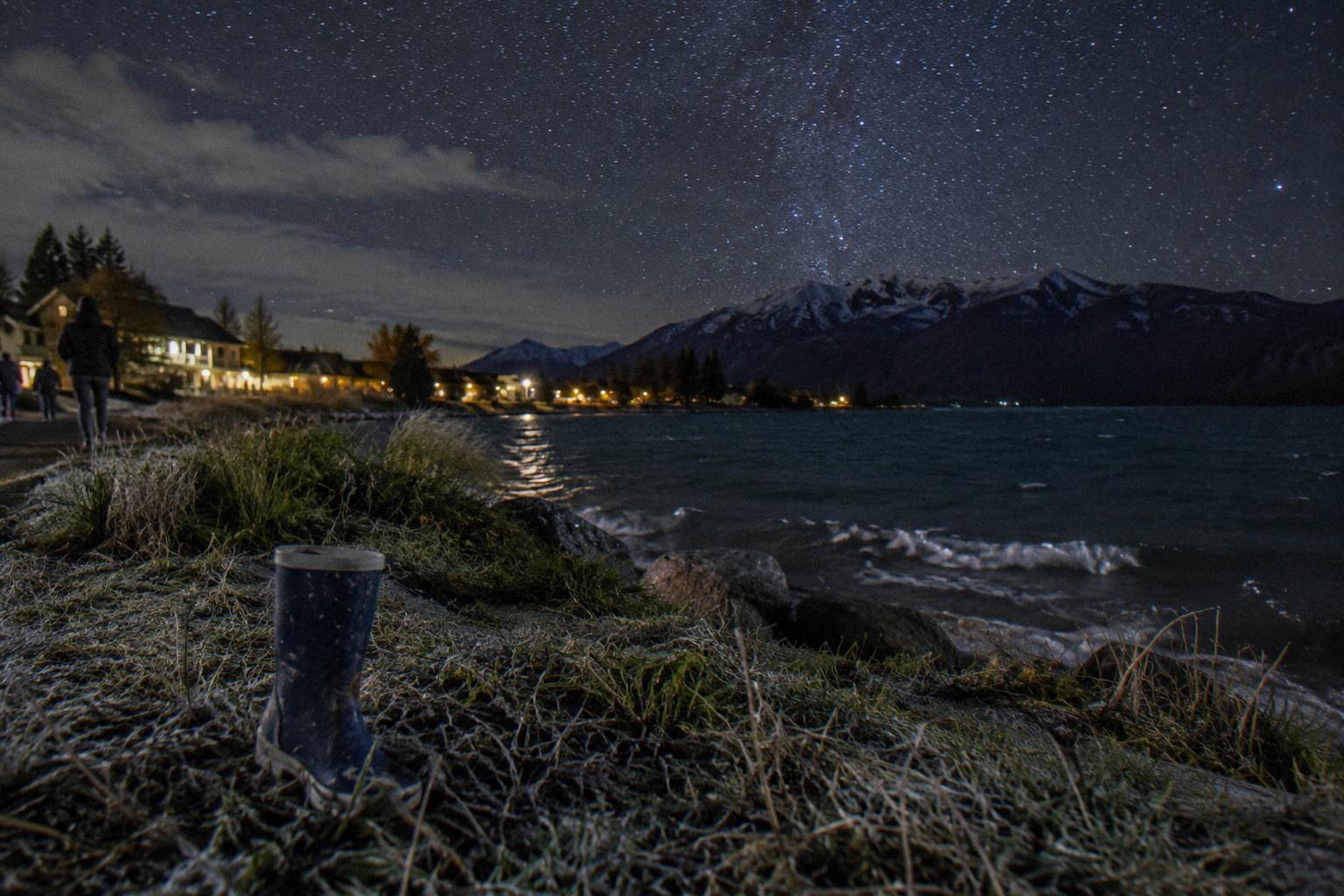
Yes, the sky itself costs nothing. Lake Tekapo sits inside the Aoraki Mackenzie International Dark Sky Reserve, covering Aoraki/Mt Cook National Park and the Mackenzie Basin, and nobody charges you to stand outside after dark. The catch: the verified operator facts name no specific free public viewing locations, so this page will not invent any. Instead it explains the road fee, the lighting rules and the moon, and helps you decide whether a guided night earns its price.
The reserve is real and it is large. Dark Sky Project, the operator based at 1 Motuariki Lane in Takapō (Tekapo), describes it as the largest dark sky reserve in the Southern Hemisphere, with the designation awarded in April 2012. The Mackenzie District Council also runs lighting rules in its District Plan, including shielding so lights point downward, which is part of why the village stays dark. Those rules are why free stargazing from anywhere with a clear view away from buildings works as well as it does here.
What the facts do not give is a curated list of free spots. The operators publish details about their own sites, the summit road and the lakefront, not a map of public dark-sky viewpoints. Any article naming five "secret free locations" is filling the gap with invention. The honest version: walk away from the village lights, face the dark side of the sky, and the reserve does the rest. If you want specifics on what is visible, the guide on what you see through Tekapo stargazing telescopes covers the objects themselves.
Free also means unsupported. No guide, no telescope, no extreme cold weather jacket, no cloud fallback. In midwinter the summit area can be brutally cold, and the question of clothing is its own topic, covered in what to wear for Tekapo stargazing. A free night is a genuine option here, but it is an option with no safety net, and the rest of this page is about weighing that trade honestly.
The Mt John Access Road: A Daytime Fact, Not A Night Shortcut
The road up Mount John is open 9am to 4pm daily, with a NZD 14 per vehicle road user fee paid at the gate, according to the operator's Astro Cafe page. That makes it a daytime attraction, not a free stargazing route: you cannot drive up at 11pm, and overnight parking on the summit is not part of the published access. Vehicles over 12 seats are not permitted, and the road closes in some weather.
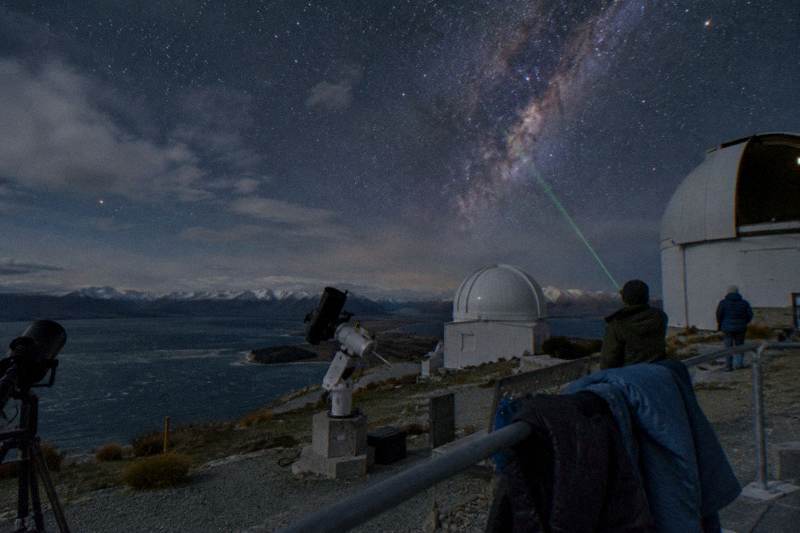
The summit itself is worth the daytime drive if the budget for a tour is not there. Mt John Observatory, run by the University of Canterbury, sits at 1,029 m, and the operator describes it as New Zealand's largest professional research observatory. The Astro Cafe at the top is open 9am to 4pm daily, the same hours as the road, per the operator's Astro Cafe page. During the day you get the lake, the cafe and the observatory buildings; the telescopes inside are for research and for the guided night tours, not for casual visitors.
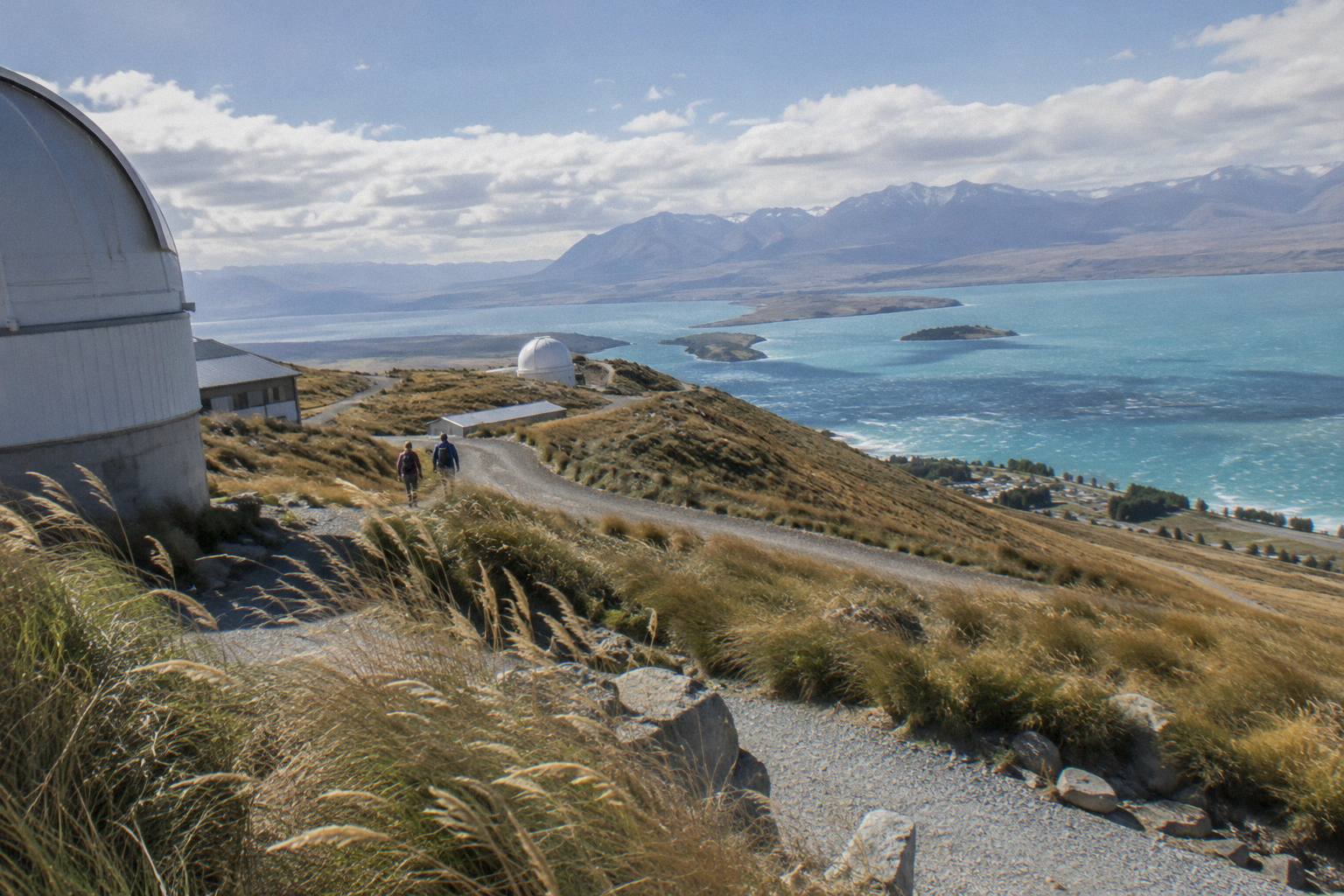
One more daytime detail with night relevance: the Summit Circuit track, 8.9 km return, starts near the summit area. Walking it late in the day is a way to be on the hill at dusk without a vehicle fee waiver, but note the road gates close at 4pm, so plan to walk out on the track or be back at the car before closing. The University and Dark Sky Project also give the hill a Māori name, Ōtehīwai Mount John, on the cafe page.
For readers whose real question is "can I get the summit experience without paying for a tour", the answer is partly yes and mostly no. The road and the cafe give you the mountain in daylight. The telescopes, the private dome and the guided interpretation at night are exactly what the paid Summit Experience sells, and there is no published do-it-yourself equivalent after dark. A reader weighing the two paths may find the comparison in Mount John observatory stargazing options useful, and the paid alternatives are below.
Where Free Stargazing Around The Village Actually Works
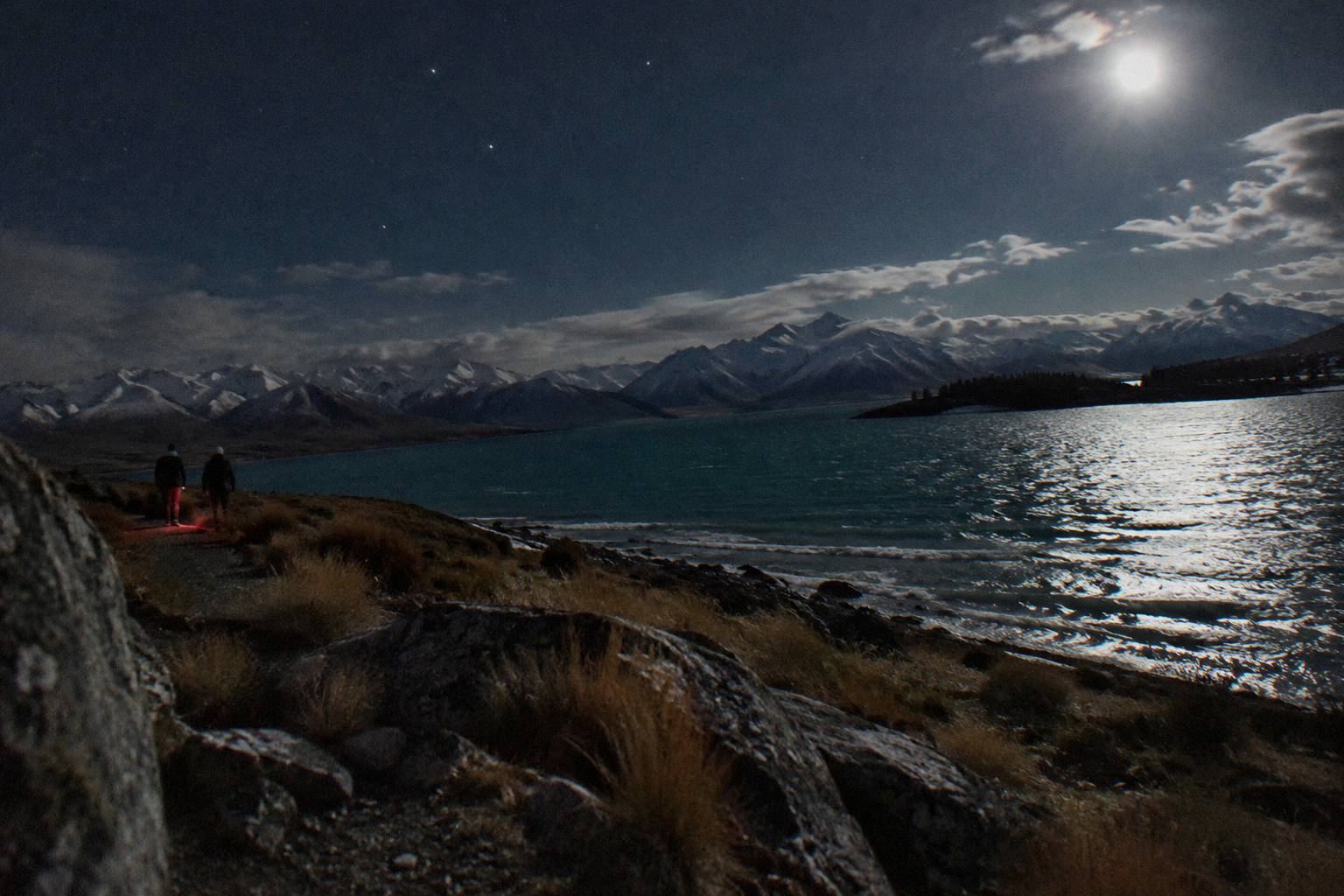
Free stargazing works by walking away from artificial light, and the reserve's darkness handles the rest. The verified facts anchor three lit-or-managed places: the village lakefront near the Dark Sky Project base, the Tekapo Springs side of the lake, and the summit road by day. Beyond those anchors no free locations are stated by the operators, so choose any safe, legal spot with an open sky, no headlights and no security lighting.
Practically, the geometry matters more than the postcode. Light falls off fast with distance, so even two or three minutes' walk from the village centre changes what your eyes adapt to. Face away from the village glow and toward open sky. Give your eyes time: dark adaptation is the one free technology every stargazer owns, and it costs nothing but patience. Avoid headlights and phone screens, both of which reset that adaptation.
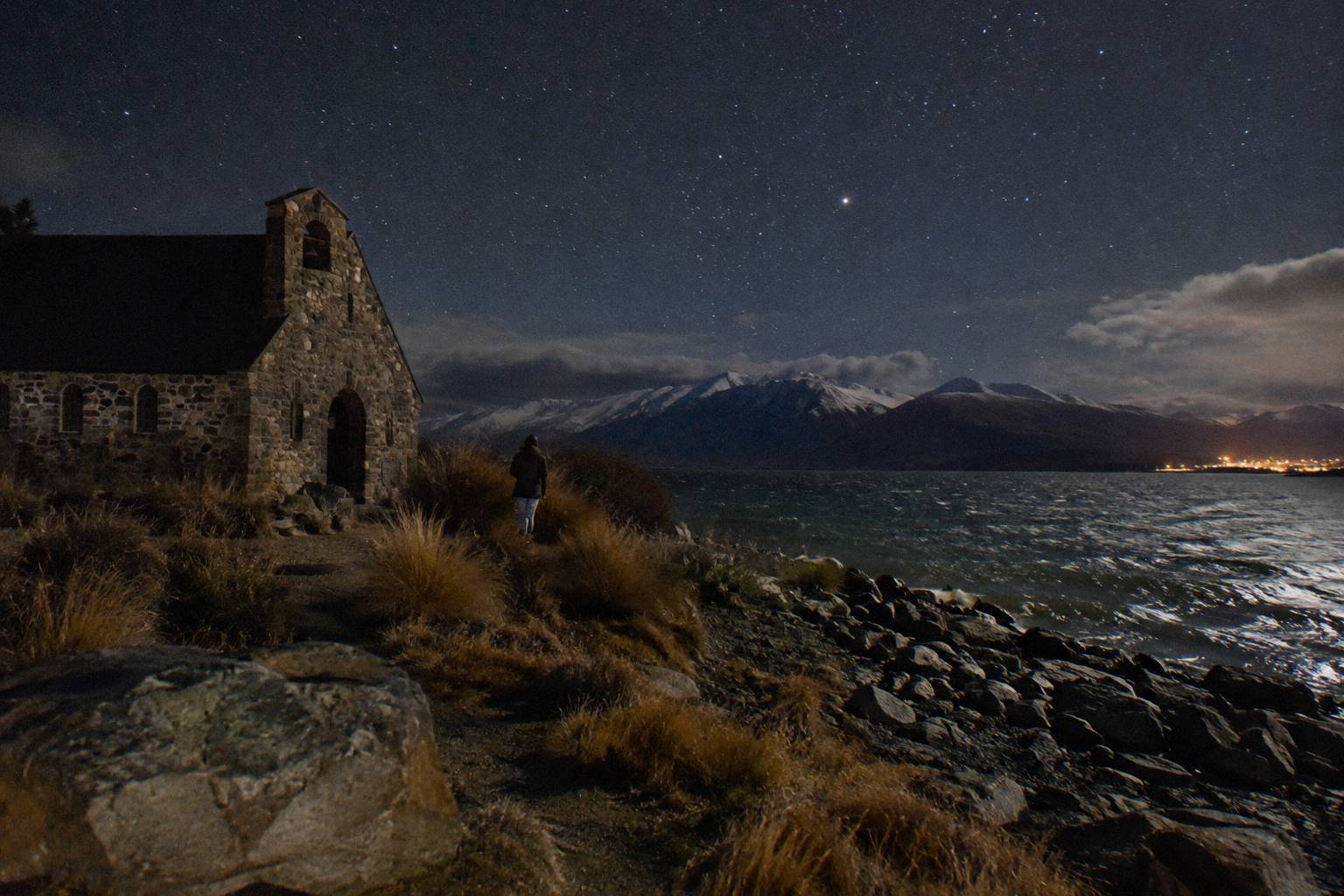
The moon is the second variable. Dark Sky Project says brighter moonlight affects fainter stars and galaxies, while the moon itself remains a good target, and Tekapo Stargazing says telescopes still show bright objects under a full moon even though naked-eye Milky Way is reduced. The trade is simple: around new moon, free stargazing gets the faint deep-sky detail; around full moon, the moon dominates and the Milky Way fades. The new moon or full moon guide works through that decision, and the best time guide adds the seasonal angle.
One honest limit of a free night: you get sky, not interpretation. Nobody hands you a telescope, explains Tātai Aroraki (Māori astronomy), or points a handheld laser at what you are looking at. If reading the sky yourself is the appeal, free is genuinely enough. If the point is being shown things you cannot find alone, that is what the guided products exist for, and the Crater Experience at NZD 139 adult is the operator's lower-priced entry to guided telescope viewing, at Cowan's Private Observatory a five minute drive from the base. Check availability
What Weather And Cloud Do To A Free Night
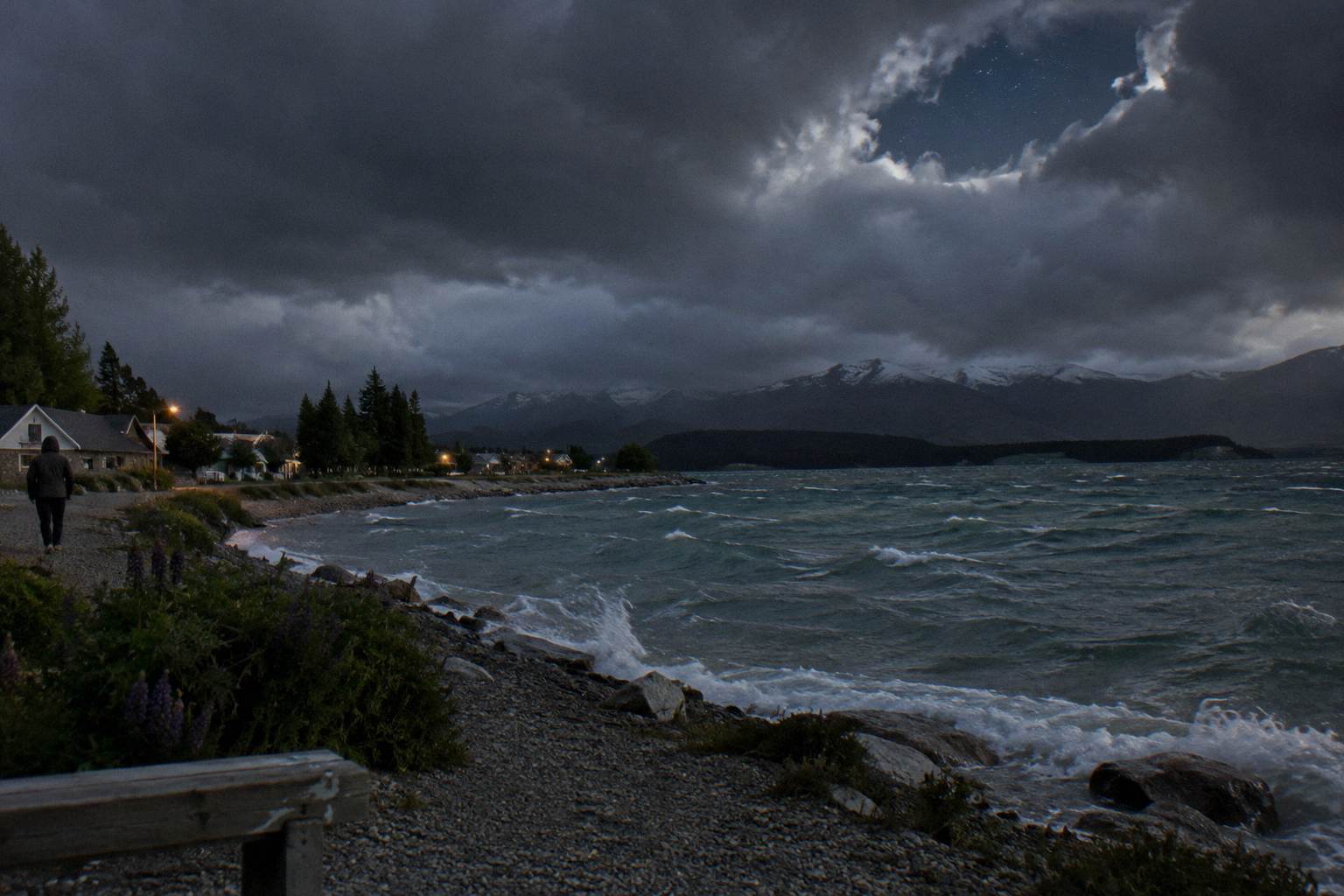
Cloud is the single thing that ruins a free stargazing plan, because there is no fallback: no indoor alternative, no reschedule, no refund, since nothing was paid. Dark Sky Project cannot guarantee clarity even for its own guided tours and decides close to tour time; Tekapo Springs runs in all weather with a VR indoor experience replacing telescope viewing under cloud. A free night has none of that, so checking the sky first is the whole risk plan.
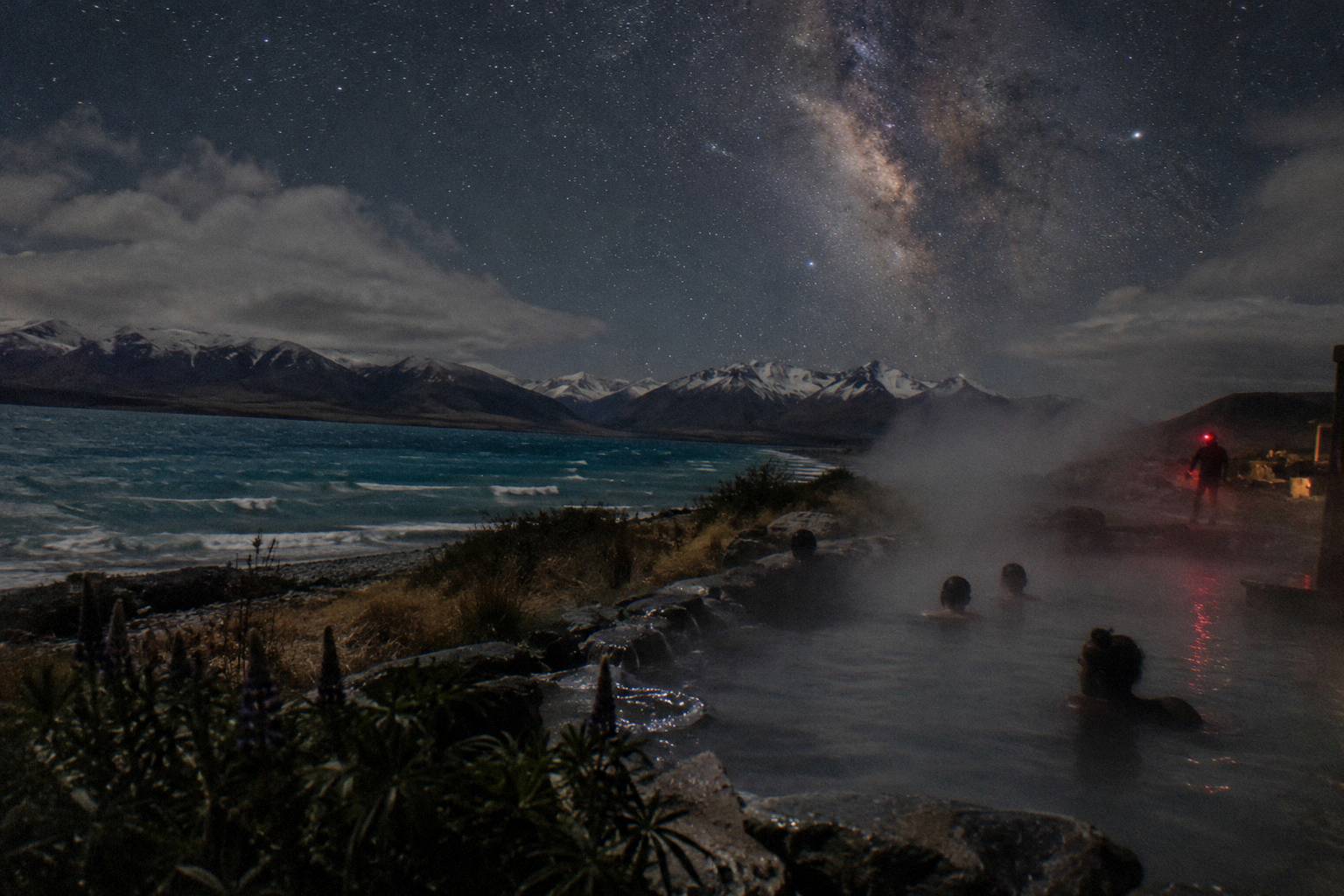
The Mackenzie climate gives no promises. The operators themselves, who run nightly businesses here, both decline to guarantee clarity: Dark Sky Project's terms offer an indoor alternative, a reschedule subject to availability, a gift voucher valid three years, or a full refund when outdoor stargazing is not possible, per the operator's weather page. That is telling for the free stargazer: if the professionals structure their whole cancellation policy around cloud, a plan with no fallback should at least check the forecast first.
| Situation | Guided Dark Sky Project tour | Free night |
|---|---|---|
| Clear sky | Tour runs | Look up |
| Cloud, no outdoor viewing | Indoor alternative offered, or reschedule, voucher (3 years) or full refund | Nothing; go home |
| Decision timing | As close to tour time as possible | Yours alone |
| Late arrival | No refund per operator terms | No cost |
| Moon washes out faint objects | Operator says moon is a good target | Same sky, same trade |
This is the clearest way to frame what money buys: not better sky, but a structure around the risk. A paid booking converts "maybe" into "reschedule or refund". A free night keeps all the risk and all the savings. For a longer stay the risk is smaller, since you can simply try again tomorrow; the post on how many nights to book makes that case.
The moon plan is the other half of free-night tactics. Since the sky costs nothing, the cheapest upgrade available is timing: pick a moonless window and a clear forecast, and a free night can deliver the reserve's fainter detail. Pick a full moon and you will still see bright stars and the moon itself, but the Milky Way's glow over the lake shrinks. Neither outcome costs a cent, and neither is guaranteed.
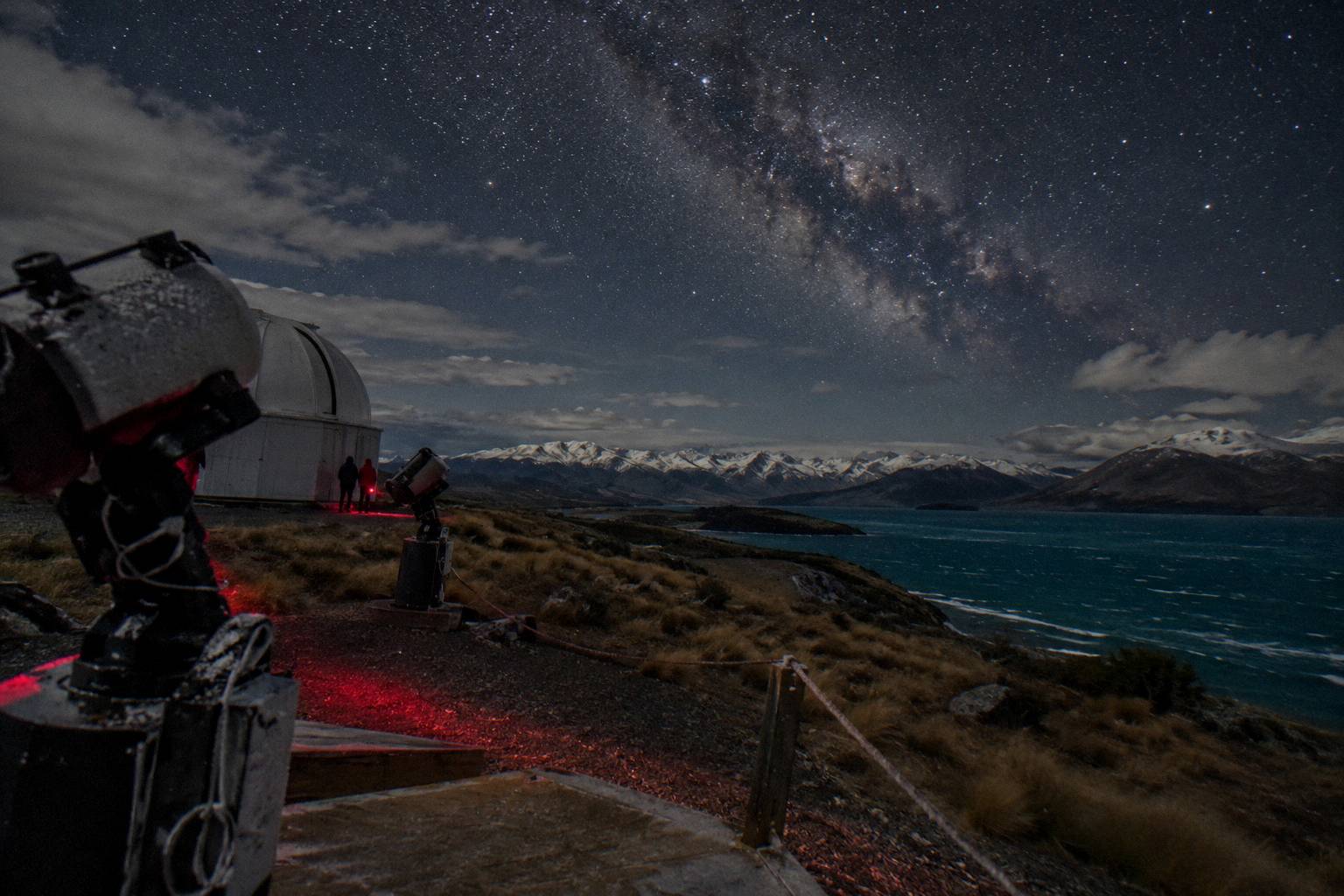
The two risks also run on different clocks, and that sets the order of operations. The moon's phase is fixed far in advance, so a moonless window can be chosen before you travel; cloud resolves at the last moment, which is why the forecast check belongs to the night itself. Dark Sky Project waiting until nearly tour time to commit shows how late real clarity settles, and a free stargazer holds the same option: go outside, glance up, and call it off on the spot with nothing forfeited.
The tactics compound, too. Every extra night in the area adds another shot at the combination that matters, a sky that is both clear and moonless, and no booking has to be rearranged to take it; you simply go out on whichever evening delivers.
When A Guided Tour Adds Something A Free Night Cannot
A guided tour adds three things: telescope time, interpretation, and a fallback. The Summit Experience uses telescopes up to 16 inch inside a private dome at the observatory, with Tātai Aroraki and Western astronomy woven through the guiding, and includes an extreme cold weather jacket loan. No free night replicates any of that, and the operator's price is NZD 239 adult and child alike, minimum age 10.
The telescope gap is the big one. Naked-eye stargazing in a gold-tier reserve is genuinely good, and many travellers are happy with it. But a telescope resolves objects your eye holds as smudges or cannot hold at all, and the guided tours are built around that difference. The Mt John Summit Stargazing Experience pairs the summit site with dome viewing and runs 1 hour 45 minutes including the 15 minute bus each way. It is rated 4.6 across 352 reviews, the operator's own figures.
Interpretation is the second gap. Dark Sky Project says Tātai Aroraki, Māori astronomy, is woven through its Summit, Crater and indoor experiences, and that Takapō is the name recorded by Ngāi Tahu ancestors. Tekapo Springs, on its stargazing pages, presents stars as a Pacific navigation compass, with Matariki and the Southern Cross. A free night gives you the sky; a guided night gives you the sky plus the stories the operators tell about it, told in their own words on the night.
The third gap is comfort and weather structure. Tekapo Springs' Soak in the Stars, NZD 179 adult for 90 minutes, follows guided telescope viewing with an exclusive hot pool at 37.5 to 38.5 °C, with towels, robes, hot drinks and warm poncho coats, minimum age 10. It runs in all weather, with a VR indoor experience replacing the telescope time under cloud and a 25 percent refund per ticket if telescope viewing falls under 30 minutes. That refund clause is something a free night structurally cannot offer, and the detail is in the Tekapo Springs stargazing and hot pools guide.
None of this says free is the wrong choice. If your budget is tight, your eyes are keen and your nights in town are many, the reserve's darkness is a public good and you should use it. The upgrade case is strongest for travellers with one clear night, one shot, and an interest in being shown rather than finding: exactly the reader Mt John Stargazing exists to help.
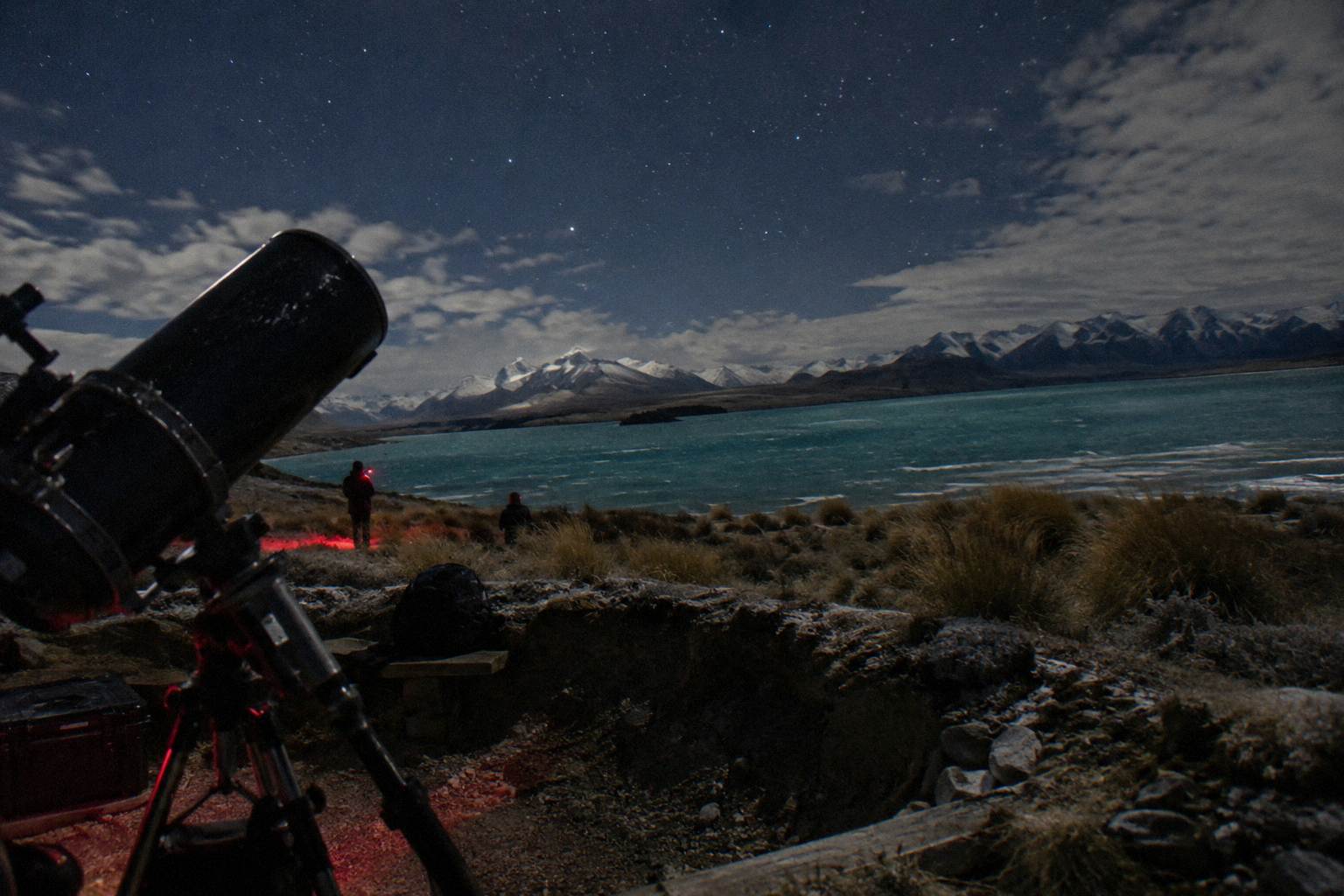
Costs Side By Side: Free, Road Fee And Operator Prices
The free option costs zero dollars. The Mt John road costs NZD 14 per vehicle, daytime only. The operators' own prices start at NZD 59 adult for the indoor Dark Sky Experience, NZD 139 adult for the Crater Experience and NZD 239 for the Summit Experience, with Tekapo Springs' Soak in the Stars at NZD 179 adult. All are the operators' own NZD prices, their current schedule, valid to 30 September 2027.
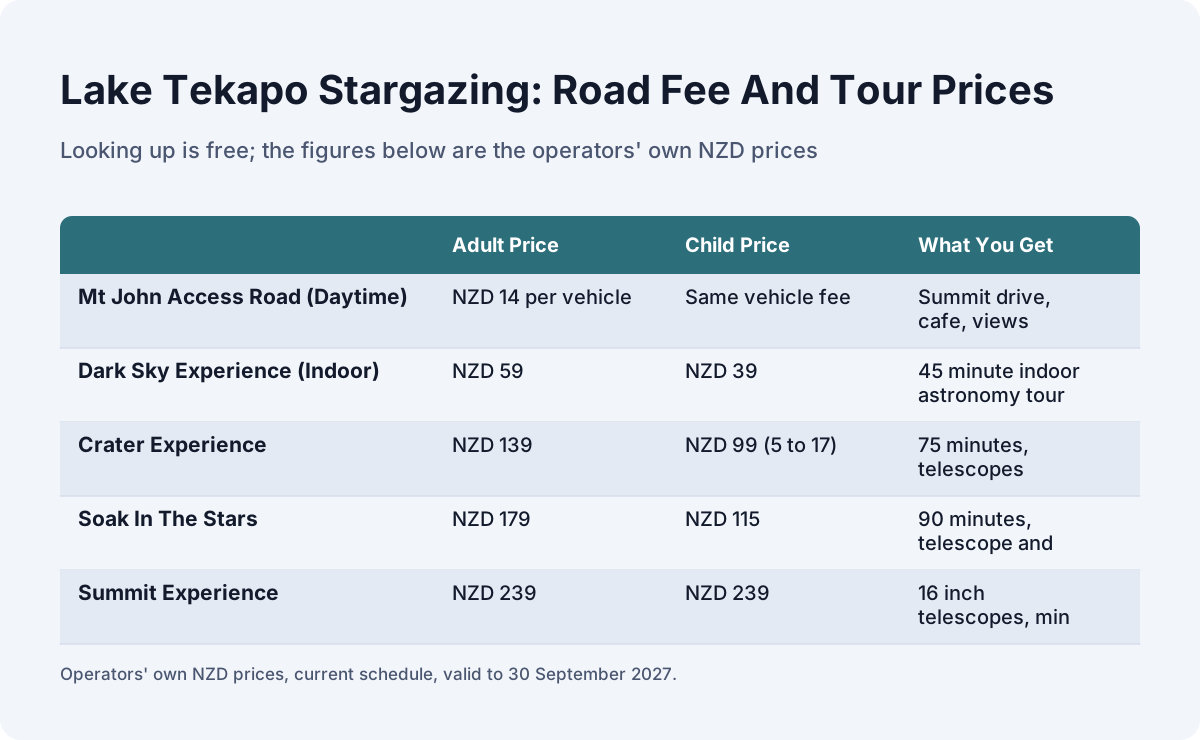
| Option | Adult price (operator's own) | Child price | What it buys |
|---|---|---|---|
| Free night | Free | Free | Sky, no support |
| Mt John road (day) | NZD 14 per vehicle | Same vehicle fee | Summit drive, cafe, views |
| Dark Sky Experience (indoor) | NZD 59 | NZD 39 | 45 minute indoor astronomy tour, no stargazing |
| Crater Experience | NZD 139 | NZD 99 (5 to 17) | 75 minutes, telescopes at Cowan's |
| Soak in the Stars | NZD 179 | NZD 115 | 90 minutes, telescope viewing plus hot pool |
| Summit Experience | NZD 239 | NZD 239 (same) | 1 hour 45 minutes, dome telescopes on the summit |
A few notes the table cannot carry. Family pricing exists for three of the four paid options: Crater at NZD 377 for two adults and two children, the indoor experience at NZD 157, Soak in the Stars at NZD 499. The indoor Dark Sky Experience is a daytime, weather-proof cultural astronomy tour with no stargazing at all, so it is not a substitute for a free night under the stars, it is a different product; the operator lists English sessions at 10:30am, 12:30pm and 2:30pm, with a 4:30pm session Tuesday and Wednesday subject to availability.
The comparison is not only about money, it is about what each rung fixes. The road fee buys daylight access to the mountain. The NZD 59 tier buys knowledge indoors. The NZD 139 tier buys a first telescope experience with the youngest minimum age, 5. The NZD 179 tier buys warmth and a soak. The NZD 239 tier buys the summit, the dome and the biggest telescopes. A free night buys none of these and keeps the money, which is a perfectly rational choice when the sky itself is the attraction.
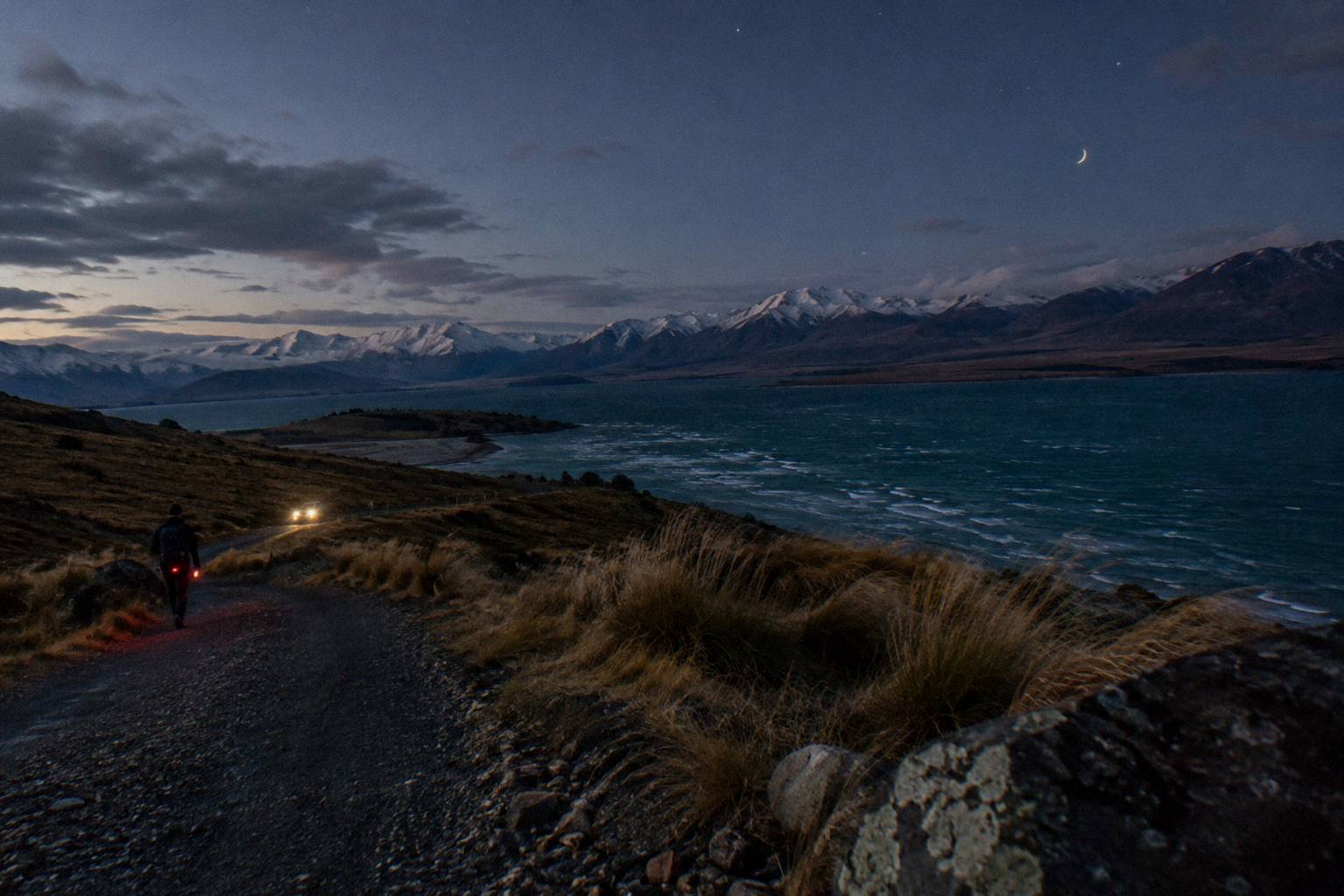
Cancellation terms matter at every paid rung. Dark Sky Project allows direct bookings to cancel up to 24 hours before for a full refund, per its operator terms and conditions page; Tekapo Springs offers cancel or change up to 24 hours before for a full refund, date change or voucher. Booking pages sold through agents follow the agent's terms. The free night, again, has no terms at all.
Common Mistakes When Stargazing Without A Tour
The mistakes are predictable: assuming the summit road is open at night, expecting a free night to include telescopes, ignoring the moon phase, dressing for the village rather than the altitude, and treating any blog's "secret free spot" list as fact. The road runs 9am to 4pm with a NZD 14 fee, the moon halves what you can see, and the verified operator facts name no free viewing locations at all. Each mistake has a cheap fix.
The road mistake is the most common. Travellers read "observatory" and assume evening access; the operator's cafe page is explicit that both road and cafe run 9am to 4pm, closing in some weather. Arriving at 8pm for a free summit view ends at a closed gate. The fix is to treat the summit as a daytime add-on and to plan the free night from lower ground.
The moon mistake is the most expensive in lost experience. Every source here says the same thing: brighter moonlight suppresses the fainter stars and the Milky Way, while bright objects survive. Planning a once-only free night around a full moon, then judging the reserve by it, is unfair to the reserve. Check the phase, and if the timing is fixed, at least aim expectations at the moon and bright stars rather than deep-sky glow.
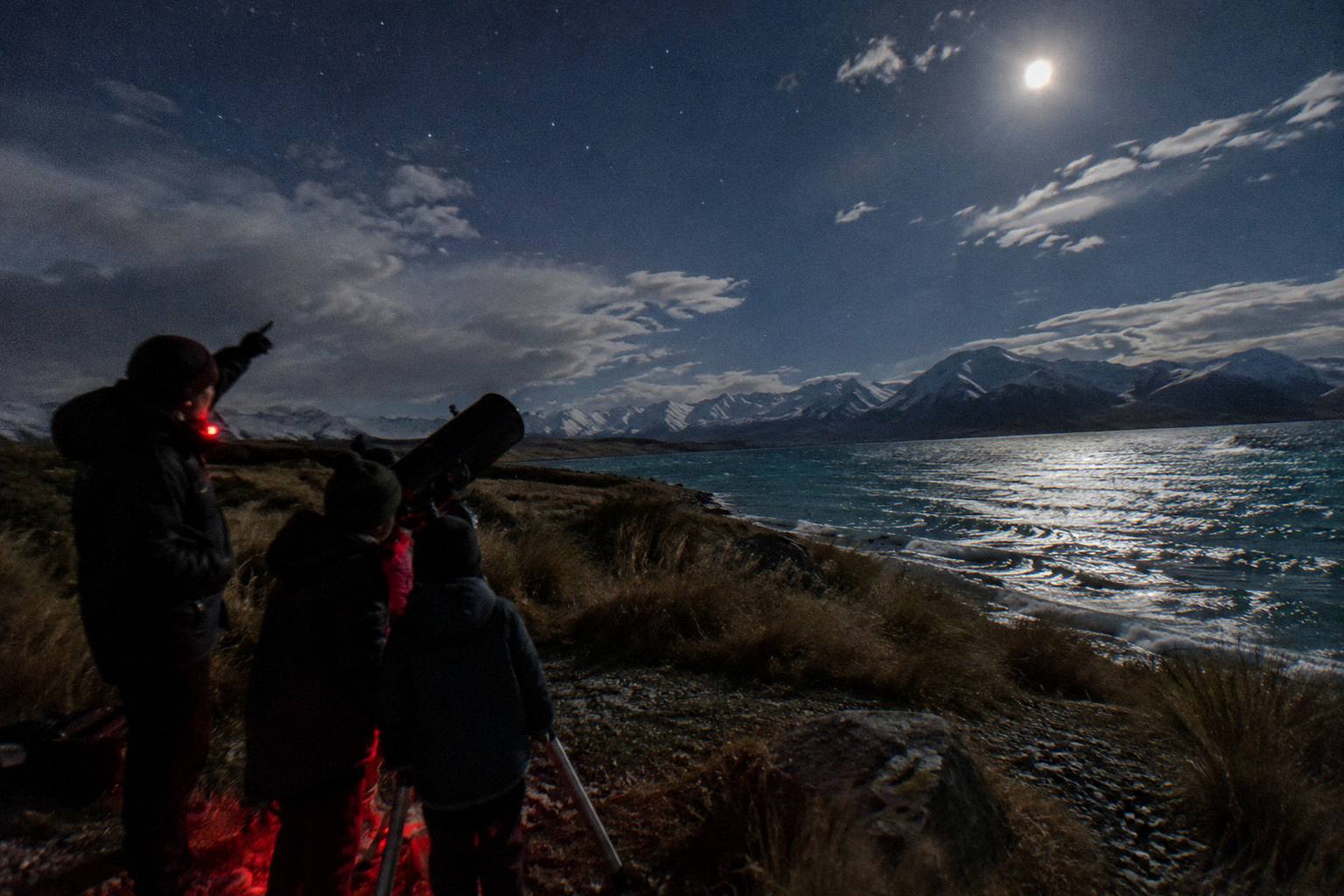
The clothing mistake is the least forgivable because the fix is free. Free means no extreme cold weather jacket loan, the item the Summit Experience includes precisely because the summit at 1,029 m gets cold at night in any season. Layers, hat, gloves, closed shoes. Beyond the village there is also the practical point that a free night has no guide watching the clock or the group, so tell someone where you are going, carry a red light if you have one, and keep to safe, legal ground.
For travellers who want a guided step up from a free night without the full summit price, the lakeside operators offer smaller shared formats too. The Chameleon Shared Stargazing Experience runs about 1.5 hours from the lakeside, and its price and start time are on the live listing rather than in the verified facts here.
The last mistake is believing invented lists. The facts underpinning this page, drawn from the operators' own published material, do not name free night viewing locations, and an honest article says so rather than inventing a lakeside carpark with a name and a view. Anywhere dark, safe and open works on the same physics.
Common Questions About Free Stargazing At Lake Tekapo
Can You Stargaze At Lake Tekapo For Free?
Yes. The village sits inside the Aoraki Mackenzie International Dark Sky Reserve and no ticket is needed to look at the sky. The verified operator facts name no specific free viewing locations, so pick any safe, dark spot away from artificial light and headlights.
Can You Drive Up Mount John At Night For Free?
No. The Mt John access road runs 9am to 4pm daily with a NZD 14 per vehicle road user fee at the gate, per the operator's Astro Cafe page, and closes in some weather. There is no published night access for private vehicles.
Is The Mt John Road Fee Worth It For Stargazing?
Not for stargazing, because the road is daytime only. It is worth it for the daytime summit: the Astro Cafe, 9am to 4pm, the 1,029 m elevation and the view over Lake Tekapo, plus the 8.9 km return Summit Circuit track.
Do You Need A Tour To See The Milky Way At Tekapo?
No, the Milky Way is visible to the naked eye when conditions allow, and no operator guarantees it. What a tour adds is telescope time, interpretation including Tātai Aroraki, clothing loan on the Summit Experience, and a cloud fallback such as reschedule or refund that a free night lacks.
What Is The Cheapest Paid Stargazing Option If Free Is Not Enough?
The operators' own prices start at NZD 59 adult for the indoor Dark Sky Experience, which is a 45 minute cultural astronomy tour with no stargazing. The cheapest outdoor guided option with telescopes is the Crater Experience at NZD 139 adult, NZD 99 child aged 5 to 17, for 75 minutes including transport.
Does A Full Moon Ruin Free Stargazing At Lake Tekapo?
It changes it. Dark Sky Project says brighter moonlight affects fainter stars and galaxies while the moon itself is a good target, and Tekapo Stargazing says full moon reduces naked-eye Milky Way but telescopes still show bright objects. Around new moon the fainter detail returns.