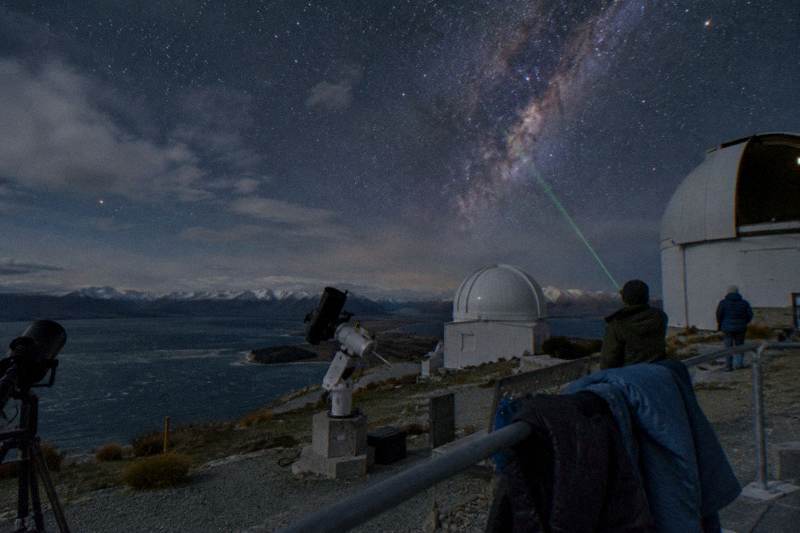
Milky Way At Lake Tekapo: When The Core Shows On A Stargazing Night
The Milky Way is the single most asked about sight at Lake Tekapo, and the one thing no operator can promise. Here is what the operators themselves say about moonlight, cloud and the galactic core, and how those facts should shape the tour you book.
Short answer
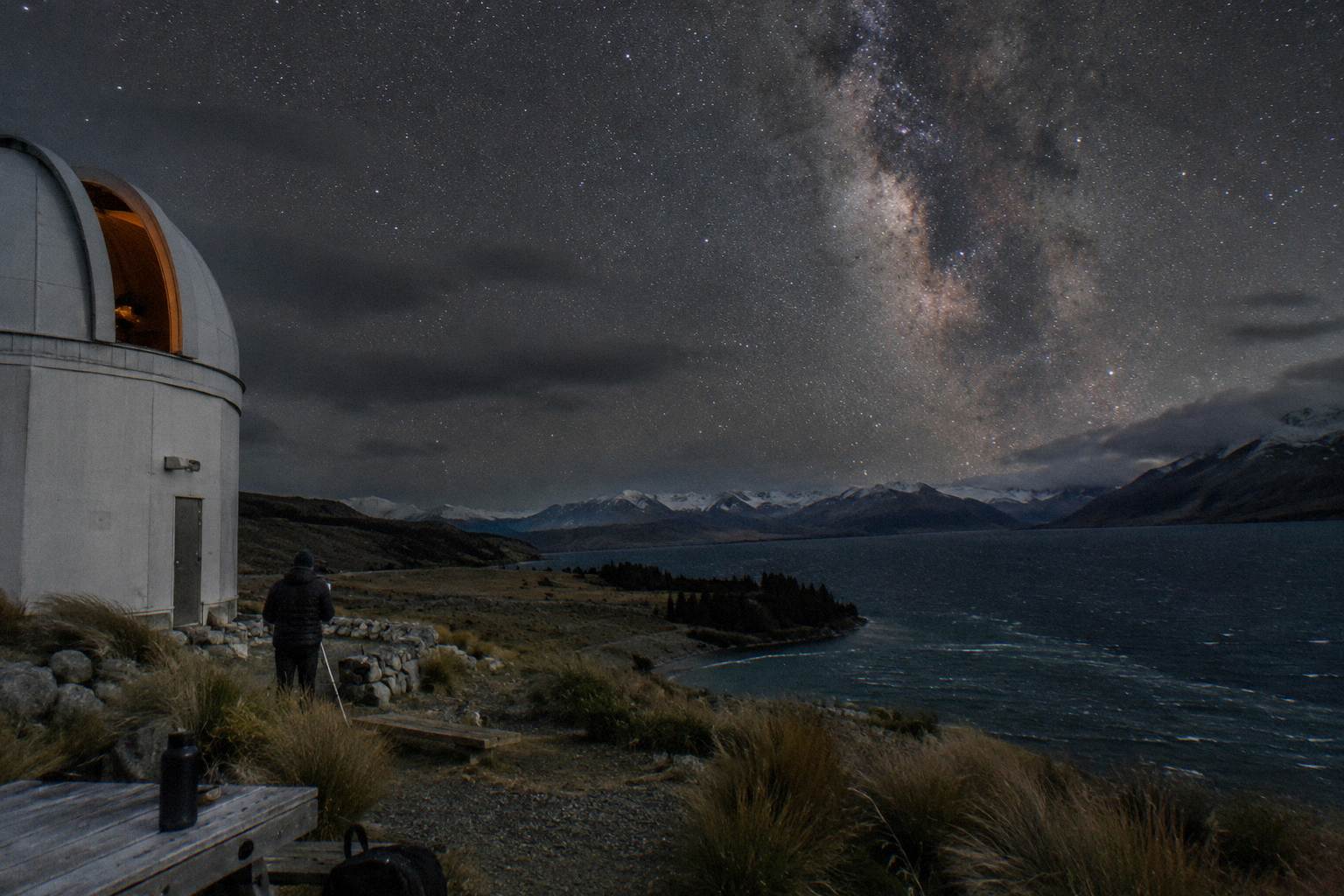
The Milky Way above Lake Tekapo depends entirely on conditions: Dark Sky Project states plainly that it cannot guarantee clarity or any object, including the Milky Way. Moonlight and cloud are the two variables you can plan around. Book a tour with a strong weather fallback, keep your dates flexible, and let the moon calendar guide which night you choose.
This guide is part of the site's season coverage: see the Tekapo stargazing forecast explainer for how to read a cloud map, and the planning guide to every Lake Tekapo stargazing tour for the full field of ten options.
| Quick fact | Detail |
|---|---|
| Reserve | Aoraki Mackenzie International Dark Sky Reserve, awarded April 2012 |
| Standing | The largest dark sky reserve in the Southern Hemisphere |
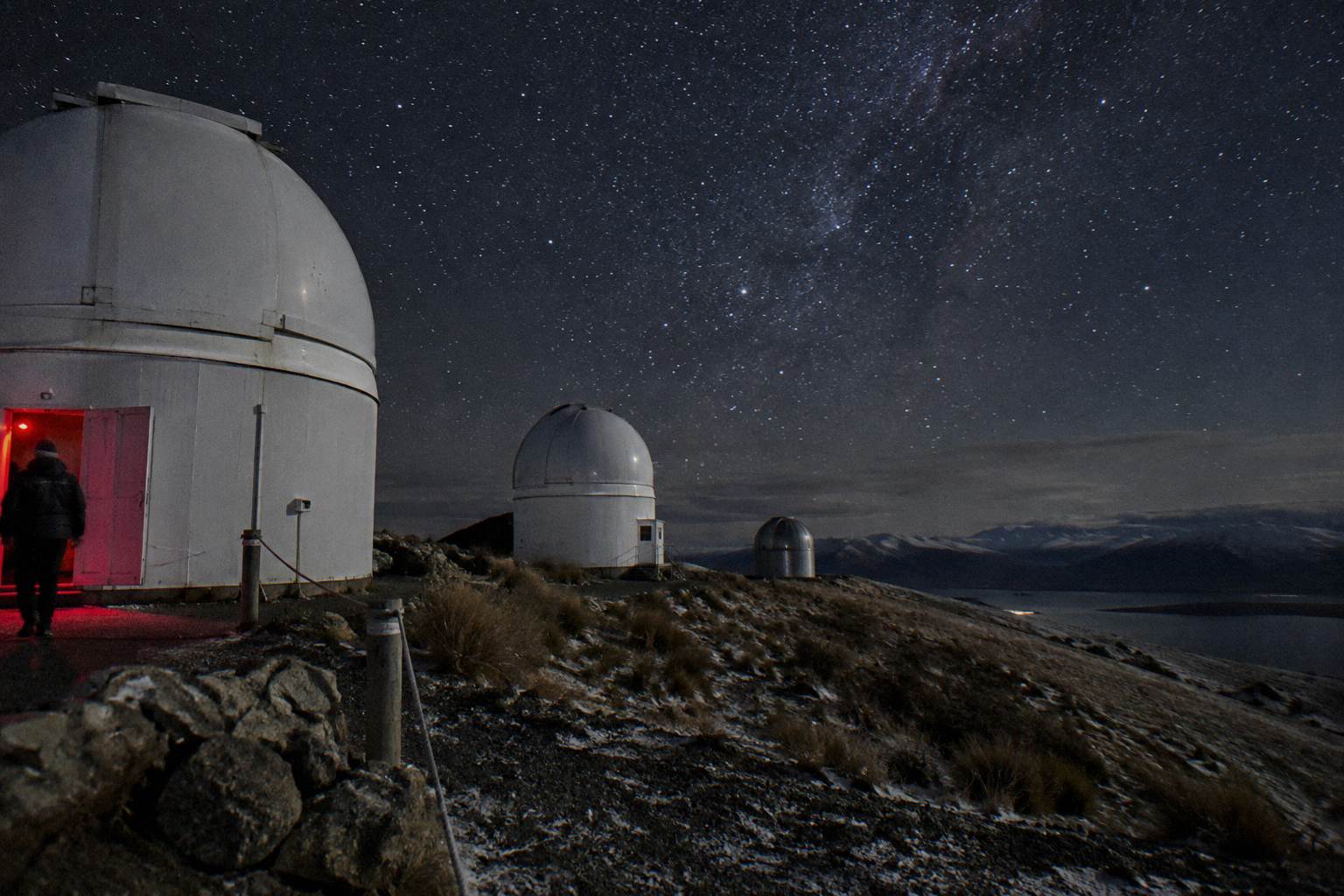
| Observatory | University of Canterbury Mt John Observatory, elevation 1,029 m |
| Milky Way guarantee | None: Dark Sky Project says clarity and objects cannot be guaranteed |
| Moon effect | Brighter moonlight affects fainter stars and galaxies |
| Weather call | Made as close to tour time as possible |
| Prices on this page | The operators' own NZD prices, schedule valid to 30 September 2027 |
What The Milky Way Looks Like From Lake Tekapo
From Lake Tekapo, inside the Aoraki Mackenzie International Dark Sky Reserve, the Milky Way appears as a band of light so bright on a clear, moonless night that it can cast shadows. The band is there every clear night, though how vivid it looks at your eye depends on moonlight, cloud, and how far you are from the village lights.
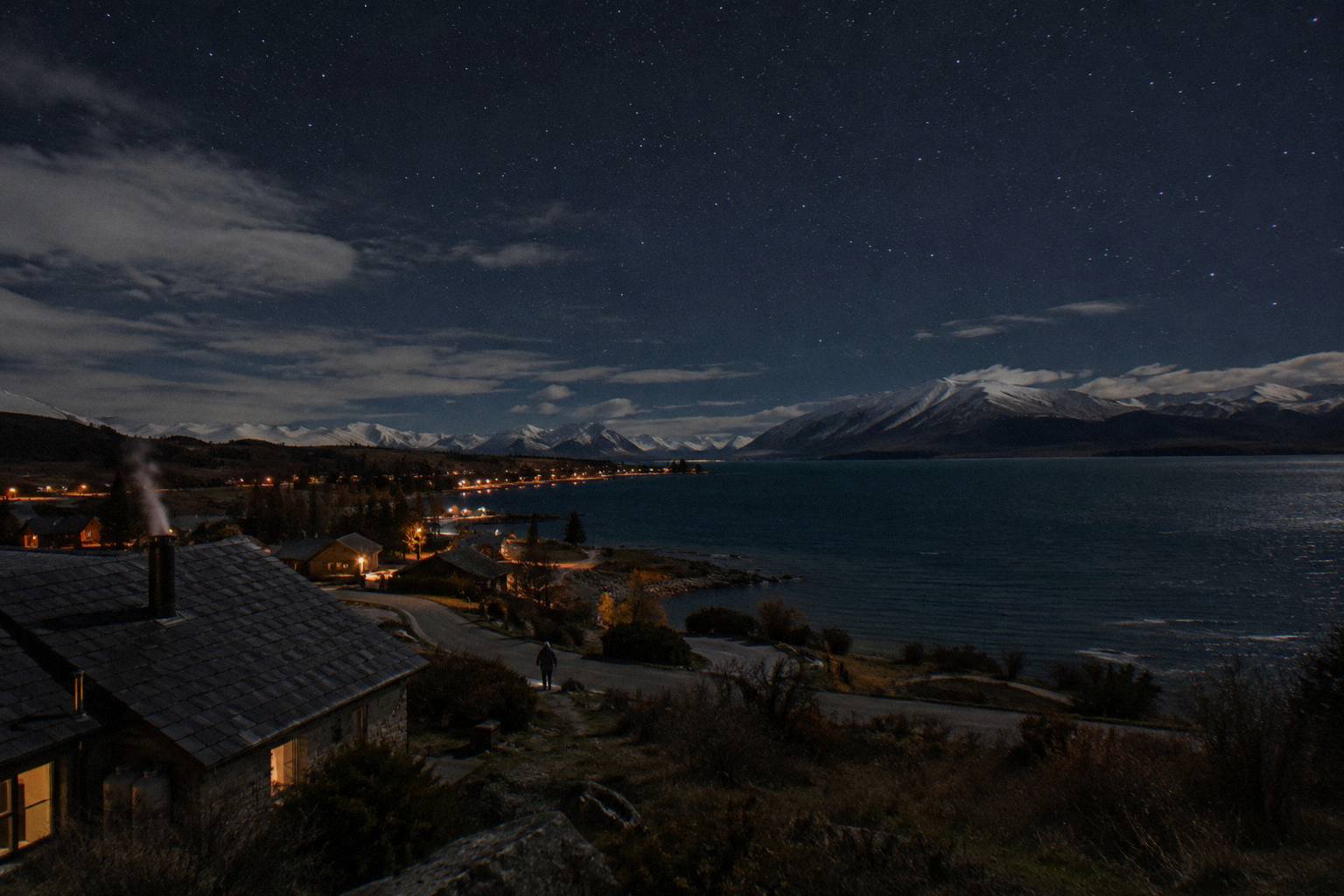
The reserve's darkness is protected in law, at least in outline. The Mackenzie District Council runs lighting rules in its District Plan, including shielding requirements so that outdoor lights point downward, and limits on the time and frequency of lighting. Those rules are the quiet infrastructure behind Tekapo's sky: they are why the lakeshore a few minutes from the village centre stays dark enough for the Milky Way's structure, the dark dust lanes included, to be visible without a telescope. Dark Sky Project tells the reserve's story on its own reserve page, including the April 2012 designation.
Geography does the rest. The village sits at the lake's edge and the University of Canterbury Mt John Observatory stands on the summit above it at 1,029 m, which the University describes as New Zealand's largest professional research observatory, opened in 1965 with four research telescopes. A tour that takes you up the hill, or out to a purpose-built crater observatory, is moving you away from the village's glow and into sky that the reserve was created to protect.
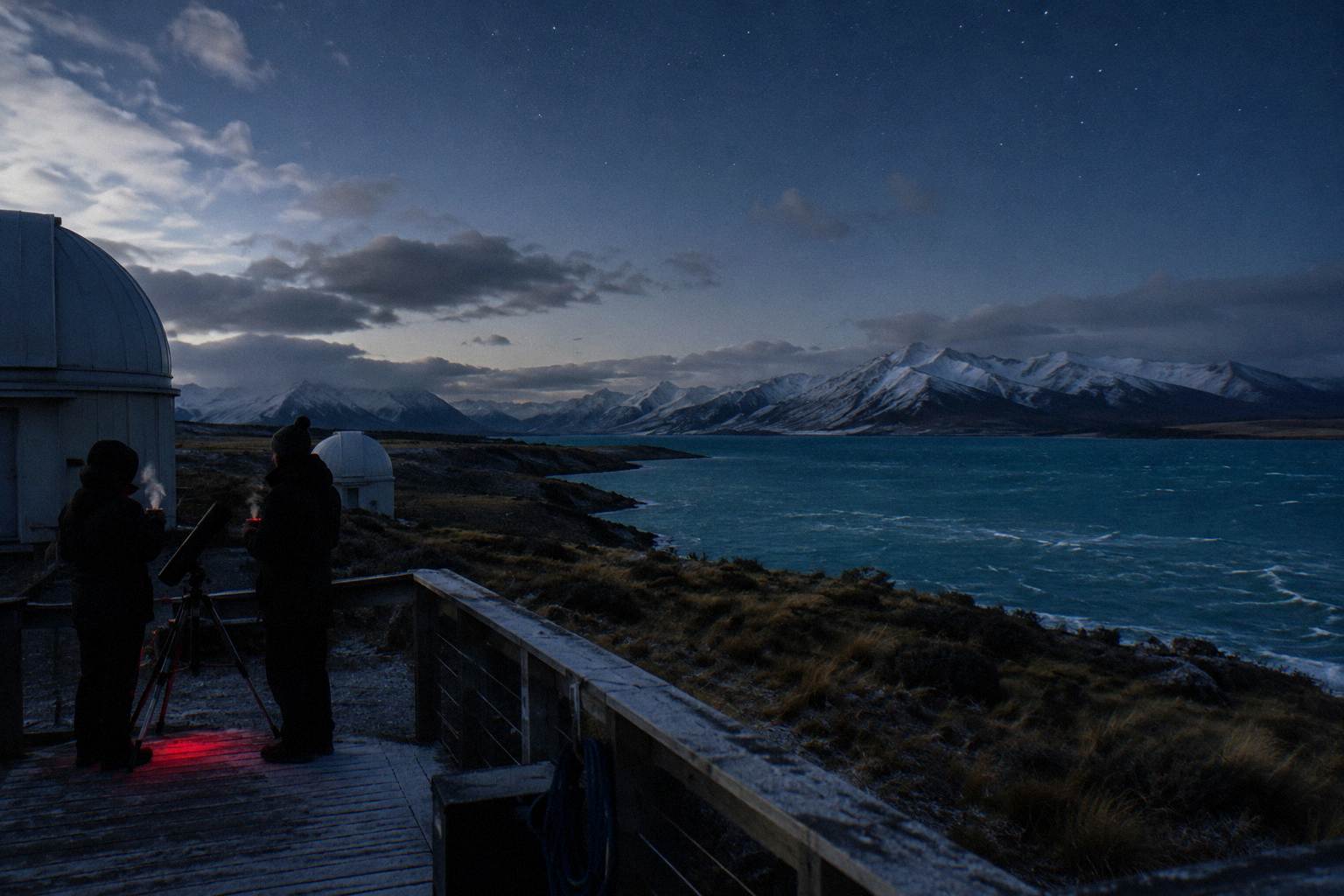
What you should not expect is a promise. Dark Sky Project's own frequently asked answers say the Milky Way and Aurora Australis depend on conditions and are not guaranteed, and Tekapo Springs' terms say the same about clarity, even though its advertising leans harder on the word than its fine print supports. The honest framing, and the one this whole site works from, is that Tekapo gives you the best odds in New Zealand and no certainties. For the wider picture of what the protected zone means, see the guide to the Aoraki Mackenzie dark sky reserve.
Why The Milky Way Cannot Be Promised, In The Operators' Own Words
Both Tekapo operators publish the same caveat: the sky is not a feature that can be switched on. Dark Sky Project cannot guarantee clarity or objects, decides as close to tour time as possible, and offers an indoor alternative, a reschedule, a voucher valid three years, or a full refund; Tekapo Springs runs in all weather, substitutes virtual reality under cloud, and refunds 25 percent if telescope viewing falls under 30 minutes, and neither promises the Milky Way.
Dark Sky Project's weather page is unusually direct about the mechanics. The operator cannot guarantee clarity or any object in the sky, the go or no go decision is made as close to tour time as possible, and guests are asked to check in 15 minutes early for the update. If outdoor stargazing is off, the options are an indoor alternative such as the Virtual Stargazing Experience, a reschedule subject to availability, a gift voucher valid for three years, or a full refund. Direct bookings can be cancelled up to 24 hours before for a full refund; inside 24 hours the full price is charged, and groups of ten or more face longer no refund windows, 72 hours for the summit and crater tours and 48 hours for the indoor experience. The details are on the operator's terms page.
Tekapo Springs takes the opposite approach to cloud: its tours run in all weather, and a VR indoor experience built from 360 degree imagery of the Church of the Good Shepherd and the Mt John summit replaces the telescope portion when the sky is closed. Its refund logic is specific: if telescope viewing runs under 30 minutes, each ticket earns a 25 percent refund at the end of the tour, for tours from 18 June 2026. That is a different risk profile from Dark Sky Project's full refund or reschedule, and it matters when you are choosing between the two families of tour. The comparison is worked through in the site's guide to Tekapo stargazing when cloud rolls in.
The Milky Way itself sits inside this framework rather than beside it. When the moon is bright or the cloud is in, the fainter stars and the naked eye band suffer first, which is exactly what both operators say happens. Neither sells a Milky Way ticket; both sell a guided night under whatever sky the reserve delivers, with telescopes that can still show bright objects when the naked eye view thins out.
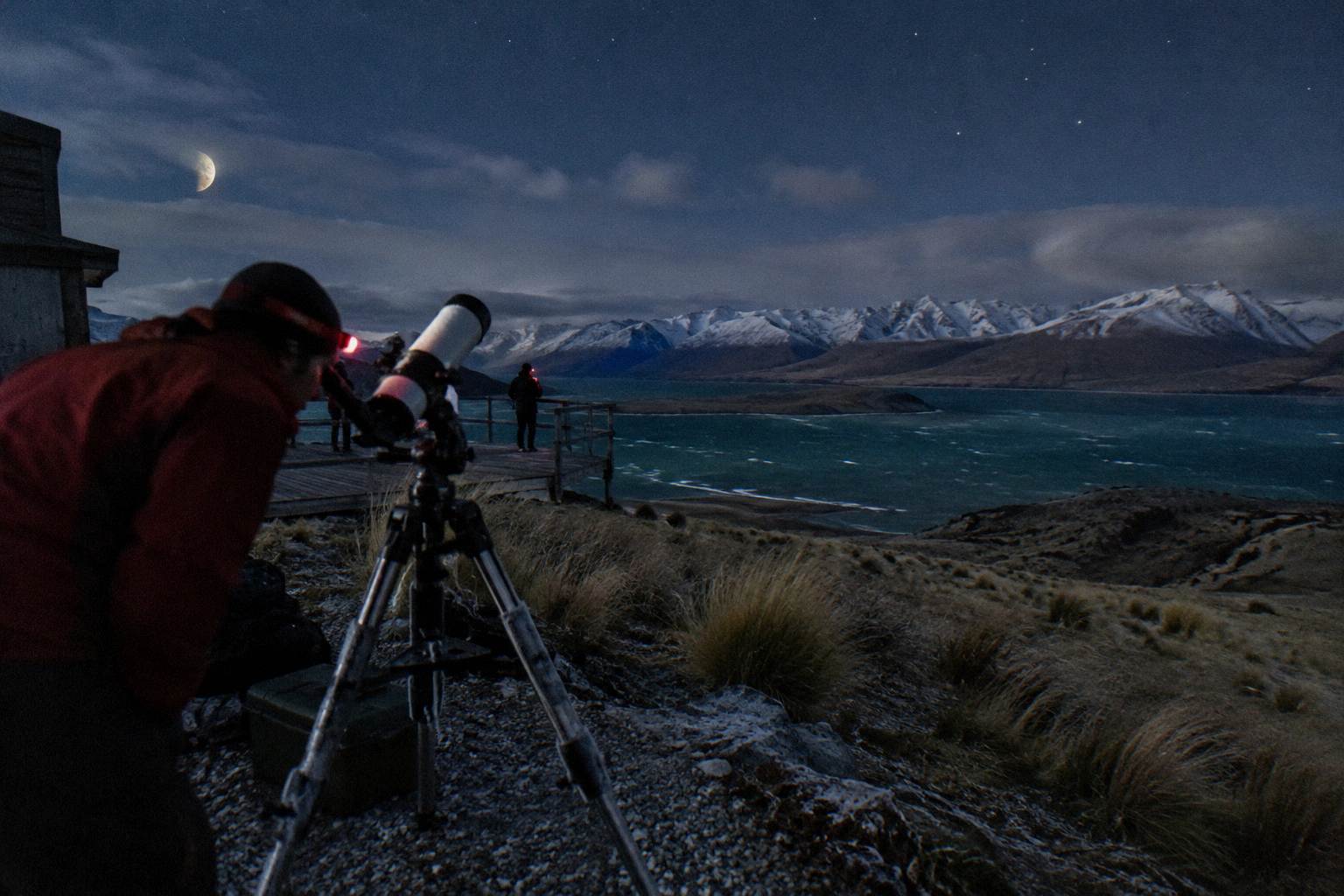
Because Dark Sky Project makes its call at the last practical moment, there is little point trying to predict the outcome hours ahead. The useful moves are small: arrive for the full check-in window, when the update lands, and decide beforehand which option you would pick if outdoor stargazing is off, so the switch happens without hesitation.
The cancellation terms also split bookings into two camps. Small direct bookings keep a full refund option until the day before, while an organizer of ten or more commits earlier, and the gap is widest on the summit and crater tours, which carry the longest no refund window of the tours described here. If your dates might shift, that alone can decide which tour to book.
Read the two refund structures as a statement about who carries the weather risk. Tekapo Springs runs regardless and its remedy is partial money back rather than a full do-over. Dark Sky Project's remedies are fuller but arrive only after its late call. Visitors who would rather not sit through a closed sky at all will lean one way; those content with a virtual look at the Church of the Good Shepherd and the Mt John summit will lean the other.
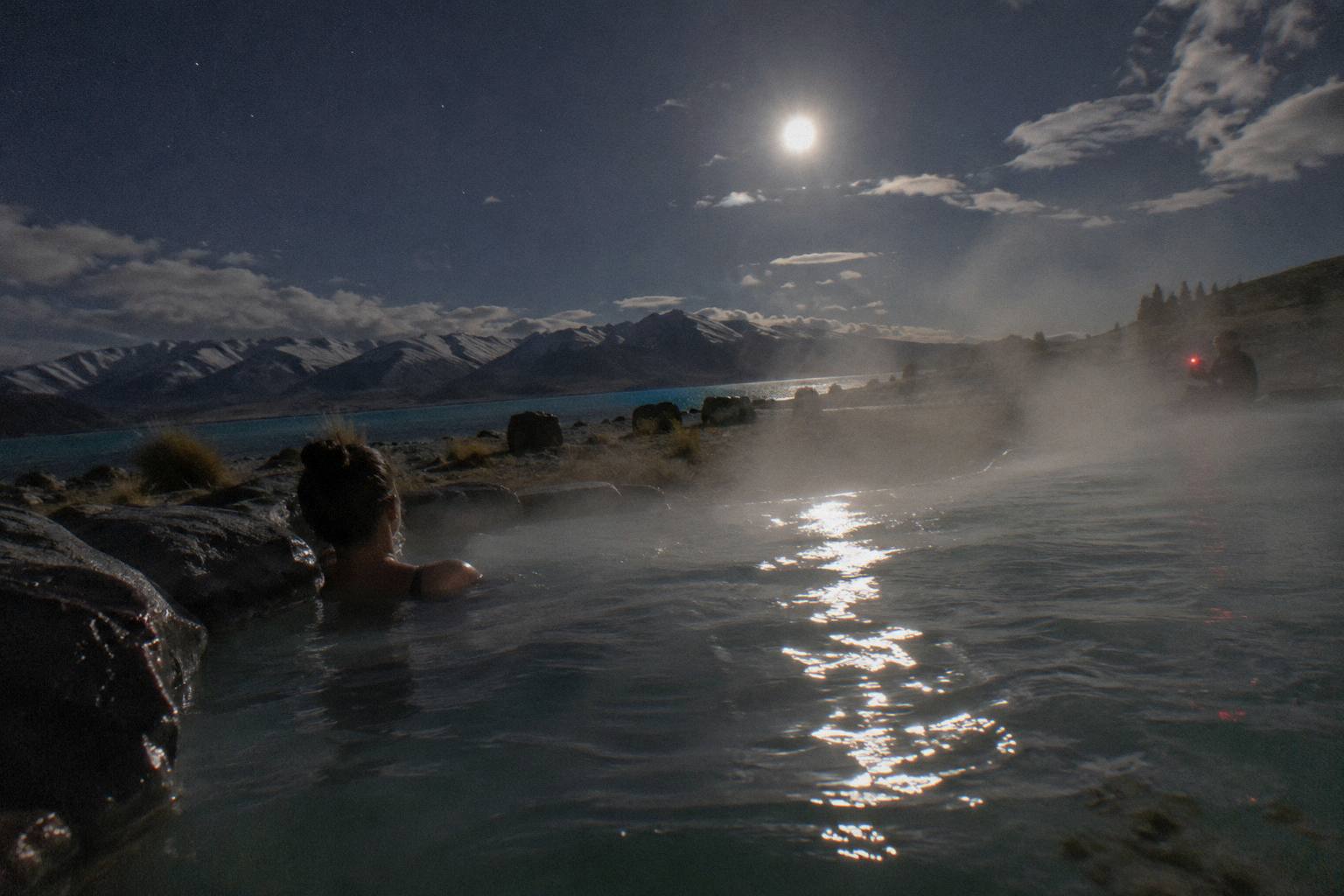
How Moonlight Changes What A Tekapo Tour Can Show
Moonlight is the one sky condition you can plan around months ahead, and its effect depends on what you came to see: bright moonlight dims fainter stars and the Milky Way's naked-eye glow, while telescopes still deliver planets, bright objects, and the moon itself as a worthwhile target. For the Milky Way core at its best, aim for the nights around a new moon; for telescope viewing, phase matters far less.
The physics is not mysterious and the operators do not hide it. The Milky Way's glow is faint, and any appreciable moonlight washes the fainter structure out of the naked eye view while leaving bright objects largely untouched. Dark Sky Project's weather planning page puts it as a trade off rather than a ban: brighter moonlight affects fainter stars and galaxies, but the moon is a good target, and its summit and crater telescopes, up to 16 inch on the summit experience, keep showing bright objects regardless. So a moonlit night is not a wasted booking; it is a different booking.
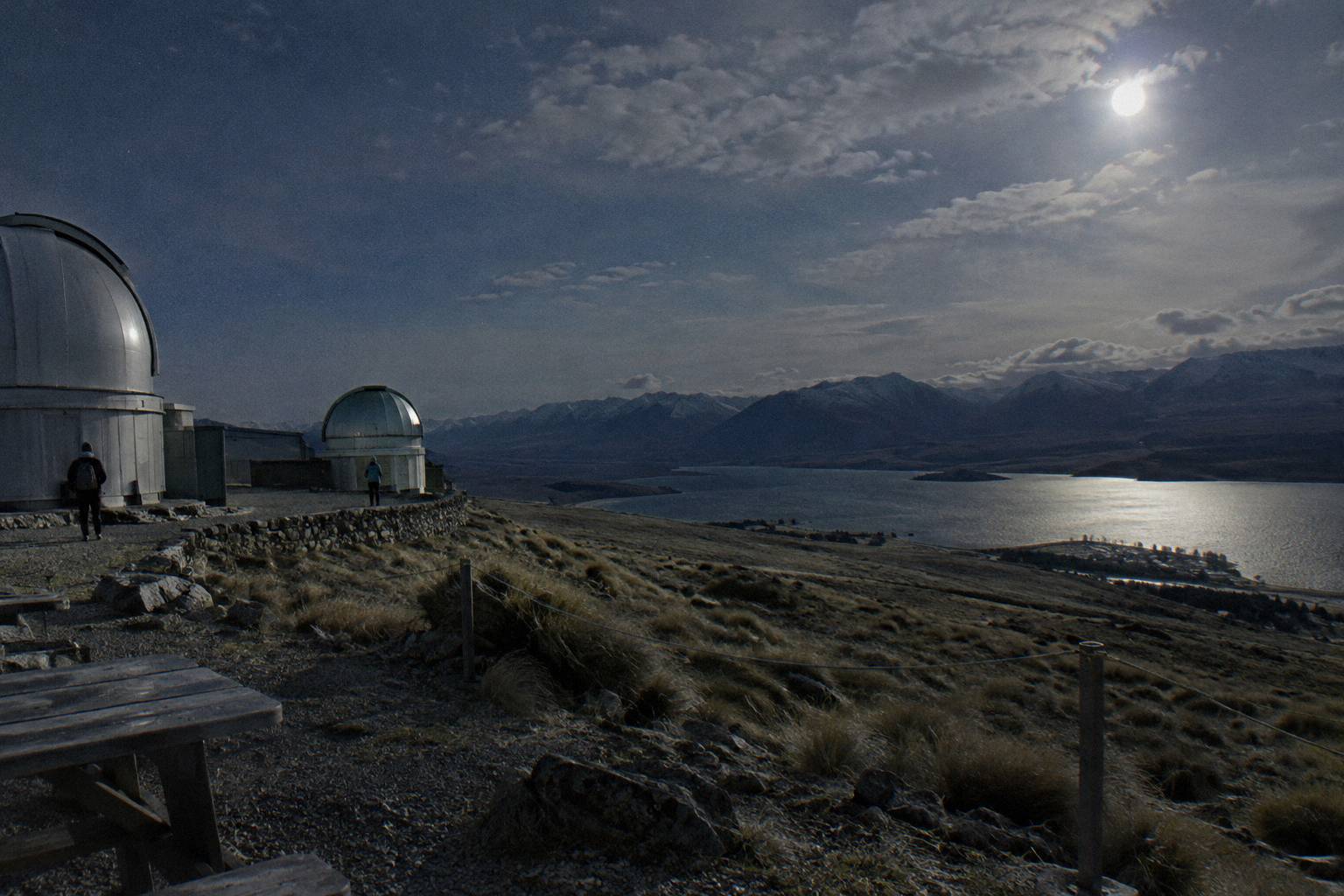
The decision logic follows directly. If the Milky Way core is the reason you are travelling, build your Tekapo nights around the new moon window and hold your tour date loosely, because cloud ignores the calendar. If you are booking in a bright moon fortnight and cannot shift, a telescope based tour still delivers, and Tekapo Springs explicitly frames its moonlit nights as telescope nights. The site's new moon or full moon comparison works through the timing detail.
| Sky condition | Naked eye Milky Way | Telescope viewing | What the operators say |
|---|---|---|---|
| Clear, new moon window | Strongest naked eye view | Full program | Fainter stars and galaxies show best without moonlight |
| Clear, bright moon | Reduced | Bright objects still show | DSP: the moon is a good target; TSG: telescopes still show bright objects |
| Cloud, Tekapo Springs tour | No outdoor viewing | Replaced by VR indoor experience | 25 percent refund per ticket if telescope viewing under 30 minutes |
| Cloud, Dark Sky Project tour | No outdoor viewing | Indoor alternative offered | Reschedule, voucher valid 3 years, or full refund |
One caution that belongs to the moon section rather than anywhere else: moonlight and cloud compound. A bright moon over thin cloud closes the Milky Way completely while leaving a booking technically "on", which is why the weather fallback in the next section is worth as much attention as the phase calendar.
Cloud, Weather Fallbacks And Which Booking Protects You
When cloud decides the night, Dark Sky Project's reschedule and full refund options protect you most, since they keep your money attached to a clear night; the operator also offers an indoor alternative or a three year voucher, with the call made close to tour time. Tekapo Springs runs in all weather, swaps in a VR experience, and refunds 25 percent per ticket if telescope viewing drops under 30 minutes.
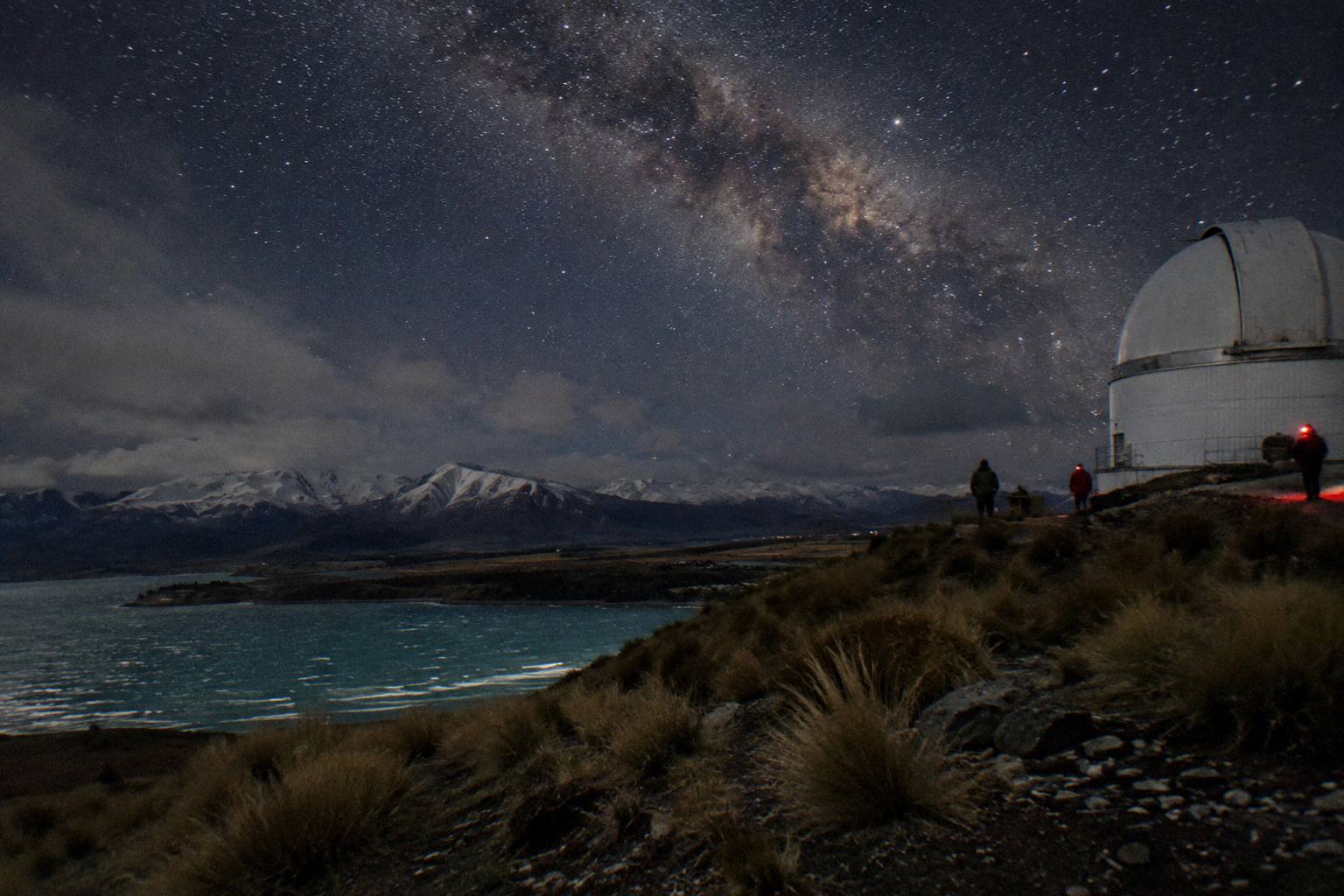
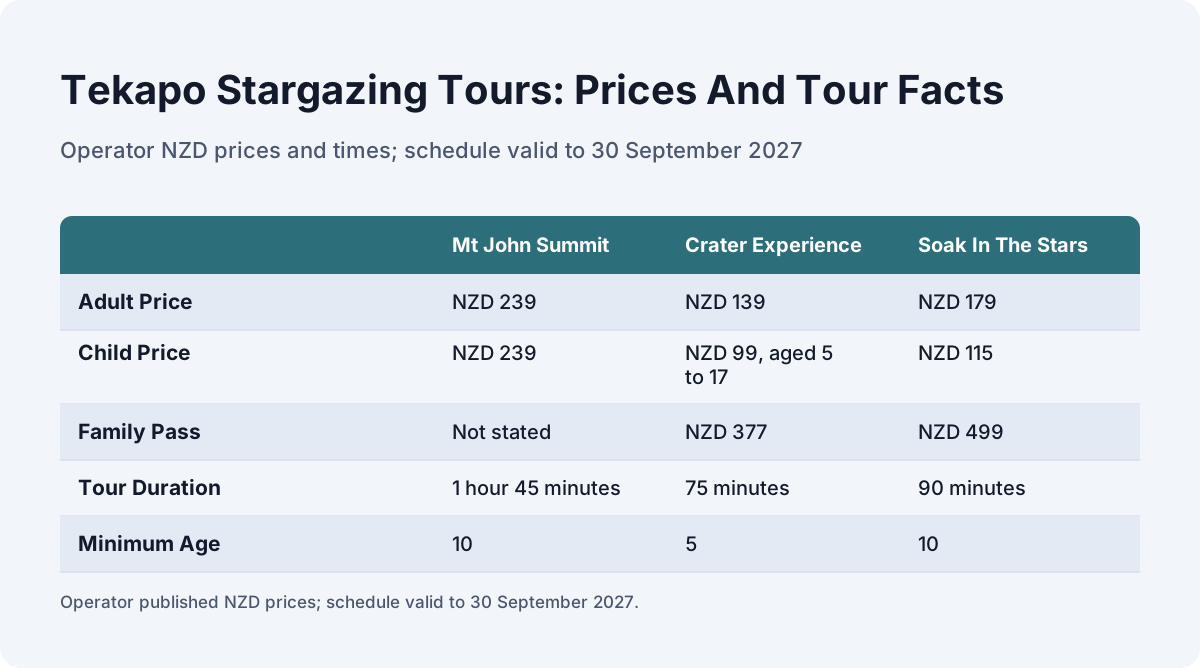
Start with the Mt John Summit Stargazing Experience, this site's featured tour for the Milky Way question, because it combines the darkest location with the strongest fallback. The operator's price is NZD 239 for adults and children alike, the tour runs 1 hour 45 minutes including the 15 minute bus to the University of Canterbury observatory on the summit, minimum age is 10, and it is rated 4.6 across 352 reviews. It carries telescopes up to 16 inch inside a private dome, an Extreme Cold Weather jacket loan, and Tātai Aroraki, Māori astronomy, woven through the guiding. The full detail is in the site's Summit Experience guide, and the tour page is at Mt John Summit Stargazing Experience. Free cancellation on the booking page runs to 24 hours before, and you can also check availability once your moon window is picked.
The Crater Experience at Cowan's Private Observatory is the family and accessibility alternative, with a 5 minute drive from the Dark Sky Project base, 75 minutes including transport, minimum age 5, and the operator's price at NZD 139 adult, NZD 99 child aged 5 to 17, with a family pass for two adults and two children at NZD 377. It is rated 4.6 across 93 reviews. Wheelchair users can join but must drive their own vehicle to Cowan's. Its purpose built observation craters are sheltered from wind and light, which is a real comfort difference on a cold Milky Way night. The Cowan's Observatory guide covers it in depth.
Tekapo Springs runs a third model altogether. Hot Pools And Stargazing At Tekapo Springs, the Soak in the Stars tour, is NZD 179 adult, NZD 115 child, NZD 499 for a family, runs 90 minutes with guided telescope viewing followed by an exclusive hot pool at 37.5 to 38.5 degrees with the guide poolside, towels, robes, hot drinks and warm poncho coats included, minimum age 10. Its season logic matters for planners: seven evenings a week October to April, Thursday to Monday May to September, with some tours beginning after midnight, a 12:15am start given as the operator's own example, because the best sky comes late in summer. The Tekapo Springs hot pools guide has the full breakdown.
The one booking that removes weather from the equation entirely is the Dark Sky Experience, Indoor Cultural Astronomy: a 45 minute daytime indoor tour at the Dark Sky Project base, NZD 59 adult and NZD 39 child, under 5s free with an adult ticket, English sessions at 10:30am, 12:30pm and 2:30pm with 4:30pm added on Tuesday and Wednesday, subject to availability. It offers no stargazing and no Milky Way, but it is the cloud proof anchor of a Tekapo sky itinerary, with the restored 125 year old Brashear telescope and Tātai Aroraki content, rated 4.6 across 54 reviews. The wider set of guides lives on Mt John Stargazing.
Matching The Tour To Your Milky Way Night
The Summit Experience is the strongest Milky Way pick, pairing the darkest site with the biggest telescopes at NZD 239 per person aged 10 and up. The Crater Experience suits a shorter, warmer, family friendly night from NZD 99 per child, while Soak in the Stars blends a 90 minute telescope session with hot pools from NZD 115 per child, with an all weather VR fallback; all prices run to 30 September 2027.
The table that matters for a Milky Way trip is this one, built from the operators' stated figures.
| Tour | Operator price (NZD) | Duration | Minimum age | Weather approach |
|---|---|---|---|---|
| Mt John Summit Stargazing Experience | 239 adult and child alike | 1 hour 45 minutes | 10 | Indoor alternative, reschedule, voucher or full refund |
| Crater Stargazing At Cowan's Observatory | 139 adult, 99 child (5 to 17), family 377 | 75 minutes | 5 | Same Dark Sky Project fallback terms |
| Hot Pools And Stargazing At Tekapo Springs | 179 adult, 159 senior or student, 115 child, family 499 | 90 minutes | 10 | Runs in all weather, VR replaces telescopes, 25 percent refund under 30 minutes of viewing |
| Dark Sky Experience, Indoor Cultural Astronomy | 59 adult, 39 child, family 157 | 45 minutes | None, content suits about 7 and up | Indoors, daytime, unaffected |
Beyond the three Tekapo formats, the wider region offers options worth knowing about when your Milky Way window and your itinerary do not line up. Silver River Stargazing runs a 75 minute Alpine Stargazing Experience and a 2 hour Ultimate Stargazing Experience from Tekapo, both with 24 hour free cancellation on the booking page and prices on the booking page. Stargaze Mackenzie runs a 75 minute Twizel Stargazing Tour With An Astronomer, minimum age 6, meeting in Twizel. Silver River also runs the 75 minute Mt Cook Stargazing Experience from the Tasman Glacier car park. None of those carries a printable price here; ask each operator or read the booking page. The Mount Cook stargazing guide and the Twizel night sky guide cover them properly.
For readers deciding between the hot pool format and the observatory formats, the summit or Tekapo Springs comparison walks the trade off, comfort against darkness, in detail. The short version for a Milky Way chaser: the summit's 1,029 m site and research observatory setting are the strongest card, while Soak in the Stars is the only format whose night still has a payoff, a 37.5 to 38.5 degree pool, if the sky closes.
Common Mistakes When Chasing The Milky Way At Tekapo
The recurring mistakes all trace back to ignoring the two variables operators name: moon and cloud. Travellers book a single night in a bright moon fortnight, assume the Milky Way is guaranteed because the reserve is famous, skip a tour's weather fallback terms, treat a cloudy night as a failed trip rather than using the reschedule, or turn up late and lose the ticket, since late check in means no refund.
The fix for each mistake is mechanical. Give Tekapo at least two nights, so a cloud out does not end the mission; the site's piece on how many nights you need in Tekapo makes the case. Pick your dates from a moon calendar before you pick your accommodation. Read the fallback column of the table above before you pay, because the difference between a full refund option and a 25 percent partial refund is the difference between re booking and absorbing. And check in 15 minutes early, which both Tekapo operators require; Dark Sky Project's terms are explicit that late check in forfeits the ticket.
The subtler mistake is expecting a photograph. Phone cameras struggle at night and most tours are eyes first, a question the site answers in whether you can take photos on a Tekapo stargazing tour; anyone serious about capturing the core should read the Tekapo astrophotography tours guide instead, since a standard guided tour and a photo tour are different products.
Common Questions About The Milky Way At Tekapo
Can You See The Milky Way At Lake Tekapo?
Yes, on clear moonless nights the Milky Way is visible to the naked eye from Lake Tekapo, inside the Aoraki Mackenzie International Dark Sky Reserve, the largest dark sky reserve in the Southern Hemisphere. No operator guarantees it: Dark Sky Project states that clarity and objects, the Milky Way included, depend on conditions.
What Is The Milky Way Like At Mount John Observatory?
Mount John sits at 1,029 m above the village and hosts the University of Canterbury's Mt John Observatory, described by the University as New Zealand's largest professional research observatory. The Mt John Summit Stargazing Experience runs there, 1 hour 45 minutes, NZD 239 adult and child alike, minimum age 10, with telescopes up to 16 inch inside a private dome.
Does A Full Moon Ruin Stargazing At Tekapo?
It changes it rather than ruining it. Dark Sky Project says brighter moonlight affects fainter stars and galaxies, and that the moon is itself a good telescope target. Tekapo Springs says telescopes still show bright objects under moonlight and that a full moon only reduces the naked eye Milky Way. For the faintest naked eye detail, aim near a new moon.
Which Tekapo Tour Is Good For The Milky Way?
The Mt John Summit Stargazing Experience pairs the darkest site with the largest telescopes; the Crater Experience at Cowan's Observatory is the shorter, younger family option from NZD 99 per child; Soak in the Stars at Tekapo Springs adds a hot pool and runs in all weather with a VR fallback. All are legitimate choices; they differ in price, duration, minimum age and weather handling, not in access to the sky.
What Happens If It Is Cloudy On My Stargazing Tour?
Dark Sky Project decides close to tour time and offers an indoor alternative, a reschedule subject to availability, a gift voucher valid three years, or a full refund. Tekapo Springs tours run in all weather, replacing telescope viewing with a VR indoor experience and refunding 25 percent per ticket if telescope viewing falls under 30 minutes, for tours from 18 June 2026.
Do You Need A Tour To See The Milky Way At Tekapo?
No. The lakeshore and the free viewing spots around Tekapo sit inside the reserve and the Milky Way shows to the naked eye on clear dark nights, a path the site's free stargazing at Lake Tekapo guide covers. A tour adds telescopes, guiding in both Western and Māori astronomy, transport away from village lights, and a weather fallback; the sky itself is free.