What You See Through Telescopes On A Tekapo Stargazing Tour
Every stargazing tour around Lake Tekapo puts a telescope between you and the sky, but the apertures, the settings and the weather rules differ sharply from operator to operator. Here is what each tour's own pages say about the instruments and the objects.
Short answer
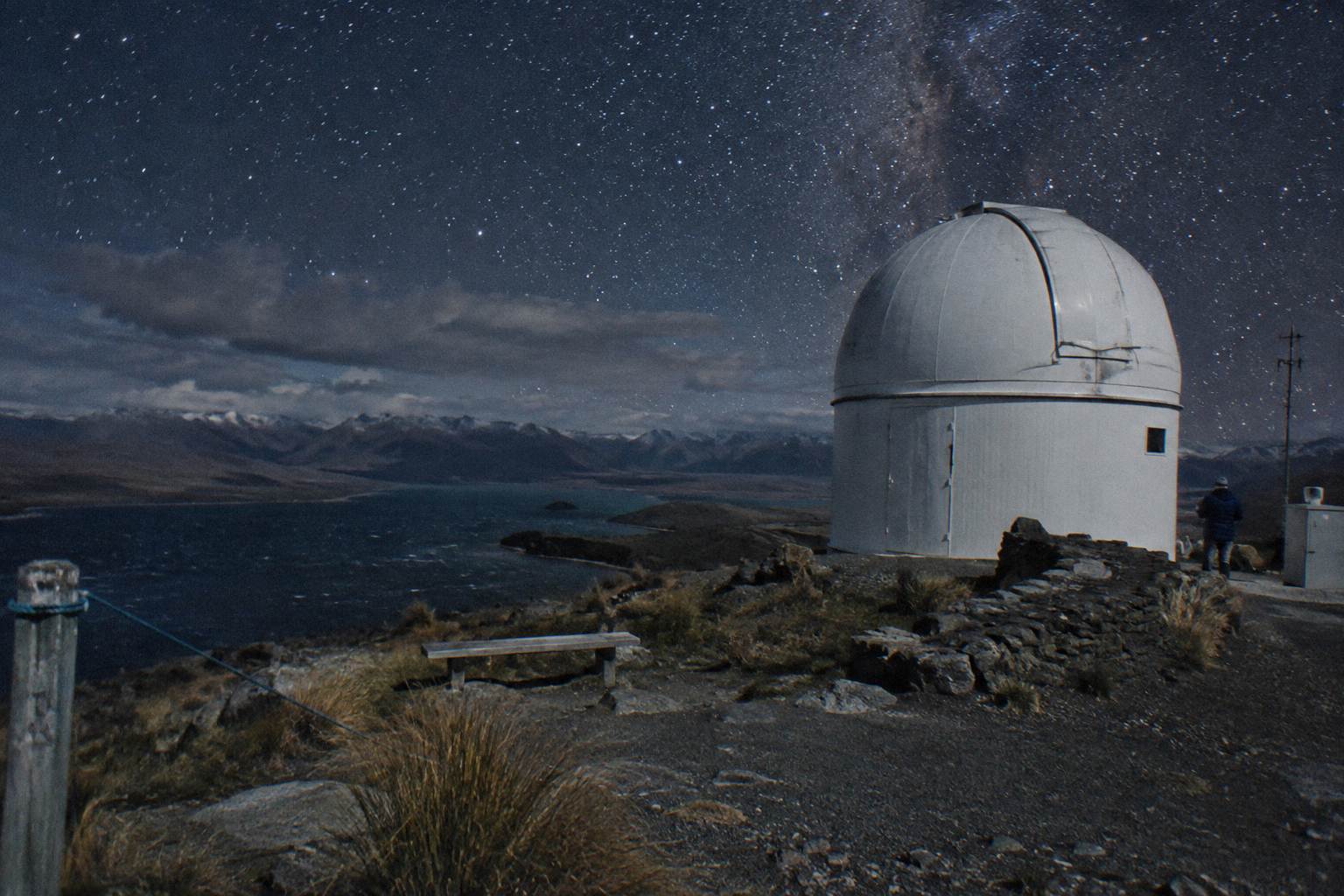
The Mt John Summit Stargazing Experience uses telescopes up to 16 inch inside a private dome at the observatory, at the operator's price of NZD 239 per person, minimum age 10. The Crater Experience at Cowan's Observatory uses 14 inch telescopes from NZD 139 adult. No operator guarantees any object: the moon, cloud and clarity all depend on conditions.
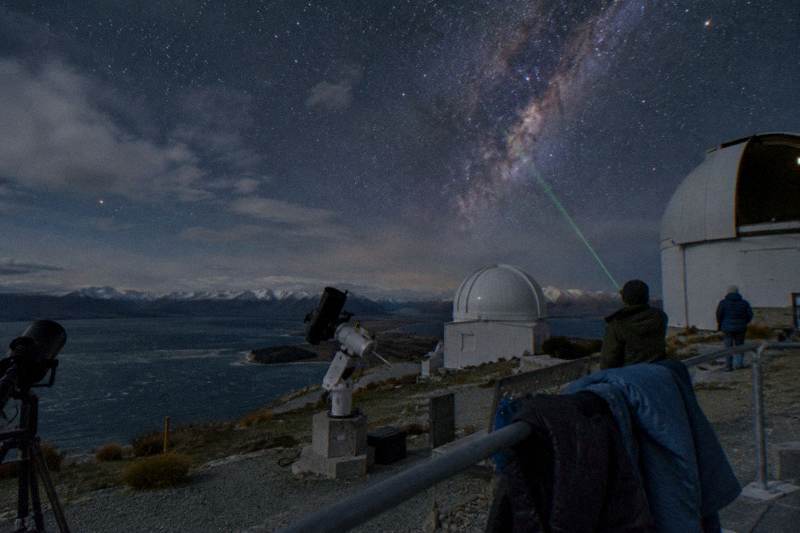
The question behind almost every Tekapo stargazing booking is a simple one: what will actually be in the eyepiece? The honest answer starts with the hardware. The Mt John Summit Stargazing Experience works with telescopes up to 16 inch inside a private observatory dome at the University of Canterbury Mt John Observatory, while the Crater Experience at Cowan's Private Observatory uses 14 inch telescopes in purpose-built observation craters, and the lakeside operators run smaller instruments. What any of them show on a given night depends on conditions, and every operator here says so plainly.
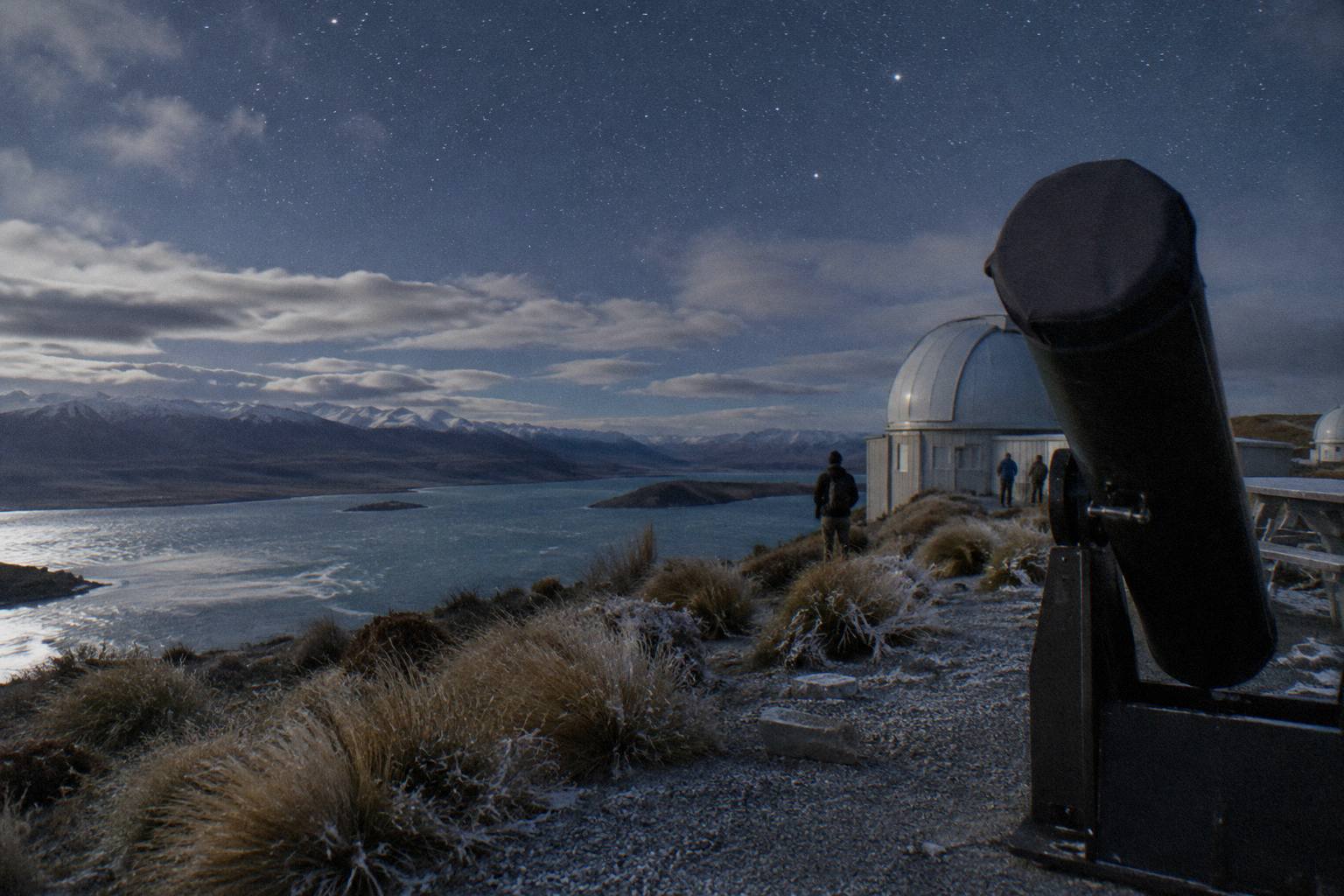
For background on how these options stack up overall, see the Lake Tekapo stargazing tours compared guide; this page stays on the instruments and the sky.
| Tour | Operator | Telescope aperture stated | Setting |
|---|---|---|---|
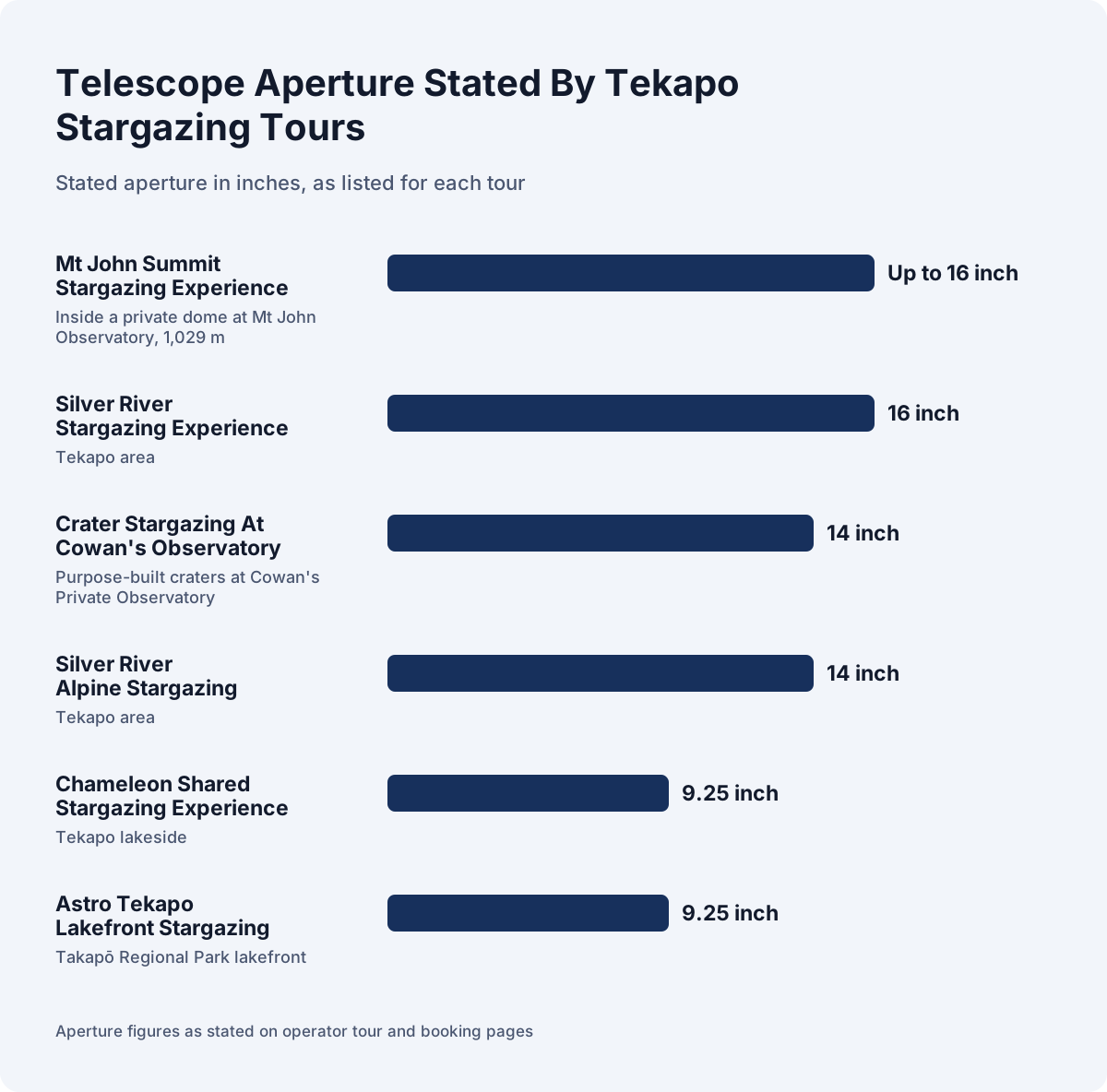
| Mt John Summit Stargazing Experience | Dark Sky Project | Up to 16 inch, inside a private dome | University of Canterbury Mt John Observatory, 1,029 m |
| Crater Stargazing At Cowan's Observatory | Dark Sky Project | 14 inch telescopes or observatory dome | Cowan's Private Observatory, purpose-built craters |
| Chameleon Shared Stargazing Experience | Chameleon Stargazing | 9.25 inch, per the booking page | Tekapo lakeside |
| Astro Tekapo Lakefront Stargazing | Astro Tekapo | 9.25 inch, per the booking page | Takapō Regional Park lakefront |
| Silver River Alpine Stargazing Experience | Silver River Stargazing | 14 inch, per the booking page | Tekapo area |
| Silver River Ultimate Stargazing Experience | Silver River Stargazing | 16 inch, per the booking page | Tekapo area |
What Telescopes Do The Tekapo Stargazing Tours Use?
Aperture, the diameter of a telescope's main mirror or lens, is the single number that most changes what an eyepiece shows. A bigger aperture gathers more light, which is the whole game in a dark sky reserve. Dark Sky Project's Summit Experience page states telescopes up to 16 inch inside a private observatory dome, with the operator's home page describing a range of 9 1/4 to 16 inch across its experiences. The Summit Experience page is the operator's own description of the instruments and the site, and it is the page to read before booking.
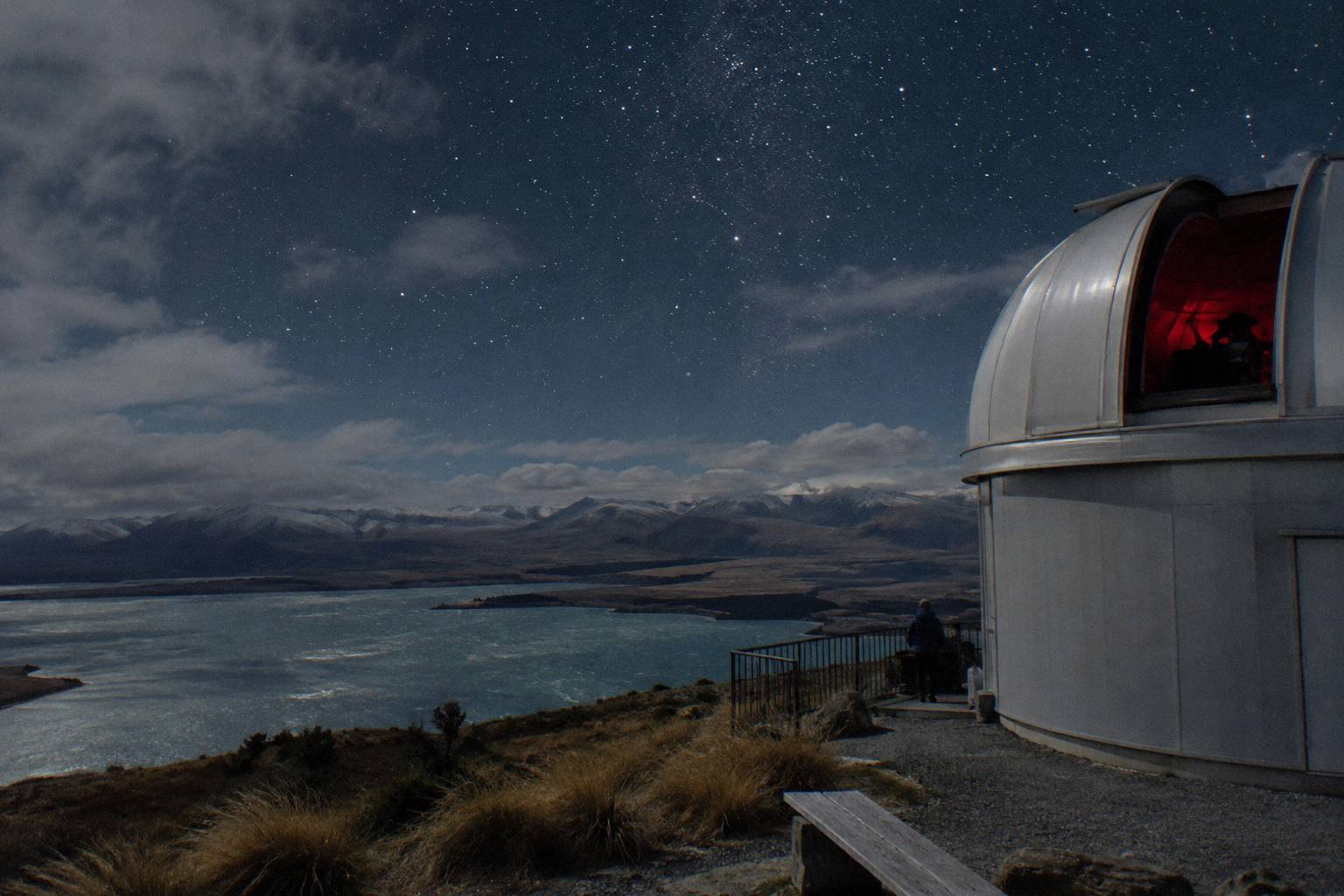
The Crater Experience, by contrast, sits at Cowan's Private Observatory a 5-minute drive from the Dark Sky Project base at 1 Motuariki Lane, Takapō (Tekapo). Its page states 14 inch telescopes or an observatory dome, and the setting is a set of purpose-built observation craters sheltered from wind and light. The smaller lakeside operators state 9.25 inch instruments on their booking pages, and Silver River Stargazing states 14 inch on its Alpine experience and 16 inch on its Ultimate experience. The Crater Experience page gives the operator's own account of what its craters and telescopes involve.
Beyond Tekapo, the Mackenzie options state their instruments on their booking pages too: the Twizel Stargazing Tour With An Astronomer from Stargaze Mackenzie and the Mt Cook Stargazing Experience from Silver River. Prices for those are on the booking pages rather than stated here. The full regional picture, including where each tour meets, is in the Mount Cook stargazing tours guide.
Each card's page carries the operator's own details on duration, age minimums and cancellation.
What Do You Actually See On A Summit Experience Tour?
The Summit Experience combines telescope viewing up to 16 inch with naked-eye guiding using handheld lasers, framed by both Tātai Aroraki (Māori astronomy) and Western astronomy, according to the operator. It lasts 1 hour 45 minutes including a 15-minute bus each way, costs NZD 239 at the operator's price for adult and child alike, and carries a minimum age of 10. No object is promised.
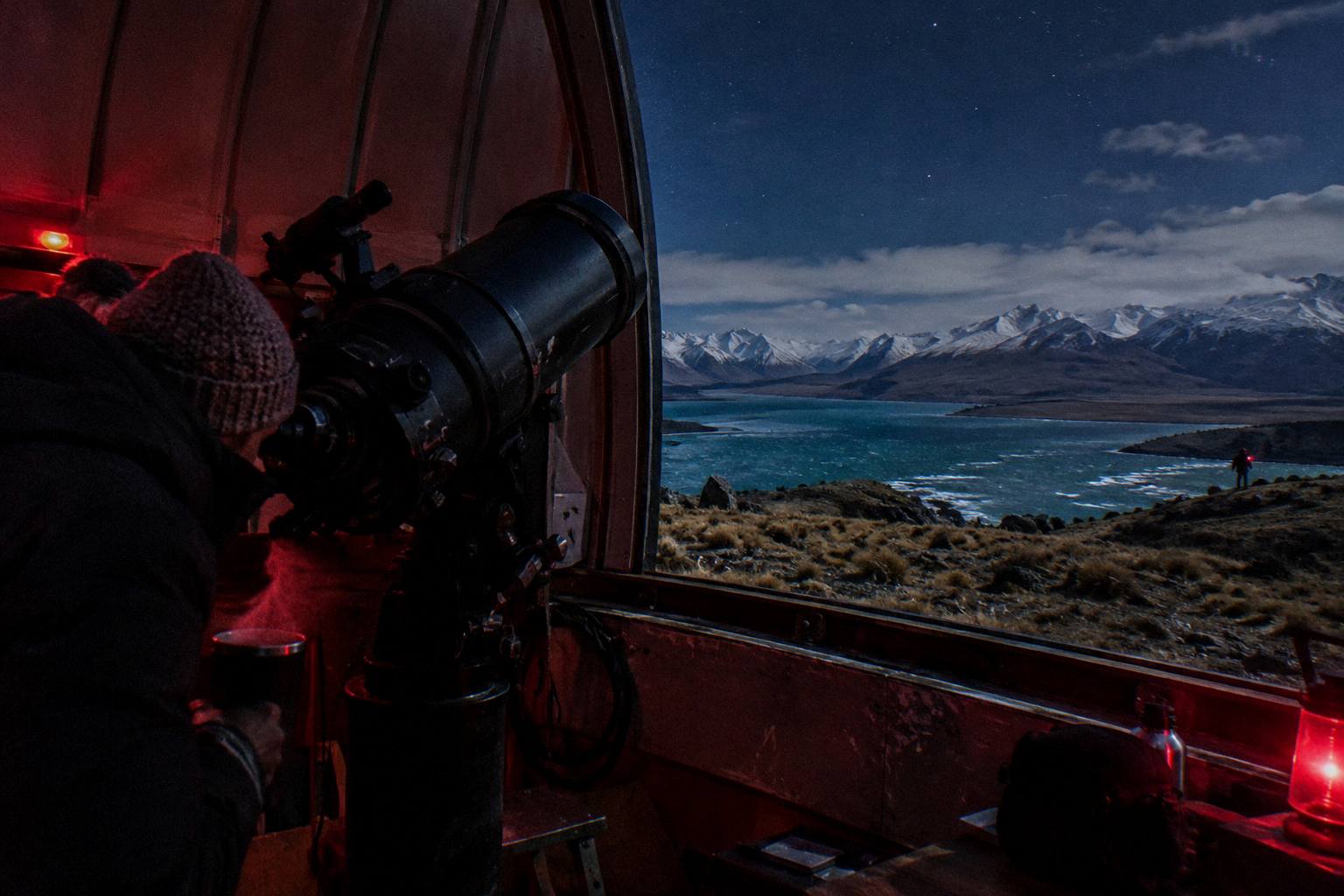
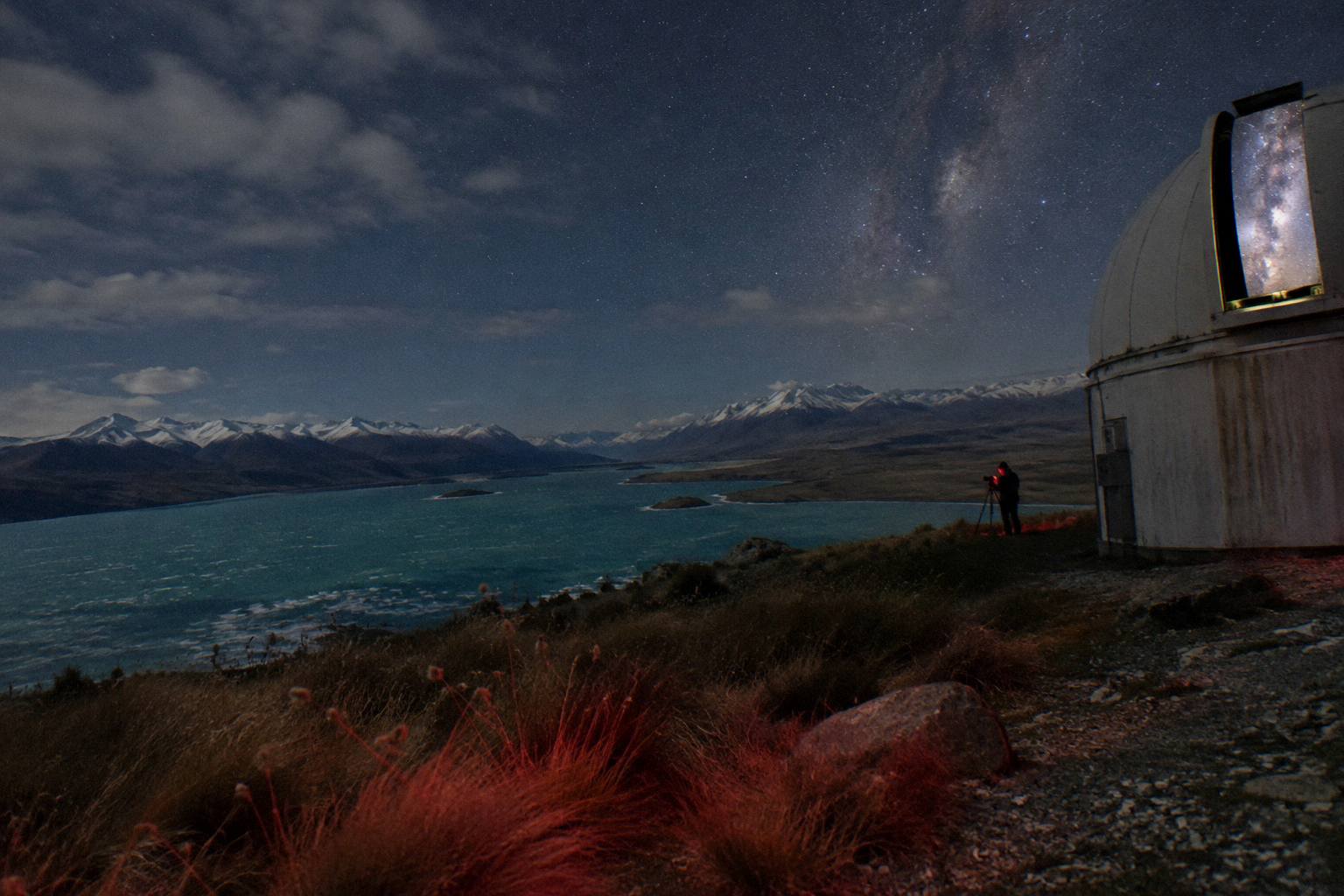
Dark Sky Project describes the Summit Experience as telescope viewing inside a private observatory dome at the University of Canterbury Mt John Observatory, plus naked-eye guiding with handheld lasers. The cultural content is stated in the operator's own words: Tātai Aroraki, Māori astronomy, is woven through the experience alongside Western astronomy. Takapō itself is the name recorded by Ngāi Tahu ancestors, and Dark Sky Project says it uses the macron spelling to support revitalising Māori place names.
The observatory backdrop matters to what the tour is. The University of Canterbury calls Mt John Observatory, elevation 1,029 m, New Zealand's largest professional research observatory, home to four research telescopes including the 1.8 m MOA telescope operated with a Japanese university partner. The Summit Experience does not use the research instruments; it uses the private dome and its up to 16 inch telescopes. The story of the site itself is covered in the Mount John Observatory stargazing guide.
What the eyepiece holds depends on the night. Dark Sky Project's own pages state that the moon's brightness affects fainter stars and galaxies, that the moon is also a good target, and that the Milky Way and Aurora Australis depend on conditions and are not guaranteed. The operator decides whether outdoor stargazing is possible as close to tour time as it can, and asks guests to check in 15 minutes early for an update. The experience is rated 4.6 across 352 reviews.
Practical facts shape the visit as much as the sky. The tour includes transport, guiding and the loan of an Extreme Cold Weather jacket, a Summit-only inclusion, and it asks for moderate fitness: a 100 m gravel incline walk and a few steps in the dark. Tour times are various times throughout the year, depending on time of sunset, and are not published in advance. If you are weighing this tour against the lakefront alternatives, the Mt John summit or Tekapo Springs stargazing comparison works through that choice.
The tour page for the Mt John Summit Stargazing Experience carries full booking details, and check availability shows the current evening sessions for your dates.
What Does The Crater Experience Show Through Its 14 Inch Telescopes?
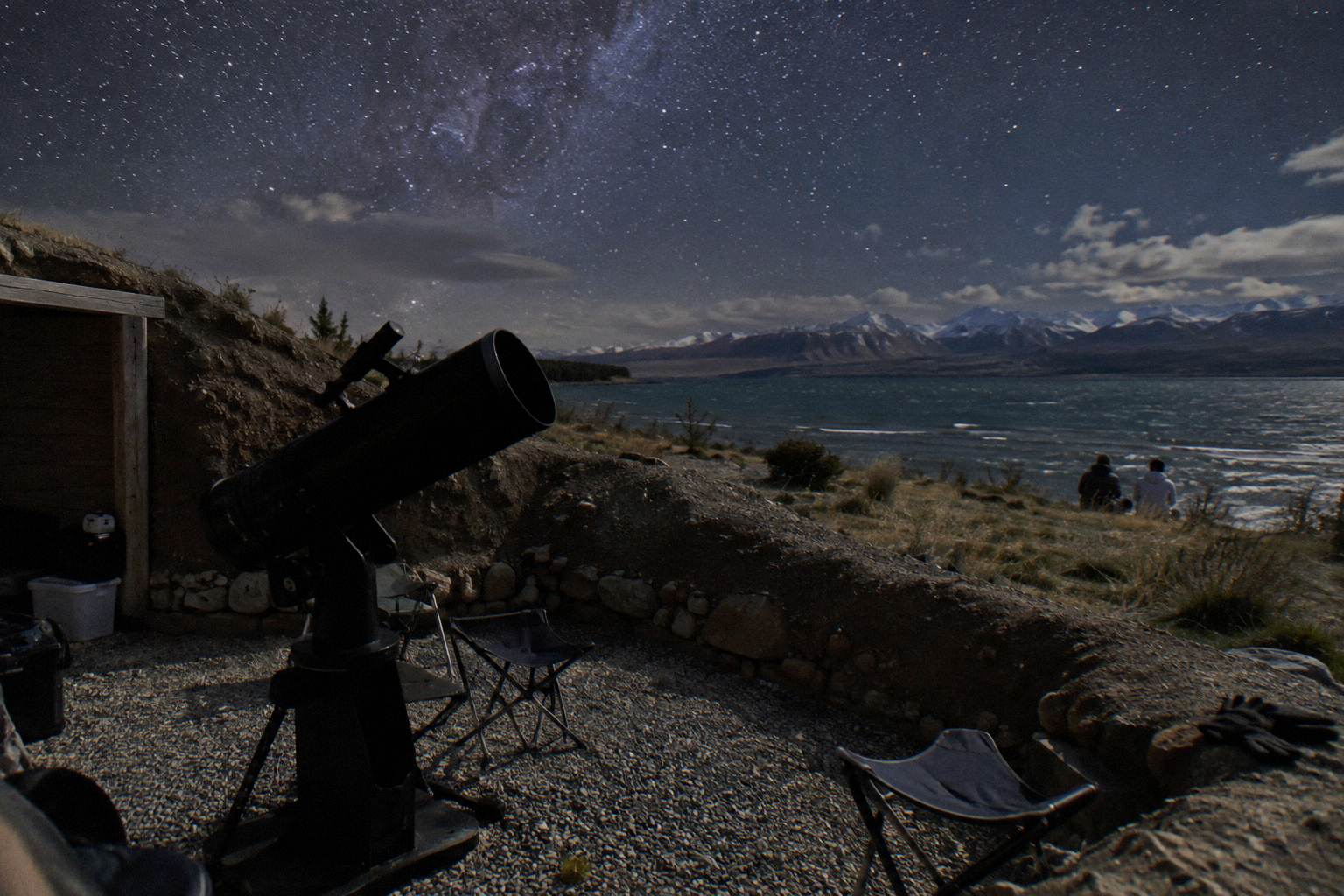
The Crater Experience runs 75 minutes including transport to Cowan's Private Observatory, where 14 inch telescopes or an observatory dome sit inside purpose-built observation craters sheltered from wind and light. The operator's price is NZD 139 adult and NZD 99 child aged 5 to 17, with a family pass at NZD 377, and the minimum age is 5. Tour times are various evening times after twilight, seven days a week.
The younger minimum age is the practical difference for families. Where the Summit Experience draws its line at 10 and Tekapo Springs excludes children under 6 entirely, the Crater Experience takes children from 5, and its family pass (2 adults and 2 children, with an extra child at NZD 99) is built around that. The observation craters are the operator's own answer to the wind that comes with a Mackenzie night: sheltered viewing positions rather than an exposed summit.
Accessibility also differs from the summit product. Dark Sky Project states that wheelchair users can join the Crater Experience but must drive their own vehicle to Cowan's rather than take the included transport. It is the tour most often recommended here for younger families, and the Tekapo stargazing with kids guide works through the age rules across every operator.
What the 14 inch instruments show follows the same honesty as the summit: the operator cannot guarantee clarity or objects, and the decision on whether the tour runs outdoors is made close to tour time. The same weather fallbacks apply, and the same moon caveat: brighter moonlight affects fainter stars and galaxies, while the moon itself is a good target. The experience is rated 4.6 across 93 reviews.
What Happens When Cloud Or Moonlight Gets In The Way?
Dark Sky Project cannot guarantee clarity or objects, decides whether outdoor stargazing is possible as close to tour time as possible, and then offers an indoor alternative, a reschedule subject to availability, a gift voucher valid 3 years, or a full refund. Tekapo Springs runs in all weather, substituting a VR indoor experience under cloud, and refunds 25 percent per ticket if telescope viewing falls under 30 minutes.
The operator's weather page states the position in the operator's own terms: clarity is not guaranteed, and neither is any object. If outdoor stargazing is not possible, the options are the indoor alternative or Virtual Stargazing Experience, a reschedule, a gift voucher valid 3 years, or a full refund. Booking cancellations follow a separate track: direct bookings cancelled up to 24 hours before receive a full refund, while inside 24 hours the full price is charged, and late check-in receives no refund.
Moonlight is the quieter variable that trips people up. Dark Sky Project says brighter moonlight affects fainter stars and galaxies, and also says the moon is a good target in its own right. Tekapo Stargazing's FAQ puts it similarly: telescopes still show bright objects, and a full moon only reduces the naked-eye Milky Way. The planning logic is in the new moon or full moon Tekapo stargazing guide, and the forecast side is covered in the Tekapo stargazing forecast page.
Tekapo Springs takes a different approach worth understanding before booking. Its tours run in all weather, and under cloud a VR indoor experience with 360 degree imagery, including the Church of the Good Shepherd and the Mt John summit, replaces the telescope viewing; it is not a standalone tour. Its FAQ adds a partial refund: if telescope viewing runs under 30 minutes, 25 percent per ticket is refunded at the end of the tour. The full cloud-and-cancellation picture is in the Tekapo stargazing cancelled for cloud guide.
| Situation | Dark Sky Project (Summit, Crater) | Tekapo Springs (Soak in the Stars) |
|---|---|---|
| Cloud decision timing | As close to tour time as possible | Tours run in all weather |
| If outdoor viewing is not possible | Indoor alternative or Virtual Stargazing Experience, reschedule, voucher valid 3 years, or full refund | VR indoor experience replaces telescope viewing |
| Short viewing refund | Not stated | 25 percent per ticket if under 30 minutes of telescope viewing |
| Guest cancellation, direct booking | Full refund up to 24 hours before | Full refund, date change or voucher up to 24 hours before |
What Do You See Without A Telescope At All?
A large part of every guided Tekapo night is naked-eye skyreading, not eyepiece time. Dark Sky Project's Summit Experience pairs its telescopes with naked-eye guiding using handheld lasers, and its guiding weaves Tātai Aroraki, Māori astronomy, through the Western astronomy. Tekapo Springs tells Māori star stories and frames the stars as a Pacific navigation compass, naming Matariki and the Southern Cross.
The reserve itself is the reason the naked-eye half works. The Aoraki Mackenzie International Dark Sky Reserve, awarded reserve status in April 2012, comprises Aoraki/Mt Cook National Park and the Mackenzie Basin, and is described as the largest dark sky reserve in the Southern Hemisphere. The Mackenzie District Council runs lighting rules in its District Plan, including shielding of lights so they point downward and limits on their time and frequency, which is why the basin's towns sit under skies this dark. The reserve's story is told in full in the Aoraki Mackenzie dark sky reserve guide.
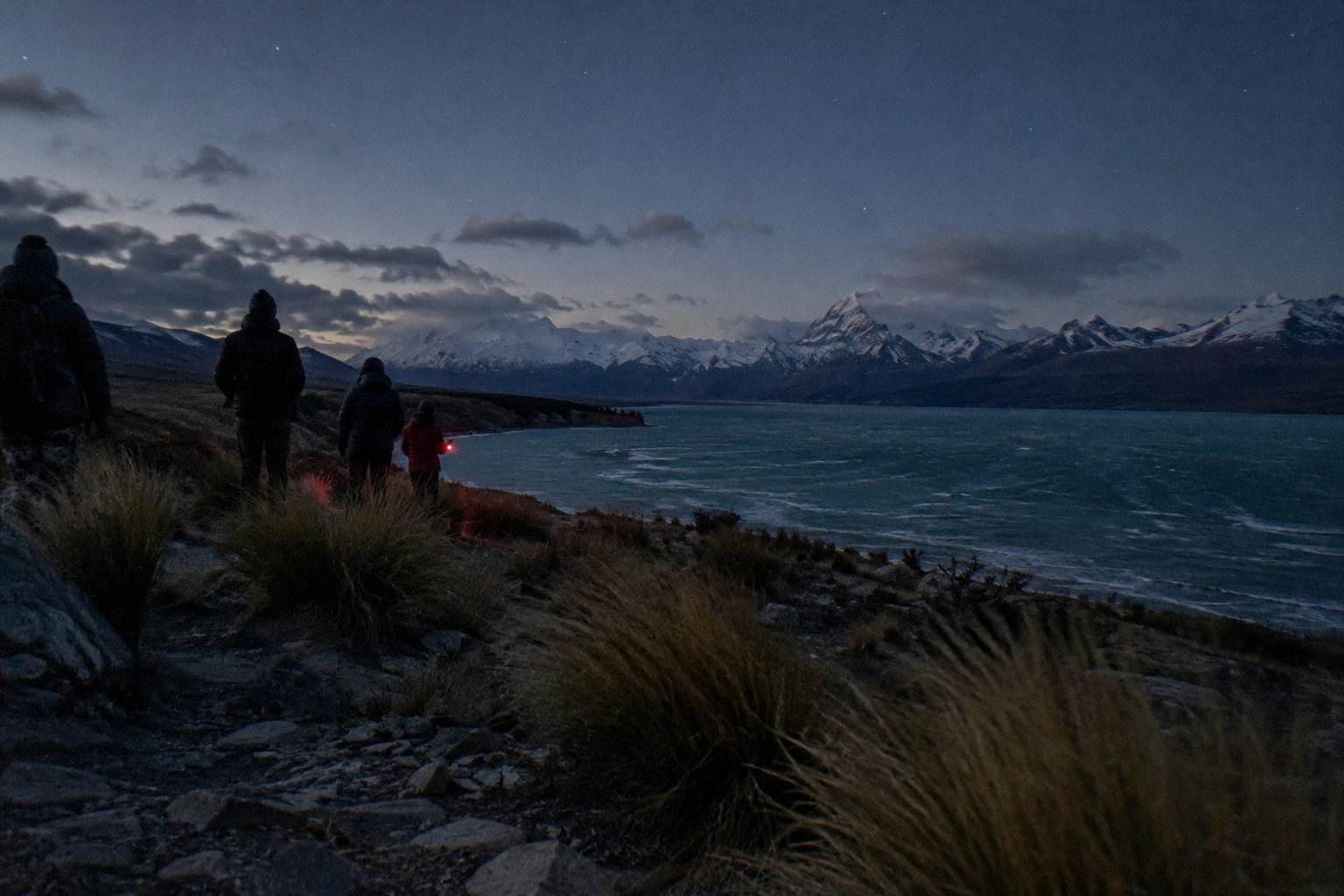
What the operators say about specific sky content is narrow and attributed. Tekapo Springs names Matariki and the Southern Cross in its storytelling, and describes stars as a Pacific navigation compass. Dark Sky Project says the Milky Way and Aurora Australis depend on conditions and are not guaranteed, and that brighter moonlight affects fainter stars and galaxies. Neither operator publishes a list of planets or nebulae for a given night, and this page will not invent one. For what fills the southern sky more broadly, the constellations of the Southern Hemisphere guide is the companion read.
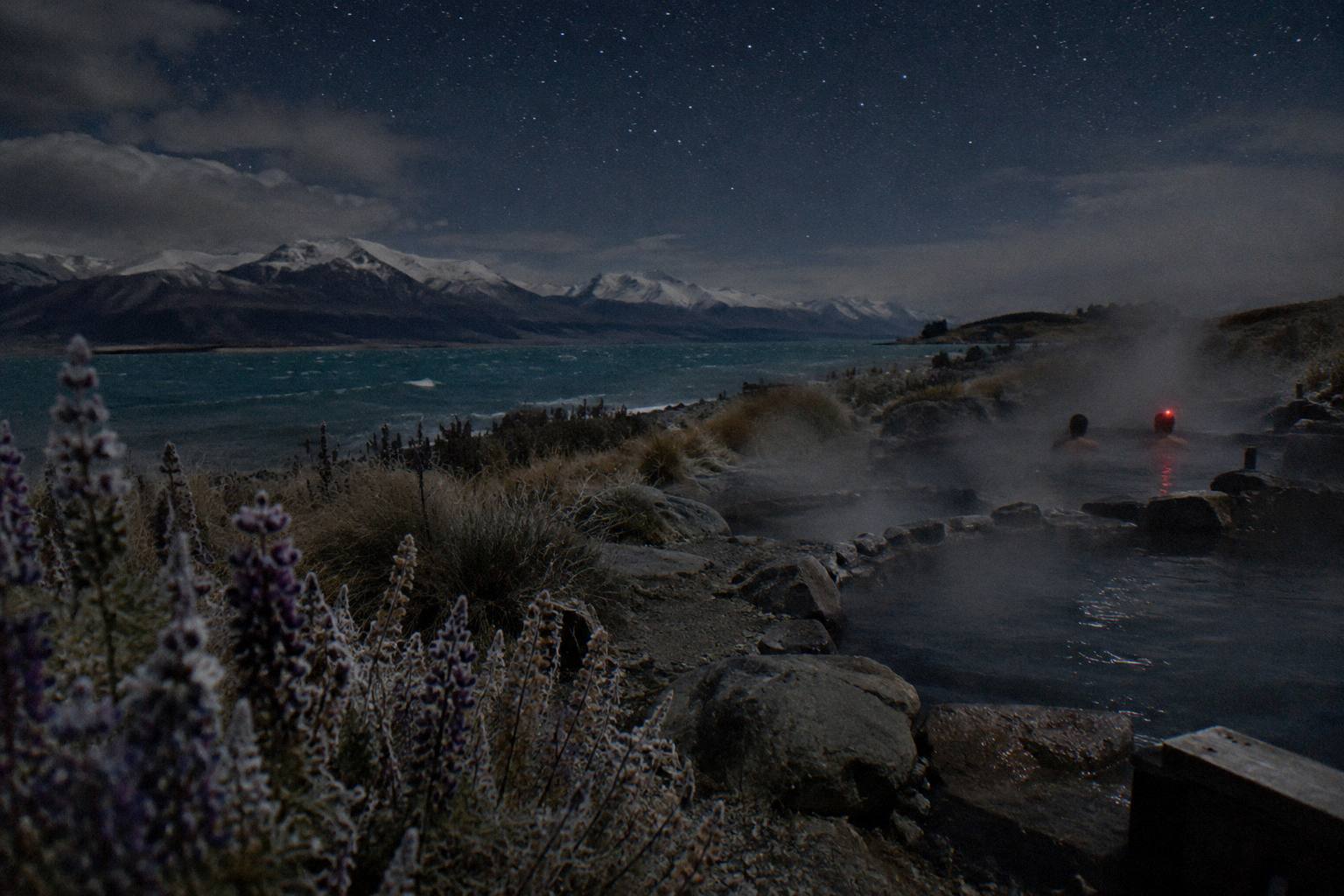
The Hot Pools And Stargazing At Tekapo Springs experience, sold as Soak in the Stars, runs 90 minutes at the operator's price of NZD 179 adult, NZD 115 child, minimum age 10: guided telescope viewing first, then an exclusive hot pool at 37.5 to 38.5 °C with the guide poolside. It runs seven evenings a week from October to April and Thursday to Monday from May to September, with some tours beginning after midnight. Its telescope time is shorter than the Dark Sky Project products; its trade is warmth.
Is There An Option With No Sky At All?
Yes, and it is not a stargazing tour. The Dark Sky Experience, Indoor Cultural Astronomy, is a 45-minute indoor guided astronomy tour at the Dark Sky Project base, running through four zones and the restored 125-year-old Brashear telescope, with no stargazing at all. It costs NZD 59 adult and NZD 39 child at the operator's price, with under 5s free with an adult ticket.
Because it is indoors and daytime, weather cannot touch it. English tours run at 10:30am, 12:30pm and 2:30pm, with a 4:30pm session on Tuesday and Wednesday subject to availability, and Mandarin on request. There is no minimum age, though the operator says the content suits ages from about 7. It is the natural fallback when a family's evening tour has been curtailed by cloud, and it carries the same Tātai Aroraki cultural content the operator weaves through its outdoor experiences.
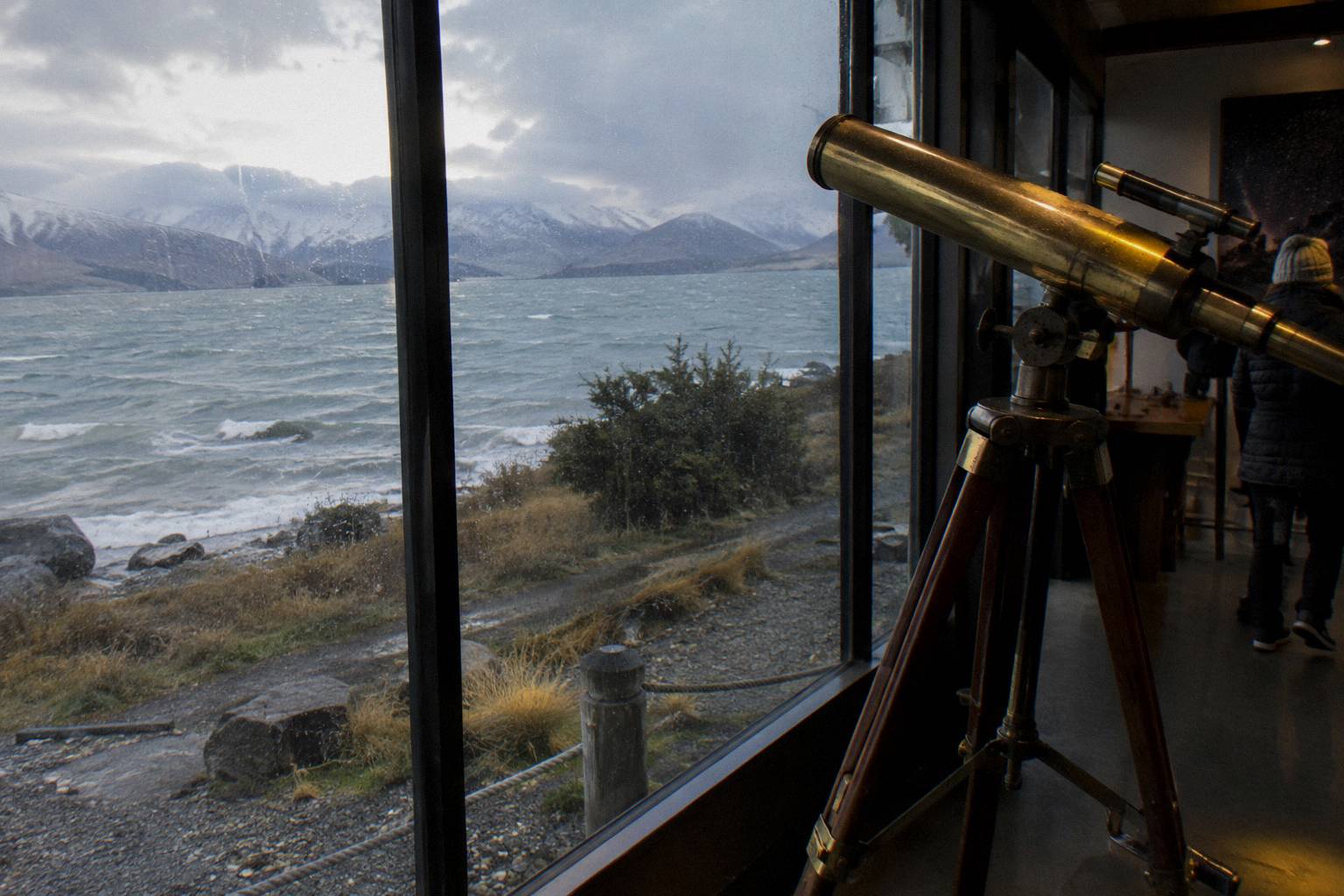
The Brashear telescope deserves its own sentence. The operator describes it as a restored 125-year-old instrument, and it anchors the indoor experience's story of astronomy's history alongside its four zones of guiding. It is a museum piece you stand beside rather than a working eyepiece you look through, which is exactly why the tour can promise its content regardless of cloud: nothing in it depends on the night sky. For a fuller treatment of the operator's whole range, see the Dark Sky Project stargazing tours guide.
| Experience | Setting | Duration | Operator price (NZD) | Minimum age |
|---|---|---|---|---|
| Mt John Summit Stargazing Experience | Observatory dome, 1,029 m summit | 1 hour 45 minutes | 239 adult and child alike | 10 |
| Crater Stargazing At Cowan's Observatory | Sheltered observation craters | 75 minutes | 139 adult, 99 child (5 to 17), family 377 | 5 |
| Hot Pools And Stargazing (Soak in the Stars) | Tekapo Springs, telescope then hot pool | 90 minutes | 179 adult, 159 senior or student, 115 child, family 499 | 10 |
| Dark Sky Experience, Indoor Cultural Astronomy | Indoors at the base | 45 minutes | 59 adult, 39 child, family 157, under 5 free | Not stated |
How Do You Choose A Tour By Telescope And Setting?
Match the instrument to the person, not the other way round. A 10 year old and an adult can both do the Summit Experience at NZD 239 each; a 5 year old cannot, and fits the Crater Experience at NZD 99; anyone who wants sky plus warmth fits Soak in the Stars at NZD 179 adult; and a cloudy afternoon fits the indoor Dark Sky Experience at NZD 59. Aperture is the tiebreaker after those gates.
Work it as a decision tree. First, the age gate: Summit takes 10 and over, Soak in the Stars takes 10 and over, Crater takes 5 and over, and Astro Tekapo's lakefront tour takes 6 and over, while Tekapo Springs allows no child under 6 on any of its tours, babies carried included. Second, the fitness and access gate: the Summit Experience asks for moderate fitness for a 100 m gravel incline walk and a few steps in the dark, while Crater welcomes wheelchair users who drive their own vehicle to Cowan's. Third, the weather temperament gate: if losing an evening to cloud would ruin the trip, the indoor experience or the Tekapo Springs all-weather model with its VR fallback changes the risk.
Then, and only then, aperture. If the biggest possible eyepiece is the point, the 16 inch instruments stated for the Summit Experience and Silver River's Ultimate experience lead, at 1 hour 45 minutes and 2 hours respectively. If shelter matters as much as size, the Crater Experience's 14 inch telescopes in wind-sheltered craters are the operator's own answer. If price per person leads, the operator's own schedule puts Crater at NZD 139 adult against Summit at NZD 239, and every other tour's price is on its booking page.
What Trips People Up When Reading Telescope Claims?
Three things catch readers out: expecting a guaranteed object, expecting the research telescopes, and expecting a child price that does not exist. No operator guarantees any planet, nebula, the Milky Way or aurora; the Summit Experience uses the private dome's instruments, not the observatory's research telescopes; and Summit adult and child prices are both NZD 239, so there is no child discount to find.
The first trap is the word "see". Operators describe what their telescopes can show, and separately state that clarity and objects cannot be guaranteed. Reading the instrument list as a viewing promise sets up disappointment that the operator's own terms warn against. The second trap is assuming the Summit Experience uses the University of Canterbury's research telescopes, including the 1.8 m MOA instrument: it does not, it uses the private dome with telescopes up to 16 inch. The third is price arithmetic: the Summit Experience charges NZD 239 for adult and child alike, and Tekapo Springs' senior and student tier for Scope at the Stars differs across the operator's own pages, so that tier is best confirmed by phone at +64 3 680 6550 or by email at bookings@tekapostargazing.co.nz.
A fourth, quieter trap is timing. Summit times vary throughout the year with sunset and are not published; Soak in the Stars runs to a seasonal calendar with some sessions after midnight, 12:15am among them. Planning a 9pm bedtime assumption around either tour leads to a booking that does not fit. Where a figure is not stated at all, ask the operator: Dark Sky Project takes questions on +64 3 680 6960 or info@darkskyproject.co.nz.
The Silver River Ultimate Stargazing Experience, at 2 hours the longest tour in the group, states a 16 inch telescope on its booking page, with the price and age minimum there too. It suits the reader whose priority is maximum time at the eyepiece around Tekapo.
For everything on the page so far in one place, Mt John Stargazing keeps the whole Tekapo and Mackenzie range side by side, including the tours this site features and the planning guides around them.
Common Questions About Tekapo Stargazing Telescopes
What Size Telescope Do The Tekapo Stargazing Tours Use?
The stated apertures run from 9.25 inch on the lakeside tours to 16 inch at the summit. Dark Sky Project's Summit Experience uses telescopes up to 16 inch inside a private dome, its Crater Experience uses 14 inch telescopes at Cowan's, and Silver River states 14 and 16 inch across its two Tekapo experiences.
Will I See The Milky Way Through The Telescope?
Dark Sky Project states that the Milky Way depends on conditions and is not guaranteed, and that brighter moonlight affects fainter stars and galaxies. The operator also notes the moon is a good target in its own right. No tour here promises any object.
Do The Tours Use The Research Telescopes At Mt John Observatory?
No. The University of Canterbury's Mt John Observatory houses four research telescopes, including the 1.8 m MOA instrument, but the Summit Experience uses its own private observatory dome with telescopes up to 16 inch.
What Happens If It Is Cloudy On The Night?
Dark Sky Project decides whether outdoor stargazing is possible as close to tour time as possible, and offers an indoor alternative, a reschedule subject to availability, a gift voucher valid 3 years, or a full refund. Tekapo Springs tours run in all weather, with a VR indoor experience replacing telescope viewing under cloud.
Can Children Use The Telescopes?
It depends on the tour. The Crater Experience takes children from age 5, Astro Tekapo's lakefront tour from age 6, and the Summit Experience and Soak in the Stars from age 10. Tekapo Springs allows no child under 6 on any of its tours, including babies carried.
Is There A Stargazing Option If The Weather Is Bad All Week?
The Dark Sky Experience, Indoor Cultural Astronomy, is a 45-minute indoor guided tour at the Dark Sky Project base, at NZD 59 adult and NZD 39 child at the operator's price. It includes the restored 125-year-old Brashear telescope and offers no stargazing, so cloud does not affect it.