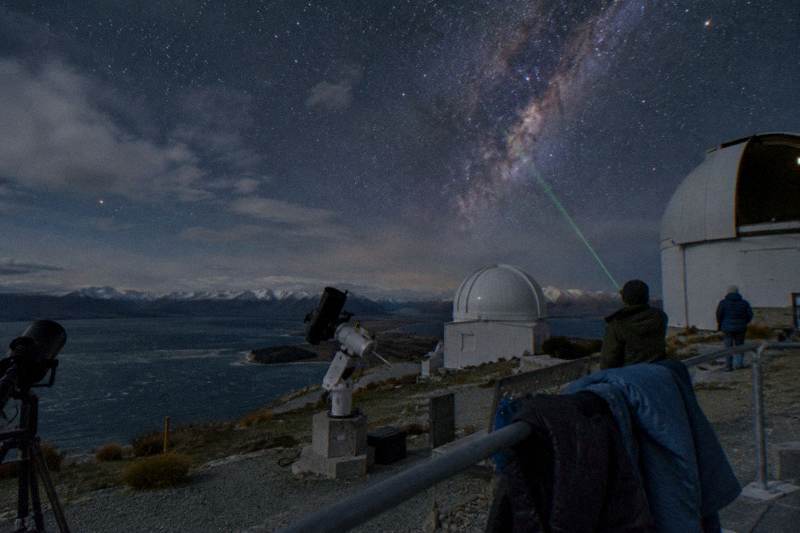
Can You See The Southern Cross On A Tekapo Stargazing Night?
The Southern Cross in Tekapo's guided star stories, which tour formats point it out, weather honesty, and how to choose between the Dark Sky Project and Tekapo Springs nights.
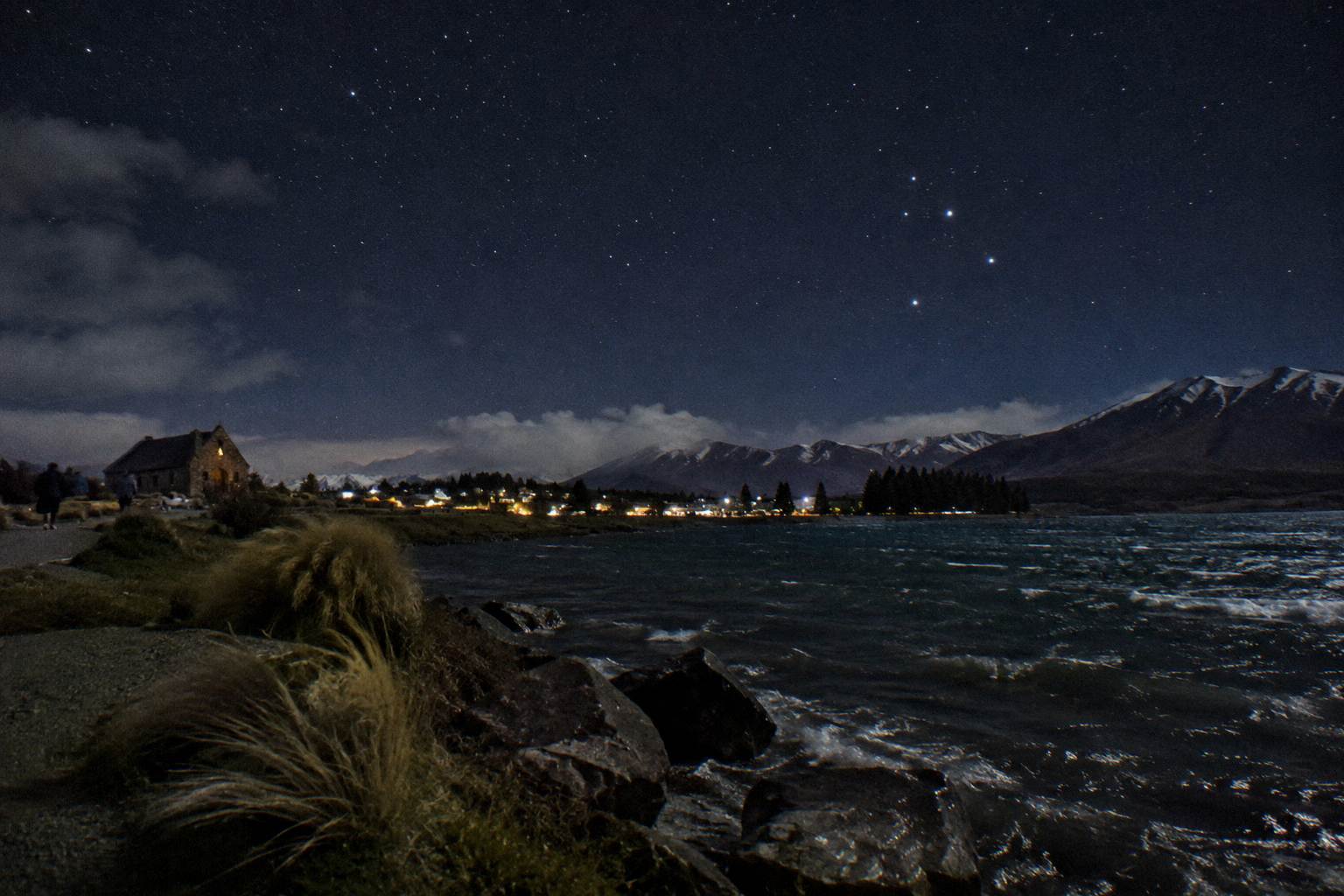
Yes, the Southern Cross is part of what Tekapo's stargazing guides point out, and the constellation is visible from this latitude on clear nights. Tekapo Stargazing names the Southern Cross and Matariki in its Māori star stories, and Dark Sky Project guides point out southern sky features with handheld lasers. No operator in Tekapo guarantees any particular object, because cloud and moonlight decide the night; the honest answer is that the Southern Cross belongs to the southern sky this reserve is famous for, and a guided night is the reliable way to have it found for you.
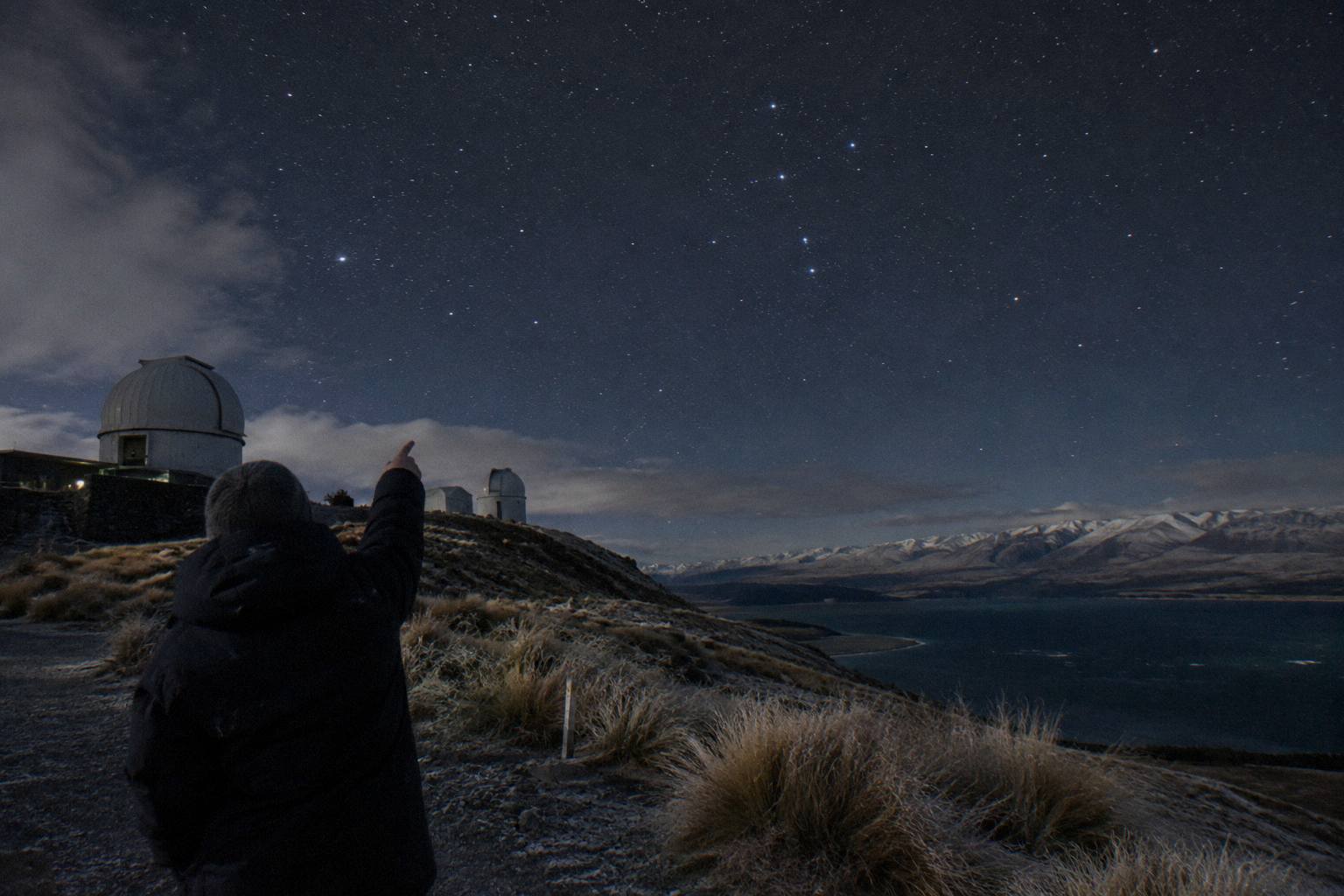
The Southern Cross is a southern-sky constellation that Tekapo's guides treat as core content, not a lucky bonus. Tekapo Stargazing lists it by name alongside Matariki in the Māori star stories it tells on tour, describing stars as a Pacific navigation compass. Dark Sky Project's guides work the southern sky with handheld lasers. Neither operator promises the constellation on any given night, because clarity is never guaranteed.
The reason the question is even worth asking is the setting. Lake Tekapo sits inside the Aoraki Mackenzie International Dark Sky Reserve, awarded reserve status in April 2012, which comprises Aoraki/Mt Cook National Park and the Mackenzie Basin. Dark Sky Project calls it the largest dark sky reserve in the Southern Hemisphere on its reserve page. The district has rules on outdoor lighting in its District Plan, including shielding so lights point downward, which is why the town's sky stays dark enough for faint stars to survive.
That darkness is what makes the Southern Cross straightforward to pick out on a clear night rather than a challenge. The constellation is small, but from a dark site its five main stars stand out clearly, and the two pointer stars near it are the classic way to find it. A guide with a laser makes the identification instant, which is the practical argument for a tour over trying your luck from the lakefront car park.
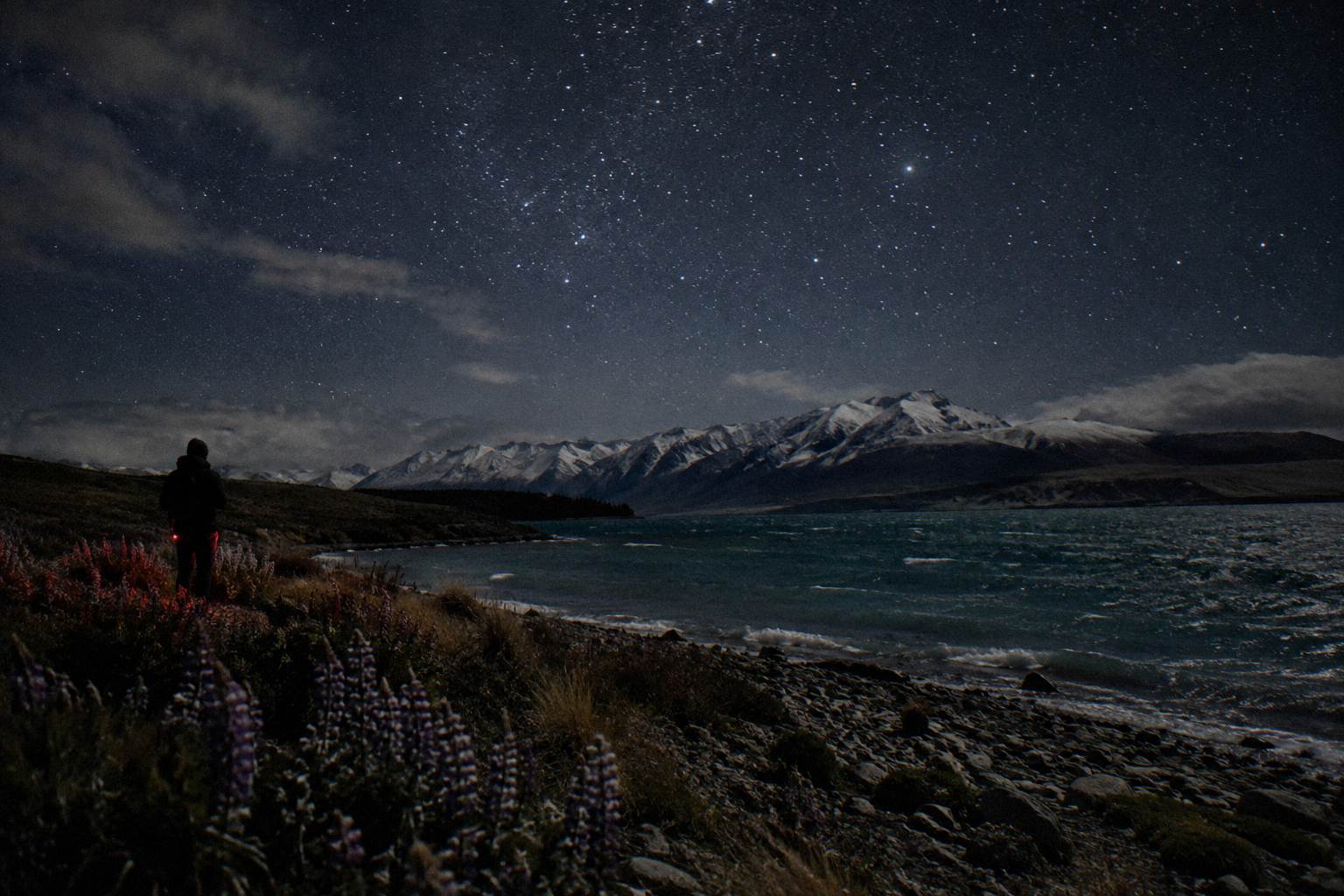
For a first decision, three formats cover most travellers: the summit observatory night, the sheltered crater night, and the hot-pools combination night.
Where The Southern Cross Fits In Tekapo's Star Stories
The Southern Cross is one of the few objects the operators name in advance, and in Tekapo it arrives wrapped in navigation lore rather than as a bare constellation. Tekapo Stargazing tells Māori star stories and frames the stars as a Pacific navigation compass, naming both Matariki and the Southern Cross. Dark Sky Project weaves Tātai Aroraki, Māori astronomy, through its Summit, Crater and indoor Dark Sky Experience.
That cultural framing is the difference between a Tekapo night and a generic telescope session. On the Mt John Summit Stargazing Experience, the guide's commentary moves between Western astronomy and Tātai Aroraki, with telescopes up to 16 inch inside a private observatory dome and naked-eye pointing guided by handheld lasers. The tour page explains the full summit experience format if you want the mechanics before deciding. At 1 hour 45 minutes, operator price NZD 239 for adults and children alike, minimum age 10, it is the deepest of the three flagship formats.
The Crater Experience, at Cowan's Private Observatory a 5-minute drive from the Dark Sky Project base, uses purpose-built observation craters sheltered from wind and light, with 14 inch telescopes or the observatory dome. It runs 75 minutes including transport, from NZD 139 adult and NZD 99 child, minimum age 5, with a family pass at NZD 377 for two adults and two children. The same Tātai Aroraki thread runs through its commentary.
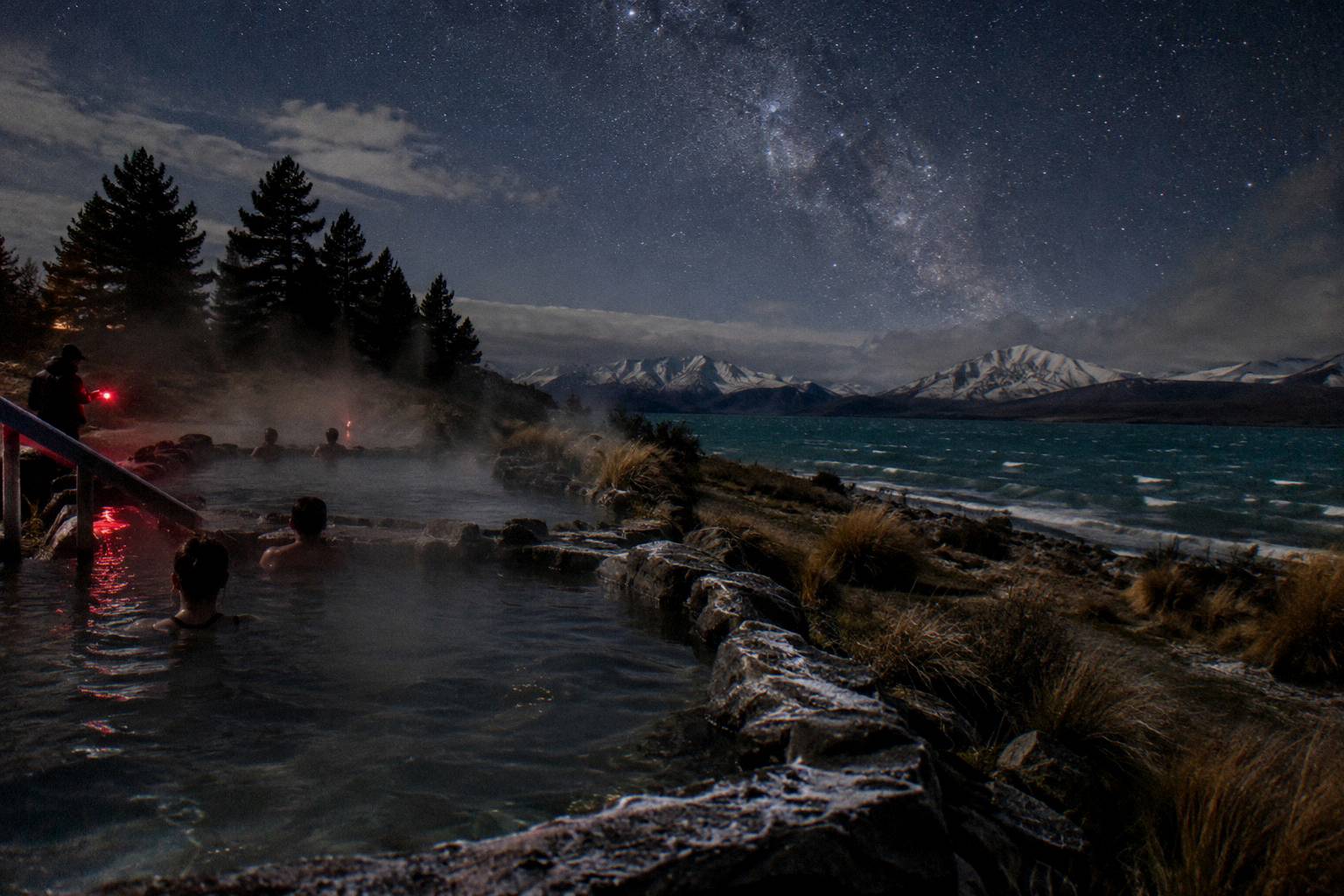
At Tekapo Springs the story is told warm. Soak in the Stars pairs guided telescope viewing with an exclusive hot pool at 37.5 to 38.5 °C with the guide poolside, towels, robes, hot drinks and warm poncho coats included, 90 minutes, NZD 179 adult and NZD 115 child, minimum age 10. That is where the Southern Cross and Matariki star stories sit, per the operator's own description of the tour.
Which Tour Format Suits Finding The Southern Cross?
Match the format to your group, not to the constellation, because every guided format works under the same sky. Families with children aged 5 to 9 fit the Crater Experience, whose minimum age is 5. Groups wanting the research-observatory setting and the biggest telescopes fit the Summit Experience, minimum age 10. Anyone who wants warmth built in fits Soak in the Stars, minimum age 10, which runs in all weather with an indoor VR fallback.
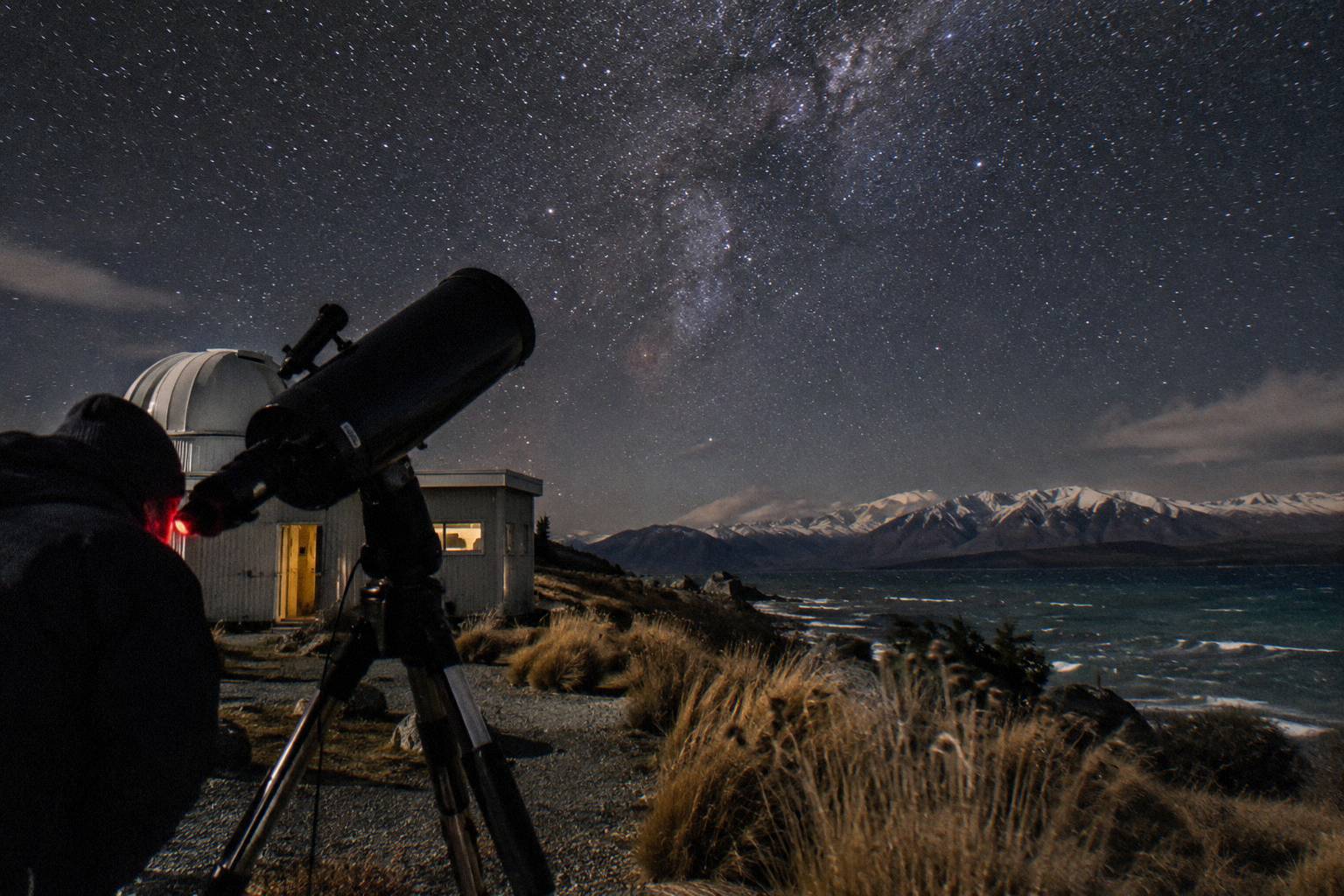
There is a real trade between setting and comfort. The Summit Experience involves a 15-minute bus ride up to the University of Canterbury Mt John Observatory at 1,029 m, then a 100 m gravel incline walk and a few steps in the dark; the operator asks for moderate fitness and lends an Extreme Cold Weather jacket, the only format that does. The Crater Experience trades the summit for shelter, with craters built to block wind and stray light, and wheelchair users can join if they drive their own vehicle to Cowan's. The hot pools format trades elevation for heat: you view through telescopes, then soak.
The comparison below holds the formats side by side on the facts each operator states.
| Format | Operator | Duration | Min age | Operator price (NZD) |
|---|---|---|---|---|
| Mt John Summit Stargazing Experience | Dark Sky Project | 1 hour 45 minutes | 10 | 239 adult, 239 child |
| Crater Stargazing At Cowan's Observatory | Dark Sky Project | 75 minutes | 5 | 139 adult, 99 child, family 377 |
| Hot Pools And Stargazing (Soak in the Stars) | Tekapo Springs | 90 minutes | 10 | 179 adult, 115 child, family 499 |
| Dark Sky Experience (indoor, daytime) | Dark Sky Project | 45 minutes | none stated | 59 adult, 39 child, family 157 |
A note on that last row: the Dark Sky Experience is a 45-minute indoor, daytime guided astronomy tour at the base, built around four zones and a restored 125-year-old Brashear telescope. It offers no stargazing at all, so it is not a way to see the Southern Cross; it is the cloud-proof alternative, and a decent one for jet-lagged arrival days.
If the summit format is the one that fits, the summit night is worth Mt John Summit Stargazing at this point, since summit nights run at set capacities and the operator says direct bookings can be cancelled up to 24 hours before for a full refund.
Cloud, Moonlight And What No Operator Will Promise
Every Tekapo operator says the same thing in its own terms: the Southern Cross is not guaranteed on any night, because cloud and moonlight are not bookable. Dark Sky Project decides as close to tour time as possible, and offers an indoor alternative, a reschedule, a gift voucher valid 3 years, or a full refund if outdoor stargazing is not possible. Tekapo Springs runs in all weather, swapping telescope time for an indoor VR experience under cloud.
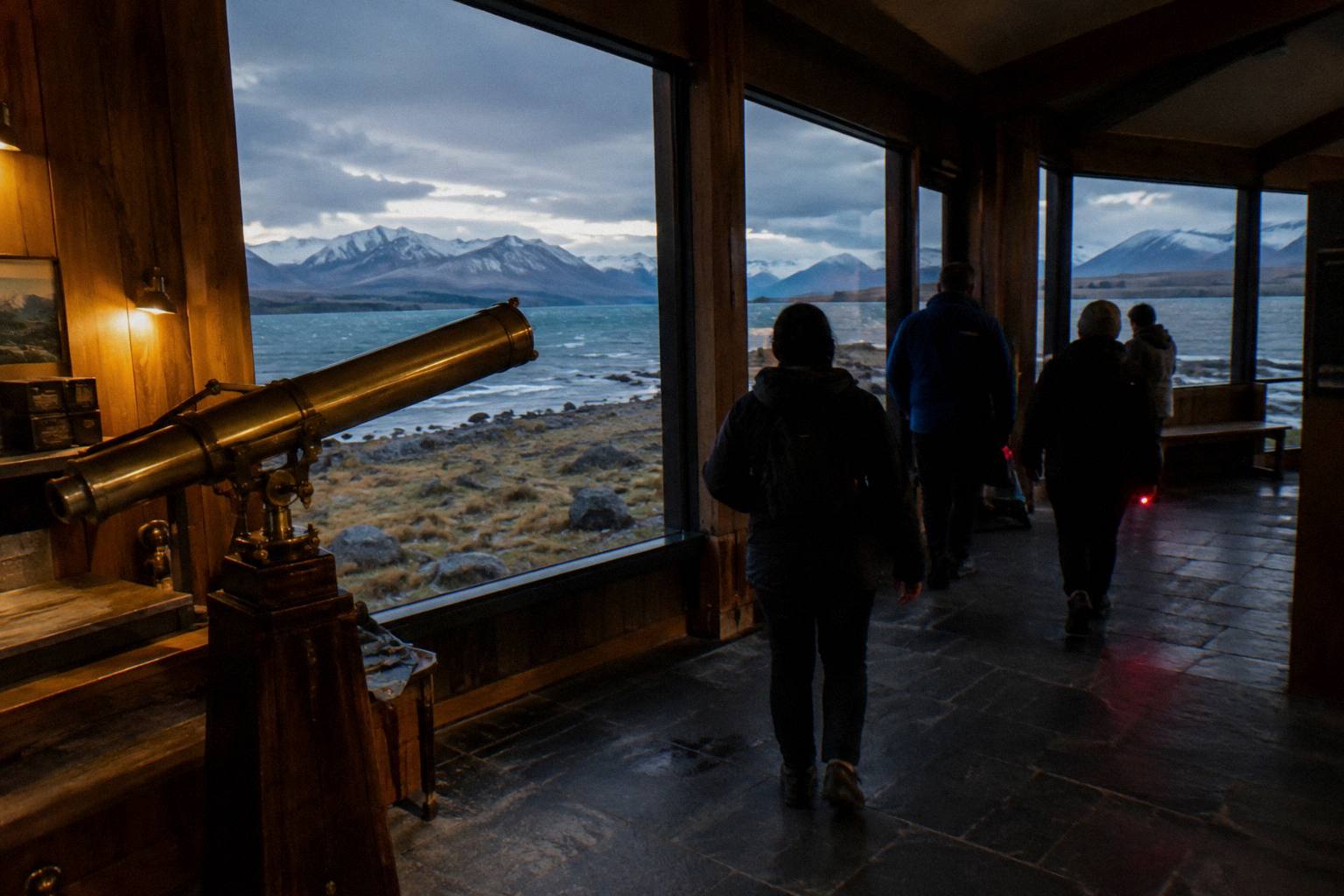
The detail worth knowing is the refund structure, because it changes what cloud costs you. Dark Sky Project's weather page advises checking in 15 minutes early for the latest call. If the sky fails, its options include the indoor Virtual Stargazing Experience as an alternative on the night. Tekapo Springs goes further on partial viewing: if a tour delivers under 30 minutes of telescope viewing, the operator refunds 25 percent per ticket at the end of the tour, for tours from 18 June 2026.
The moon is the quieter factor. Dark Sky Project says brighter moonlight affects fainter stars and galaxies, and also that the moon is a good target in its own right. Tekapo Stargazing says telescopes still show bright objects under a fuller moon and that it mainly reduces the naked-eye Milky Way. The Southern Cross sits between those cases: its main stars are bright enough to hold up under moonlight that washes out fainter deep-sky objects, which is why a moonlit night is not a wasted booking. The site's new moon or full moon comparison works through that trade in detail.
Finding The Southern Cross Yourself From The Lakefront
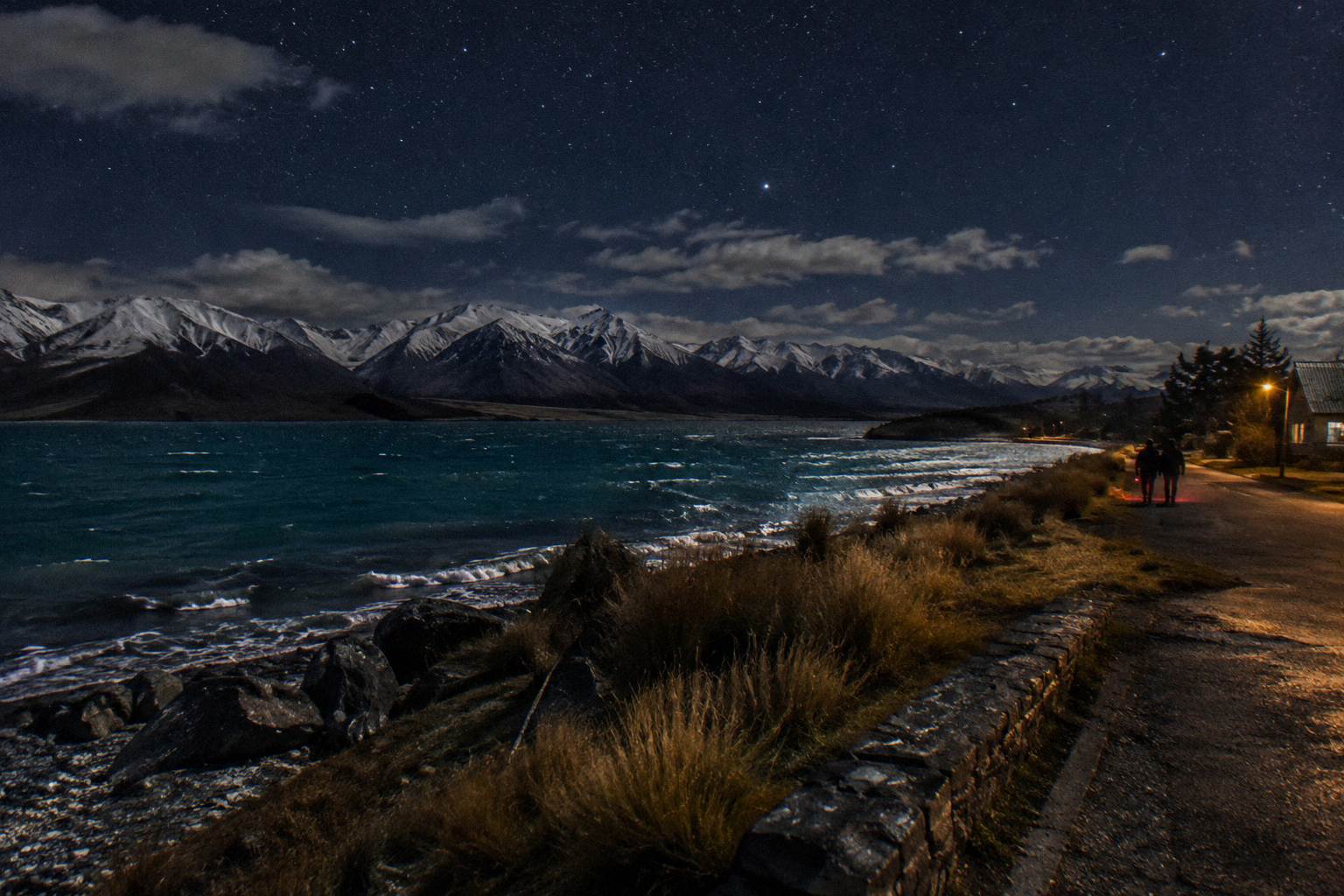
You do not need a tour to look for the Southern Cross from Tekapo, only a clear night and a dark stretch of lakefront, since the reserve's darkness is free to stand under. The free option costs nothing but gives you no guide, no laser, no telescope and no weather fallback, which is exactly the trade the paid formats exist to solve. The town's own lighting rules keep the shore darker than most tourist towns.
Practically, the lakefront and the walks away from the village centre are the accessible spots, and the free stargazing options around Lake Tekapo are covered in their own guide. What you give up is the finding itself: identifying the Southern Cross unaided takes the two pointer stars and a bit of patience on a first attempt, whereas a guide with a laser resolves it in seconds and then puts a telescope on objects your eyes cannot reach. If you are curious whether that gap matters, the do you need a tour to stargaze at Mount John question is answered separately.
One daytime note that pairs well with a free night: the Astro Cafe on the Mt John summit is open daily 9am to 4pm, with the access road open the same hours and a road user fee of NZD 14 per vehicle at the gate. Driving up by day to see the observatory you would visit by night is a common pairing, and vehicles over 12 seats are not permitted on the road.
Costs, Durations And Booking Windows Compared
The cheapest guided route into the southern sky is the indoor Dark Sky Experience at NZD 59 adult, but it shows no stars; the cheapest outdoor guided night with a stated price is the Crater Experience at NZD 139 adult, 75 minutes, minimum age 5. The Summit Experience costs NZD 239 at any age over 10, and Soak in the Stars sits between at NZD 179 adult for 90 minutes including the hot pool.
For families the arithmetic favours the crater. A two-adult, two-child family pass is NZD 377 at Cowan's Observatory against NZD 499 for the equivalent family at Soak in the Stars, and an extra child at the crater is NZD 99. At the summit, adult and child pricing is identical, so a family of four with children over 10 pays the same per head as adults everywhere. The smaller operators, Astro Tekapo, Chameleon and Silver River among them, publish no operator price, so ask the booking page for those.
Cancellation windows matter as much as prices when the sky is involved.
| Tour | Free cancellation | Weather plan | Booking contact |
|---|---|---|---|
| Summit Experience | 24 hours (direct) | Indoor alternative, reschedule, voucher or refund | Dark Sky Project, +64 3 680 6960 |
| Crater Experience | 24 hours (direct) | Same terms as Summit | Dark Sky Project, +64 3 680 6960 |
| Soak in the Stars | 24 hours (direct) | Runs in all weather, VR indoors, 25% refund under 30 min viewing | Tekapo Springs, +64 3 680 6550 |
| Dark Sky Experience | 24 hours (direct) | Indoors, unaffected | Dark Sky Project, +64 3 680 6960 |
Groups of 10 or more should read the fine print before booking: Dark Sky Project gives no refunds inside 72 hours for the Summit and Crater experiences, or 48 hours for the indoor tour. Late check-in receives no refund under any of its terms. Third-party bookings follow the agent's terms, so check the cancellation line on whatever page you book through.
Choosing By Traveller Type
A family with a six-year-old has one clear fit, the Crater Experience, because it is the only outdoor night whose minimum age reaches below 10. A couple maximising one night in town fits the Summit Experience for the observatory dome and the 1 hour 45 minute runtime. Cold-averse travellers and anyone visiting in winter fit Soak in the Stars, and a rainy-day schedule fits the indoor Dark Sky Experience at 45 minutes and NZD 59.
The lakefront alternatives earn their place for flexible travellers. Astro Tekapo Lakefront Stargazing runs 1.5 hours from the lakefront at Takapō Regional Park, minimum age 6, with a 24-hour free cancellation window on the booking page. The Silver River Alpine and Ultimate experiences run 75 minutes and 2 hours respectively, the Ultimate being the longest guided night of any listed format. Chameleon Stargazing runs a shared experience of about 1.5 hours. None of these publishes an operator price, so treat them as booking-page enquiries rather than priced options.
Solo and repeat visitors sometimes combine formats across two nights: an outdoor tour on the clearer-looking night, the indoor Dark Sky Experience slotted into a cloudy afternoon. Its English sessions run 10:30am, 12:30pm and 2:30pm, with 4:30pm added on Tuesday and Wednesday, subject to availability, and Mandarin on request.
Common Mistakes When Planning A Southern Cross Night
The recurring mistakes are all about assumptions: assuming a clear-sky guarantee that no operator offers, assuming a child of seven can board every tour when the summit's minimum age is 10, and assuming a start time that has not been published. Book the format that matches your group's ages, treat the weather call as the operator's to make, and plan a second night or an indoor fallback rather than staking the whole trip on one sky.
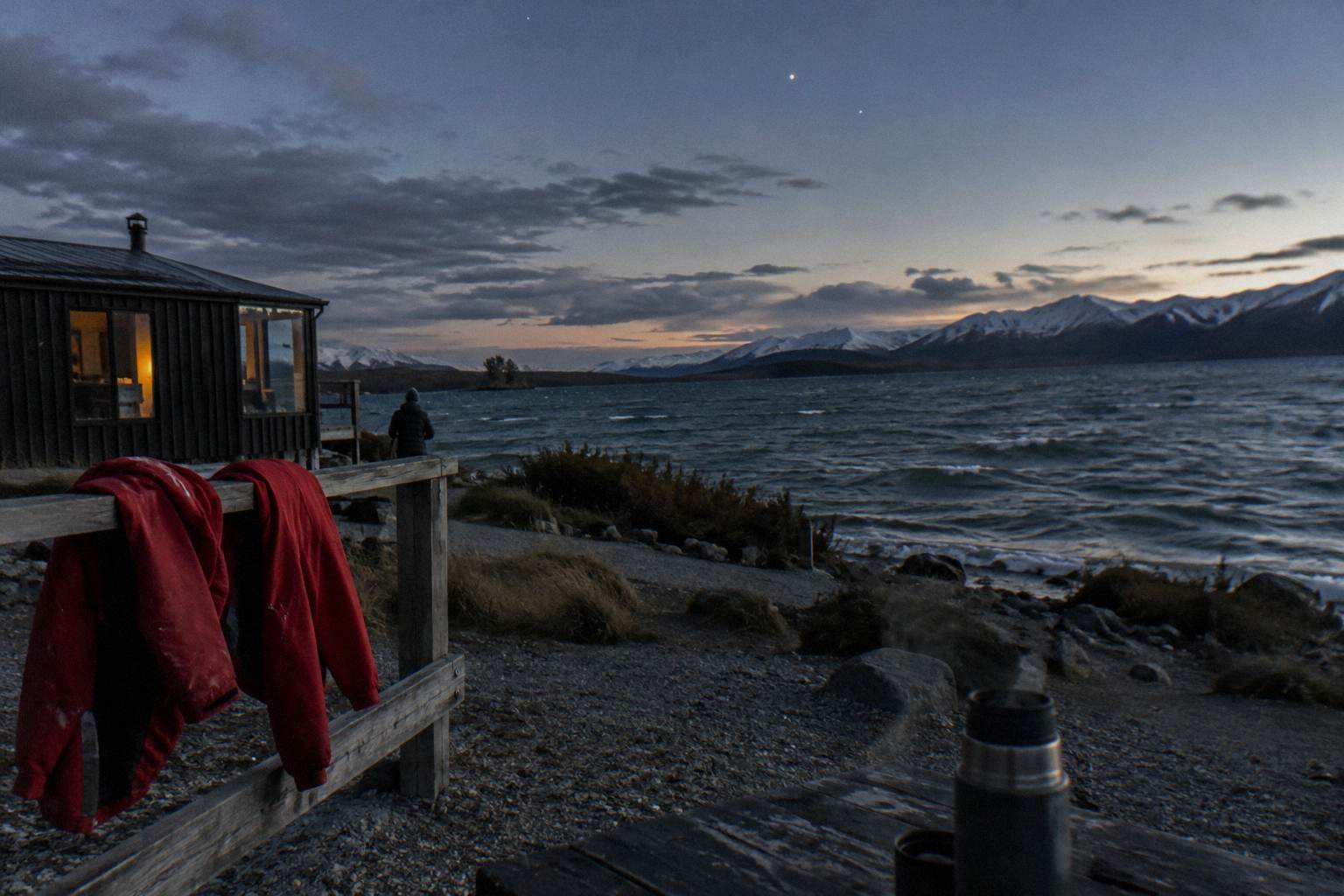
The specific traps, in the order people hit them:
- Expecting a published start time for the summit or crater. Summit times are described by the operator as various times throughout the year, depending on time of sunset, and are not published; crater times are various evening times after twilight. Plan the evening loosely and let the booking confirmation fill the gap.
- Arriving at check-in late. Both major operators ask for check-in 15 minutes before departure, and Dark Sky Project gives no refund for late check-in.
- Assuming warmth is included. Only the Summit Experience lends an Extreme Cold Weather jacket; on other nights you dress for it yourself, and the what to wear guide covers that in full.
- Discounting the moon. Brighter moonlight affects fainter objects, so a moon-heavy week is a reason to prefer telescope time over naked-eye hopes, not a reason to cancel.
- Treating the indoor tour as stargazing. The Dark Sky Experience is a cultural astronomy tour with no viewing, useful precisely because it is weather-proof, but it will not show you the Cross.
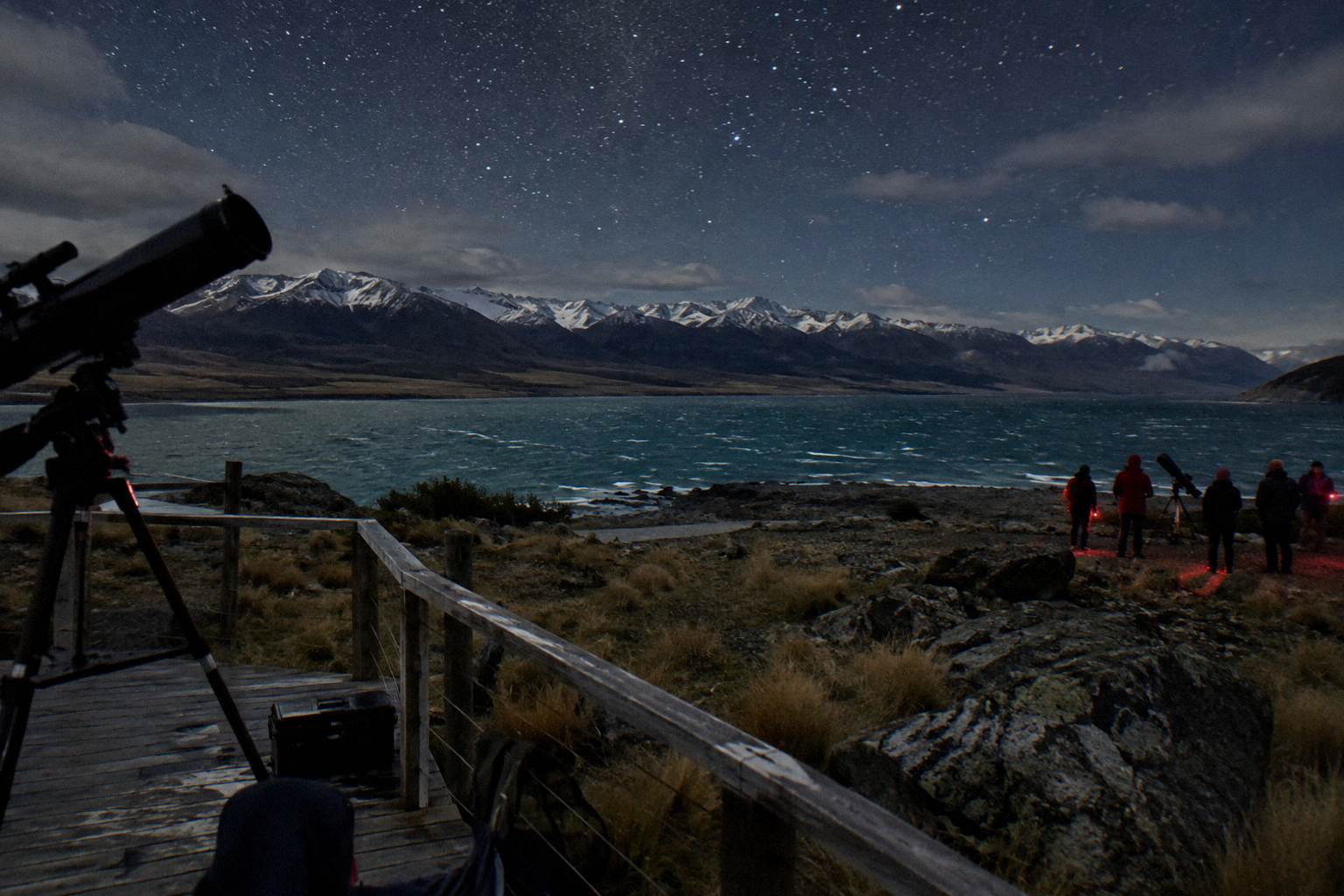
The Short Answer, And Where To Book
Tekapo is one of the better places on earth to have the Southern Cross found for you, and the short version of the decision is simple: pick by ages and cold tolerance, not by constellation. The Summit Experience, rated 4.6 across 352 reviews, delivers the deepest session at NZD 239; the crater delivers it younger and cheaper; the hot pools deliver it warmest at NZD 179 adult.
A gold-status dark sky reserve, an operators' culture that puts the constellation inside its star stories, and three outdoor formats at different prices and comfort levels make the choice a matter of fit rather than quality. Whichever you pick, book a format with a 24-hour cancellation window, hold the date loosely, and give the sky two nights if your itinerary allows.
Whichever format you lean toward, Mt John Stargazing keeps the current tour set side by side, including the smaller lakefront and Mackenzie Basin operators, so nothing in the decision is guesswork.
Common Questions About The Southern Cross In Tekapo
Can You See The Southern Cross On A Tekapo Stargazing Night?
On a clear night, yes, and Tekapo's guides treat it as core content: Tekapo Stargazing names it in its Māori star stories and Dark Sky Project guides work the southern sky with lasers and telescopes. No operator guarantees it on any given night, since cloud and moonlight decide, but the reserve's darkness makes it a straightforward object to point out when the sky cooperates.
Which Tekapo Tour Mentions The Southern Cross By Name?
Tekapo Stargazing's Soak in the Stars names the Southern Cross and Matariki in its star stories, framing stars as a Pacific navigation compass. Dark Sky Project's tours weave Tātai Aroraki, Māori astronomy, through the Summit, Crater and indoor experiences without promising specific objects.
Can Children Join A Tekapo Stargazing Tour?
It depends on the format. The Crater Experience takes children from age 5, Astro Tekapo and the Twizel tour from age 6, and the Summit Experience and Soak in the Stars from age 10. Tekapo Springs allows no child under 6 on any of its tours, including babies carried. The indoor Dark Sky Experience has no minimum age, with the operator suggesting content suits ages about 7 and up, and under 5s free with an adult ticket.
What Happens If It Is Cloudy On The Night Of The Tour?
Dark Sky Project decides as close to tour time as possible and offers an indoor alternative, a reschedule subject to availability, a gift voucher valid 3 years, or a full refund. Tekapo Springs tours run in all weather, with an indoor VR experience replacing telescope viewing under cloud and a 25 percent per-ticket refund if telescope viewing comes in under 30 minutes, for tours from 18 June 2026.
Can You See The Southern Cross Without A Tour In Tekapo?
Yes, on a clear night from any dark stretch of lakefront, since the reserve's lighting rules keep the town dark. You give up the guide's instant identification, the laser pointing, the telescope time and any weather fallback, which is the trade the paid formats solve.
Is The Moon A Problem For Seeing The Southern Cross?
Not for the constellation itself. Dark Sky Project says brighter moonlight affects fainter stars and galaxies rather than bright ones, and Tekapo Stargazing says telescopes still show bright objects while a full moon mainly reduces the naked-eye Milky Way. A moonlit night favours the telescope formats over naked-eye hopes.