What Month Is Best To See The Southern Lights From Tekapo?
No operator in Tekapo publishes a best aurora month or guarantees the Southern Lights. Here is what the operators actually say, and how to plan a stargazing night that gives you the best honest chance.
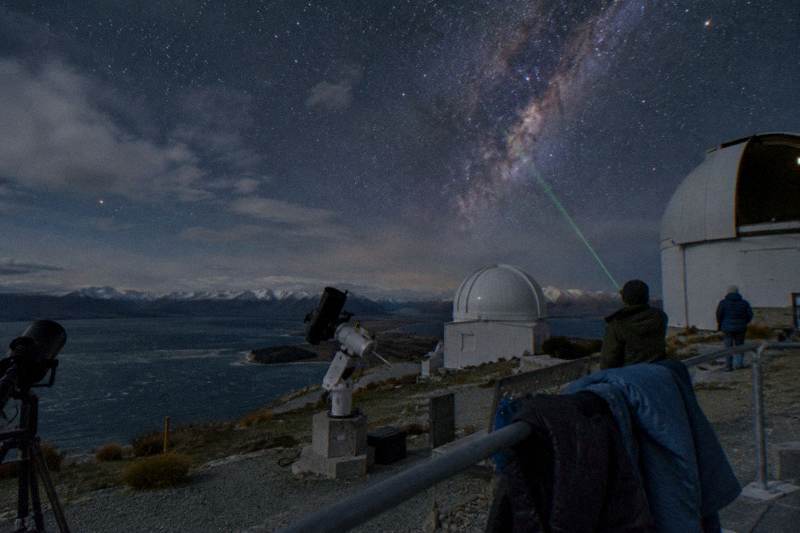
No month can honestly be named. Dark Sky Project, Tekapo Springs and the smaller Tekapo operators do not publish a best month for Aurora Australis, and Dark Sky Project states plainly that the Milky Way and Aurora Australis depend on conditions and are not guaranteed. Aurora is a space-weather event, not a seasonal feature of Lake Tekapo, so any calendar month claim would be invented. What the rest of this page does instead is explain what actually drives your chances, then how to book a night that maximises them.
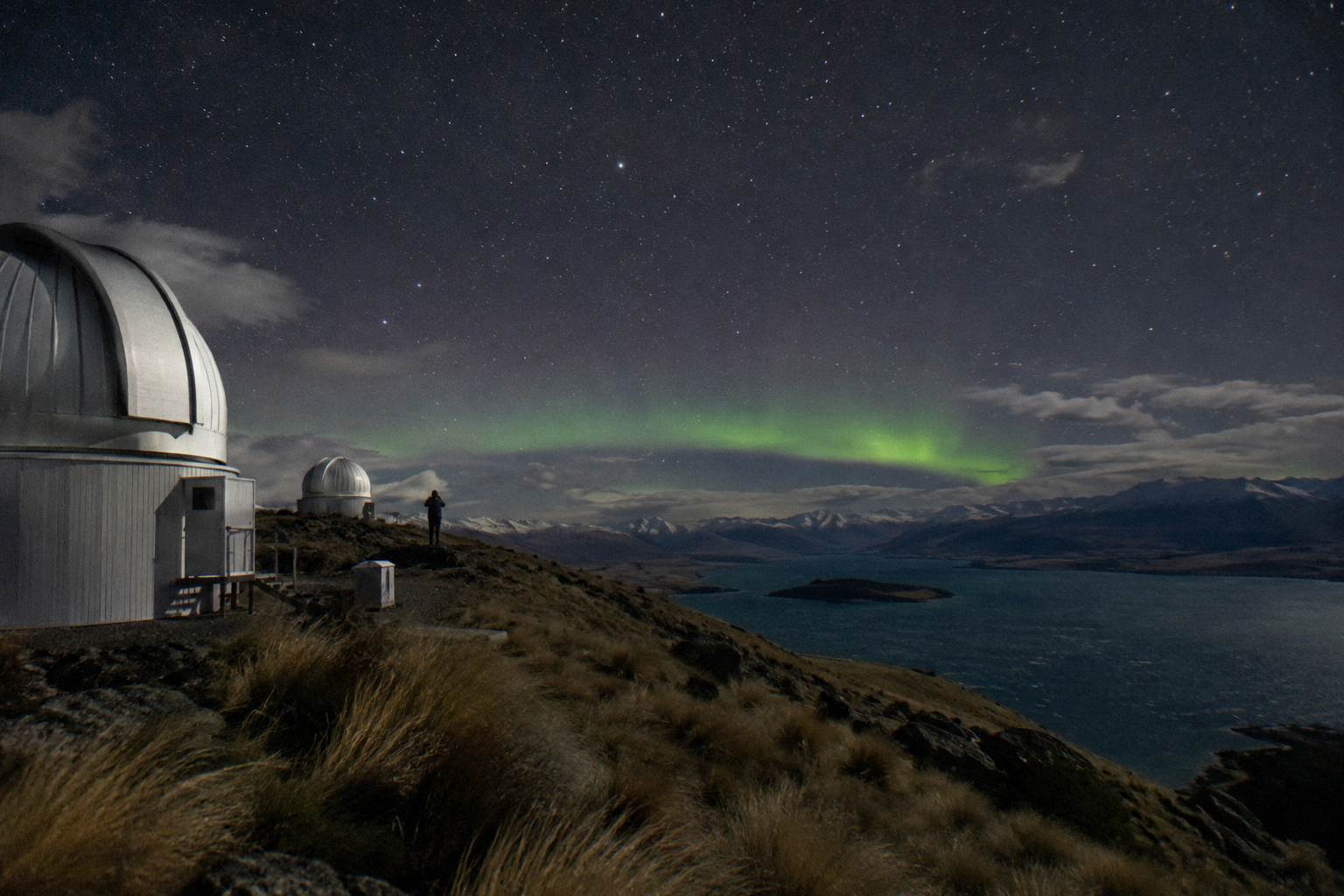
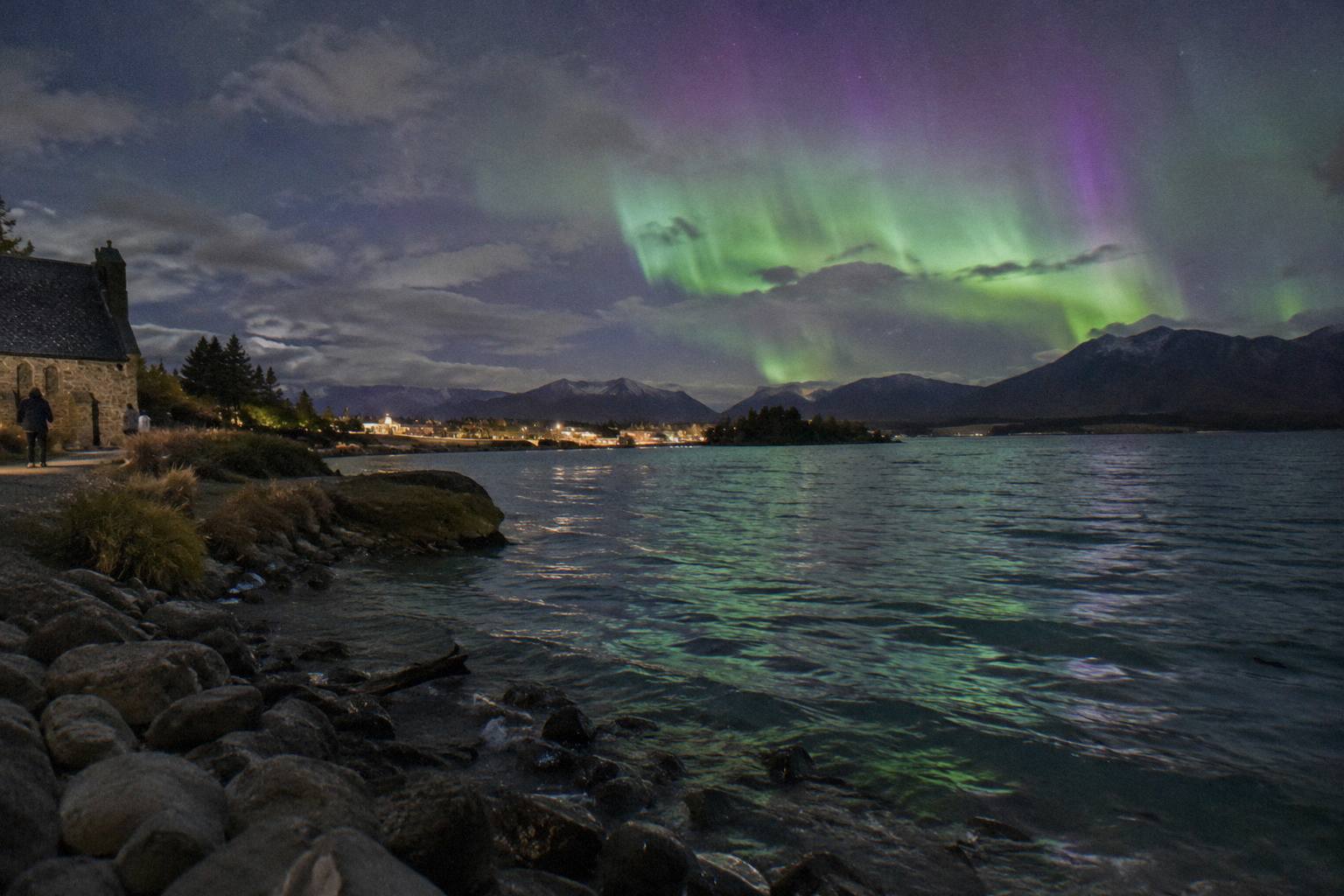
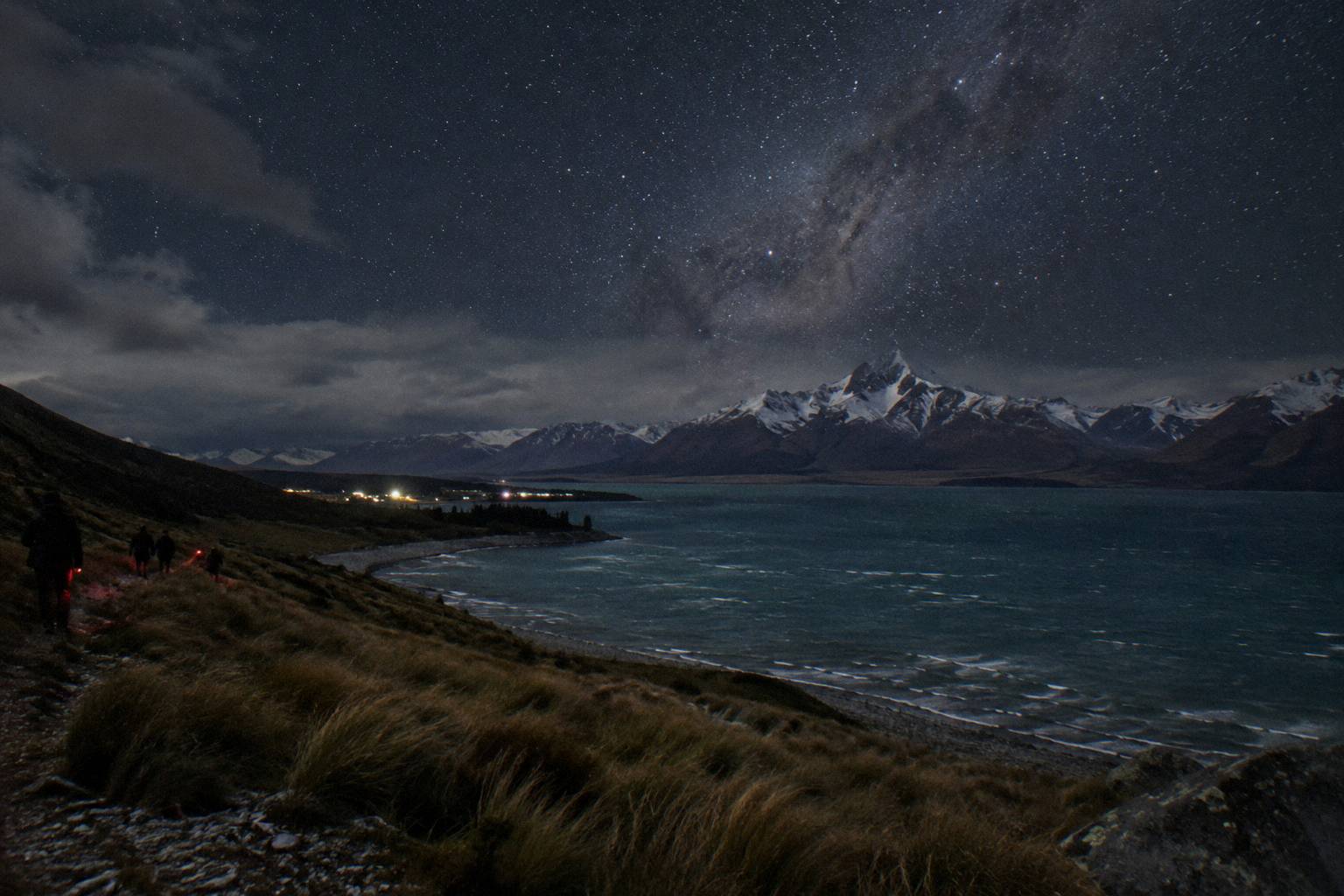
Aurora Australis, the Southern Lights, is the southern counterpart of the aurora borealis. Charged particles from the sun disturb Earth's magnetic field, and oxygen and nitrogen in the upper atmosphere emit green, red and violet light in response. Whether you catch a display from the shores of Lake Tekapo depends on solar activity, geomagnetic latitude, cloud cover, darkness and a fair amount of luck, in roughly that order of unpredictability. New Zealand sits far enough south that strong geomagnetic storms push the auroral oval into view, and the Mackenzie Basin's darkness makes faint glows visible that a city sky would erase entirely.
That darkness is not an accident. Lake Tekapo sits inside the Aoraki Mackenzie International Dark Sky Reserve, which Mt John Stargazing covers in depth elsewhere; the reserve was awarded status in April 2012 and comprises Aoraki/Mt Cook National Park and the Mackenzie Basin. The Mackenzie District Council runs lighting rules in its District Plan, shielding outdoor lights so they point downward and limiting their time and frequency. The result is a sky in which a geomagnetic storm has a fighting chance of being seen, whatever the month on the calendar.
This page is honest about the gap: the operators say aurora depends on conditions and is not guaranteed, and there the seasonal question ends. The decision content that follows is about everything you can actually control.
No single month can honestly be named as the best, because no operator-backed answer exists and any page that names one is guessing. The Southern Lights depend on solar activity rather than the calendar, so treat confident month rankings with skepticism and read specific month claims elsewhere as unverified filler. Dark Sky Project's own FAQ says the Milky Way and Aurora Australis depend on conditions and are not guaranteed, and Tekapo Springs publishes no aurora months either. The Southern Lights are driven by solar activity that no calendar predicts, so the honest question becomes: how do you book a night that gives luck the best possible surface to land on. That is a question about darkness, cloud and moonlight, and it has real answers.
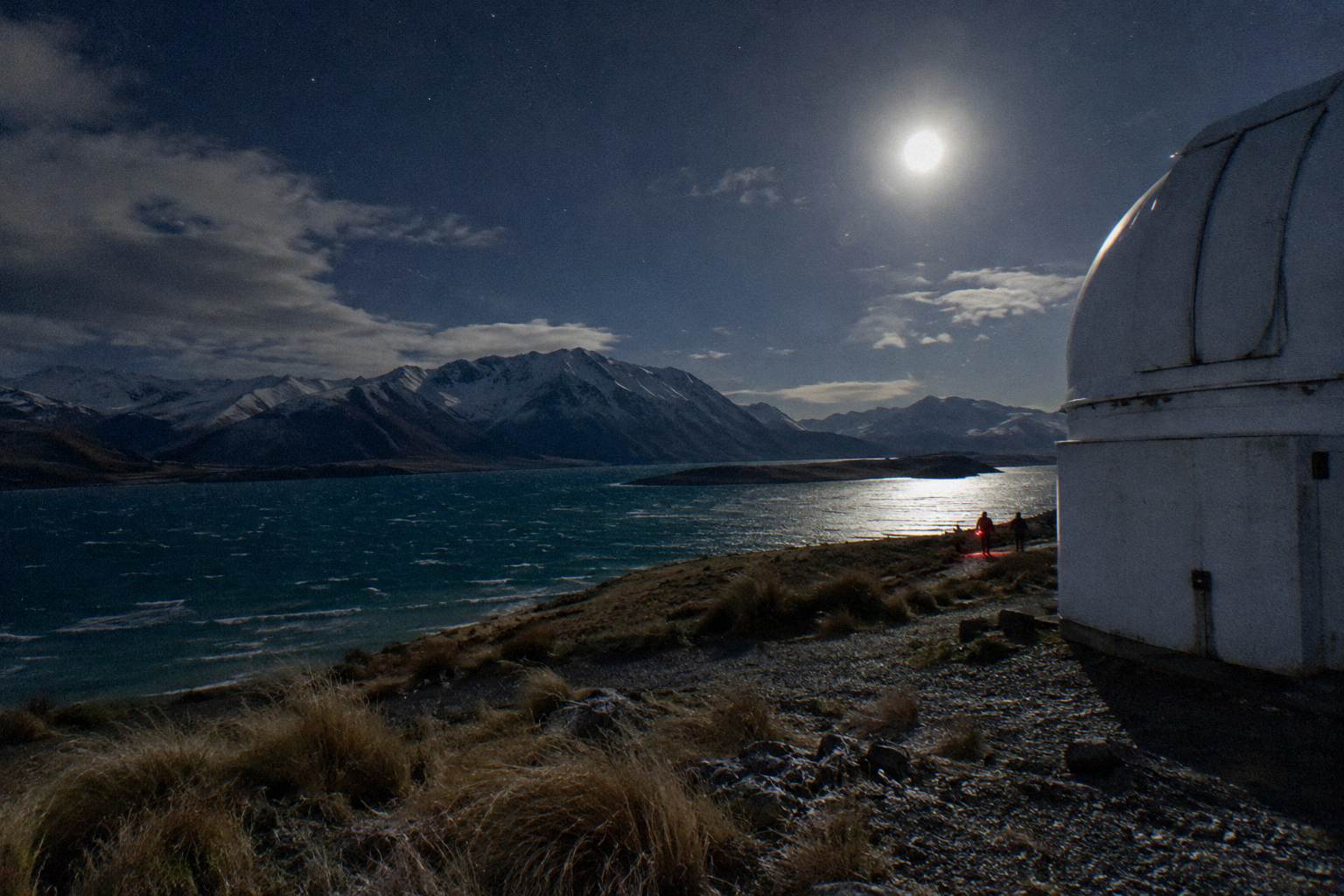
Start with what does not vary by month in the way people assume. Tekapo's darkness is year-round: the reserve's lighting rules apply in January as much as in July, and the Milky Way's core, the Southern Cross, the Magellanic Clouds and thousands of naked-eye stars are present every clear night. Tekapo Springs notes that telescopes still show bright objects around full moon and that full moon only reduces the naked-eye Milky Way, which means even a moonlit night delivers a sky worth seeing. Aurora is the one thing on the night's menu that arrives on its own schedule, governed by the sun, not by the season.
What does vary by month is practical. Nights are long in the New Zealand winter and short in summer, so a winter visit gives you more hours of darkness and, often, tours that start at clock times people find startling: Tekapo Springs' Soak in the Stars lists some tours beginning after midnight, with a 12:15am example, because midsummer darkness starts late. Daytime temperatures and the mountain chill differ too, and Dark Sky Project lends an Extreme Cold Weather jacket on its Summit Experience for exactly this reason. None of that changes aurora probability; it changes how much night you have and how comfortable you are standing in it.
So the month question dissolves into three better questions. How dark is the moon on your dates, which the moon phase alone answers? How likely is clear sky, which no operator will promise but which their weather pages help you think about? And how many nights are you staying, because a second or third night is the single most powerful thing you can add to an aurora chase. If you are planning the wider trip, the question of how many nights you need in Tekapo for stargazing is worth reading alongside this page, because the answer compounds exactly the way an aurora hunter wants it to.
It also helps to know which tours run when. Dark Sky Project's Summit and Crater experiences run seven days a week at times that vary with sunset through the year; Tekapo Springs' Soak in the Stars runs seven evenings a week from October to April and Thursday to Monday from May to September. Neither schedule is an aurora forecast, but both shape which nights you can actually be out under the sky.
Do The Operators Guarantee Aurora Or Publish Best Months?
No on both counts: the operators offer no guarantee that you will see the aurora, and they do not publish a list of best months either. They are refreshingly direct about this, telling prospective guests plainly that the Southern Lights are a natural phenomenon no one can promise, so sightings remain a matter of luck rather than any assured outcome. Dark Sky Project says it cannot guarantee clarity or celestial objects, that the Milky Way and Aurora Australis depend on conditions, and that the weather decision is made as close to tour time as possible. Tekapo Springs runs its tours in all weather and offers an indoor VR experience when cloud blocks the telescopes. Neither operator, nor any of the smaller Tekapo outfits, publishes a best aurora month, because such a month does not exist.
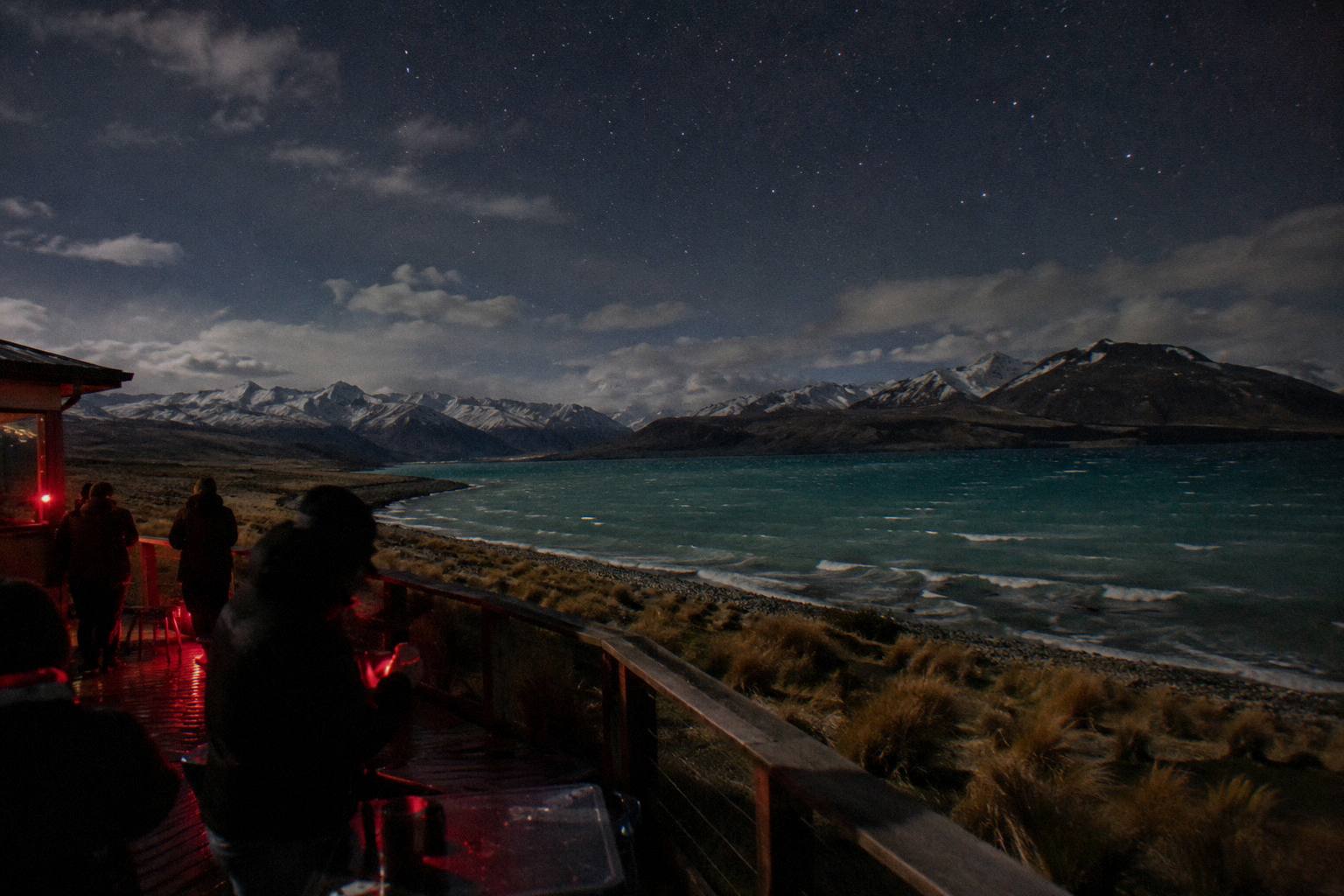
This matters more than it might sound. Some tourism copy around the world markets aurora as a seasonal certainty, and New Zealand is not immune to the temptation. The Tekapo operators largely resist it. Dark Sky Project's own weather page explains that cloud, moonlight and the sky itself cannot be guaranteed, and that if outdoor stargazing is not possible you are offered an indoor alternative such as the Virtual Stargazing Experience, a reschedule subject to availability, a gift voucher valid three years, or a full refund. That is a refund structure built around the sky's refusal to make promises, which tells you how the operator frames the question.
Tekapo Springs takes the opposite approach to the same problem: its tours run in all weather, and under cloud a VR indoor experience with 360 degree imagery, including the Church of the Good Shepherd and the Mt John summit, replaces the telescope viewing. Its FAQ also commits to a 25 percent refund per ticket if telescope viewing comes in under 30 minutes, for tours from 18 June 2026, excluding certain ticket types. Aurora is never part of the product on either operator's page; it is a possible guest, not a booked act.
For you as a planner, this collapses the month question into a booking question. Since no month is better on paper, the value of your booking lies in what happens when the sky misbehaves: Dark Sky Project offers alternatives, reschedules, vouchers or refunds decided near tour time, while Tekapo Springs always runs, with the VR fallback and the partial refund on thin telescope time. Choosing between those safety nets is a real decision, and it is one you can make with actual information rather than a guess about the sun.
There is one more category worth naming: the indoor, daytime Dark Sky Experience at the Dark Sky Project base, a 45-minute guided astronomy tour with no stargazing at all. It is not an aurora chase, but on a fully clouded-out day it keeps the sky part of your trip, with Māori astronomy and a restored 125-year-old Brashear telescope inside the building. Treat it as the weather-proof complement, never as a stargazing tour.
What Actually Drives Aurora Timing In New Zealand?
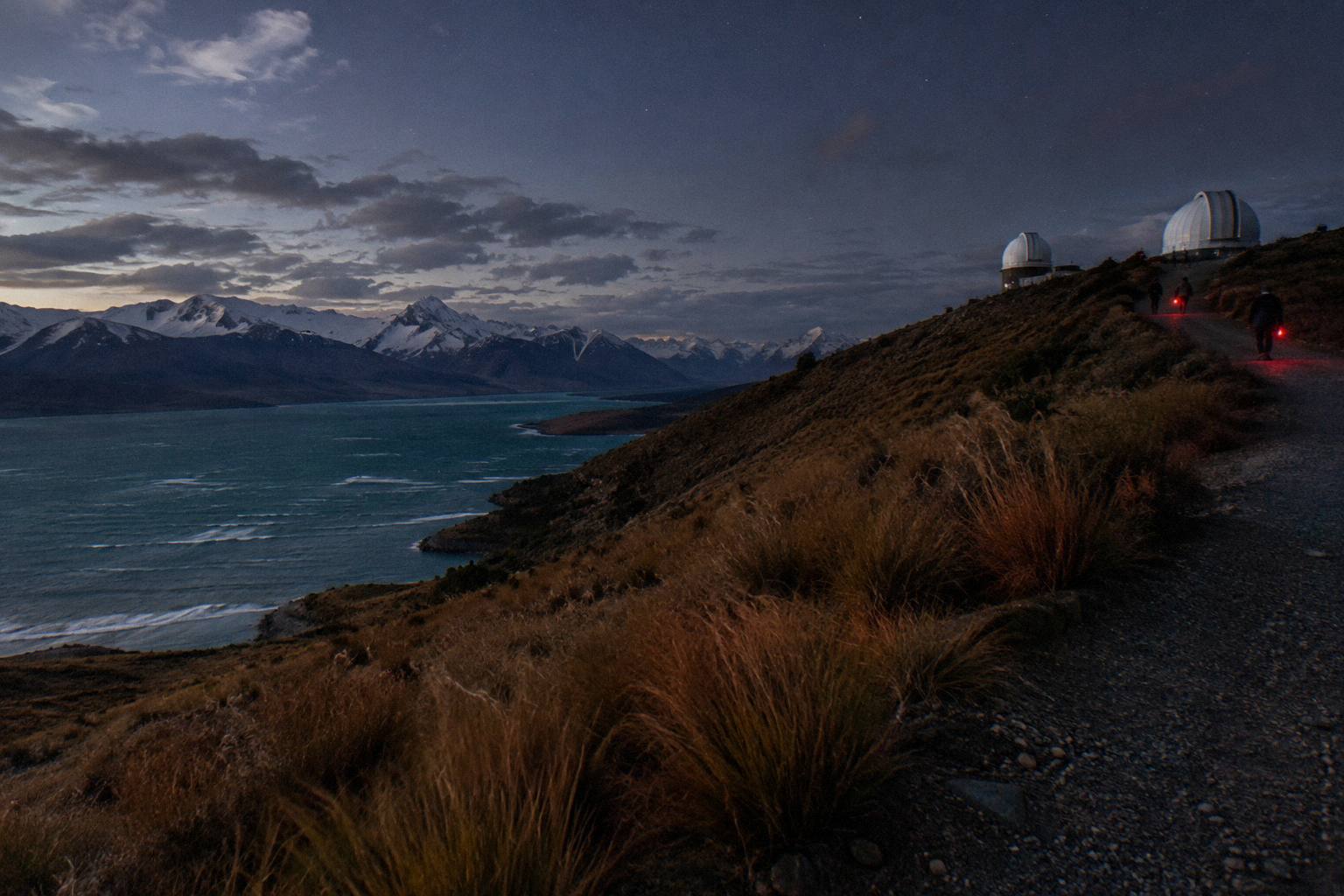
Aurora timing in New Zealand comes down to three factors working in combination: geomagnetic activity, darkness, and clear sky. None of these follow the calendar month, so the lights cannot be predicted by date alone, and no month on the calendar guarantees anything about when, or whether, the sky will light up. Aurora Australis becomes visible from New Zealand's South Island when solar activity pushes the auroral oval northward, which happens irregularly through the year and is forecast only days or hours ahead. What Tekapo adds is the darkness and the latitude to notice: inside the largest dark sky reserve in the Southern Hemisphere, a moderate display that a city would ignore can glow plainly over the lake.
The physics is worth sixty seconds because it kills the month myth permanently. The sun sheds charged particles constantly, and during coronal mass ejections and sustained high-speed solar wind streams, that flow intensifies. When it reaches Earth, the magnetic field funnels particles toward the poles, where they excite atmospheric gases at high altitude: green from oxygen, red from higher, thinner oxygen, violet and blue from nitrogen. Geomagnetic storm forecasts, expressed as Kp indices, rise and fall on timescales of hours to days. Nothing in that chain knows whether it is March or October.
What the calendar does control is your viewing window. Darkness lengthens through autumn and winter and shrinks toward Christmas, so the same aurora at the same intensity is simply visible for more hours in July than in January, and a tour that ends at midnight in winter may only just be starting then in midsummer. Tekapo Springs' seasonal schedule reflects this directly, with after-midnight departures listed for Soak in the Stars. The reserve's own story is tied to this darkness rather than to any aurora season: the operator's reserve page describes the designation covering Aoraki/Mt Cook National Park and the Mackenzie Basin, a landscape protected for its night sky every month of the year.
A practical reading of all this: pick your month for the trip you want, not for aurora. If you want long nights, mountain cold and snow-dusted hills, the New Zealand winter gives you hours of darkness and a landscape that photographs beautifully. If you want daylight for hiking and lupin-season colour, summer gives you both, at the cost of a shorter dark window and late tour starts. Either way, aurora probability is set by the sun on the night, not by your itinerary.
And whatever the month, spend at least one night standing under the reserve sky with a guide. The Mt John Summit Stargazing Experience, 1 hour 45 minutes at the University of Canterbury Mt John Observatory, is the deepest of the lakefront options, and you can read the full Mount John Observatory stargazing guide before committing. On the night, what the guide can show you is guaranteed only in the sense that the telescopes work; the sky chooses the programme.
Which Tekapo Tours Give You A Night Under The Sky?
Five booked experiences from Lake Tekapo put you beneath the reserve's night sky, and the right pick comes down to your budget, the ages in your group, and how much of the night you want to spend out there. Each one gets you under the stars, so match the option to your plans. Dark Sky Project runs the Summit Experience and the Crater Experience, plus the indoor Dark Sky Experience. Tekapo Springs runs Soak in the Stars, combining telescope viewing with a hot pool. Smaller operators, Chameleon Stargazing, Astro Tekapo and Silver River Stargazing, offer lakefront and alpine formats with prices on their booking pages.
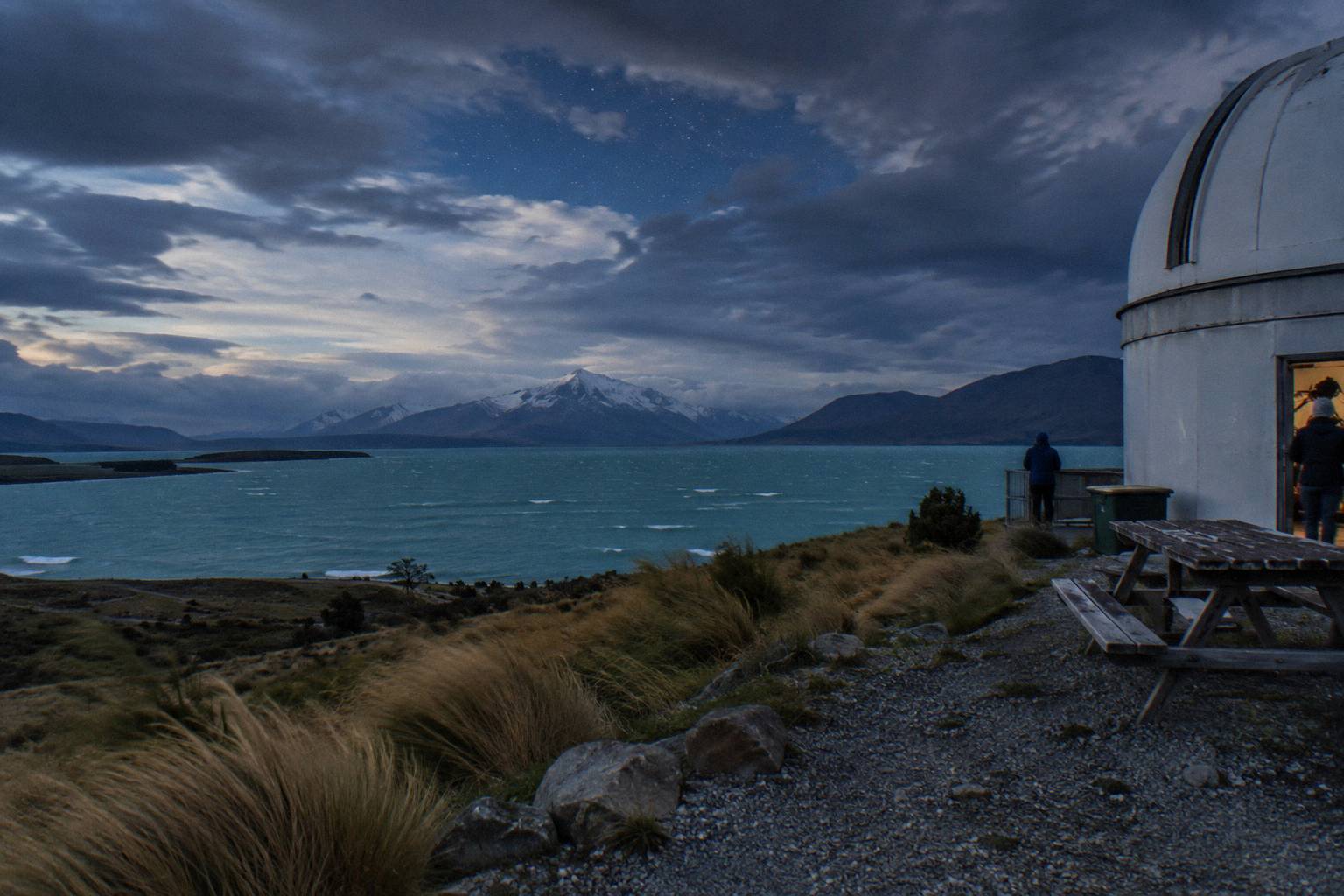
The Summit Experience is the flagship. For the operator's price of NZD 239, the same for adult and child, you get a 15-minute bus from the lakefront base to the summit of Mt John at 1,029 m, telescopes up to 16 inch inside a private dome at the University of Canterbury observatory, naked-eye guiding with handheld lasers, and the loan of an Extreme Cold Weather jacket. Minimum age is 10, total duration 1 hour 45 minutes, and the tour is rated 4.6 across 352 reviews. There is a 100 m gravel incline walk and a few steps in the dark, so moderate fitness is needed. Tātai Aroraki, Māori astronomy, is woven through the guiding alongside Western astronomy.
The Crater Experience is the family and accessibility play. It runs at Cowan's Private Observatory, a 5-minute drive from the base, in purpose-built observation craters sheltered from wind and light, with 14 inch telescopes or the observatory dome. It lasts 75 minutes including transport, the operator's price is NZD 139 adult and NZD 99 for children aged 5 to 17, with a family pass at NZD 377 for two adults and two children, and the minimum age is 5. Wheelchair users can join but must drive their own vehicle to Cowan's. It is rated 4.6 across 93 reviews.
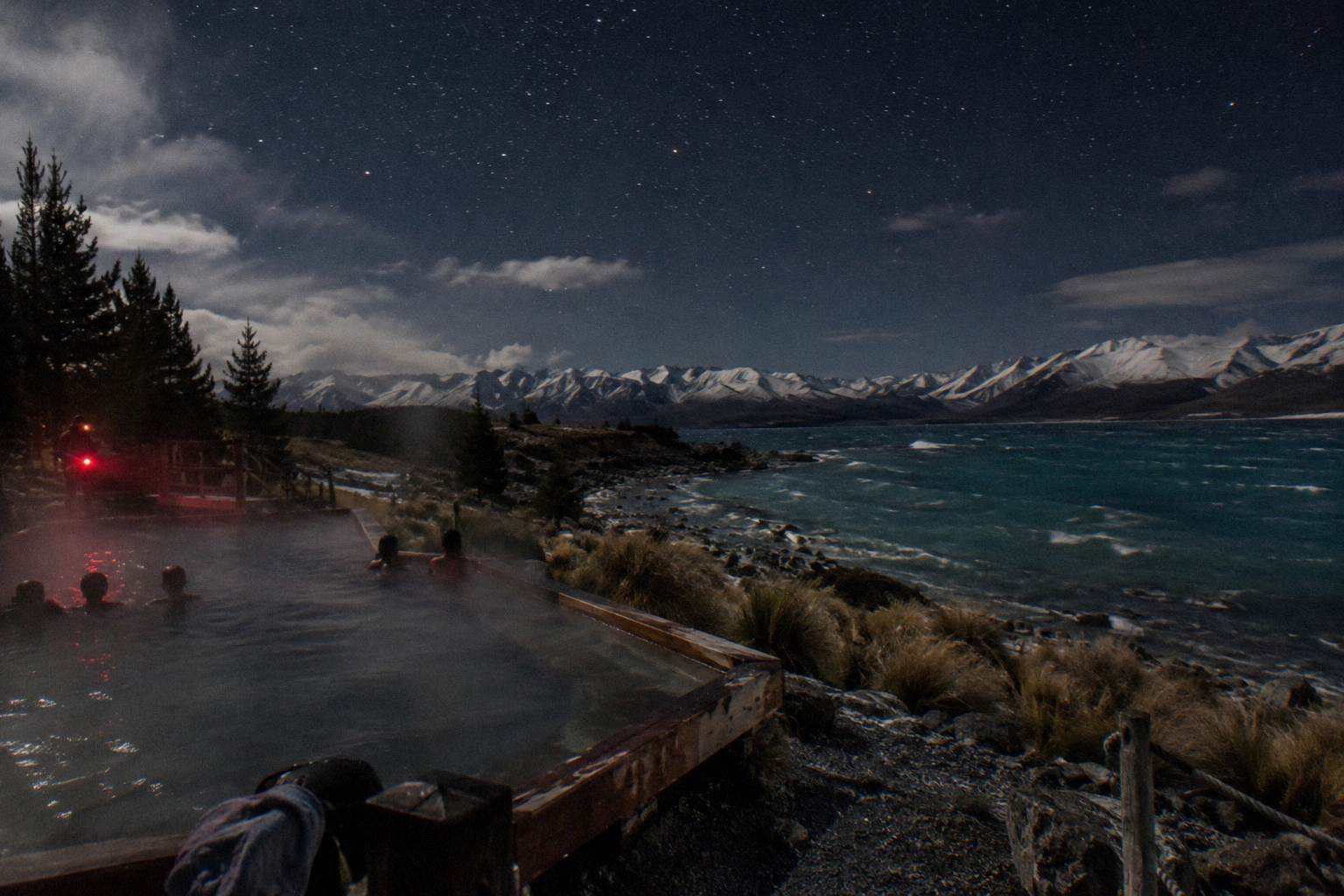
Soak in the Stars, at Tekapo Springs, splits its 90 minutes between guided telescope viewing and an exclusive hot pool at 37.5 to 38.5 degrees Celsius with the guide poolside, including towels, robes, hot drinks and warm poncho coats. The operator's price is NZD 179 adult, NZD 159 senior or student, NZD 115 child and NZD 499 for a family, minimum age 10. It is the only option that builds warmth into the night itself, which on a cold Mackenzie evening is a genuine decision factor. The site's Tekapo Springs stargazing and hot pools guide compares the two Tekapo Springs formats in detail.
| Tour | Operator | Duration | Operator price (NZD) | Min age | If cloud rolls in |
|---|---|---|---|---|---|
| Summit Experience | Dark Sky Project | 1 hour 45 minutes | 239 adult and child alike | 10 | Indoor alternative, reschedule, voucher or refund, decided near tour time |
| Crater Experience | Dark Sky Project | 75 minutes incl. transport | 139 adult, 99 child (5-17), 377 family (2+2) | 5 | Same weather terms as Summit |
| Soak in the Stars | Tekapo Springs | 90 minutes | 179 adult, 159 senior or student, 115 child, 499 family | 10 | Runs in all weather; VR replaces telescope viewing |
| Dark Sky Experience (indoor) | Dark Sky Project | 45 minutes | 59 adult, 39 child, 157 family (2+2) | None stated | Indoors and daytime; no stargazing |
| Astro Tekapo Lakefront Stargazing | Astro Tekapo | 1.5 hours | On the booking page | 6 | Not stated; ask the operator |
Two cautions on that table. First, the smaller operators publish no prices and, in most cases, no ratings, so for those cells the booking page carries the detail. Second, per-tour figures never transfer: a duration or age limit stated for one product says nothing about another, even from the same operator.
The Mount John Summit tour page gives the full rundown of the flagship experience, and you can also check availability once your dates firm up. Aurora will not be on the itinerary either way; a superb night sky will be.
Beyond Tekapo itself, the Mackenzie Basin adds options that suit an aurora-hunting road trip. The Twizel Stargazing Tour With An Astronomer runs 75 minutes from Twizel with a minimum age of 6, and Silver River Stargazing runs a Mt Cook Experience from the Tasman Glacier car park. The basin's darkness is continuous; a display over Tekapo is a display over Twizel too.
How Does Weather And Cloud Shape Your Chances?
Cloud is the single factor that most often deletes an aurora night, and it is the one no operator can promise away. Even a strong display stays hidden behind cloud, so watch local forecasts, keep your plans flexible, and treat any break in the sky as your real window of opportunity. Dark Sky Project cannot guarantee clarity, decides close to tour time whether outdoor stargazing will happen, and asks you to check in 15 minutes early for the update. Tekapo Springs runs regardless, substituting its VR indoor experience under cloud. A perfect geomagnetic storm behind a solid overcast is invisible, which is why multi-night stays beat any month choice.
The honest way to think about Tekapo cloud is probabilistically and without invented averages. No verified figure for clear nights per month exists in the operator material, so nothing of that kind is stated here. What the operators do publish is the decision structure: Dark Sky Project's weather page tells you the call is made as close to tour time as possible and lists the fallbacks, an indoor alternative, a reschedule subject to availability, a gift voucher valid three years, or a full refund. Direct bookings can be cancelled up to 24 hours before for a full refund; inside 24 hours the full price applies, and late check-in earns no refund.
The two operators' models suit two kinds of traveller. If your whole evening is about the sky and you would rather reschedule to a better night, Dark Sky Project's refund-or-reschedule structure fits: book early in your stay so a washout can roll forward. If you are travelling with people whose priority is the experience, the warm pool, the robes, the hot drinks, Tekapo Springs' always-run model means the evening happens regardless, with the VR show standing in for the telescopes and the 25 percent per-ticket refund if telescope time falls under 30 minutes. Neither model finds you an aurora; both decide what a cloudy night costs you.
| Weather situation | Dark Sky Project (Summit, Crater) | Tekapo Springs (Soak in the Stars) |
|---|---|---|
| Clear sky | Outdoor stargazing proceeds | Telescope viewing then hot pool |
| Cloud near tour time | Indoor alternative, reschedule, voucher or full refund | Tour runs; VR indoor experience replaces telescopes |
| Under 30 min of telescope viewing | Not stated as a refund trigger | 25 percent refund per ticket, tours from 18 June 2026 |
| Cancellation by you, direct booking | Full refund up to 24 hours before | Full refund, date change or voucher up to 24 hours before |
| Groups of 10 or more | No refunds inside 72 hours (Summit, Crater) | Not stated; ask the operator |
One structural point helps an aurora hunter more than any forecast: Tekapo's weather can differ from the surrounding basin, and a night that is overcast at the lake can be clear an hour away, and vice versa. The basin tours from Twizel, Mt Cook and Pukaki therefore double as weather hedges for a multi-night itinerary, though their own booking pages carry their terms. If a clouded-out Tekapo night leaves you stuck, the site's page on Tekapo stargazing cancelled for cloud and weather works through every fallback in order.
The last weather factor is the one people forget: the moon. Brighter moonlight washes out fainter stars and galaxies, as Dark Sky Project's weather page notes, though the operator also says the moon is itself a good target, and Tekapo Springs adds that telescopes still show bright objects around full moon. For faint aurora, darkness is your friend; a strong storm outshines the moon anyway. The practical rule is to prefer dates near a new moon when you have the choice, without treating full-moon nights as worthless.
Planning Your Aurora Night Without A Calendar Crutch
Plan around three factors you can control, in this order: the moon phase, your tour schedule, and how many nights you spend in town. Choose dates when the moon works in your favor, fit the tour around those nights, and stay long enough that the sun can handle the rest. The moon's phase is published years ahead, so you can pick dates near a new moon with total confidence. Tour schedules are published per operator per season, so you can confirm which evenings you can be out. Nights in town are your own choice, and each extra night multiplies your chances of catching whatever the sky delivers.
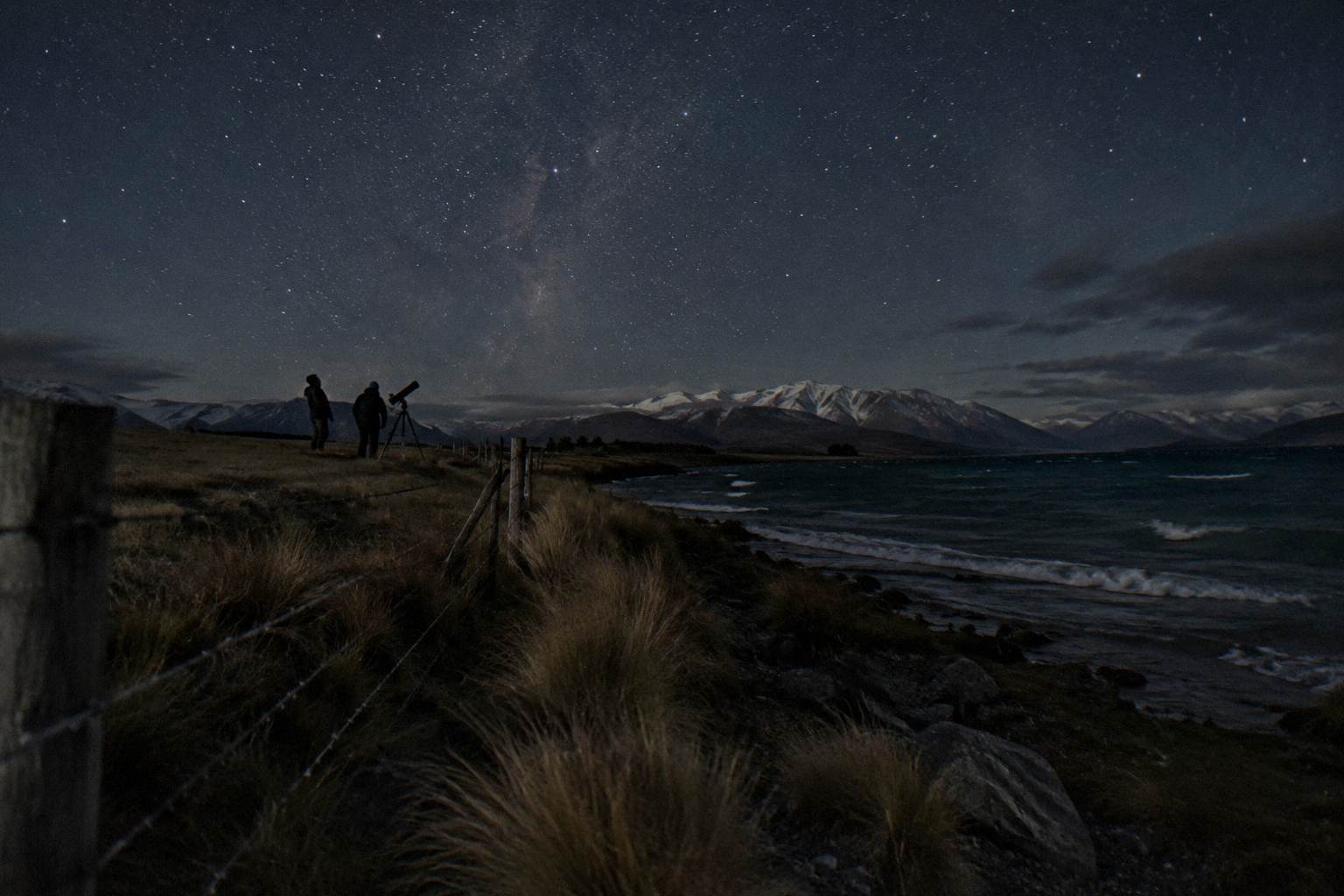
Start with the moon. The site's new moon or full moon comparison works through the trade-off in full, but the short version is that around new moon the sky is at its darkest, faint aurora is at its most visible, and the Milky Way's structure is at its most detailed. Around full moon, telescopic targets survive, faint glows do not. Since you cannot pick your geomagnetic storm, pick your darkness.
Then pick your format. The Crater Experience, 75 minutes at Cowan's Private Observatory with the operator's price from NZD 99 for a child aged 5 to 17, is a good first night: shorter, cheaper, sheltered from wind, and friendly to younger families. The Summit Experience is the deeper commitment, at NZD 239 with the same price for adult and child, minimum age 10, and the 100 m gravel walk in the dark. Soak in the Stars suits anyone whose second priority is warmth. If a solo card helps you weigh the middle option, here it is.
Then layer in the practical details that trip people up less often than the aurora question but matter more on the night. Book the stargazing for your first evening in town, not your last, so a weather reschedule is possible; Dark Sky Project's 24-hour direct cancellation window makes early booking low-risk. Check in 15 minutes early, which is when the weather update lands. Dress for the cold regardless of season, since a mountain night at 1,029 m nears the lake's winter extremes even in autumn; the site's guide to what to wear covers layers, and the Summit Experience's loan of an Extreme Cold Weather jacket is included in that tour only.
| Planning lever | What you control | What it buys you |
|---|---|---|
| Moon phase | Dates near new moon | Darker sky; faint aurora and Milky Way detail more visible |
| Booking slot | First night of your stay, not last | Room to reschedule if cloud decides against you |
| Nights in town | Two or three rather than one | More chances for whatever the sun sends |
| Tour format | Summit, Crater, hot pools or lakefront | Warmth, depth, age fit and budget fit |
| Cancellation window | 24 hours before, direct with the operator | Full refund or change if plans shift |
Finally, on the night itself: watch the sky from the lakefront while you wait, since the reserve's darkness makes even unaided eyes useful, and remember that aurora, when it comes, can be a faint grey-green glow to the eye that photographs far more colourfully than it appears. That asymmetry between eye and camera is a well-known feature of aurora viewing, and it is why the site's pages on Tekapo astrophotography tours and camera settings exist. None of this depends on the month. All of it depends on being there, under darkness, with enough nights to let the sky perform.
What Trips People Up When Chasing The Southern Lights
Most disappointing Tekapo aurora trips come down to four fixable mistakes: treating the southern lights as a seasonal attraction, gambling on a single night's stay, overlooking where the moon sits in its cycle, and misreading the weather terms that actually matter for clear, dark skies. Every one of them is avoidable with information the operators themselves publish, and none of them is fixed by choosing a different month. The first mistake is the premise of this page, so it deserves the plainest statement: no operator names an aurora month, and any claim you see elsewhere that a particular month is best for the Southern Lights from New Zealand is not sourced from the people who actually run the tours.
The single-night booking is the second. Aurora is intermittent by nature, and so is clear sky; a traveller who gives Tekapo one evening has stacked two low-probability events on top of each other. Two or three nights, with the stargazing booked on the first, converts luck into repetition. The moon is the third: a full-moon week dims exactly the faint displays a first-time aurora hunter is hoping for, and the phase is knowable months in advance. Weather terms are the fourth: travellers sometimes assume a cloudy night is automatically refunded, when Dark Sky Project instead offers an indoor alternative, a reschedule, a voucher or a refund, and Tekapo Springs simply runs the tour with the VR substitute. Knowing which model you have bought changes what a cloudy evening feels like.
A fifth, quieter trap is treating aurora as the point of the night. The reserve's sky delivers the Milky Way, the Southern Cross, the Magellanic Clouds and telescope views of planets and clusters on every clear night, and a visitor who arrives fixated on one phenomenon can leave without noticing they had a world-class sky anyway. Book the tour for the sky; let the aurora be the bonus. That framing is not a consolation prize, it is how the operators themselves present their nights, with Tātai Aroraki and Western astronomy woven through the guiding rather than a promise of any single object.
Common Questions About The Southern Lights From Tekapo
What Month Is Best To See The Southern Lights From Tekapo?
No month is published as best, and none can honestly be named. The operators do not guarantee aurora and state that Aurora Australis depends on conditions. Plan around moon phase, cloud and the number of nights you stay rather than the calendar month.
Can The Tekapo Tours Guarantee I Will See Aurora Australis?
No. Dark Sky Project says the Milky Way and Aurora Australis depend on conditions and are not guaranteed, and Tekapo Springs makes no aurora promise either. The tours guarantee guiding, telescopes and the reserve's darkness, not the sky's programme.
Does Full Moon Ruin Aurora Viewing From Tekapo?
Not necessarily. Brighter moonlight affects fainter stars and galaxies, so a faint aurora is harder to see, but Dark Sky Project notes the moon is itself a good target and Tekapo Springs says telescopes still show bright objects around full moon. A strong display outshines the moon.
What Happens If It Is Cloudy On My Tour Night?
Dark Sky Project decides close to tour time and offers an indoor alternative, a reschedule subject to availability, a gift voucher valid three years, or a full refund. Tekapo Springs tours run in all weather, with an indoor VR experience replacing telescope viewing under cloud.
Which Tour Should I Book For The Best Chance Of A Dark Sky?
The Mt John Summit Stargazing Experience puts you at the University of Canterbury Mt John Observatory, 1,029 m above the lake, for 1 hour 45 minutes, from NZD 239 with the operator's adult and child price the same, minimum age 10. The Crater Experience and Soak in the Stars are shorter, cheaper alternatives with different strengths.
Do I Need A Tour To Try To See The Southern Lights?
No. The reserve's darkness is free to stand under, and the lakefront away from village lights works on any clear night. A tour adds telescopes, guiding, shelter, transport and a structured fallback if cloud arrives. The site's page on free stargazing around Lake Tekapo covers the DIY option.