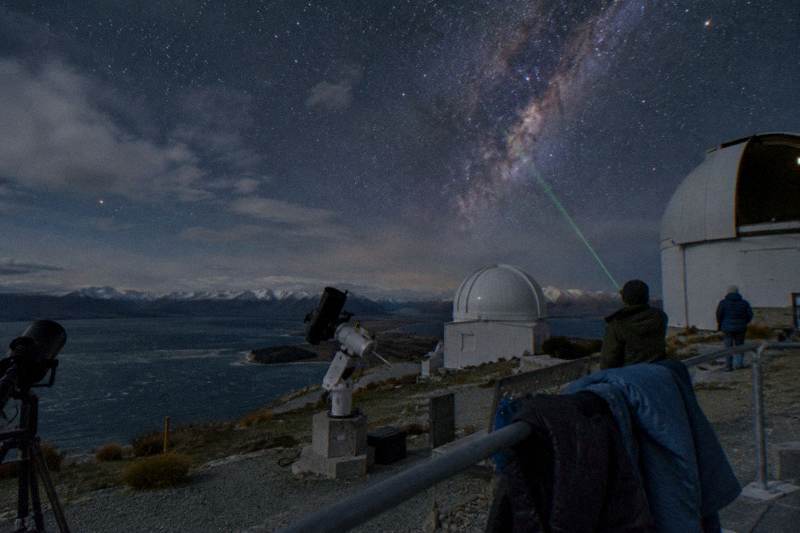
Astro Cafe At Mount John: Coffee Before Or After A Stargazing Tour
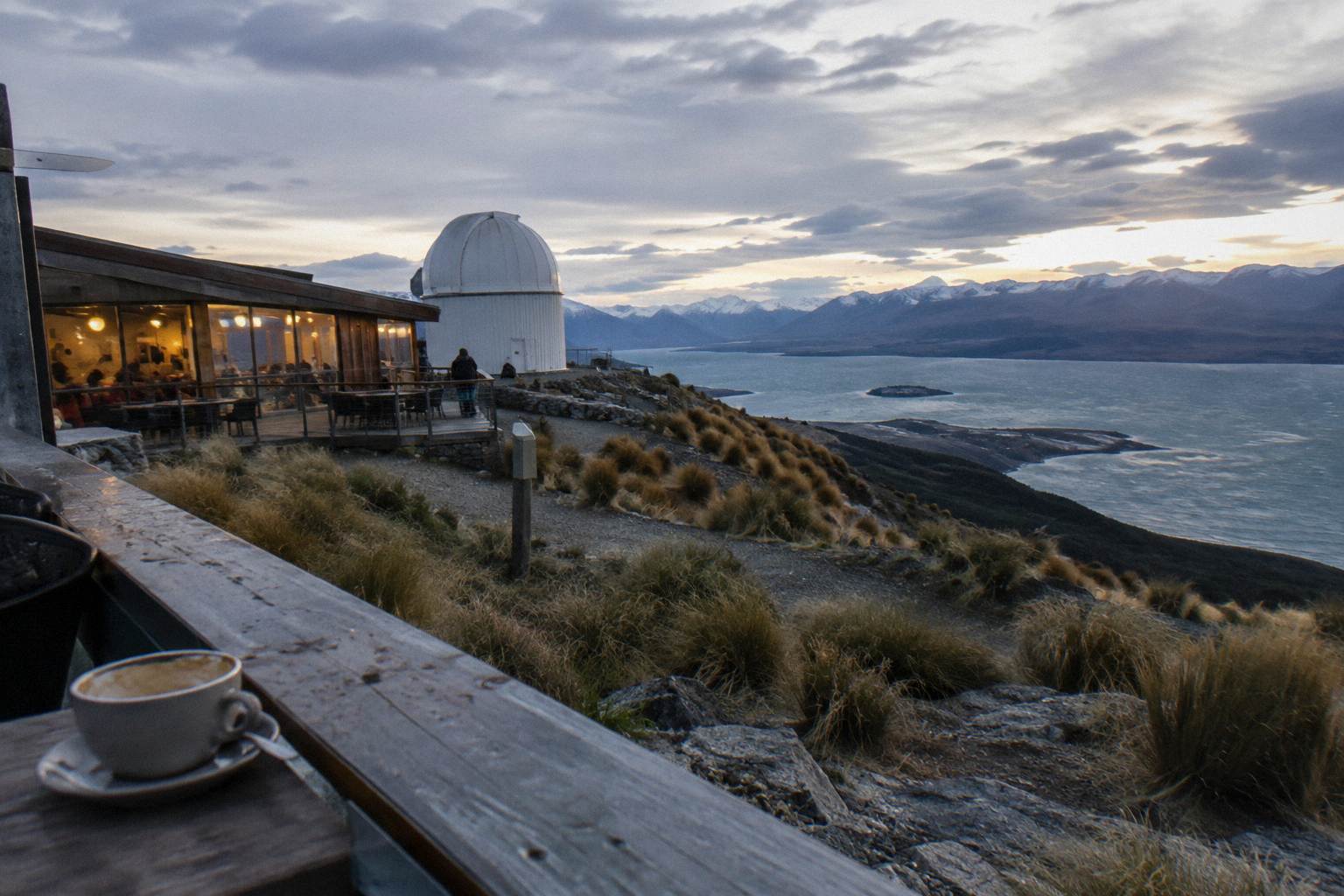
The Astro Cafe sits on the summit of Mount John, 1,029 m above Lake Tekapo, inside the University of Canterbury's research observatory grounds. It is open daily from 9am to 4pm, reached by a toll road or an 8.9 km walking track, and it is the natural daytime half of a stargazing day in the Aoraki Mackenzie International Dark Sky Reserve.
Short answer
The Astro Cafe at Mount John is open daily from 9am to 4pm, and the access road keeps the same hours. The road user fee is NZD 14 per vehicle at the gate, vehicles over 12 seats are not permitted, and the road closes in some weather. A night stargazing tour does not use the road gate.
If you are planning the full experience, start with the Mount John Observatory stargazing overview for the night side of the mountain.
| Quick fact | Detail |
|---|---|
| Cafe | Astro Cafe, Mt John summit |
| Hours | Daily, 9am to 4pm |
| Access road hours | Daily, 9am to 4pm |
| Road user fee | NZD 14 per vehicle at the gate |
| Large vehicles | Vehicles over 12 seats not permitted |
| Walking track | Summit Circuit track, 8.9 km return |
| Elevation | 1,029 m |
| Weather | Road and cafe closed in some weather |
| Night tours | Travel by bus, not through the day gate |
What Is The Astro Cafe At Mount John?
The Astro Cafe is a small cafe sitting on the summit ridge of Mount John at 1,029 m, inside the grounds of the University of Canterbury Mt John Observatory, and it is the only cafe in New Zealand perched beside a working professional research observatory. Dark Sky Project's cafe page records its daily hours as 9am to 4pm. It serves as the daytime anchor of a visit that most people otherwise make at night.
The observatory around it is described by the University of Canterbury as New Zealand's largest professional research observatory, officially opened in 1965, with four research telescopes including the 1.8 m MOA telescope operated in partnership with Osaka University. The cafe occupies a modest building on the summit, and the mountain itself carries two names: Dark Sky Project's own cafe page gives the Māori name Ōtehīwai Mount John, while the University writes Mt John Observatory. Both refer to the same summit above Lake Tekapo.
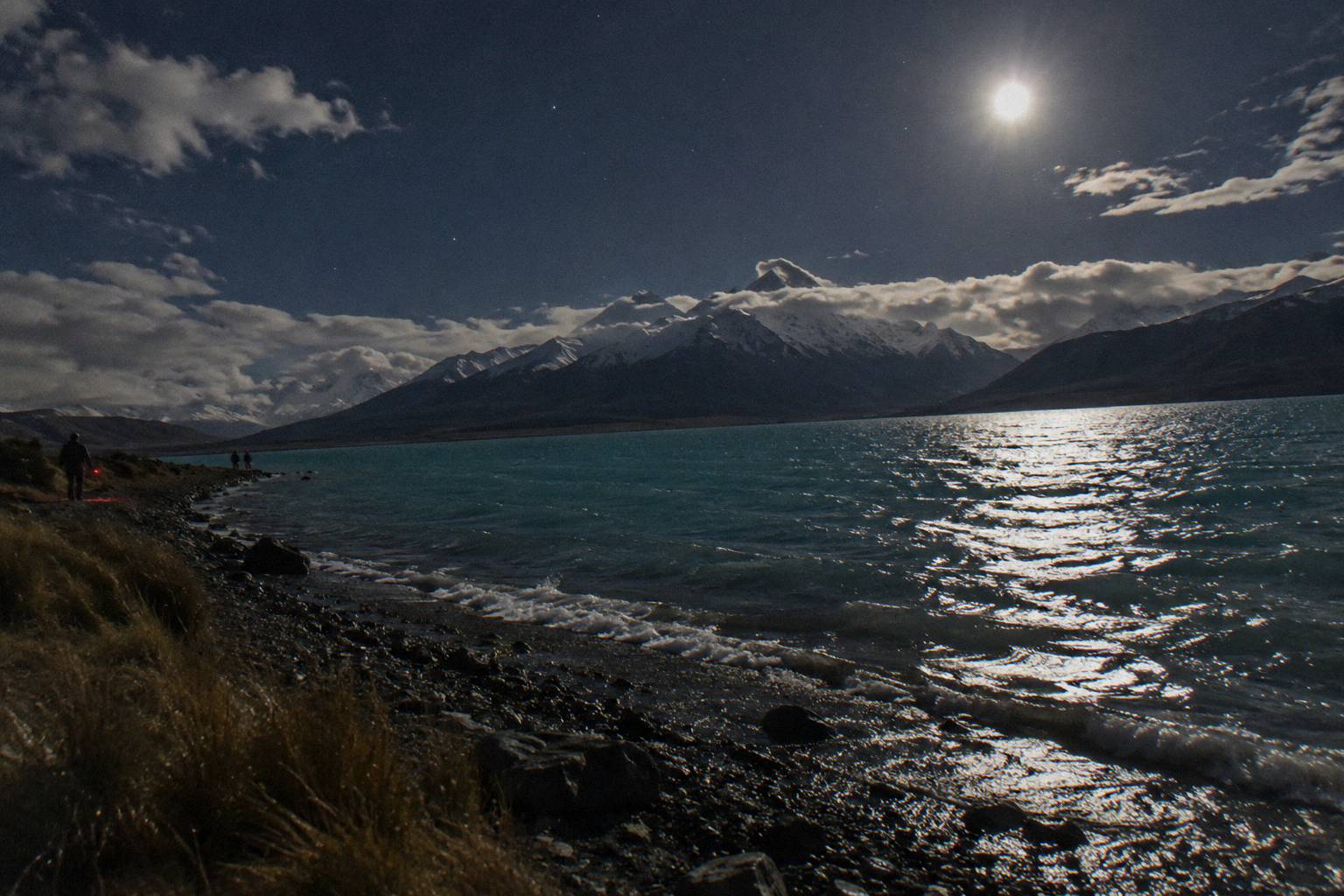
What makes the cafe worth the trip is the setting rather than the size. From the summit you look straight down on the milky-turquoise water of Lake Tekapo, across the Mackenzie Basin and, on clear days, toward the Southern Alps. The whole area lies inside the Aoraki Mackenzie International Dark Sky Reserve, the largest dark sky reserve in the Southern Hemisphere, awarded reserve status in April 2012. Daytime visitors therefore stand inside the same protected sky corridor that draws stargazers after dark, which is exactly why the cafe pairs so naturally with a night tour.
Dark Sky Project, the operator based on the lakefront at 1 Motuariki Lane, Takapō (Tekapo), runs the cafe alongside its stargazing experiences. The company was founded in 2004 as Earth & Sky, welcomes over 45,000 visitors a year, and became a Ngāi Tahu Tourism partner in 2016. Its base building on the lakefront, with the large observatory dome, is where all of its experiences depart from, and it sits between the Four Square and the YHA.
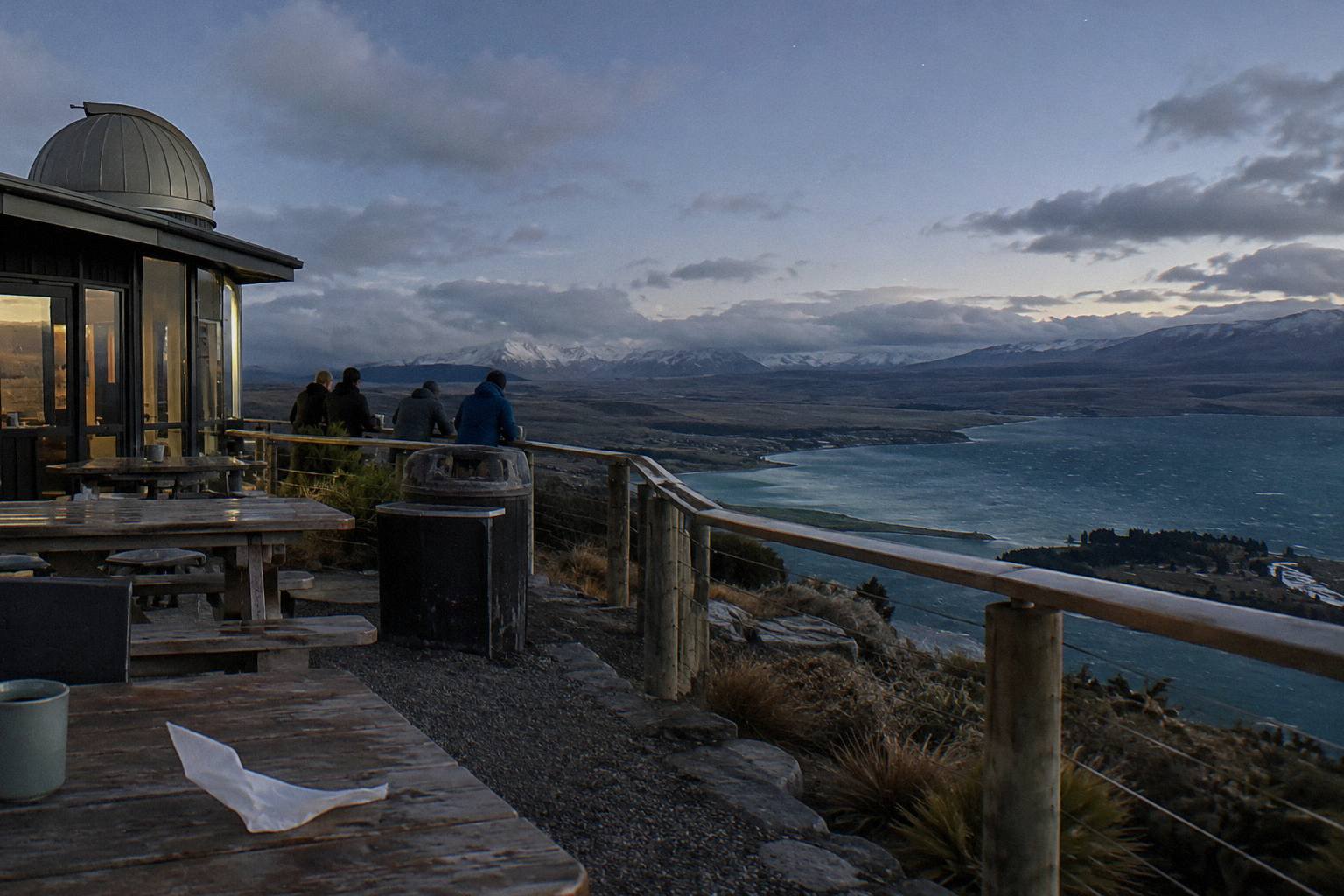
A useful way to think about the mountain is as two products sharing one summit. By day, the cafe and the road are open to anyone willing to pay the gate fee or walk the track. By night, the summit belongs to guided stargazing groups, including the Mt John Summit Stargazing Experience, which the operator rates 4.6 across 352 reviews. The cafe is the daytime half; the dome and the telescopes are the night half.
Can You Drive Up To Mount John Observatory?
Yes, you can drive to the summit in your own vehicle between 9am and 4pm daily, and the road user fee is NZD 14 per vehicle, collected at the gate. Vehicles over 12 seats are not permitted on the road at all, and the road closes in some weather. Outside those hours the gate is shut, and the summit is reached only by guided tour transport or on foot.
The road is a sealed but narrow and winding climb from the Lake Tekapo village side of the mountain, and the gate at the bottom controls both entry and timing. The hours matter more than first-time visitors expect: the road and the cafe share the same 9am to 4pm window, so a late lunch is not an option, and the last practical entry is well before 4pm if you want time at the top. The details above come from the operator's Astro Cafe page, which also notes the weather caveat.
The 12-seat vehicle limit is aimed at coaches and large vans rather than family cars, and it exists because the road has limited passing and turning space near the working observatory. If you are travelling in a campervan or a large hired vehicle, check your vehicle's seat configuration before counting yourself under the limit. Anyone driving should also expect the road to be closed outright in some weather conditions, which in practice means snow and ice in winter; the operator's page states the closure plainly without publishing a calendar of closure days.
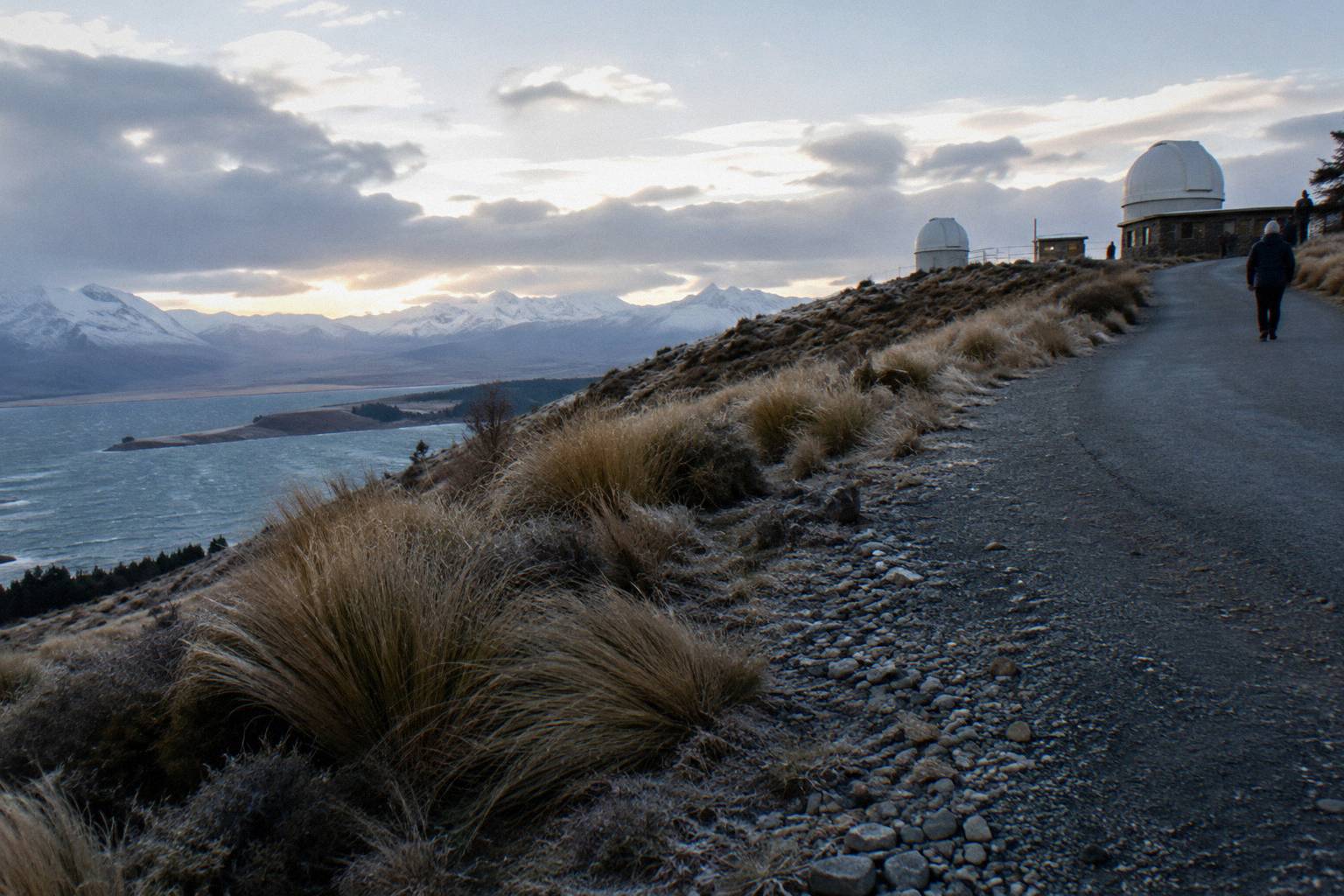
There is a separate question tucked inside this one, namely whether the night tours use this road and this gate. They do use the road, but not the day-gate arrangement: stargazing guests check in at the Dark Sky Project base on the lakefront 15 minutes before their tour and are taken up by a 15-minute bus ride to the summit and back as part of the Mt John Summit Stargazing Experience. You cannot drive yourself up for a night visit, and you should not plan to wait in the cafe car park until the stars come out, because the day gate closes at 4pm.
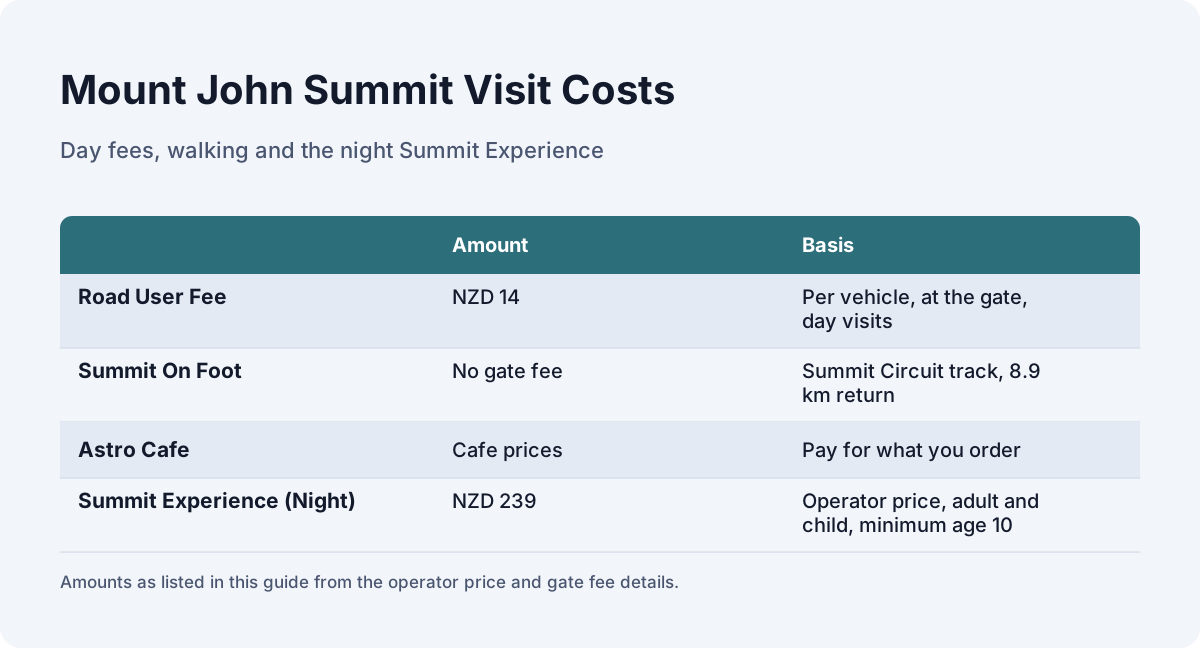
For the numbers that matter to a day visit, the infographic below gathers the cafe's hours, the fee and the walk in one place.
How Much Does A Visit To The Mount John Summit Cost?
A day visit by car costs the NZD 14 per vehicle road user fee at the gate, and nothing further is required to stand on the summit and take in the lake view. Walking the Summit Circuit track instead costs no gate fee at all. The cafe sells food and drinks at cafe prices, and Dark Sky Project's operator price for the night Summit Experience is NZD 239 per person, adult and child alike.
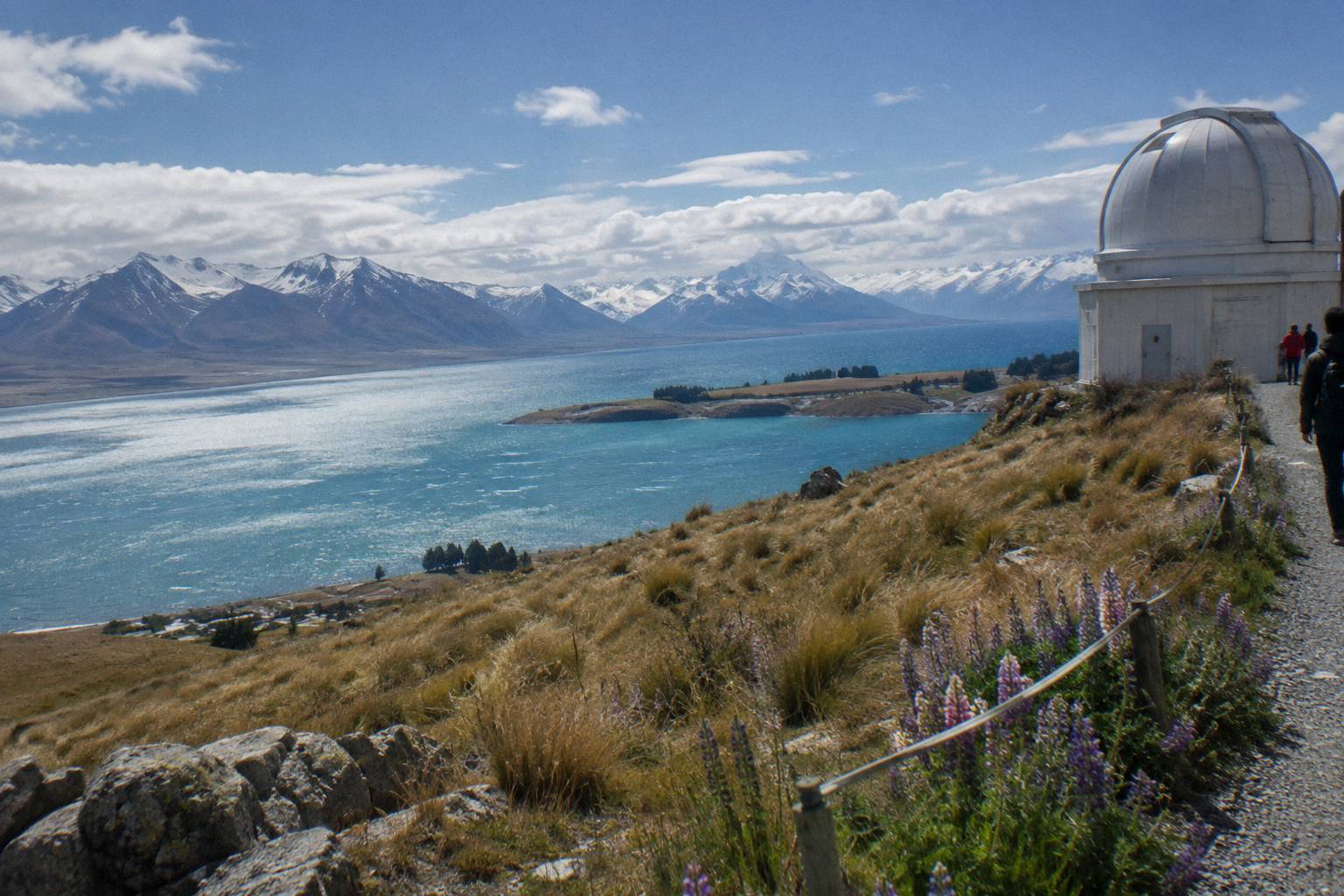
It is worth separating the three costs cleanly, because they get muddled in travel forums. The road fee is per vehicle, not per person, so a car carrying four people pays NZD 14 once at the gate. The cafe is a normal commercial cafe: you pay for what you order, and no minimum spend or entry charge applies to the summit itself. The night tour is a separate product altogether, at the operator's price of NZD 239 for adults and children equally, minimum age 10, running 1 hour 45 minutes with transport, guiding and the loan of an Extreme Cold Weather jacket included; that jacket loan is a Summit-only inclusion, a reminder of how cold the 1,029 m summit gets after dark even in summer.
| Cost item | Amount | Basis |
|---|---|---|
| Road user fee | NZD 14 | Per vehicle, at the gate, day visits |
| Summit on foot | No gate fee | Summit Circuit track, 8.9 km return |
| Astro Cafe | Cafe prices | Pay for what you order |
| Summit Experience (night) | NZD 239 | Operator price, adult and child the same, minimum age 10 |
| Crater Experience (night) | NZD 139 adult / NZD 99 child | Operator price, child 5 to 17, minimum age 5 |
The comparison rows for the Crater Experience are there because many visitors weighing a summit day also weigh the cheaper night option. Crater Stargazing At Cowan's Observatory takes 75 minutes including a 5-minute drive from the base, uses 14 inch telescopes or the observatory dome, and welcomes children from age 5, with a family pass at NZD 377 for two adults and two children. The Summit Experience uses telescopes up to 16 inch inside a private dome at the observatory itself. Which one suits you depends on budget, children's ages and how much the observatory summit matters.
If the fee structure still leaves a question open, the Tekapo stargazing tours compared guide works through the full set of operators side by side, and the how much does Tekapo stargazing cost post covers the pricing logic in more depth.
When Should You Visit The Astro Cafe?
Morning is the safest window: the cafe and road open together at 9am, the road user fee is collected from that moment, and the whole operation closes at 4pm sharp, so an arrival before midday leaves room for weather, parking and the walk around the summit. The cafe is a daytime product only, and no evening opening exists.
The hours are not flexible, and that is the single most useful planning fact on this page. A 9am opening suits travellers staying in the village overnight after a stargazing tour, since a late tour can finish close to midnight; some Tekapo Springs Soak in the Stars departures even begin after midnight, with the operator's example of a 12:15am start. A cafe breakfast on the summit the following morning is therefore a genuinely practical way to recover from a late night rather than a novelty.
Afternoon visits carry two risks. The first is the 4pm close, which arrives quickly once you factor in the drive up, parking near the summit buildings and a queue at the counter. The second is the Mackenzie weather, which can turn quickly at 1,029 m; because the road closes in some weather, an afternoon plan has less margin than a morning one. There is no published calendar of road closures, so check conditions on the day rather than assuming the forecast from Christchurch or Queenstown transfers to the summit.
Timing around the moon matters for the night half of the day, not the day half. Dark Sky Project's weather guidance notes that brighter moonlight affects fainter stars and galaxies, and also that the moon is a good telescope target in its own right. If your Mount John day ends with the Summit Experience, the moon phase shapes what the telescopes and the naked-eye segment will show, and it changes nothing about the cafe. The best time for stargazing at Lake Tekapo guide covers the moon logic in detail.
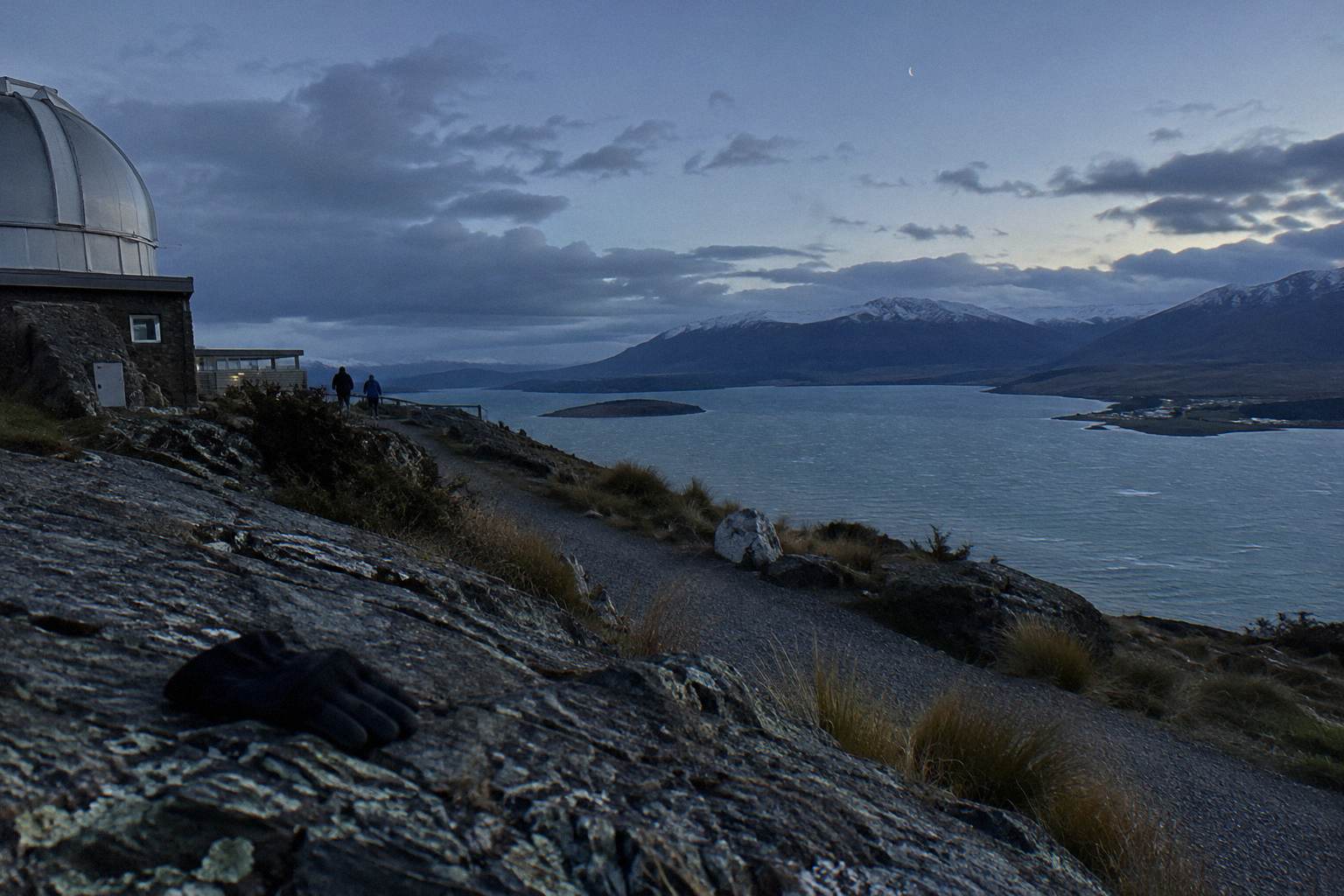
For travellers combining both halves in one day, the shape that works is cafe late morning, afternoon at lake level, then check-in at the Dark Sky Project base 15 minutes before the evening tour. The bus ride to the summit takes 15 minutes each way, and the Summit Experience runs 1 hour 45 minutes in total, with tour times varying throughout the year depending on the time of sunset. Exact times are not published in advance, so the day's rhythm has a natural gap between the cafe closing and darkness arriving.
Is The Cafe Open During Night Stargazing Tours?
No. The Astro Cafe keeps daytime hours, 9am to 4pm daily, and night stargazing tours do not include cafe service. The Mt John Summit Stargazing Experience travels to the summit by operator bus after check-in at the lakefront base, outside the road's public hours, and the tour's inclusions are transport, guiding, telescopes and a loaned Extreme Cold Weather jacket, not food.
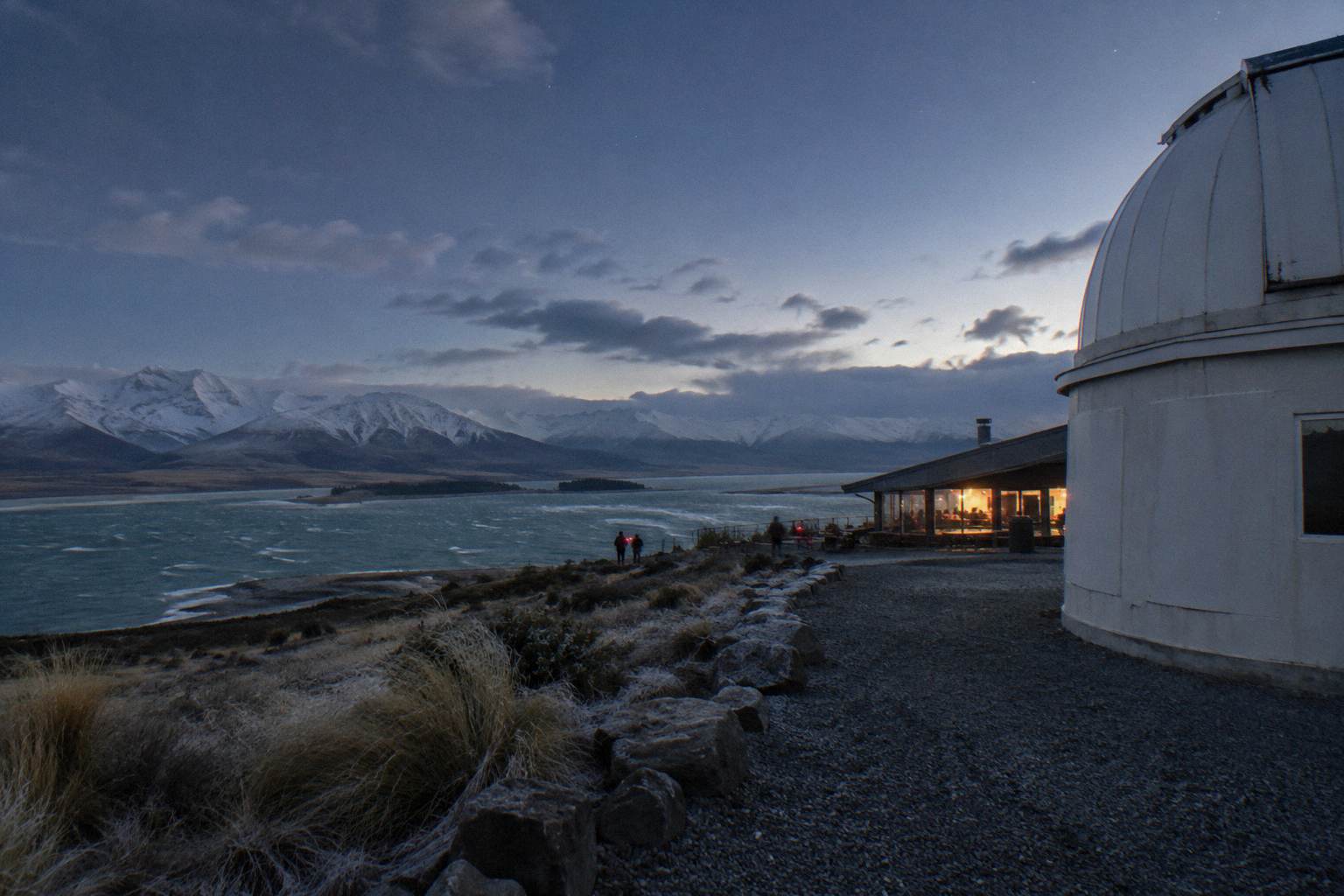
This surprises people who picture a warm latte during the session. The tour's 1 hour 45 minutes are spent on guided viewing: telescopes up to 16 inch inside a private observatory dome, naked-eye guiding with handheld lasers, and the Tātai Aroraki (Māori astronomy) and Western astronomy storytelling that Dark Sky Project weaves through the experience. Takapō itself is the name recorded by Ngāi Tahu ancestors, and Dark Sky Project explains that it uses the Takapō spelling to support revitalising Māori place names. None of that happens in or around the cafe, which by then has been closed for hours. Other pages covering the same trip are gathered on Mt John Stargazing.
If you want food close to the tour, the practical options sit at lake level. Dark Sky Project's base at 1 Motuariki Lane includes the Dark Sky Diner, and the village a few minutes' walk away has its own cafes and restaurants. Eat before check-in, because the tour asks you to arrive 15 minutes early and the summit segment runs nearly two hours in cold conditions. For what to bring and wear beyond the loaned jacket, the what to wear guide is the right reference.
The night bus also explains why the road fee never applies to stargazers. The NZD 14 gate charge is a day-visit mechanism for private vehicles; tour transport operates under the operator's arrangement with the University of Canterbury observatory, whose research telescopes, including the 1 m McLellan and the MOA 1.8 m, are the reason the summit exists as a destination at all. Visitors on the Summit Experience are guests of a working research facility after its public hours end.
One alternative worth naming here: if the evening is cloudy, the summit tour may be replaced or rescheduled, because Dark Sky Project cannot guarantee clarity and makes its decision as close to tour time as possible. Under those conditions the operator offers an indoor alternative such as the Virtual Stargazing Experience, a reschedule subject to availability, a gift voucher valid 3 years, or a full refund. The indoor, daytime Dark Sky Experience, a 45 minute guided astronomy tour at the base, is another cloud-proof option, and it includes the restored 125 year old Brashear telescope.
Walking Up: The Summit Circuit Track From Lake Tekapo
The Summit Circuit track runs 8.9 km return from the lakefront to the summit, and walking it avoids the NZD 14 road fee entirely while turning the cafe visit into a half-day outing. The track climbs from lake level to the 1,029 m summit through tussock country. It is a walking track, not a paved path, so it asks for real footwear and a realistic view of the weather.
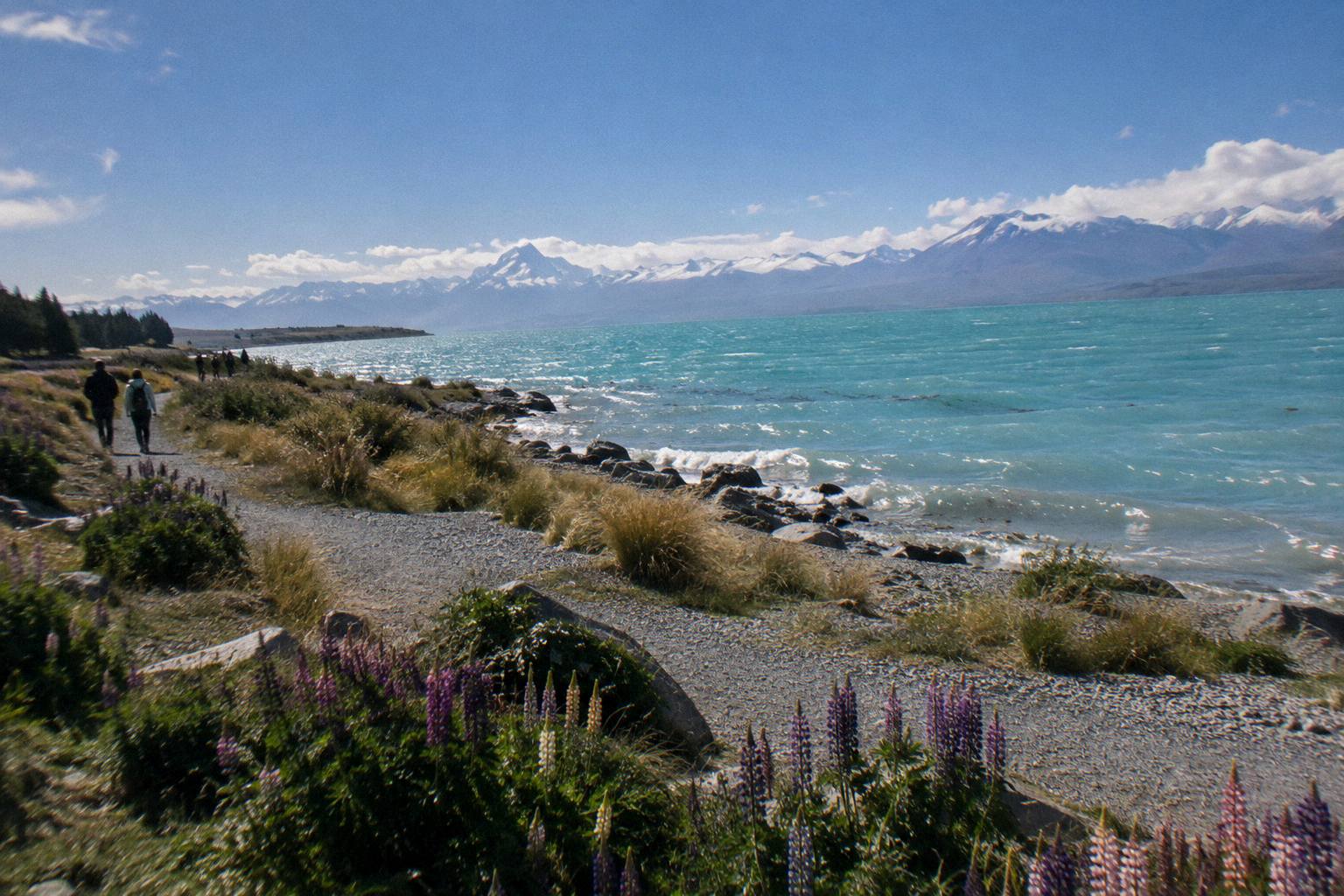
The track is the quiet alternative to the road, and it suits travellers who would rather spend effort than the gate fee, or who want the climb as exercise before a relaxed cafe stop. Because the road closes in some weather and the track is exposed Mackenzie hillside, the same weather caution applies on foot with more force: there is no shelter on the track, and the district's famous darkness cuts both ways once the sun drops. Start early enough that the whole 8.9 km return, plus cafe time, fits comfortably inside the 9am to 4pm window.
The walk also connects the two halves of the mountain's story. You pass through the same lighting-controlled landscape that earned the Aoraki Mackenzie International Dark Sky Reserve its April 2012 designation, a reserve comprising Aoraki/Mt Cook National Park and the Mackenzie Basin. The Mackenzie District Council runs lighting rules in its District Plan, including requirements that outdoor lights be shielded to point downward, with limits on time and frequency; those rules are the quiet infrastructure behind both the night tours and the dark sky you stand under at the cafe terrace after sunset.
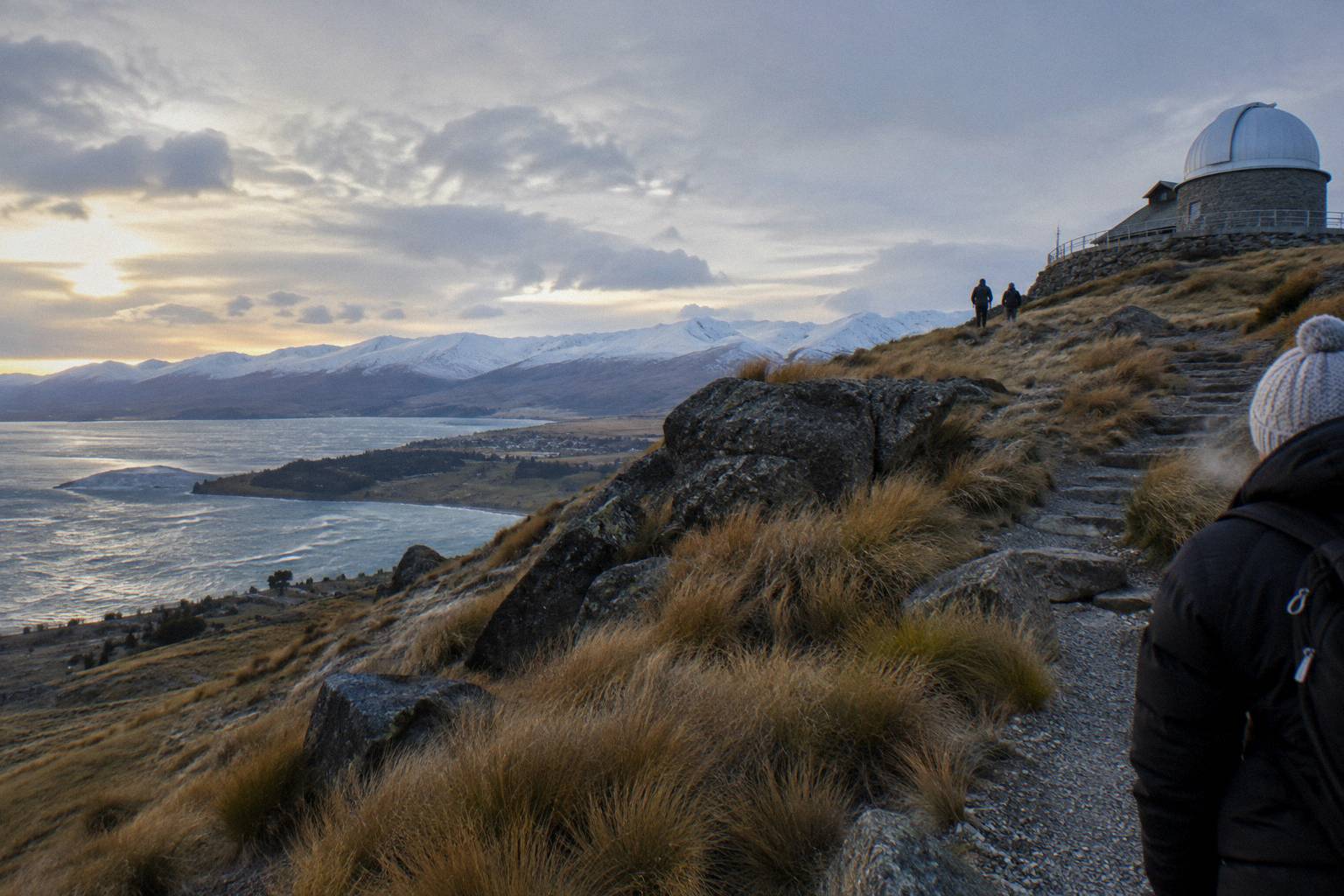
Whether walking up suits you is a fitness and schedule question. Families with young children will find the drive more realistic, and note the night-tour age rules if the day is building toward stargazing: the Summit Experience has a minimum age of 10, and it involves a 100 m gravel incline walk plus a few steps in the dark, which the operator rates as requiring moderate fitness. The Crater Experience accepts children from age 5, and Tekapo Springs allows no child under 6 on any of its tours, babies carried included. The Tekapo stargazing with kids guide works through those age gates family by family.
Pairing The Cafe With A Stargazing Tour
The strongest pairing is a night tour followed by a morning cafe visit, because summit tour times vary with sunset and can finish late, while the cafe opens at 9am and closes at 4pm. Travellers who book the evening Summit Experience, then breakfast at the Astro Cafe and drive down before the 4pm gate close, get the observatory summit twice in one story with no timing conflict.
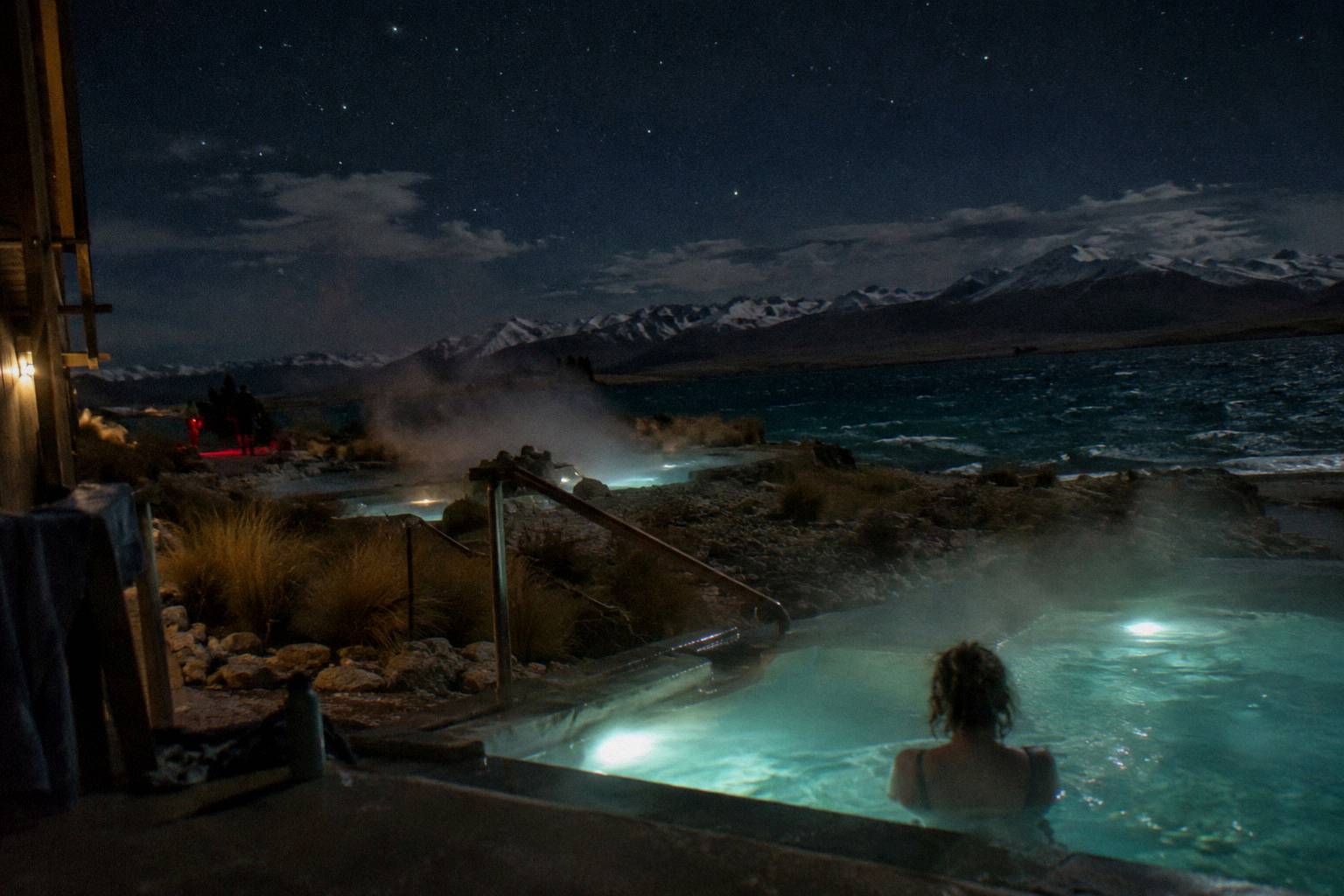
Think about the two halves as a sequence rather than a single day where possible. The Summit Experience's exact start times are unpublished and shift with the seasons, so building the cafe visit before the tour leaves you guessing at both. Reversing the order removes the guesswork: wake without an alarm, take the road or the track up in the morning, and spend the afternoon at lake level, whether at the hot pools, the lakefront, or simply resting before a late check-in.
The Mt John Summit Stargazing Experience, at NZD 239 per person with a minimum age of 10, is the observatory summit at night. Crater Stargazing At Cowan's Observatory, from NZD 139 for adults with children from NZD 99 and a minimum age of 5, is the shorter, younger-family night option a 5-minute drive from the base. Hot Pools And Stargazing At Tekapo Springs, at NZD 179 adult and NZD 115 child with a minimum age of 10, pairs telescope viewing with a soak in a 37.5 to 38.5 °C hot pool, towels, robes, hot drinks and warm poncho coats included.
| Tour | Operator price | Duration | Minimum age | Setting |
|---|---|---|---|---|
| Mt John Summit Stargazing Experience | NZD 239 adult and child | 1 hour 45 minutes | 10 | Mt John Observatory summit, dome up to 16 inch |
| Crater Stargazing At Cowan's Observatory | NZD 139 adult / NZD 99 child | 75 minutes | 5 | Cowan's Private Observatory, 14 inch telescopes |
| Hot Pools And Stargazing (Soak in the Stars) | NZD 179 adult / NZD 115 child | 90 minutes | 10 | Tekapo Springs, telescope viewing then hot pool |
| Dark Sky Experience, indoor | NZD 59 adult / NZD 39 child | 45 minutes | No minimum (content suited to about 7) | Indoor, daytime, no stargazing |
The Soak in the Stars schedule has its own rhythm worth knowing when you plan the next morning: it runs 7 evenings a week from October to April and Thursday to Monday from May to September, with some departures beginning after midnight. After a 12:15am finish, a 9am cafe opening is not early, it is exactly right. That tour also runs in all weather, with a VR indoor experience of 360 degree imagery replacing telescope viewing under cloud, and a 25 percent refund per ticket if telescope viewing falls under 30 minutes.
If the observatory summit at night is the piece that matters most, the tour page for the Mt John Summit Stargazing Experience sets out the inclusions and the check-in details, and you can check availability once your dates are fixed. Direct bookings with Dark Sky Project can be cancelled up to 24 hours before for a full refund, which matters in a place where the sky decides close to tour time.
Weather, Road Closures And The Cloud Plan
The road to the Astro Cafe closes in some weather, with no published closure calendar, and the cafe follows the road. For the night half, Dark Sky Project cannot guarantee clarity or any object, decides as close to tour time as possible, and offers an indoor alternative, a reschedule, a voucher or a full refund. Tekapo Springs tours run in all weather, swapping a VR indoor experience for telescope viewing under cloud.
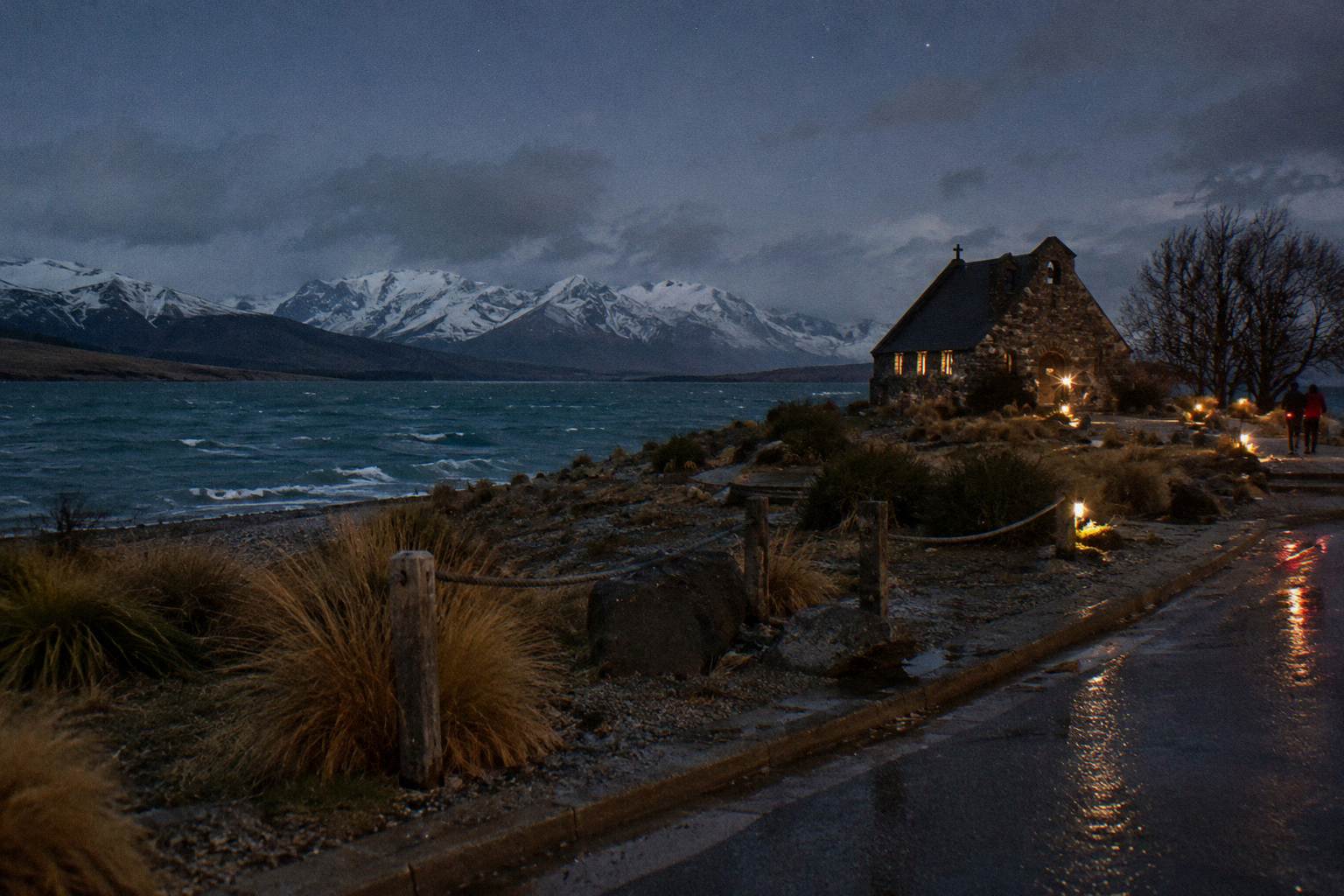
The day and the night fail differently, and knowing that shapes a resilient plan. A day trip to the cafe risks a closed road, so keep the morning option open and be ready to settle for a lakefront walk and a village cafe instead. A night tour risks cloud, and the operator's own weather planning page is explicit that the decision is made as close to tour time as possible and that guests should check in 15 minutes early for the update. Waiting for the operator's call, rather than pre-cancelling on a doubtful forecast, preserves your options.
If outdoor stargazing is not possible on a Dark Sky Project tour, the choices are an indoor alternative such as the Virtual Stargazing Experience, a reschedule subject to availability, a gift voucher valid 3 years, or a full refund. The indoor Dark Sky Experience is the daytime version of that resilience: it is a 45 minute indoor guided astronomy tour in four zones at the base, with English sessions at 10:30am, 12:30pm and 2:30pm, and also 4:30pm on Tuesday and Wednesday, subject to availability, at NZD 59 for adults and NZD 39 for children, with under 5s free with an adult ticket. It offers no stargazing, and it is best understood as the cloud-cover alternative rather than a stargazing tour.
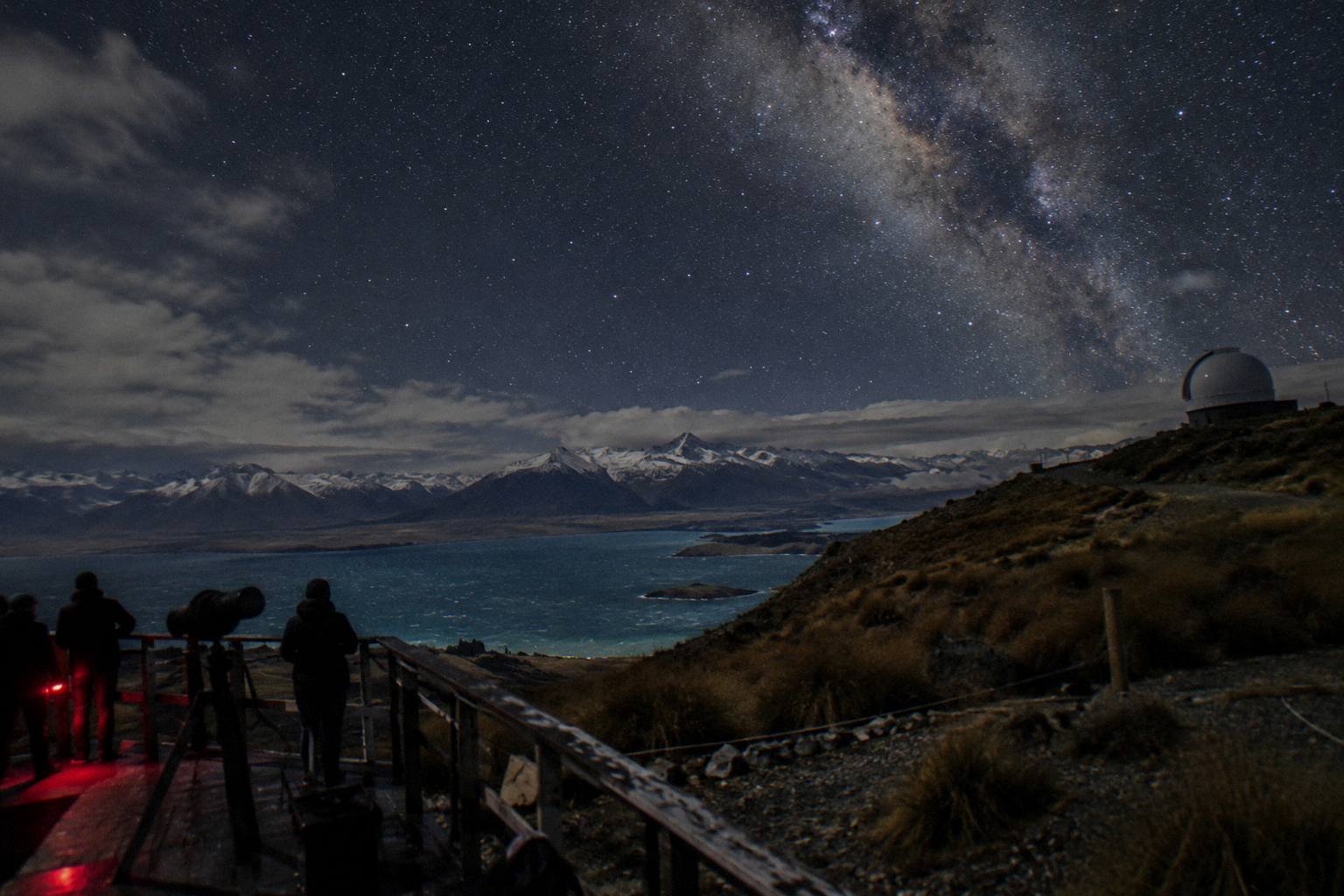
Tekapo Springs takes the opposite approach: tours run in all weather, and under cloud the telescope segment is replaced by the VR indoor experience built from 360 degree imagery of the Church of the Good Shepherd and the Mt John summit. Its partial-refund rule, 25 percent per ticket when telescope viewing falls under 30 minutes, applies to tours from 18 June 2026 and not to Economy, Premium or Premium Plus tickets. Cancellation terms also differ by operator: Dark Sky Project allows direct-booking cancellation up to 24 hours ahead, and Tekapo Springs allows changes or cancellation up to 24 hours before for a full refund, date change or voucher, with third-party bookings following the agent's terms.
One more weather-adjacent fact belongs here because it affects both halves: the moon. Dark Sky Project notes that brighter moonlight affects fainter stars and galaxies while also calling the moon a good target, and Tekapo Springs says telescopes still show bright objects under a full moon, with the naked-eye Milky Way reduced. If your cafe day precedes a tour around full moon, expect planets and the moon itself rather than faint deep-sky objects. The new moon or full moon guide unpacks the trade-off.
What Trips People Up When Visiting Mount John By Day
The recurring mistakes are arriving too late for the 4pm close, expecting the cafe or the road to have anything to do with the night tour, and forgetting that the road closes in some weather with no warning calendar. Each is avoidable with a morning plan, a clear read of the gate rules and a backup for the day half of the visit. The 12-seat vehicle limit and the NZD 14 fee also catch self-drivers off guard.
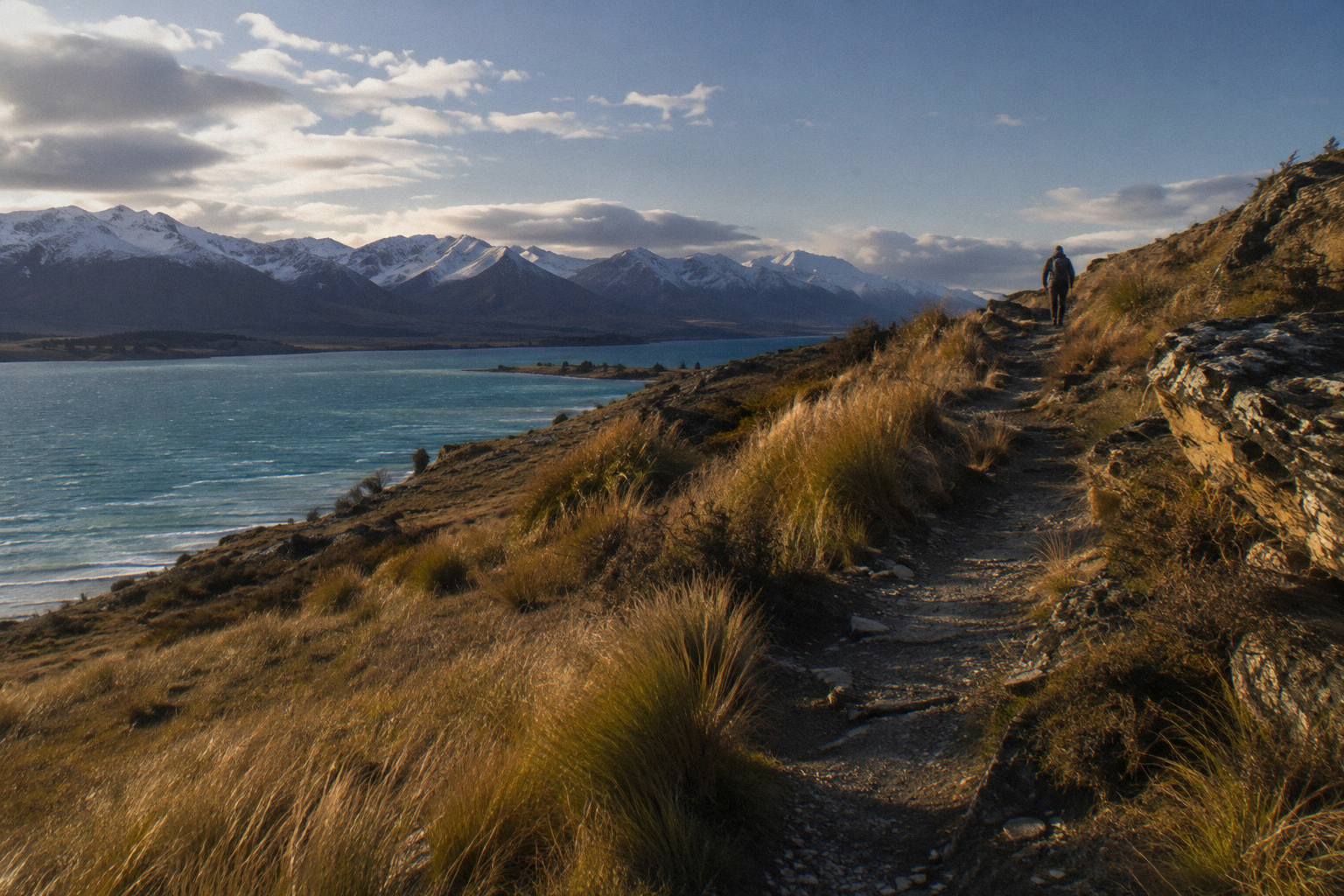
The late-arrival mistake is the most common. Visitors build a Mackenzie itinerary around Twizel or Aoraki/Mount Cook drives and reach the gate mid-afternoon, leaving minutes rather than hours on the summit. The fix is mechanical: treat 9am to 4pm as a hard window and plan to be down the road before it shuts, not at it. The second mistake, mixing up the day gate and the night tours, leads people to think a stargazing booking includes cafe access or that they can drive up independently for the stars. Neither is true; night summit access is operator transport only, after check-in at the lakefront base.
The third is assuming the road is always open. Snow, ice and severe wind can close it, and the cafe goes with it. A same-morning check with the operator, by phone on +64 3 680 6960 or info@darkskyproject.co.nz, settles the question before you drive to the gate. For unanswered detail questions, Tekapo Springs can be reached on +64 3 680 6550 or bookings@tekapostargazing.co.nz. Where a fact such as a tour's exact start time is not stated anywhere, the honest answer is to ask the operator rather than trust a forum guess; the operator's own plan your visit page is the primary reference for arrivals and check-in.
A smaller trap concerns expectations of the cafe itself. It is a small summit outpost, not a village restaurant, and its value is the terrace, the view and the fact of drinking coffee beside a research observatory. Visitors who arrive expecting an extensive menu or evening service leave disappointed; visitors who arrive at 9:30am with a stargazing story from the night before tend to leave delighted. Mount John Stargazing, this site, exists for exactly that pairing of the mountain's two halves.
Common Questions About The Astro Cafe At Mount John
What Are The Astro Cafe Opening Hours?
Daily from 9am to 4pm, and the access road keeps the same hours, so the gate and the cafe open and close together. There is no evening service, and night stargazing tours do not include cafe access.
How Much Does It Cost To Drive Up To Mount John?
The road user fee is NZD 14 per vehicle at the gate, charged during the road's 9am to 4pm hours. Vehicles over 12 seats are not permitted on the road. Walking the Summit Circuit track, 8.9 km return, avoids the gate fee entirely.
Can You Visit The Astro Cafe During A Stargazing Tour?
No. The cafe closes at 4pm, and night tours to the Mt John Observatory summit travel by operator bus after check-in at the Dark Sky Project base on the lakefront. The tour includes transport, guiding, telescopes and a loaned Extreme Cold Weather jacket, not food or cafe service.
Is The Road To Mount John Open In Winter?
The road is open daily 9am to 4pm but is closed in some weather, and no calendar of closures is published, so check on the day of your visit. Snow and ice are the realistic closure risks in winter. Contact Dark Sky Project on +64 3 680 6960 or info@darkskyproject.co.nz.
Can You Walk To The Astro Cafe Instead Of Driving?
Yes. The Summit Circuit track runs 8.9 km return from Lake Tekapo to the 1,029 m summit, with no gate fee. It is a walking track through exposed tussock country, so allow enough time to complete the return and your cafe stop inside the 9am to 4pm window.
What Happens If A Night Stargazing Tour Is Clouded Out?
Dark Sky Project cannot guarantee clarity or any object, and it makes the weather decision as close to tour time as possible. If outdoor stargazing is not possible, the operator offers an indoor alternative, a reschedule subject to availability, a gift voucher valid 3 years, or a full refund.